Black Friday is no longer a day. It is not even a weekend. Already in November 2021, online sales grew 10% year on year while sales on Black Friday itself fell 31%. Shoppers spread their buying across the weeks around it, and brands that launch early and sustain offers beyond the BFCM dates catch more of that demand.
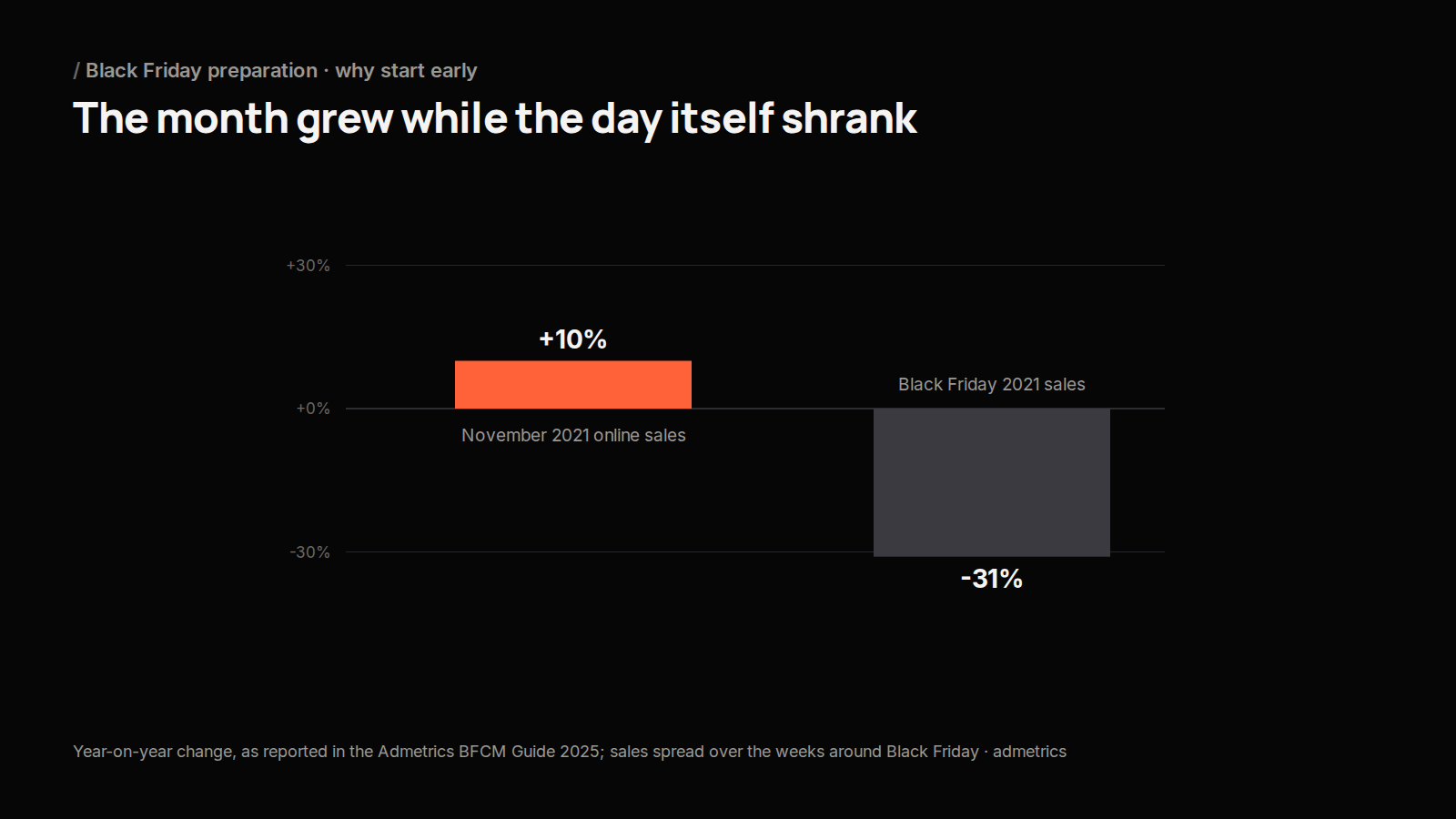
The stakes keep rising. In 2025, US shoppers spent $11.8 billion online on Black Friday, up 9.1%, and $44.2 billion across Cyber Week (Adobe). Shopify merchants sold $14.6 billion over the BFCM weekend, up 27% (Shopify). And the longer season has not made the day itself small: Black Friday alone took 31% of Cyber Week revenue (impact.com).
For many brands, this is the week that decides the year. For one in six US brands, Black Week brought at least 30% of annual orders; for almost one in ten, half or more (Omnisend).
Most Black Friday checklists stop at revenue: more traffic, more conversions, more orders. This guide adds the step most of them skip. Every decision, from the offer to the ad budget, is checked against what each order leaves after product, shipping, fees, returns and marketing. A week that sets revenue records and loses money is a common Black Friday outcome, and an avoidable one.
It covers Black Friday and Cyber Monday preparation in eight steps, with what the 2025 season showed, real examples from brands such as NATURTREU, ESN and More Nutrition, SugarGang, and Heimplanet, and links to detailed guides and calculators for each step.
Admetrics is a marketing measurement and budget platform for ecommerce and DTC brands. We measure what drove each order independently of the ad platforms, work out the profit left after costs and returns, and help brands move budget toward what earns.
Key takeaways
- Start ten weeks out. Goals, budget, offers, tracking and stock all need lead time; the week before Black Friday is for checks, not decisions.
- Write goals in profit terms. "20% more revenue than last BFCM" is a start; add a contribution margin target and a cost ceiling per new customer.
- Set the ad budget from the revenue goal backwards. Revenue goal ÷ AOV = orders; revenue goal ÷ target MER = ad budget. Then check what is left after margin.
- Pick offers by margin impact. Thresholds, bundles and value adds protect margin; straight price cuts give it away on every unit.
- Fix tracking before the rush. Server-side events, deduplicated attribution and a daily MER floor need weeks of history to be trusted.
- Plan Meta budgets by phase and scale by rules. A proven split is 5/80/5/5/5 across five phases, with at least 2× your CPA per creative and scaling in 10/20/30% steps.
- Prepare for what goes wrong. Stock, fulfilment, payments and site speed fail under load; each needs an owner and a backup plan.
Black Friday 2025: what the numbers say about 2026
Last year's season is the best guide to this one. Seven findings from the 2025 reports, and what each means for your plan:

The sources measure different things on different sets of brands, mostly in the US. None of them reports profit after discounts, shipping and returns, which is the gap this guide is built to close. All figures, with links, are in our Black Friday 2025 in numbers roundup.

The Black Friday preparation timeline
Black Friday 2026 falls on 27 November, with Black Week running from 23 to 30 November. Working backwards gives roughly ten weeks of preparation, in six workstreams that overlap.
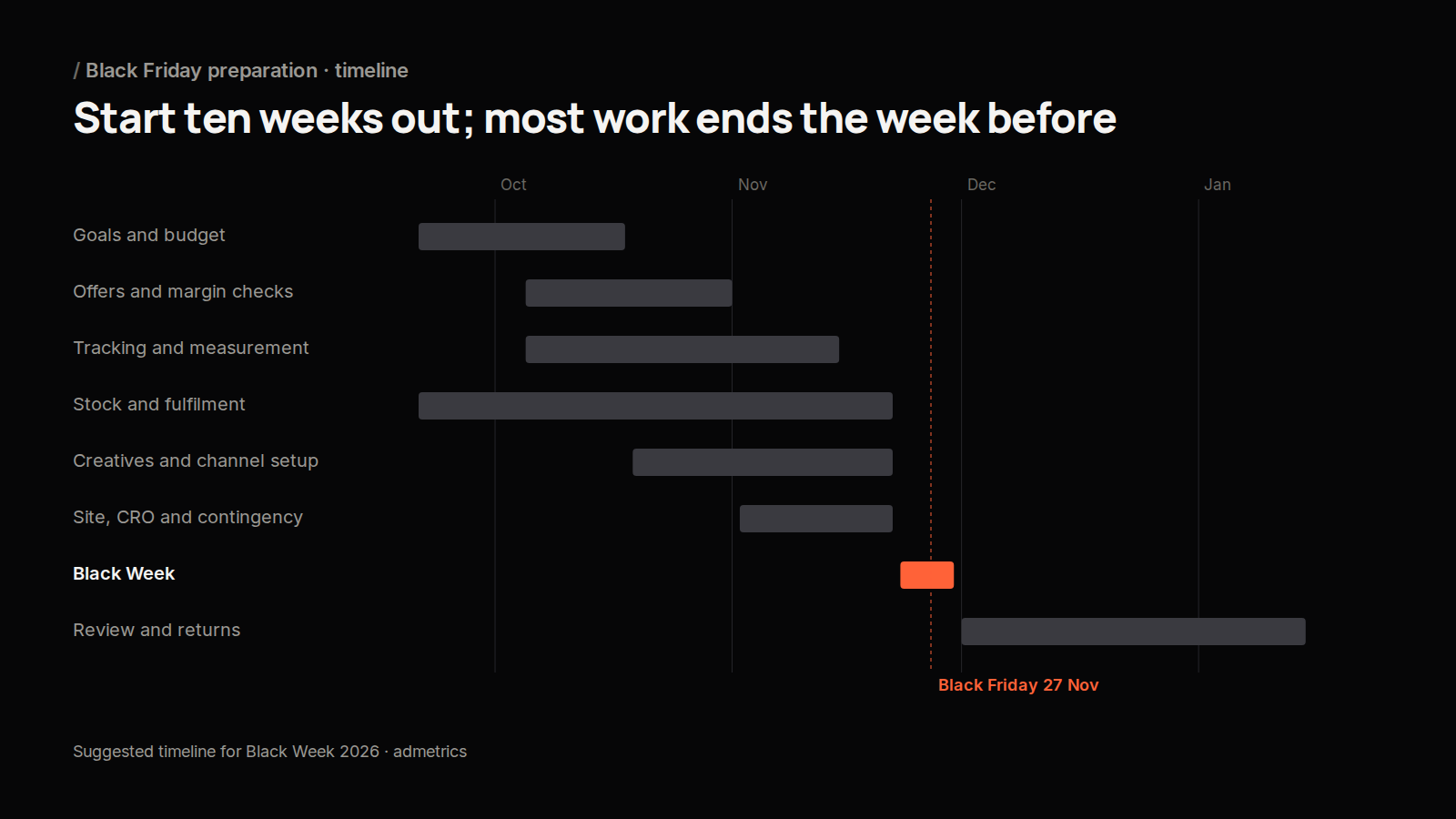
The most common failure is not a bad idea but late planning: it puts stock, budget and the site at risk at once. The fix is a planning calendar that starts in September.
Step 1: Set goals and KPIs in profit terms
Start by making goals specific: instead of "increase sales", aim for something like "20% more sales than last BFCM". That is a good start. A profit-first plan adds two more lines, so the goal cannot be met by a week that loses money.
The KPIs to watch
The KPIs that matter most are CVR, AOV, CM2, ROAS, new-customer ROAS and POAS, plus the repeat purchase rate and lifetime value of last year's BFCM shoppers, which tell you how much you can afford to spend acquiring this year's. Set a target or floor for each before the week, so decisions during it are rules, not debates:
- MER floor: break-even MER from your planned discount mix (MER vs ROAS guide)
- NC-CAC ceiling per campaign: from first-order margin and expected repeat orders (CAC guide)
- CM2 per product at the planned discount (contribution margin guide)
- AOV target and free-shipping threshold (AOV guide)
Monitor these KPIs in real time and adjust during the event. That only works if the thresholds are agreed in advance.
Why the new-customer goal matters: ESN and More Nutrition
The Quality Group, the company behind ESN and More Nutrition, processes more than 200,000 orders on a single Black Friday. In its measurement setup, the largest single lever was separating new from existing customers in every budget decision: cost per new customer fell 70%. Without that split, a Black Week can hit its revenue goal while mostly selling discounted products to people who would have bought anyway.
It matters more because few Black Friday buyers come back on their own. Just 11% of 2024 Black Friday shoppers returned for Black Friday 2025 (Ometria). Set the NC-CAC ceiling from first-order margin plus the repeat orders your own past Black Friday cohorts actually placed; our CAC and NC-CAC guide shows the calculation.
Step 2: Set the budget from the revenue goal backwards
The simplest budget, and the most common, is incremental: last year's figure plus a bit. A typical example: a brand that spent €20,000 on ads last Black Friday allocates €22,000 this year. It is easy, but it ignores whether last year's spend made money and whether this year's margins are the same.
A profit-first budget works from the goal instead:
- Orders needed = revenue goal ÷ expected AOV (after discounts)
- Ad budget = revenue goal ÷ target MER
- Check = revenue goal × CM2 ratio − ad budget. If the result is negative or too small, the goal, the discount or the budget has to change.

In the example, most orders carry a 20% discount, so the CM2 ratio is about 25% and break-even MER is 4.0. A target MER of 5.0 leaves room for profit: €300,000 of revenue at a 25% CM2 ratio is €75,000, minus €60,000 of ads leaves €15,000 of contribution after marketing. At a target MER of 4.0, the same goal would need €75,000 of ads and leave nothing.
Six budgeting approaches, and when they fit
Use the goal-backwards calculation to set the total, activity-based budgeting to split it, and rolling budgets to steer it during the week.
Split the budget by phase
For Meta, a common approach is five phases: anticipation 5%, pre-Black Friday 80%, Black Friday 5%, pre-holiday 5% and holiday 5%. Whatever split you choose, decide it in advance and tie each phase to its own MER floor, because the discount, and with it the break-even, changes between phases.

Plan for costs to rise on the peak days. Across one agency's client accounts in Cyber Week 2025, Meta spend grew 54% while Meta revenue grew 50%, and cost per click rose 6% overall and 11% on Cyber Monday (Logical Position). A budget that only scales spend will buy less with every extra euro; set a cost ceiling per phase and move money when a campaign passes it.
Case study: NATURTREU more than doubled its budget, and ROAS still rose
NATURTREU, a German brand of natural food supplements, sells roughly half through Amazon and half through its own Shopify shop. For BFCM it raised its budget by 122% and still increased ROAS by 23%, on top of more than 100% growth year on year. Two things made the bigger budget work:
- Marketing mix modeling showed where each channel's response curve still had room, so the extra budget went where it would still earn.
- Cross Matching showed how customers moved between Amazon and the shop, so channels stopped competing for the same buyers.

"With PRISMA and the Cross Matching feature, we can finally see how customers move between Amazon and Shopify, identify overlaps, and allocate budgets without cannibalizing channels." Vincent Grassegger, CMO, NATURTREU
Step 3: Choose offers that protect margin
A discount lowers the price but not the product cost, the shipping label or the payment fee, so margin falls far faster than price. On a product with a 50% gross margin, 30% off removes 60% of the gross profit and needs two and a half times the usual sales to earn the same.
Three rules from our contribution margin guide:
- Set a floor per product: CM2 at the planned discount must stay above what you expect to pay per order in ads.
- Discount deep where the margin is deep, as Casper does with tiered Black Friday discounts.
- Pay with value, not only with price: gifts, faster delivery or early access have a fixed, known cost.
There are around 20 common Black Friday offer types. Grouped by how they hit margin:
Early bird offers and VIP early access also fit the way demand now spreads over November: they let you start selling before the busiest, most expensive days.
Plan for bigger baskets
2025 showed that basket size moves on Black Friday. Across 5,000 US brands, Black Friday AOV rose 30%, from $164 to $215 (Omnisend), and the average Shopify cart over the BFCM weekend was $114.70 (Shopify). A free-shipping threshold just above your current AOV, bundles that pair a bestseller with a slower product, and a gift above a set basket value all raise order value without a deeper discount. Our AOV guide includes the margin check for each.
Real examples from ecommerce brands

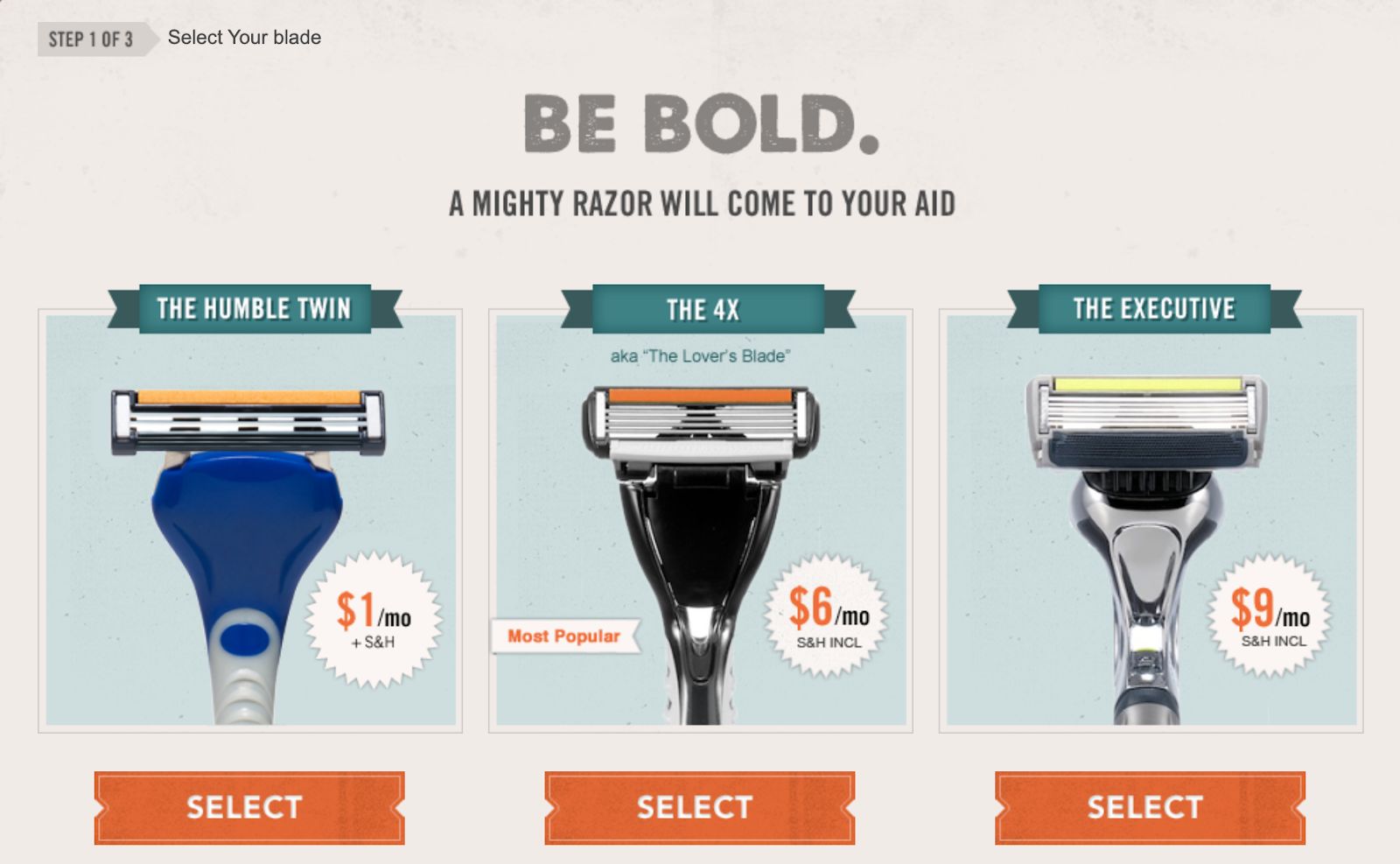
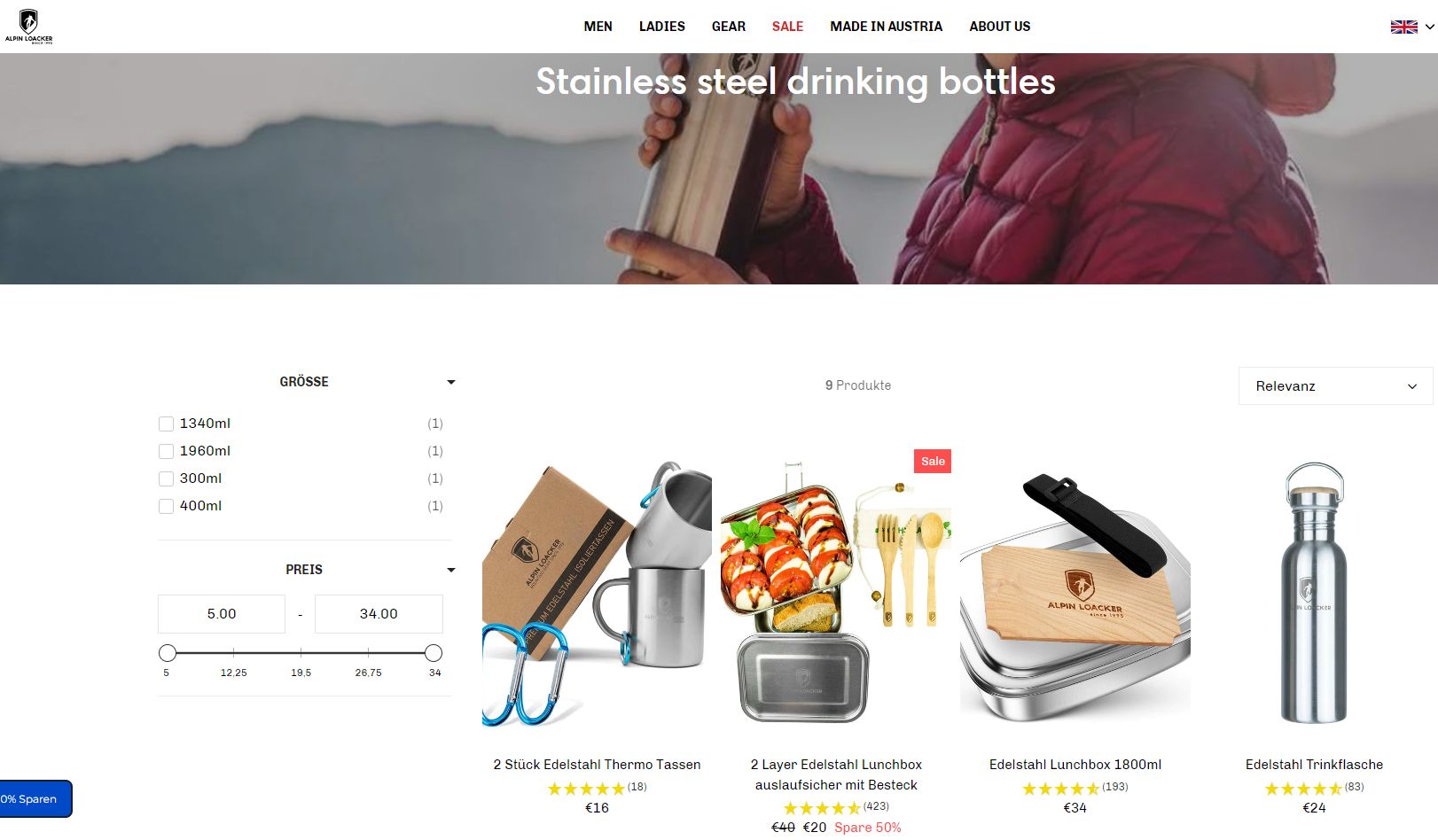

One rule for anchoring in the EU: a "was" price must be the lowest price of the previous 30 days. Inflated reference prices are a legal risk, not just a trust problem.
Step 4: Fix tracking and measurement before the rush
During Black Week you will steer on numbers several times a day. They need to be trustworthy before the week starts, not after.

What fixing the data changed for real brands
Better conversion data changes performance, not only reporting. Five examples from Admetrics customers:
"Admetrics has enabled data passback to Facebook and has created its own pixel, so we could just optimize our campaigns based on the Admetrics pixel and thereby the performance just massively increased." Tim Thies, Marketing Manager, SugarGang
Tracking needs history to be useful, which is why it belongs in October. Admetrics customers track, on average, about 30% more purchases than their ad platforms report. Our marketing attribution guide covers the setup in detail.
Step 5: Plan channels, Meta rules and creatives
Meta: budget and scaling rules
Meta matters most because it carries the most budget: Meta and Google together took 86% of Cyber 5 spend in 2025, with Meta the largest share, and CPMs rose on most major platforms (Power Digital).
Two additions for a profit-first plan. Base the ROAS thresholds in your rules on break-even ROAS at the Black Friday discount, not on a fixed 2. And add new-customer share to the rules for prospecting campaigns, so retargeting-like audiences do not take over the budget.
Creatives
Test creatives before Black Week, when CPMs are normal, not during it. Heimplanet, which sells tents and packs at an average order value of about €230, tests creatives before launch, so the ones that run in the busy weeks have already proven themselves. Its customer journeys take 7 to 14 days and longer, so it measures them with a 120-day attribution window: for considered purchases, a Black Friday order is often the end of a journey that began in October.
"The experiments tool was invaluable in this process. It allowed us to quickly pinpoint winning and underperforming ads, enabling efficient budget reallocation." Jonas Gritzmann, Marketing Manager, Heimplanet
For Black Friday creatives: make the offer clear, show it visually, design for mobile first, balance promotional posts with other content, and organise assets so the team can swap them quickly. Mobile is where the week happens: 57.5% of US online sales on Cyber Monday 2025 came from phones (Adobe).
Steering during the week: Paul Valentine
Paul Valentine, the German jewellery and watch brand, raised its MER by 22% by steering ad sets on Admetrics' Efficiency Score, which lets the team react to performance changes in paid social and paid search within hours rather than days.
"In optimizing our campaigns, we mostly rely on the 'Efficiency Score.' The Efficiency Score allows us to quickly respond to performance changes in ad sets." Paul Keil, Performance Marketing, Paul Valentine
Email, SMS and marketplaces
Email and SMS reach existing customers cheaply, so their job in Black Week is retention and early access, not acquisition. Marketplaces such as Amazon, Zalando, Kaufland and Otto reach shoppers who will not visit your shop: Paul Valentine sells its most popular products on Otto, and NATURTREU makes about half its sales on Amazon. Calculate CM2 per sales channel, because marketplace fees change it.
Customer service as a sales channel
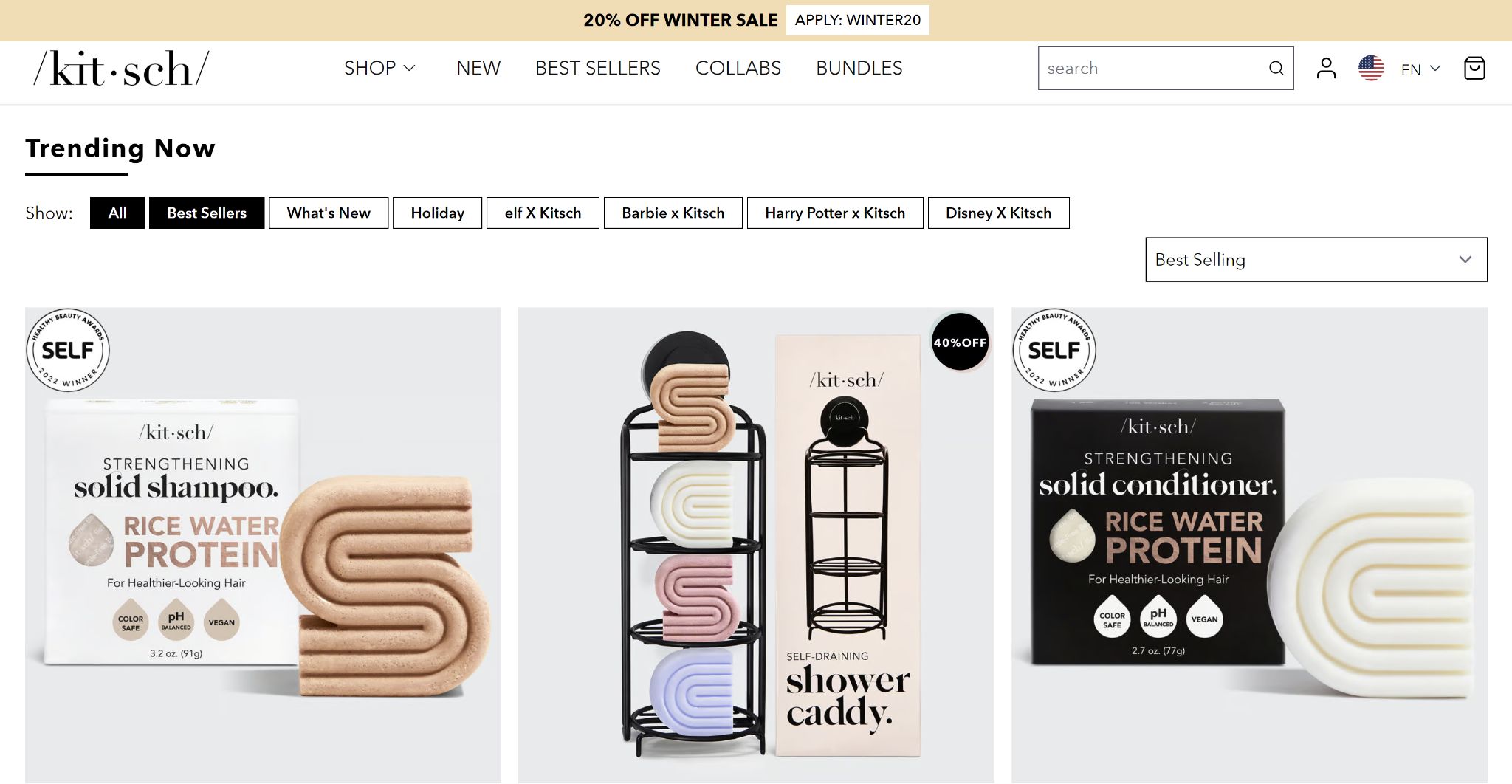
Questions spike with traffic. Kitsch, the hair and beauty brand, used AI-based instant messaging to automate 68% of routine customer questions, cut resolution times by two to three hours, and added $46,000 in revenue over 90 days. Before Black Week, prepare answers for shipping times, returns and discount codes, and route the rest to a person fast.
Step 6: Prepare stock, fulfilment, the site and a plan B
Stock
Running out of a promoted product wastes the ad spend that sent people to it. For example: stock only 10 units of a popular $250 product and you miss revenue the moment demand exceeds them. Over-ordering has its own cost in holding costs and markdowns.
- Forecast from last year's BFCM product data and decide promotions early, so stock follows the offer plan.
- Hold safety stock for the products you promote most.
- Reorder dynamically from live sales data during the event.
- Watch stock turnover, GMROI (gross margin return on inventory investment) and days sales of inventory for each promoted product.
Fulfilment and the site
Higher volumes need a fulfilment process that holds: an organised pick and pack area, extra staff trained before the week, and clear communication with carriers. On the site, test speed, checkout and payment under load, and check every landing page and code before the ads go live. Plan for the peak minute, not the average day: Shopify merchants' sales peaked at $5.1 million per minute at 12:01 pm EST on Black Friday 2025 (Shopify).
Glossier is a good example of fulfilment built around the brand. It outsources fulfilment to trusted partners but keeps strict control of packaging and unboxing, and replaced manual data with unified systems that show productivity and error rates in real time. In Black Week, that is what keeps a rush of orders from turning into a rush of complaints.

Contingency
The approach: identify risks, rank them by likelihood and impact, write an action plan with a responsible person for each, and monitor in real time so problems are spotted in minutes, not after the weekend.
Step 7: Run the week on rules
During Black Week, decisions should follow the thresholds set in step 1:
- Check a daily MER scoreboard against the break-even floor, several times a day, with a rolling three-day MER beside it. Black Friday is often the best revenue day and the worst MER day; see our MER vs ROAS guide.
- Move budget with a rolling budget: away from campaigns below their POAS or NC-CAC limits, toward those above.
- Watch new-customer share by campaign, so the week buys growth and not only discounted repeat orders.
- Monitor stock, site speed, payments and tracking coverage in real time, with the contingency owners on call.


Step 8: Review it twice
A good post-event review covers six areas: performance against the KPIs you set, sales and revenue, marketing channel performance, inventory, product performance, and lessons learned. Run it twice:
The cohort check matters because retention is where Black Friday pays off, or doesn't. Just 11% of 2024 Black Friday shoppers came back for Black Friday 2025 (Ometria), and Bain & Company's often-quoted finding is that a 5% increase in customer retention can raise profit by 25 to 95%. Tales & Tails, a subscription-led pet food brand, keeps some campaigns with weaker first-order ROAS live on purpose, because the customers they win become subscribers later.
Write the lessons down while they are fresh. Next year's plan starts with this year's review.
Marketing budget calculator
Try it with your own numbers: the free marketing budget calculator plans your ad budget from your margin and revenue goal, and shows the point where more spend stops paying.
FAQ
How big was Black Friday 2025?
Adobe put US online spending at $11.8 billion on Black Friday, up 9.1%, and $44.2 billion across Cyber Week. Shopify merchants sold $14.6 billion over the BFCM weekend, up 27%, and Black Friday took 31% of Cyber Week revenue (impact.com).
When should I start preparing for Black Friday?
About ten weeks before: late September for a Black Friday on 27 November. Goals, budget and stock come first; offers and tracking in October; creatives, site and contingency in early November.
How much should I spend on ads for Black Friday?
Work backwards from your revenue goal: divide it by a target MER that sits above your break-even MER. Then check that revenue times your CM2 ratio, minus the ad budget, leaves the contribution you want.
What should a Black Friday marketing strategy include?
Goals in profit terms, a budget split by phase, offers chosen by margin impact, working tracking and attribution, channel and creative plans, stock and fulfilment plans, a contingency plan, rules for the week and a review afterwards.
What are the most important Black Friday KPIs?
Conversion rate, AOV, CM2, ROAS, new-customer ROAS and POAS, plus MER against a break-even floor and NC-CAC against a ceiling.
Should I start Black Friday offers early?
In many cases, yes. Shoppers spread their buying over November, and early bird offers or VIP early access reach them before the most expensive days.
What goes wrong most often on Black Friday?
Late planning, stock-outs on promoted products, site or payment failures under load, ads stuck in review, and tracking gaps that leave the team steering on platform numbers.
Prepare on complete data
Admetrics shows contribution margin, MER, NC-CAC and channel results measured independently of the ad platforms, with returns included. Set it up now and Black Week runs on numbers you can trust, not on what each platform claims.
Run your biggest week free: Admetrics is free until 1 December. No credit card, no commitment. Get started for free