Ad platforms optimize on exactly what you send them. We rebuilt what reaches them, and four things changed: coverage, the values you send, what those values represent, and which customers you ask the algorithms to find.
Improved S2S Conversion Signals is live today for Google, Meta, TikTok, Outbrain, Teads and Taboola. And, as of this release, for ChatGPT.
The part of your ad account nobody looks at
Every bid a platform places on your behalf comes from one input: the conversion data your shop sends back. The targeting, the audience expansion, the budget pacing inside a campaign are all downstream of that feed.
Most shops send it through the browser, where it is incomplete by design. Events get blocked by extensions, stripped by the operating system, or lost between the click and the checkout. The platform optimizes on what arrives and never learns about the rest.
The events that do arrive carry a second problem. They all look the same. A first-time buyer at full margin and a discounted reorder from a loyal customer land as the same purchase event with the same value, so the algorithm treats them as equals and goes looking for more of both.
Coverage, rebuilt around Google
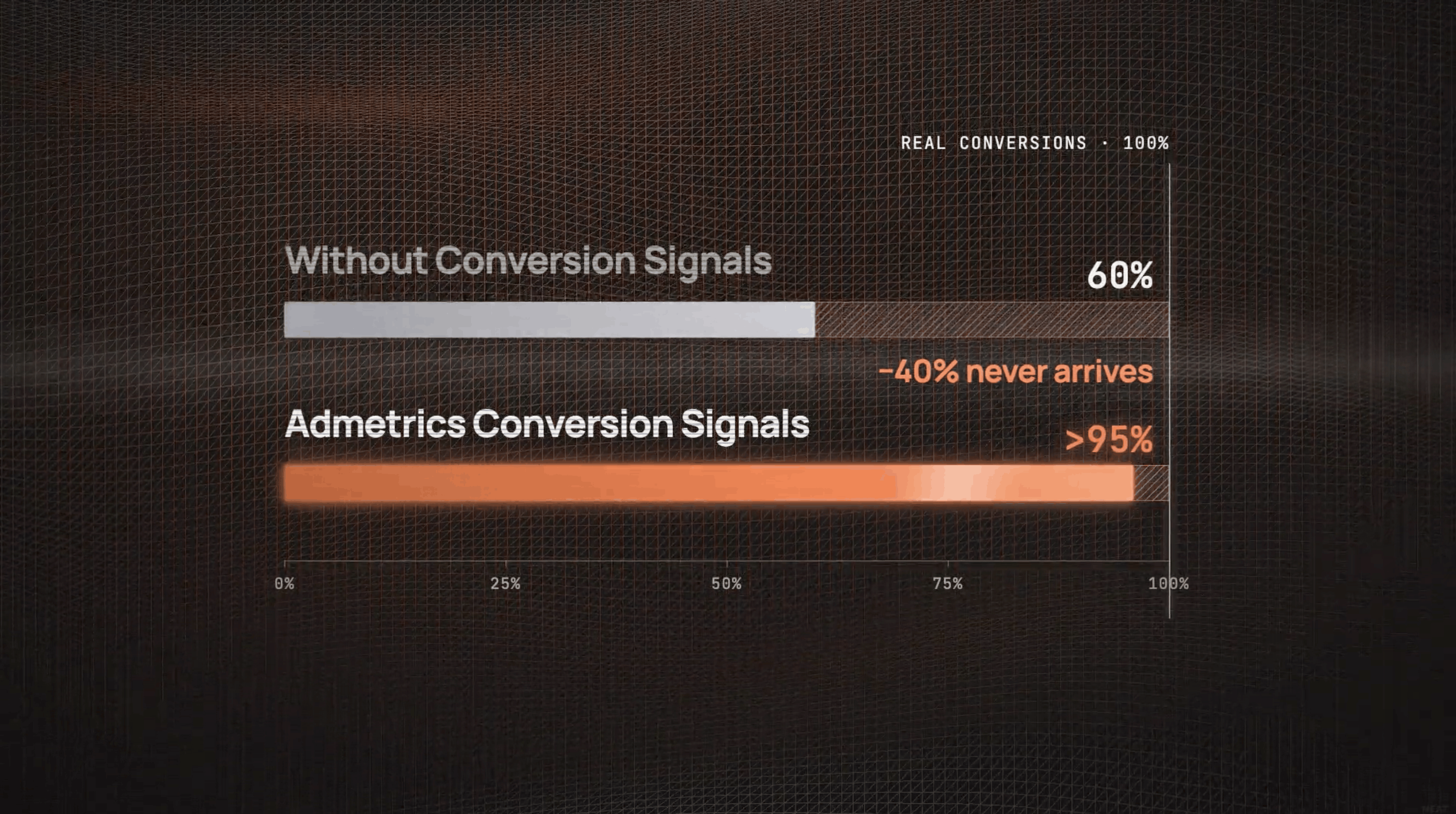
Without server-to-server data, roughly 40 percent of conversions never reach the platform. Our server-to-server pipeline sends events directly from the backend, matched to the real order, and delivers over 95 percent.
This release focused on Google. The Google path had the widest gap and the least visibility, because Google Ads reports a conversion count without telling you how many it never received. We rebuilt identifier handling, matching and deduplication on that path specifically. Every other platform benefits from the same work, and Google benefits most.
What changes in practice: Smart Bidding and Performance Max see a fuller picture of which clicks became orders, so the learning phase shortens and the bidding stops under-valuing campaigns that were converting all along.
The same mechanism also carries view-through conversions, which matters most on YouTube. Video campaigns are judged largely on conversions that happen without a click, and that is exactly the signal browser-side tracking loses first. With the rebuilt path, a purchase that followed a view rather than a click reaches Google with the order behind it, so YouTube can be measured and bid on alongside the rest of the account instead of being argued about.
Conversion values weighted by attribution
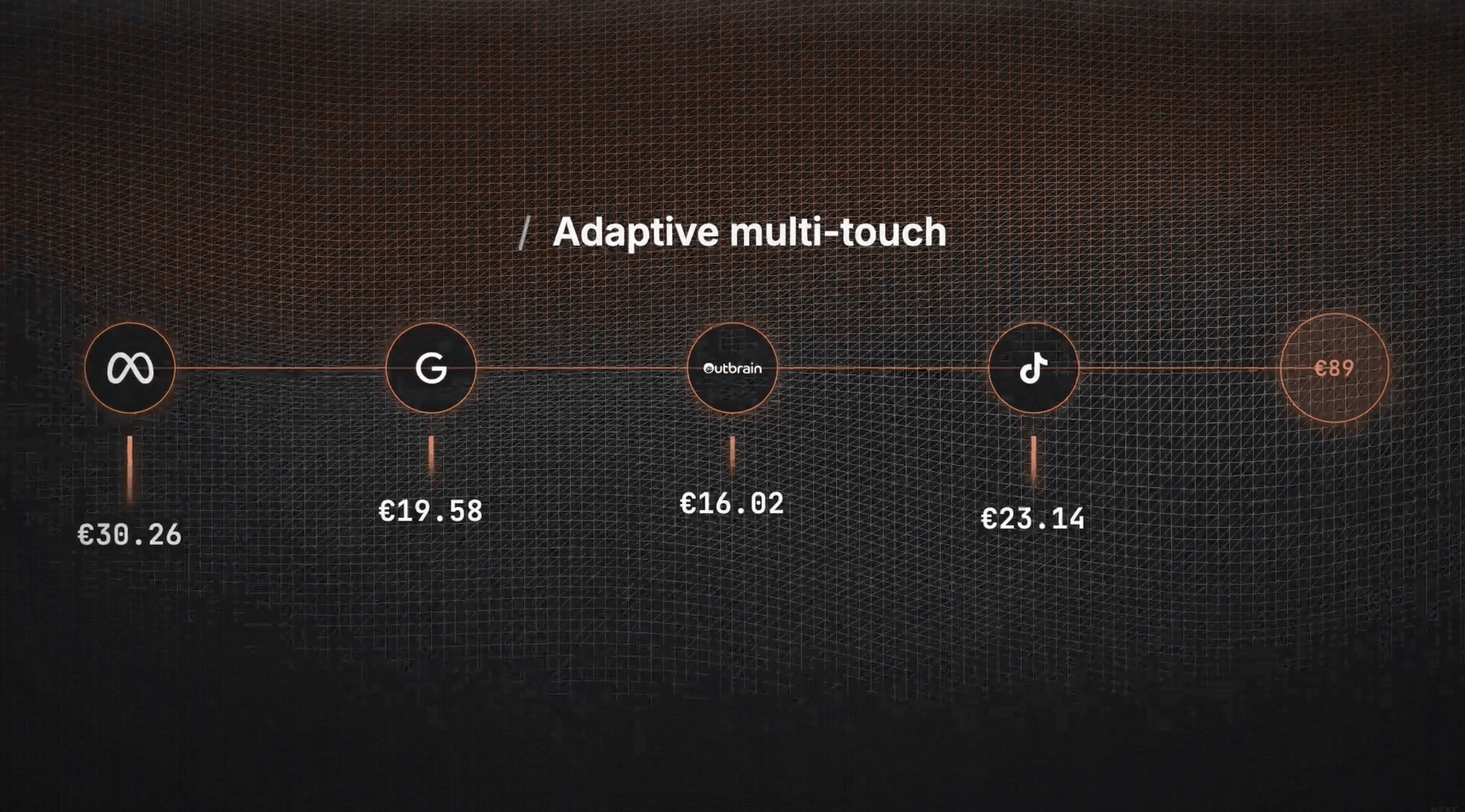
Until now, every platform that touched an order received the full order value. Four platforms involved in one sale each claimed the whole thing, so the sum of what your platforms reported had no relationship to what your shop took in.
You can now send conversion values weighted by a multi-touch attribution model. Pick the model that fits how you sell, including Adaptive Attribution, which learns from your own customer journeys which channels open the sale, which carry it and which close it, then splits the credit accordingly.
An order worth 89 euros with four touchpoints no longer arrives as 89 euros at each platform. Google receives the share Google earned, TikTok receives its own, and each bidding engine optimizes against a number that reflects its real contribution.
Send profit instead of revenue
Revenue is the wrong target for an auction. A 120 euro order on a heavily discounted bundle with a 40 percent return rate is worth less to you than a 60 euro order on a full-margin product, and bidding on revenue tells the algorithm the opposite.
You can now send contribution margin in place of revenue. Cost of goods, logistics and transaction fees come out before the value leaves our system, calculated per order rather than estimated across the account.
The effect shows up fastest on broad campaign types that rely on value-based bidding. Once the value field carries margin, Performance Max and Advantage+ start steering toward the products and audiences that actually leave something behind.
New and reactivated customers as their own events
Algorithms drift toward existing customers because existing customers are the easiest conversions to find. Left alone, a prospecting campaign quietly becomes a retargeting campaign, and the reported ROAS looks excellent while new customer acquisition stalls.
New customer and reactivated customer now ship as separate events to every connected platform, not only to Meta. You choose what each platform optimizes for: every purchase, new customers only, or new and reactivated together.
Tell Google to bid for people who have never bought from you and it will. Tell it to go after customers who stopped buying twelve months ago and it will do that instead.
Where it runs, including ChatGPT
ChatGPT is the one worth pausing on. Conversational surfaces are becoming a real source of commerce traffic, and the brands that start feeding clean conversion data into them now will have a measurement history when that traffic matters. Server-to-server, live today, with the same four capabilities as everything else in the list.
Prove it on your own account
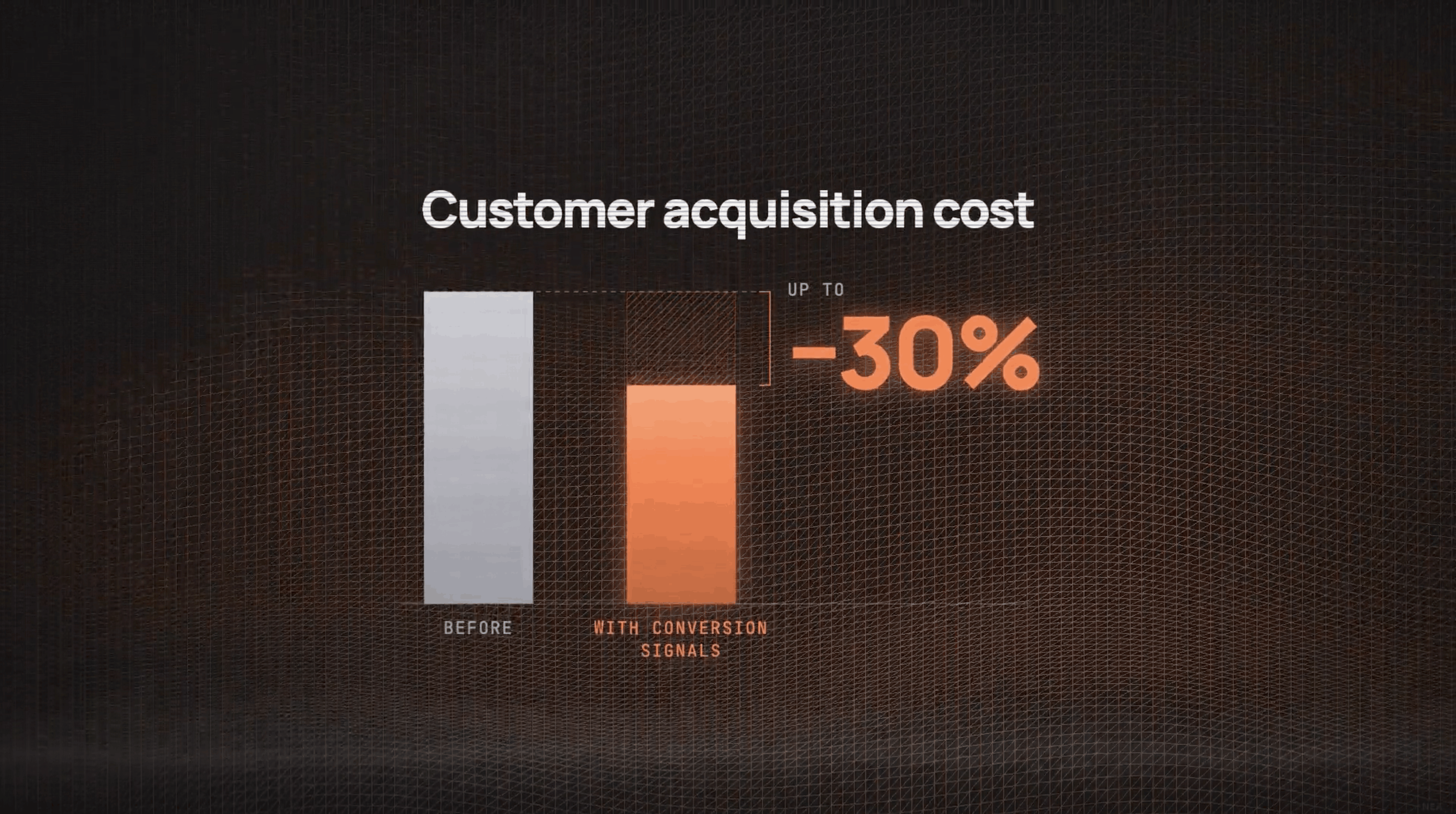
Brands running improved signals see up to 30 percent better advertising efficiency. That is our number, measured on our customers, and you have no reason to take it on trust.
So we help you test it. We set up an A/B test on your own account: one half of the account on the new signals, the other half running exactly as it does today, same budget, same creatives, same campaign structure. After a few weeks the difference is measured rather than claimed.
This is the same method we use internally before shipping a change to signal handling, and it is the only honest way to answer the question, because conversion data affects the algorithm's learning rather than any number you can read off a dashboard on day one.
Turning it on
Existing customers find the new options under Conversion Signals in the platform. Coverage improvements apply automatically. The attribution model, the value basis and the event selection are per-platform settings, so you can move one channel at a time.
If you are not on Admetrics yet, setup takes about an hour and runs alongside your current tracking. Nothing gets switched off while you compare.
Common questions
Does this replace my pixel? No. Server-to-server runs alongside browser-side tracking, and the two are deduplicated so a single order is counted once.
Does it work with my consent setup? Yes. What gets sent follows each visitor's consent state, and the pipeline works with the usual consent management platforms.
Can I send profit values to some platforms and revenue to others? Yes. Every setting is per platform, which is also how we recommend testing the change.
What happens to historical data when I switch? Nothing is rewritten. The platform starts receiving the new values going forward, which is why a split test across the account gives you a cleaner read than a before-and-after comparison.
See what it does on your account
We will set up the A/B test with you and you keep the result either way.