
Tracify is a German tracking and attribution tool for online shops, lead-gen businesses and agencies. It combines hybrid client- and server-side tracking with AI matching across devices and sessions, scores every touchpoint with one AI attribution model, sends conversions back to Meta and keeps data on servers in Germany.
Like most tools in the category, Tracify stops at the report. Every budget change after it is made by hand in each ad account, once the media buyer has checked Tracify's numbers against the ad platforms and a margin spreadsheet. This list ranks nine Tracify alternatives on tracking accuracy, data foundation, profit over revenue and what happens after attribution.
Key Takeaways
Why ecommerce brands leave Tracify
Most of the reasons show up after the attribution report, when someone has to turn it into a budget change.
No budget recommendations or automation. Tracify reports which channels, campaigns and creatives earn, and every budget change after that is made by hand in Meta Ads Manager, Google Ads and TikTok Ads Manager. Its MCP server is read-only: an AI assistant can read Tracify's data but can't change a budget. A campaign that turns unprofitable on Monday keeps spending at full budget until the media buyer gets to it.
No contribution margin per campaign. Tracify's P&L dashboard shows contribution margins by day, month or total and by new vs returning customers, with no split by channel, campaign or product and no POAS. A Meta campaign selling discounted, often-returned products can post the best ROAS in the account and still lose money once COGS, shipping and returns come off. Before each budget call, the media buyer lines up Tracify's attributed revenue, spend from each ad platform, product costs and returns in a spreadsheet, and when that sheet and Ads Manager disagree, the call either waits or gets made on ROAS.
No conversions sent to Google or TikTok. Tracify sends conversions back to Meta only, through a dedicated Meta dataset, and its TikTok integration imports costs and clicks. Google's Smart Bidding and TikTok's bidding keep learning from their own browser tags, and every purchase those tags miss is a sale the bidding never learns from.
One attribution model, no MMM or incrementality tests. Tracify's AI attribution scores every touchpoint with a single model, with no classic models to compare on the same orders, and there's no marketing mix model, holdout or geo test. When Tracify and Ads Manager credit a campaign differently, the media buyer has no second read to decide which number the budget should follow.
How we ranked Tracify alternatives
We scored every tool on four criteria. Prices and features are as of November 2026.
Tracify alternatives compared
Admetrics
★5.0Best for: ecommerce and DTC brands advertising across Meta, Google and TikTok that want budgets to move on contribution margin per campaign, from the same order data as their tracking and attribution.
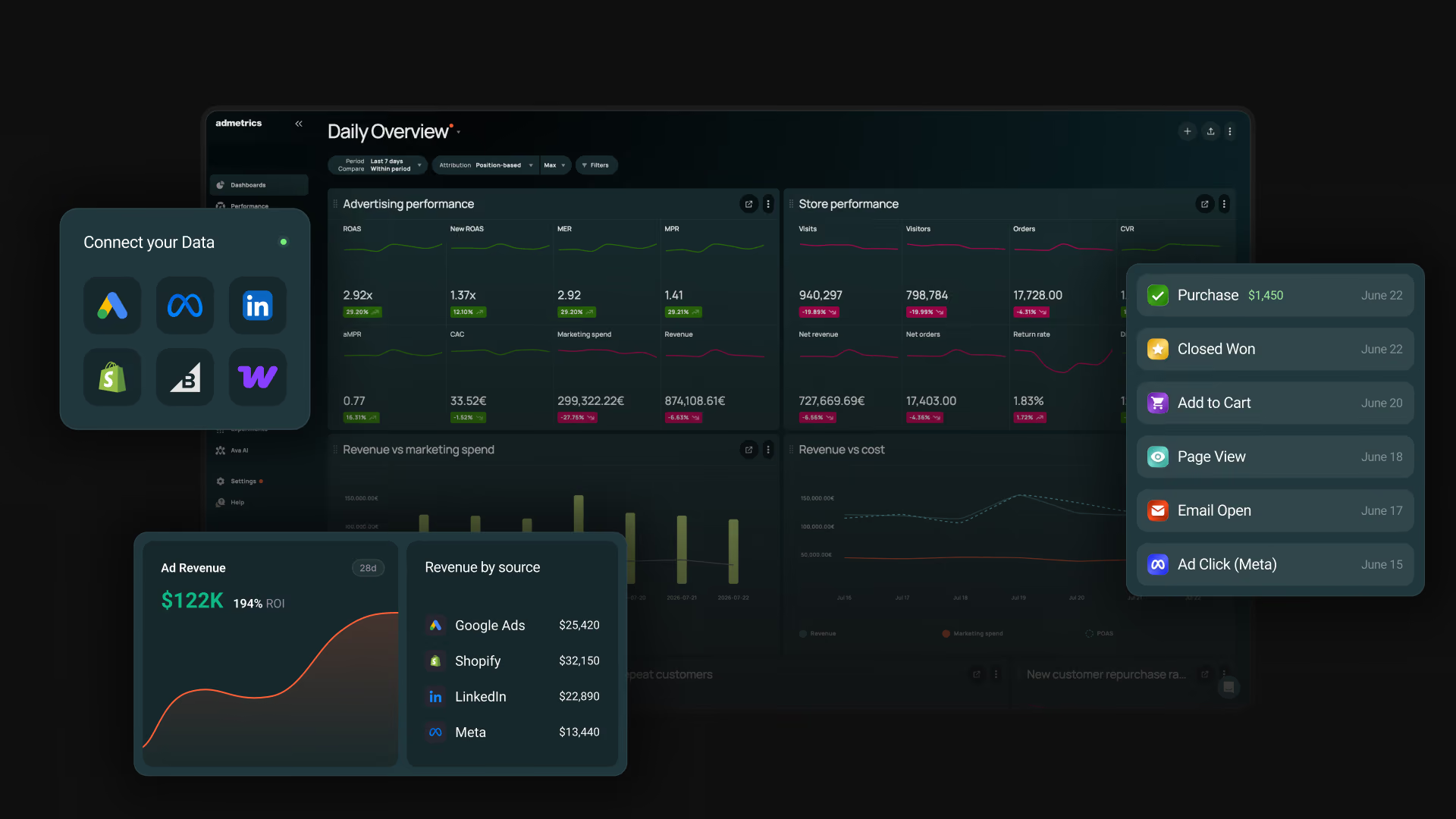
Admetrics tracks every order first-party and server-side, sends conversions server-to-server to Meta, Google, TikTok and other ad platforms, and prices each campaign down to CM3 and POAS. Budget Optimizer proposes budget moves across channels, and Ad Pilot moves Meta budgets toward a CAC, POAS or new-customer ROAS target inside the caps you set, logging every change. For a team coming from Tracify, the attribution report, the margin per campaign and the budget move sit on one dataset, with no spreadsheet in between.
Key features
Strengths
Limitations
Pricing
Growth: $399/month, including the first $20,000 of monthly ad spend, then 1.5% above that. Business: $899/month, including $70,000, then 1% above. Ad Pilot is an add-on from this plan. Custom: quoted, for brands spending more than $100,000 a month. PRISMA and Budget Optimizer are add-ons here. Annual billing saves 15%, and the 21-day free trial needs no card.Reviews
Admetrics holds 5.0 on the Shopify App Store and 4.8 on G2. Reviewers point to the onboarding help and reports that are easy to read.Bottom line
If Tracify gives you the attribution number and your team still turns it into budget changes by hand, Admetrics covers the steps after the report: contribution margin per campaign, conversions sent to Google and TikTok as well as Meta, and Meta budgets that move on a profit target inside your caps. Data stays in the EU, and Shopify, Shopware, WooCommerce, Magento and custom stores all connect.Triple Whale
★4.5Best for: Shopify brands that want attribution, an AI analyst and automated ad actions in one suite, with a free plan to start.
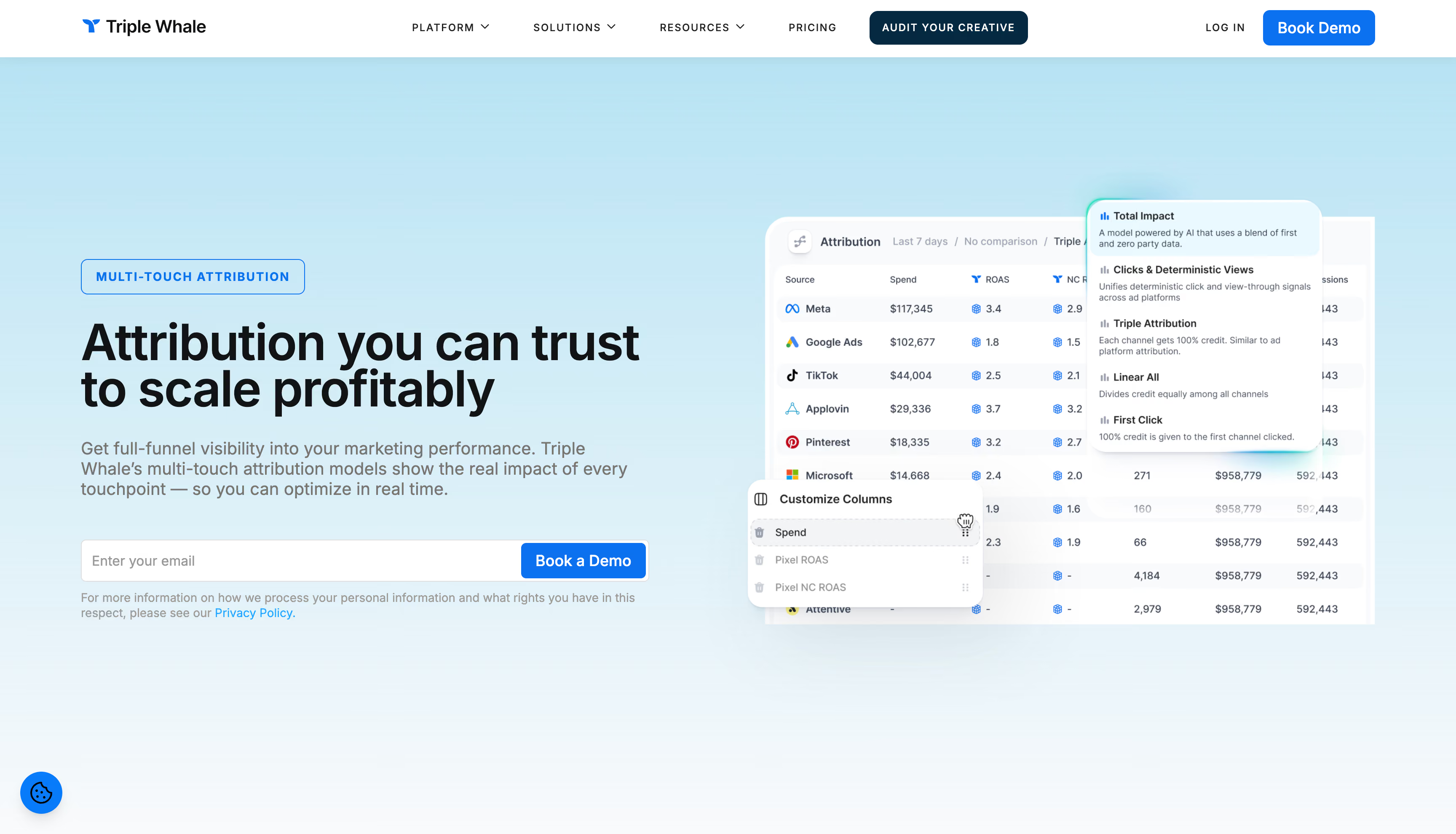
Triple Whale bundles tracking, server-side sending, attribution and AI actions. Triple Pixel tracks first-party, Sonar Optimize sends enriched events to nine platforms, seven attribution models handle credit, and Moby can pause and scale Meta ads within guardrails. Profit stops at net profit, with no contribution margin.
Key features
Strengths
Limitations
Pricing
The free plan covers Triple Pixel with first- and last-click attribution. On the Shopify App Store, Foundation costs $219 a month and Automate $749 a month, with Enterprise quoted. Prices scale with annual GMV on a 12-month commitment, and the App Store listing also offers monthly billing.Reviews
Triple Whale scores 4.5 on G2. Reviewers like having store and ad data in one place and rate Moby highly, and the complaints center on support that's hard to reach after onboarding and on billing disputes.Bottom line
Triple Whale suits a Shopify brand that wants a broad suite with AI on top. It stops at net profit, hosts data in the US, and contribution margin by campaign has to be built outside it.Hyros
★4.9Best for: info-product, coaching and call-based businesses whose sales close days or weeks after the first click, often on the phone.
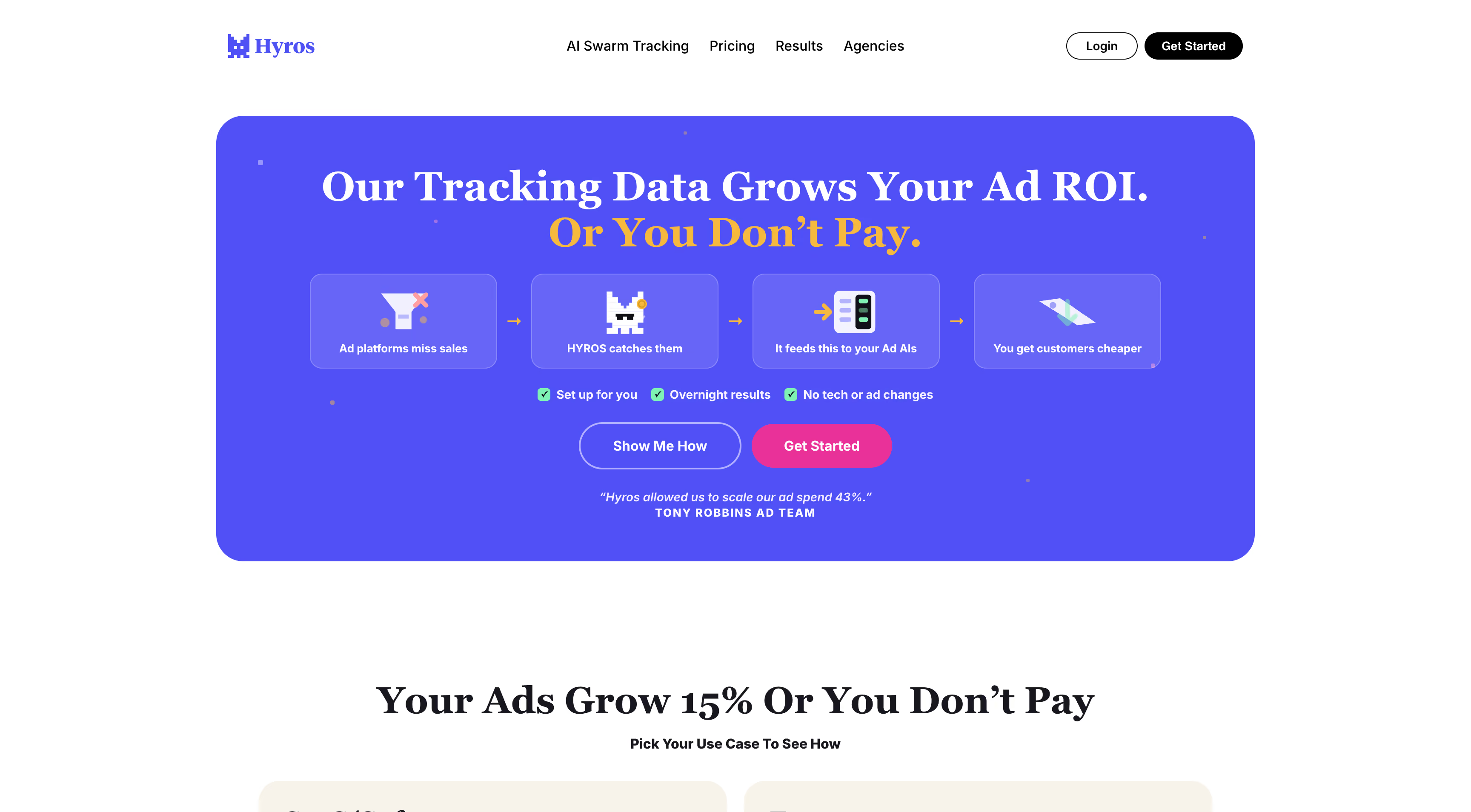
Hyros tracks each buyer first-party across visits and devices, takes in sales server-side from checkouts and CRMs, and sends verified conversions back to Meta, Google and TikTok. Attribution follows a buyer for up to a year, cost of goods reaches the reports, and an AI assistant applies ad changes once someone approves them.
Key features
Strengths
Limitations
Pricing
Hyros quotes on the sales call, sized by the revenue it tracks for you. A money-back guarantee covers the first 90 days, and there's no free plan or trial.Reviews
Hyros scores 4.9 on Trustpilot and has no G2 score. Reviewers keep naming the analysts who helped them, and the main complaint is an interface that takes a while to learn.Bottom line
Hyros suits funnels, high-ticket offers and sales that close on the phone, where a deal has to tie back to an ad weeks later. It stops at cost of goods, keeps data in the US, and has no contribution margin by campaign and no budget automation.Northbeam
★4.5Best for: mid-market and enterprise DTC brands with analysts on staff, large media budgets and room for a multi-week implementation.
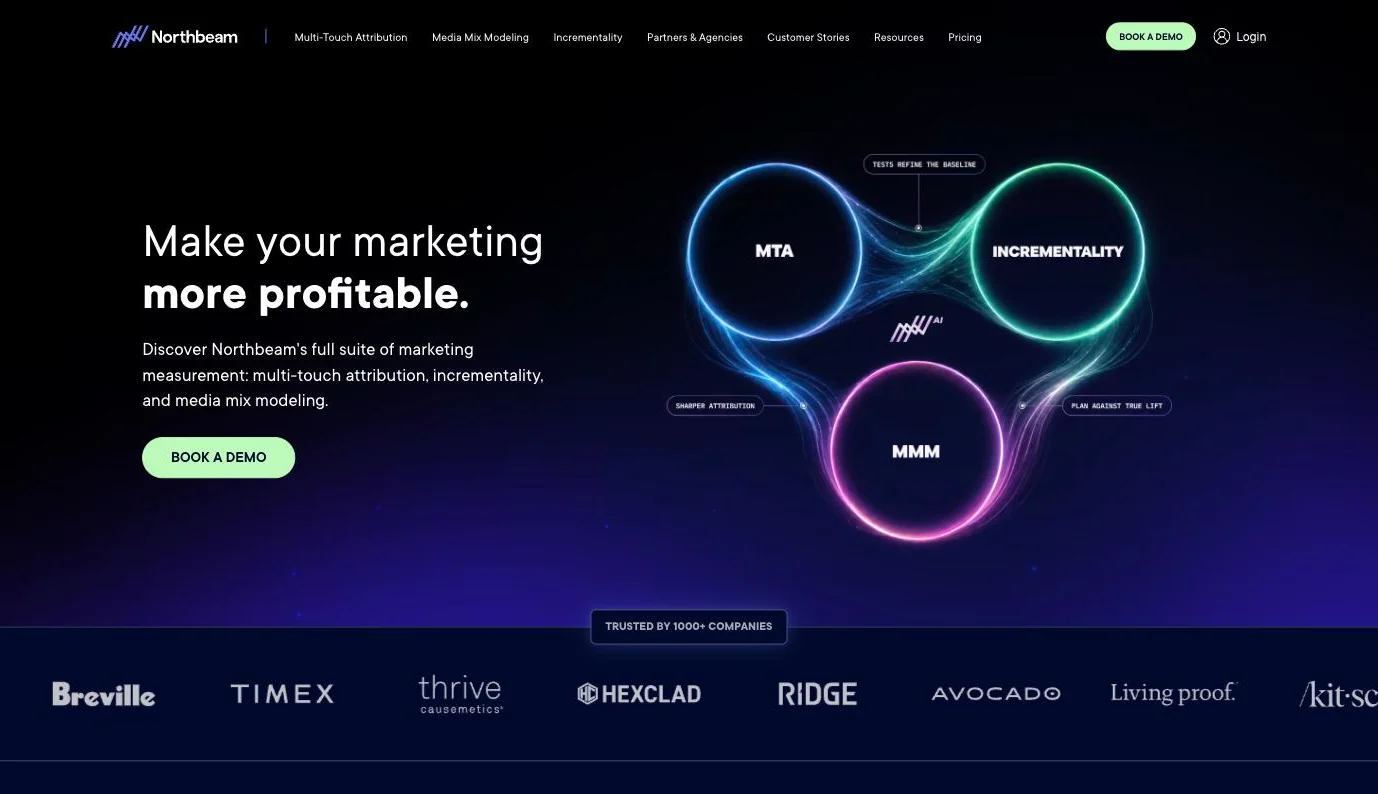
Northbeam is a measurement platform first. Its first-party pixel on your own subdomain feeds seven attribution models, with mix modeling and incrementality tests as add-ons. Apex shares attributed data with Meta, AppLovin, Snap and Pinterest, profit shows up as COGS-based targets rather than a margin report, and Northbeam's AI reads the data without touching spend. Implementation takes about 2–4 weeks on Shopify and 4–8 weeks elsewhere.
Key features
Strengths
Limitations
Pricing
Starter is $1,500 a month, month-to-month and usage-based. Professional costs $3,500 a month on annual terms, Growth and Enterprise are quoted, and every tier is priced on pageviews. There's no free plan or trial.Reviews
Northbeam scores 4.5 on G2. Reviewers praise the depth of its attribution and its knowledgeable support, and the same reviews describe a platform that feels overwhelming at first and is priced for mid-market and enterprise budgets.Bottom line
Northbeam suits a large brand whose analysts want attribution models, mix modeling and lift tests from one vendor, have time for a multi-week implementation and will act on the numbers themselves. It stops at COGS-based targets. There's no contribution margin by campaign and no budget automation.Klar
★4.9Best for: ecommerce teams that want a P&L-style view of their shops and marketplaces, down to margin per SKU, with attribution as an optional add-on.
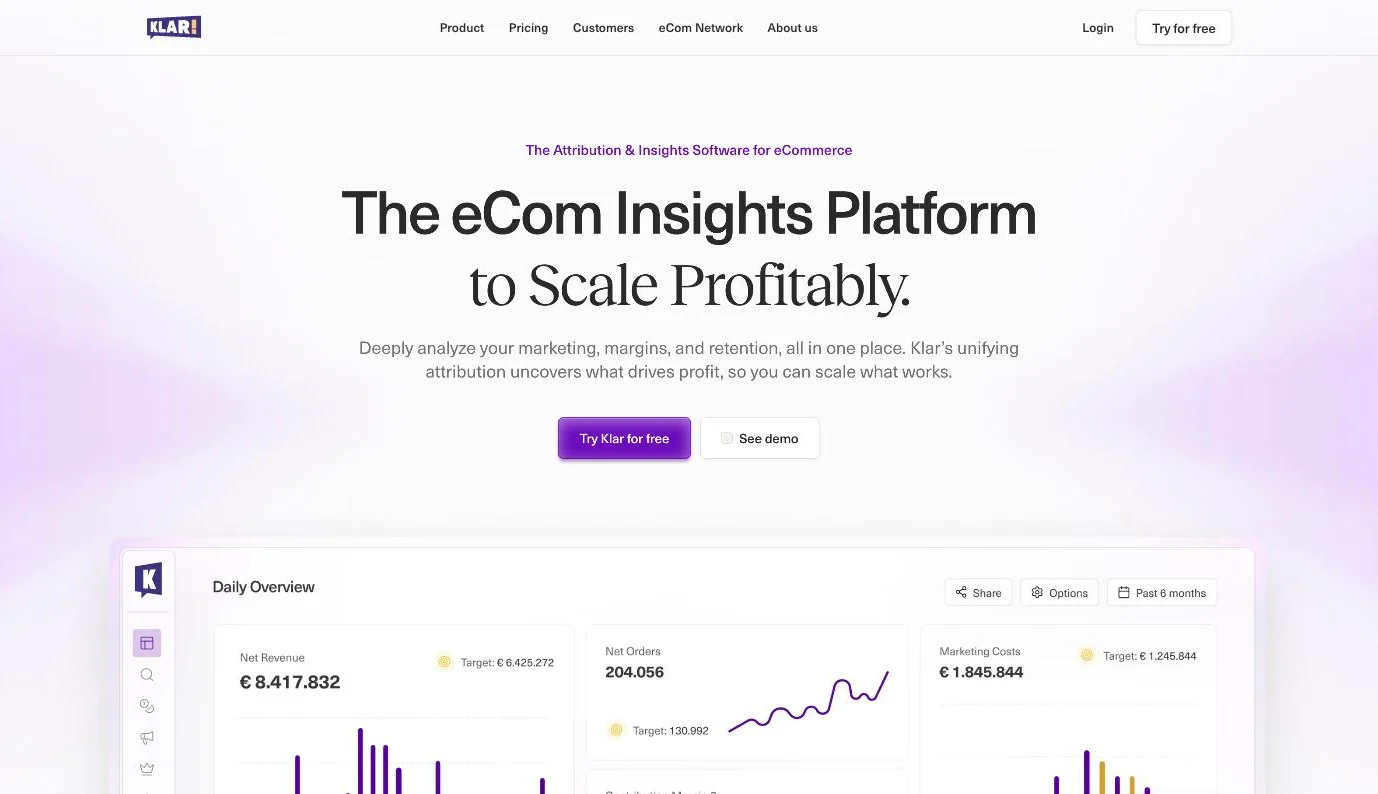
Klar is an ecommerce analytics platform from Munich. It combines multi-touch attribution, a marketing mix model and geo-based incrementality tests with P&L reporting down to CM3 per SKU, plus retention and creative reports. Tracking follows consent, with a first-party pixel on your own subdomain. Klar reports and models; it sends no conversions to the ad platforms, and budget changes still happen in each ad account.
Key features
Strengths
Limitations
Pricing
Core starts at €200/month and Core + Attribution at €400/month, both priced on the last 12 months of net revenue. There's no free plan, and the 14-day trial starts once the account is set up.Reviews
Klar scores 4.9 on G2 and 4.8 on OMR Reviews.Bottom line
Klar suits a team that wants a P&L-style dashboard across its shops and marketplaces, down to margin per SKU. It stops at the report: no conversions go back to the ad platforms, and budgets still move by hand.adtribute
★4.8Best for: brands on Shopware 5, Shopware 6 or Plentymarkets that want custom attribution models and BI dashboards on a semantic layer, with an optional data team on call.
adtribute is a German attribution and BI platform, built in Germany and hosted on EU servers. It tracks first-party, credits orders with five standard models or custom ones, reports margin tiers CM1 to CM3, and sends attributed conversions to Meta, Google, Outbrain and Taboola through its Actions add-on. Budget changes stay in the ad accounts.
Key features
Strengths
Limitations
Pricing
Attribution costs €449/month (€499 struck through) and Insights €549/month (€649 struck through). Add-ons run from €89/month for data warehouse exports and €169/month for Actions or custom event tracking up to €1,499/month for the Data Team.Reviews
adtribute holds 4.8 from 24 reviews on G2 and 5.0 on OMR Reviews.Bottom line
adtribute suits a Shopware or Plentymarkets brand that wants custom models and BI on EU servers. It stops at CM3 and the postback, with no MMM and no budget automation.Wicked Reports
★4.2Best for: subscription and replenishment brands that judge channels on new-customer CAC and lifetime value by acquiring campaign.
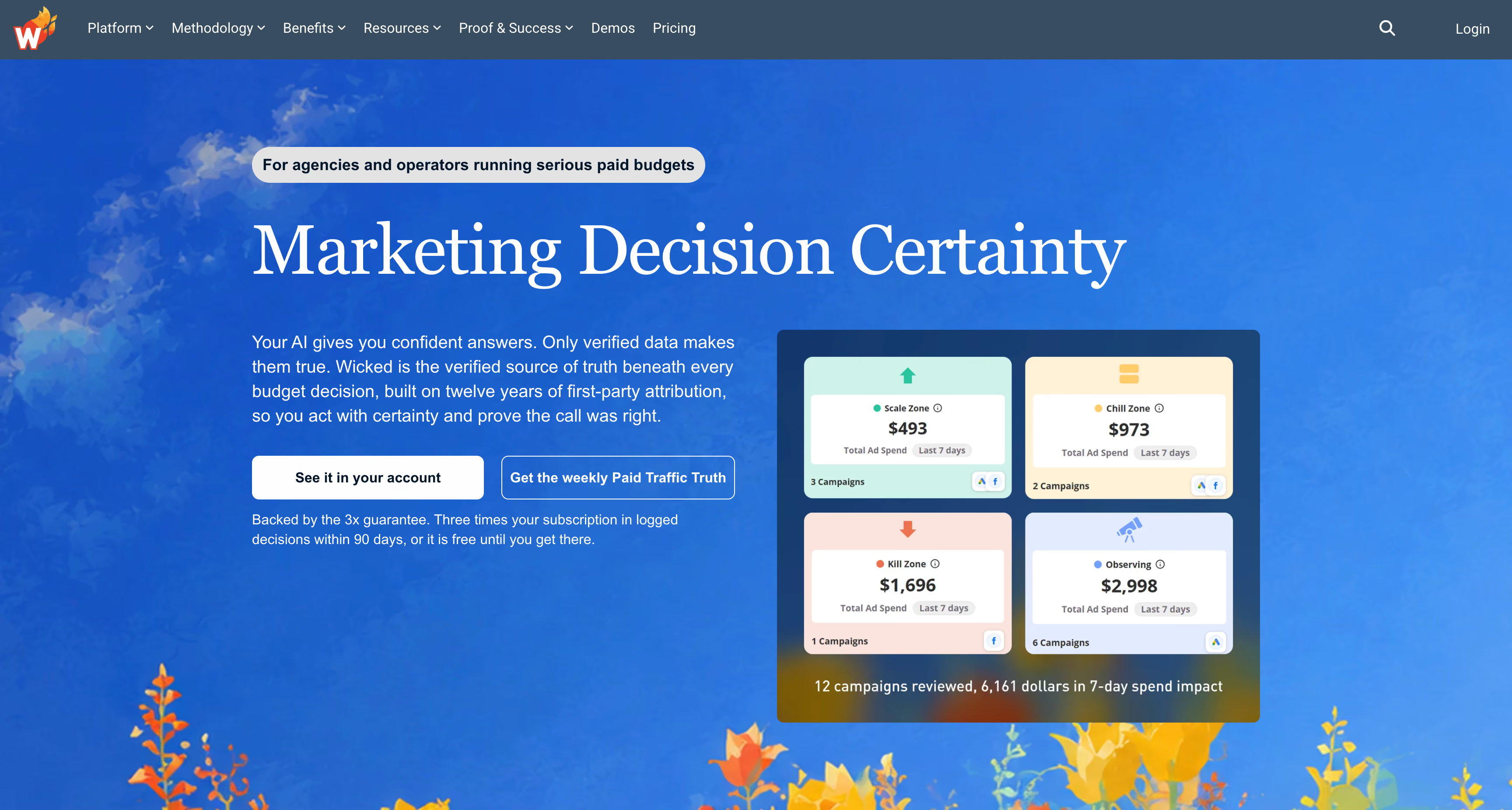
Wicked Reports is an ecommerce attribution tool built around new-customer and cohort reporting. Scripts run from your own subdomain, four click-based models credit the sale, cohort reports follow each customer's revenue by the campaign that acquired them, and 5 Forces AI labels each campaign Scale, Chill or Kill. The financial view ends at ROI and LTV.
Key features
Strengths
Limitations
Pricing
In the first revenue band, up to $2.5 million, Measure costs $499 a month, Scale $699 and Maximize $999. Enterprise starts at $4,999. 5 Forces AI and Advanced Signal add $199 a month each on Measure and Scale and are included from Maximize. There's no free plan or trial.Reviews
Wicked Reports scores 4.2 on G2. Reviewers credit useful analytics and detailed reporting across channels, and the complaint that recurs is an interface that can feel clunky.Bottom line
Wicked Reports suits a subscription brand that wants cohort and LTV reporting by acquiring campaign. It stops at ROI, with no product costs, no margin and no budget automation.AnyTrack
★3.4Best for: affiliate marketers, funnel sellers and small stores that want server-side conversions and CAPI pushback at a low published price.
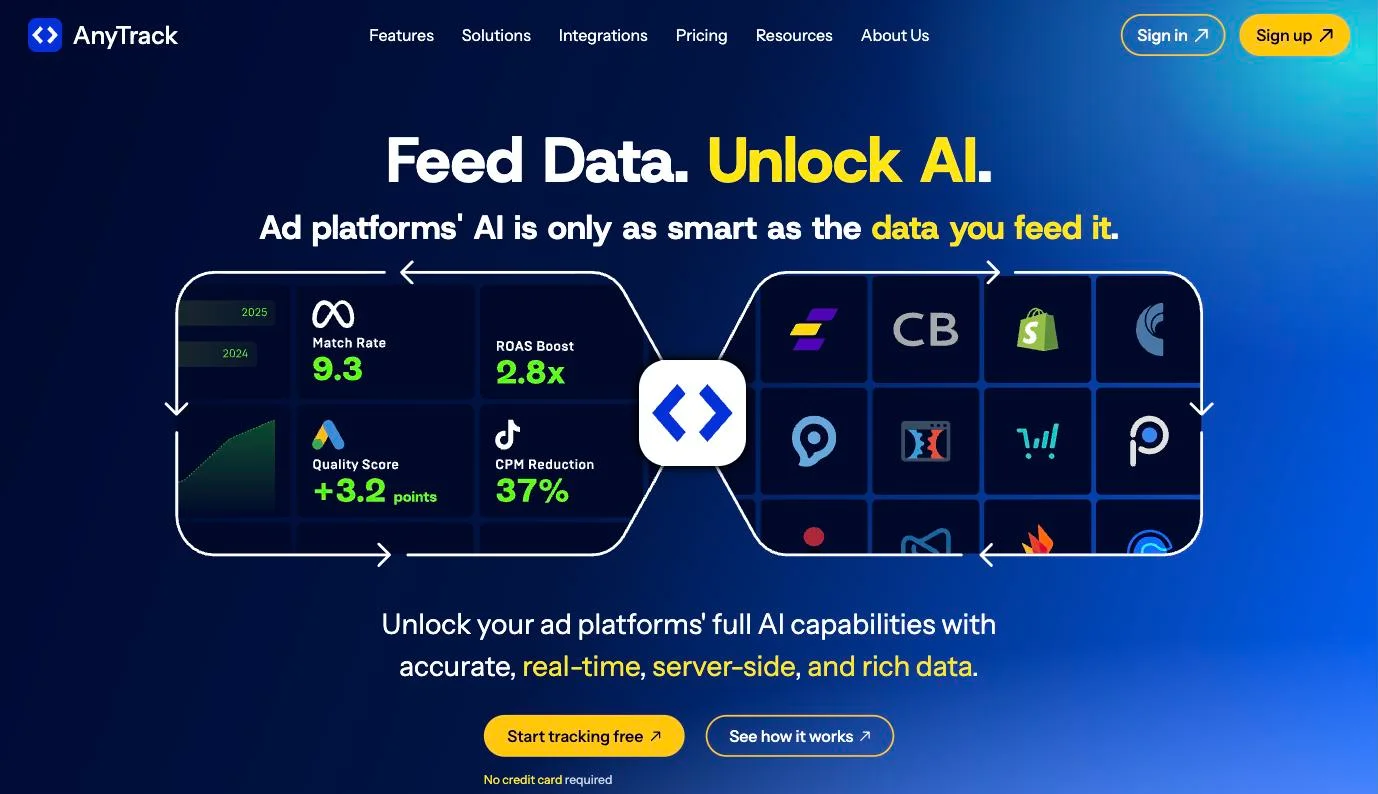
AnyTrack tracks clicks and conversions and sends them back to the ad platforms. A browser tag collects click IDs, page views and form fills, while sales and leads arrive server-side through postbacks, webhooks and APIs on every plan. Paid plans push conversions to seven ad platforms. Attribution is first or last ad click, and the reports never reach profit or budget.
Key features
Strengths
Limitations
Pricing
The free plan tracks 5,000 sessions on one property, with no CAPI. Starter is $100 a month for 100,000 sessions, Personal $150 and Advance $300, with Custom through sales. Paid plans start with a 14-day trial that needs payment details.Reviews
AnyTrack scores 3.4 on Trustpilot. Reviewers like the easy setup and the price for what it does, and the complaints are about billing disputes and slow support.Bottom line
AnyTrack suits affiliate and funnel sellers who mostly need conversions back in the ad platforms. It stops there: no multi-touch attribution, no margin per campaign and no budget moves.Cometly
★4.8Best for: B2B SaaS and lead-generation teams that attribute pipeline and revenue from a CRM and Stripe.
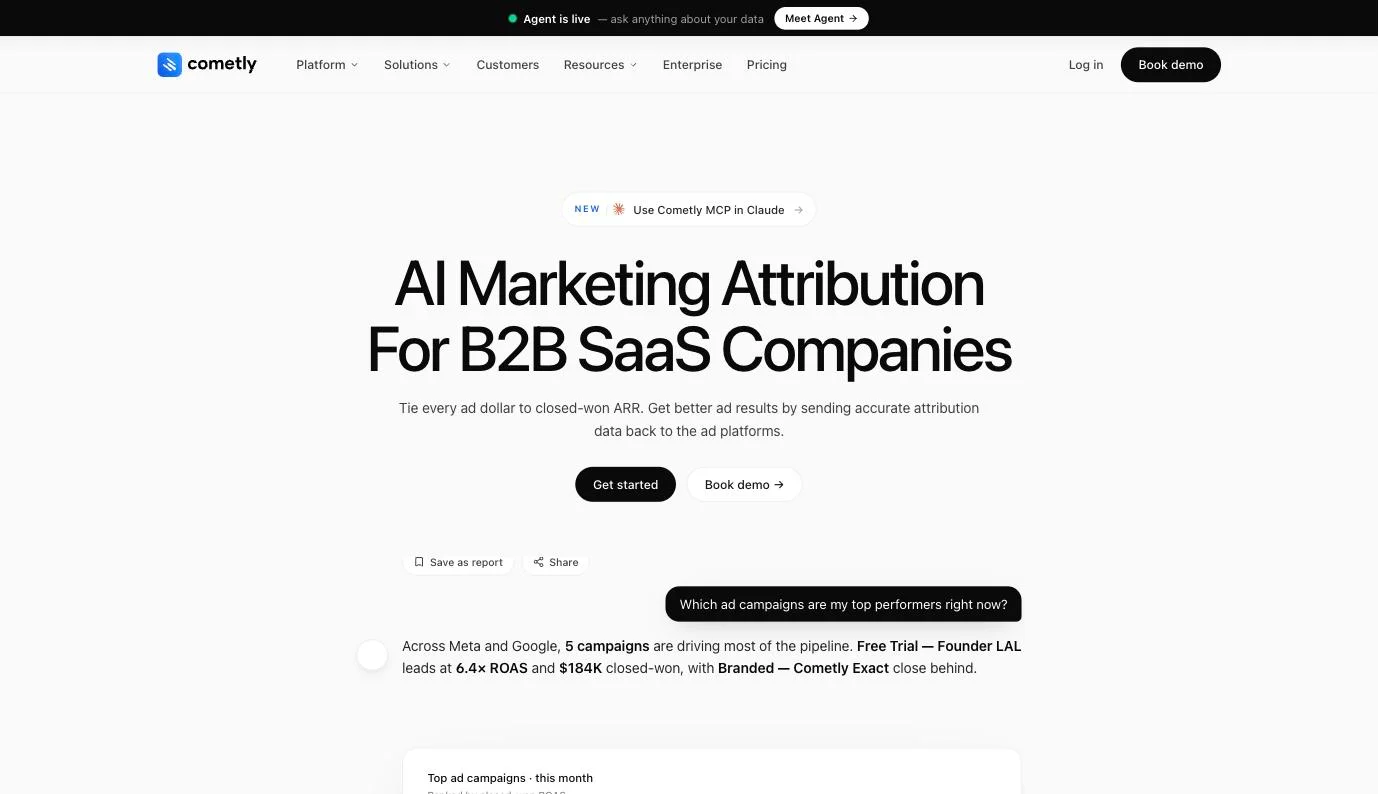
Cometly is a marketing attribution platform built for B2B SaaS and lead businesses. It tracks with a first-party server-side pixel, sends conversions to seven ad platforms and offers eight attribution models, with budget and pause controls a person triggers inside Cometly. There's no product cost or margin in the model.
Key features
Strengths
Limitations
Pricing
The pricing page shows two plans, Core and Enterprise, and no dollar figures. Both are sized on monthly pageviews, and annual billing saves 20%. There's no free plan and no trial.Reviews
Cometly scores 4.8 on G2. Reviewers say its numbers beat Meta's own reporting and praise hands-on support, while others describe a long setup and tracking that broke after changes.Bottom line
Cometly suits SaaS and lead businesses that close through a CRM. For a store selling products it stops short: there's no cost or margin in the model and no budget automation.Best Tracify alternative: final verdict
Admetrics is the best Tracify alternative for ecommerce brands that want budget moves to follow contribution margin per campaign, on the same order data as tracking and attribution. Coming from Tracify, you keep first-party, server-side tracking and data hosted in the EU, and add the steps Tracify leaves to the media buyer: conversions sent server-to-server to Google and TikTok as well as Meta, contribution margin and POAS by campaign down to the SKU, and Ad Pilot moving Meta budgets inside the caps you set. Plans start at $399/month, and the 21-day free trial needs no card.
Book a demo