Artificial intelligence has fundamentally changed how businesses connect with customers. The AI impact on marketing extends far beyond simple automation—it's reshaping entire customer journeys and creating unprecedented opportunities for growth.
Marketing teams worldwide are witnessing a transformation that rivals the internet's arrival. Companies using AI-powered marketing strategies report 37% higher conversion rates and 52% better customer acquisition costs. This shift isn't just about efficiency; it's about creating deeper, more meaningful connections with audiences.
How AI is Transforming Marketing Strategies
Personalization at Scale
AI enables marketers to deliver personalized experiences to millions of customers simultaneously. Machine learning algorithms analyze customer behavior, preferences, and purchase history to create tailored content for each individual.
Netflix exemplifies this perfectly. Their recommendation engine drives 80% of viewer engagement by analyzing viewing patterns and suggesting relevant content. This level of personalization was impossible before AI technology.
Predictive Analytics and Customer Insights
Modern AI tools predict customer behavior with remarkable accuracy. These systems analyze historical data to forecast:
- Which customers are likely to make purchases
- When customers might churn
- What products interest specific segments
- Optimal timing for marketing campaigns
Companies like Amazon use predictive analytics to anticipate customer needs, often showing products before customers realize they want them.
Automated Content Creation
AI-powered tools now generate marketing content at unprecedented speed. From social media posts to email campaigns, artificial intelligence creates engaging content that resonates with target audiences.
However, successful brands combine AI efficiency with human creativity. The AI impact on marketing works best when technology enhances human insight rather than replacing it entirely.
Key Benefits of AI in Marketing
Enhanced Customer Experience
AI chatbots provide 24/7 customer support, answering questions instantly and routing complex issues to human agents. This improves customer satisfaction while reducing operational costs.
Improved ROI and Efficiency
Marketing automation powered by AI reduces manual tasks and optimizes campaign performance in real-time. Businesses typically see 20-30% improvement in marketing efficiency after implementing AI solutions.
Better Data Analysis
AI processes vast amounts of customer data to identify patterns humans might miss. This leads to more informed decision-making and strategic planning.
Dynamic Pricing Strategies
AI algorithms adjust pricing based on demand, competition, and customer behavior. This optimization increases revenue while maintaining competitive positioning.
Conclusion
The AI impact on marketing represents one of the most significant shifts in business strategy since the digital revolution. Companies embracing AI-powered marketing strategies gain competitive advantages through enhanced personalization, improved efficiency, and better customer experiences.
Success requires balancing technological capabilities with human creativity and ethical considerations. As AI technology continues evolving, marketers who adapt quickly will lead their industries.
What's your experience with AI in marketing? Have you implemented any AI-powered strategies in your business? Share your thoughts in the comments below and help others learn from your journey.
Ready to transform your marketing strategy with AI? Start by auditing your current processes and identifying areas where AI can drive the biggest impact.
Frequently Asked Questions
What is AI impact on marketing?
AI impact on marketing refers to how artificial intelligence technologies transform marketing strategies, customer engagement, and business growth. AI enables personalization, predictive analytics, automated content creation, and enhanced customer experiences that drive better results.
How does AI improve marketing ROI?
AI improves marketing ROI by automating repetitive tasks, optimizing campaigns in real-time, and targeting the right customers with personalized messages. Companies typically see 20-30% efficiency improvements and higher conversion rates when implementing AI marketing strategies.
What are the main AI tools used in marketing?
Key AI marketing tools include chatbots for customer service, predictive analytics platforms, automated email marketing systems, content generation tools, and programmatic advertising platforms. These tools help marketers deliver personalized experiences and optimize campaign performance.
Is AI replacing human marketers?
AI is not replacing human marketers but rather enhancing their capabilities. While AI handles data analysis and automation, humans remain essential for strategy, creativity, and relationship building. The most successful marketing teams combine AI efficiency with human insight and creativity.
What challenges do businesses face when implementing AI in marketing?
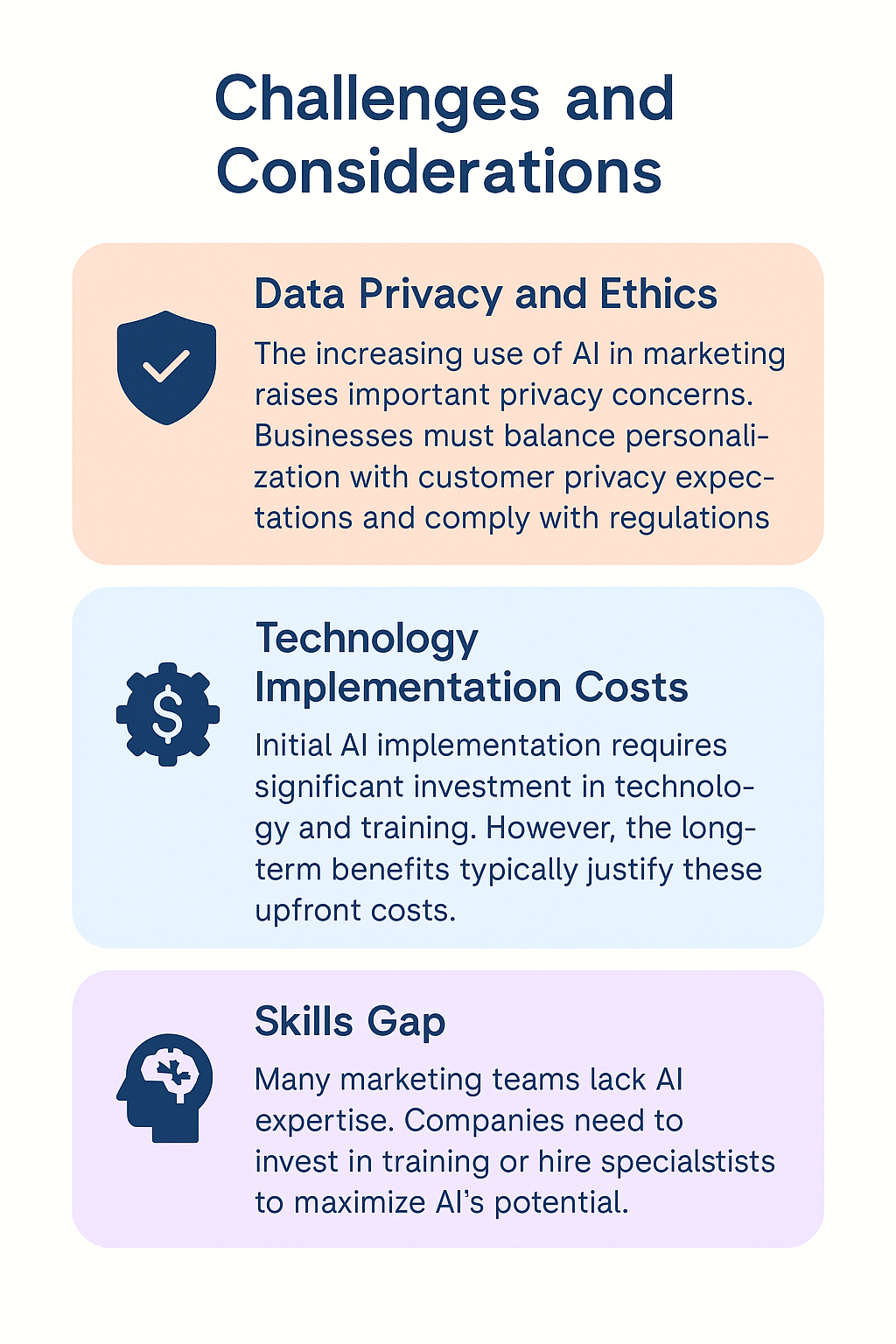
Main challenges include data privacy concerns, high implementation costs, skills gaps in marketing teams, and the need for quality data. However, businesses that address these challenges typically see significant improvements in marketing effectiveness and customer satisfaction.