
Key Takeaways
Your top seller isn't always your best seller
Your top seller this month moved 3,000 units. Marketing calls it a win. Finance calls it the reason November's margin missed budget, because the SKU everyone's chasing carries a 22% return rate and ships in a box that costs more than the discount code that sold it.
That's the gap most ecommerce analytics tools never close. They'll tell you what sold, who bought it, and which channel gets the credit for it. Fewer will tell you what any of that actually cost. And a tool that stops at revenue keeps a business scaling the wrong products with real conviction.
Ten ecommerce analytics tools sit under review here, side by side on tracking accuracy, data coverage, profit visibility, and whether they turn any of it into an actual decision.
What are ecommerce analytics tools?
An ecommerce analytics platform is software that pulls store, ad and customer data into one place and reports on what the business actually did — orders, traffic, channel performance, and on some platforms, what was left after costs.
Search analytics software for ecommerce or analytics tools for ecommerce, and two different kinds of product come back under the same label; confusing them is how brands end up paying for the wrong one. Some platforms watch a shopper move through a site, product views, cart adds, checkout steps, and report on that behavior. Others watch the money: which channel drove the sale, and what it actually earned once costs come out.
GA4 and Mixpanel sit in the first camp; ask either one which ad caused a purchase and the answer is thin. Northbeam, Triple Whale and Admetrics sit in the second, attribution and profit are the job, and on-site behavior is someone else's dashboard. Most vendors in the ecommerce analytics space build for one camp, not both, and both camps sell under the same ecommerce analytics software label — so checking which lane a tool actually plays in matters more than reading its feature list.
Why tracking accuracy decides everything downstream
Every number downstream depends on what actually got recorded at the moment of sale. Browser-based tracking runs into trouble at every step: Safari limits cookies to a single day, most iOS users decline tracking when asked, ad-blocking extensions strip the script before it ever loads, and consent banners hold back whatever's left. Third-party cookies are disappearing on top of all that, and each one of these is a sale your pixel would have caught a year ago and now simply doesn't.
Server-side capture skips the browser entirely. The order confirms on your own backend, and that confirmation is what travels to the ad platform, not a client-side tag hoping the tab stays open long enough to fire. What comes out the other end is a fuller, first-party record instead of whatever slice of shoppers let the script run, and it's the difference analytics ecommerce tracking has to get right before any attribution model on top of it means anything.
Ecommerce performance analytics: revenue metrics vs. what you actually keep
Ecommerce performance analytics that stops at ROAS misses the point: two channels can post identical ROAS and fund completely different businesses. Paid social pushes a SKU that comes back constantly and ships in oversized packaging; email pushes a SKU that almost never gets returned. Same revenue divided by the same spend, very different amount of cash actually left over at the end, and ROAS alone can't tell the two apart.
POAS is the correction, working shipping, payment fees, product cost and returns back out of the equation before anything gets ranked. Carry that math down to SKU level and the leaderboard moves; the channel with the biggest ROAS number on the dashboard isn't always the one actually funding the business.
Ecommerce customer analytics: what a buyer is worth, and what happens next
Ecommerce customer analytics answers a different question than attribution does: not which channel brought someone in, but what they're worth once they're a customer, and whether they'll buy again. Cohort tools split buyers by acquisition date, first product or channel, then track how each group's spending holds up over the following months, the number that actually predicts payback rather than just first-order margin.
Predictive analytics in ecommerce sits on top of that layer. Ecommerce predictive analytics forecasts 3-, 6-, and 12-month LTV, churn risk, and repurchase likelihood from patterns in past cohorts, so a brand can act on a customer's likely value before a second order proves it, rather than waiting for the data to arrive on its own.
How we tested and scored each tool
We ranked each of these ecommerce analytics tools against the four criteria that actually decide the outcome — not feature counts or how loud the marketing is. Four criteria, weighted in order:
Rankings come from using each product directly, reading its documentation, and cross-checking that against what verified users report on G2 and the Shopify App Store. When a vendor's claims and its shipped product told two different stories, the shipped product won.
Quick comparison: best ecommerce analytics tools 2026
Admetrics
★4.97Best for: DTC and ecommerce operators who'd rather run tracking, attribution, profit and spend decisions through a single system than reconcile a pixel, a BI dashboard and a spreadsheet every week.
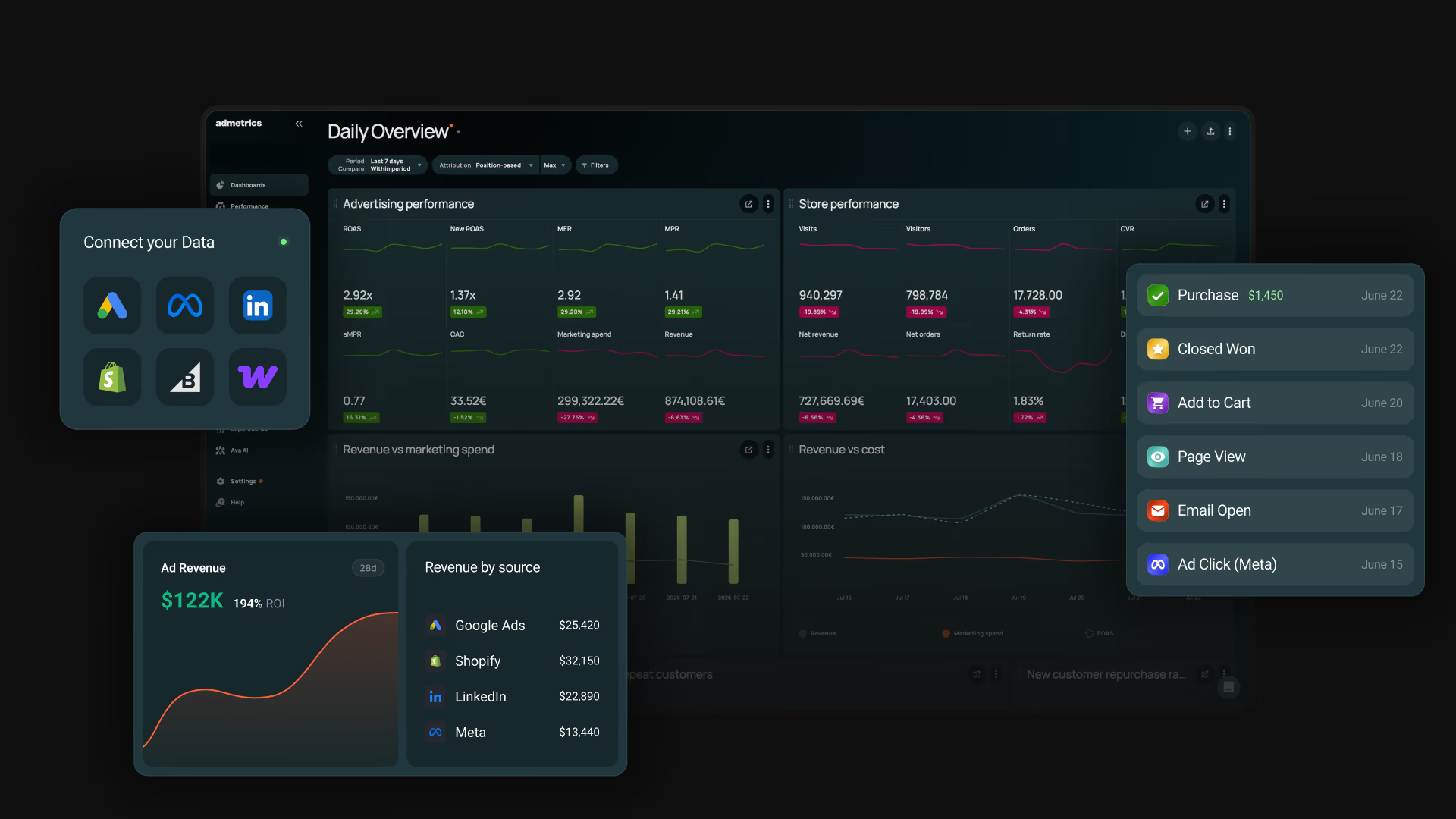
Two hundred conversions on Meta, 140 orders in Shopify, a Monday meeting arguing about whose number is real. Admetrics handles the entire sequence itself: server-side capture, credit split across nine models, SKU-level profit, a mix model catching what attribution can't, and the resulting change pushed straight into ad accounts. Most ecommerce analytics tools in this list own one link of that chain and hand you the rest.
Key features
Strengths
Limitations
Pricing
Growth opens at $399/month and covers up to $20,000 in monthly ad spend, then adds 1.5% on anything above that line. Business runs $899/month up to $70,000, with a 1% rate past it. Beyond $100K a month, the quote becomes custom. A 14-21 day trial comes standard, and no card is required to start it.Reviews
G2 scores it 4.97 out of 5, and two themes recur: the numbers hold up, and support keeps showing up after launch. Ehrenkind logged a 60% lift in ROAS; Nyfter came away tracking three times the data volume it could trust.Bottom line
Most tools here handle one link in the chain well and stay quiet about the rest. Admetrics captures the signal at the source, carries it through to an actual profit figure, and moves the budget on its own rather than handing that last step to whoever's watching the dashboard.Northbeam
★4.5Best for: brands running six-figure monthly media budgets that need one first-party number to make daily allocation calls against, instead of trusting whatever each ad platform reports about itself.
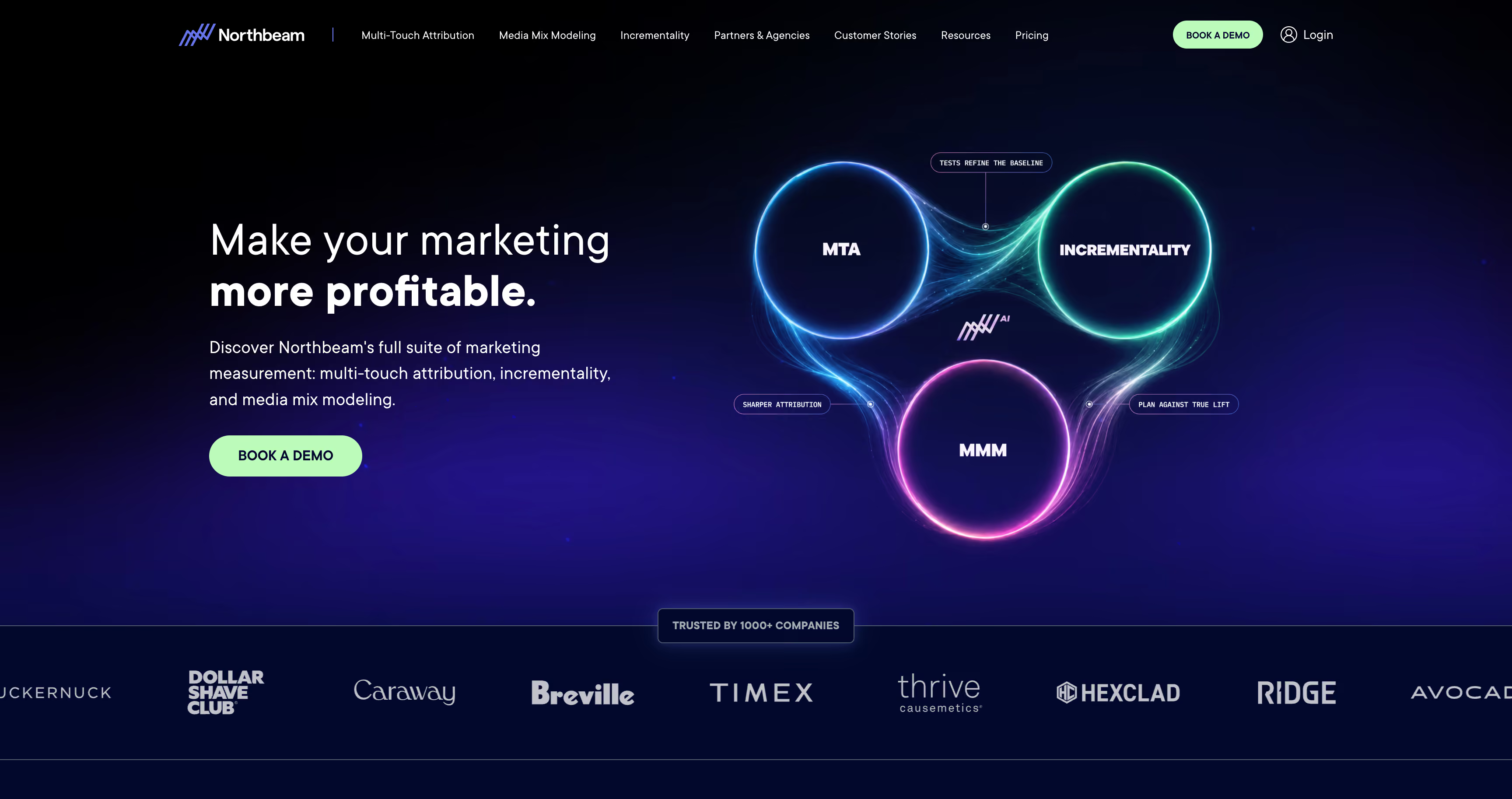
Northbeam is built specifically for larger ecommerce operations, mapping the buyer's path across Meta, Google, TikTok and CTV using first-party data instead of platform-reported numbers. Its view-through model, Clicks + Deterministic Views, credits verified impressions alongside clicks. Brands typically arrive once last-click stops holding up and a five-point misallocation would cost more than the subscription.
Key features
Strengths
Limitations
Northbeam pricing
Starter runs roughly $1,000 to $1,500/month for brands under about $250K in monthly spend, priced on data volume. Professional moves to around $2,500/month above that mark. Enterprise, past $500K/month, is quoted individually.Northbeam reviews
Northbeam sits at 4.5 out of 5 on G2 across 16 reviews. Confidence in the number over platform self-reporting comes up repeatedly; so does a steep ramp and a price that only pencils out once spend justifies it.Bottom line
The sharpest pure attribution read on this list for high-spend brands, but the picture stops at revenue, and someone still has to turn the number into a budget change by hand.Triple Whale
★4.5Best for: Shopify sellers who want attribution, creative analytics and an AI operator bundled into one subscription rather than assembled from separate vendors.
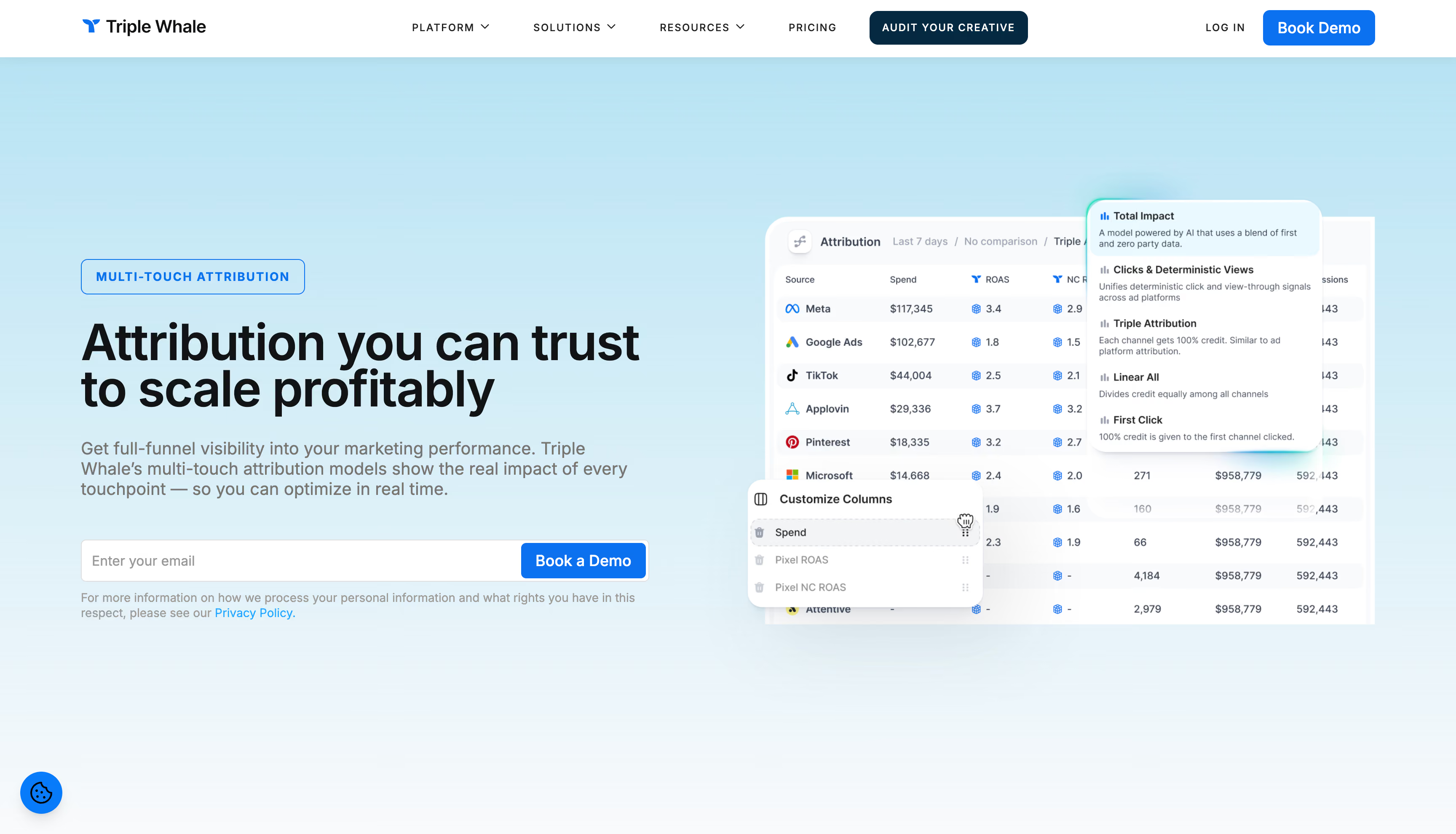
What launched as a live ROAS counter has expanded into what Triple Whale now markets as an AI operating system for e-commerce, used by 30,000+ brands. The Triple Pixel handles identity resolution and attribution, Sonar pushes enriched conversions back to Meta and Google, and Moby, now on its second generation, has moved from answering questions to executing campaign changes directly.
Key features
Strengths
Limitations
Triple Whale pricing
Free covers basic tracking and blended ROAS. Foundation starts at $219/month for attribution and daily Moby use. Automate runs $749/month and adds automations plus AI creative generation. Enterprise, with Compass included, is custom-quoted.Triple Whale reviews
Among e-commerce analytics tools, G2 puts Triple Whale at 4.5 out of 5 across 478 reviews, with praise clustering on unifying e-commerce and ad data in one dashboard. The Shopify App Store skews bimodal, mostly five-star with a smaller cluster on attribution accuracy and contract terms.Bottom line
The strongest Shopify-native pick among e-commerce analytics tools for AI doing real work fast, but profit tops out at gross margin, and the deeper measurement stack costs extra.Lifetimely
★4.6Best for: Shopify DTC brands that care more about what a customer is worth over time than about splitting attribution credit across touchpoints.
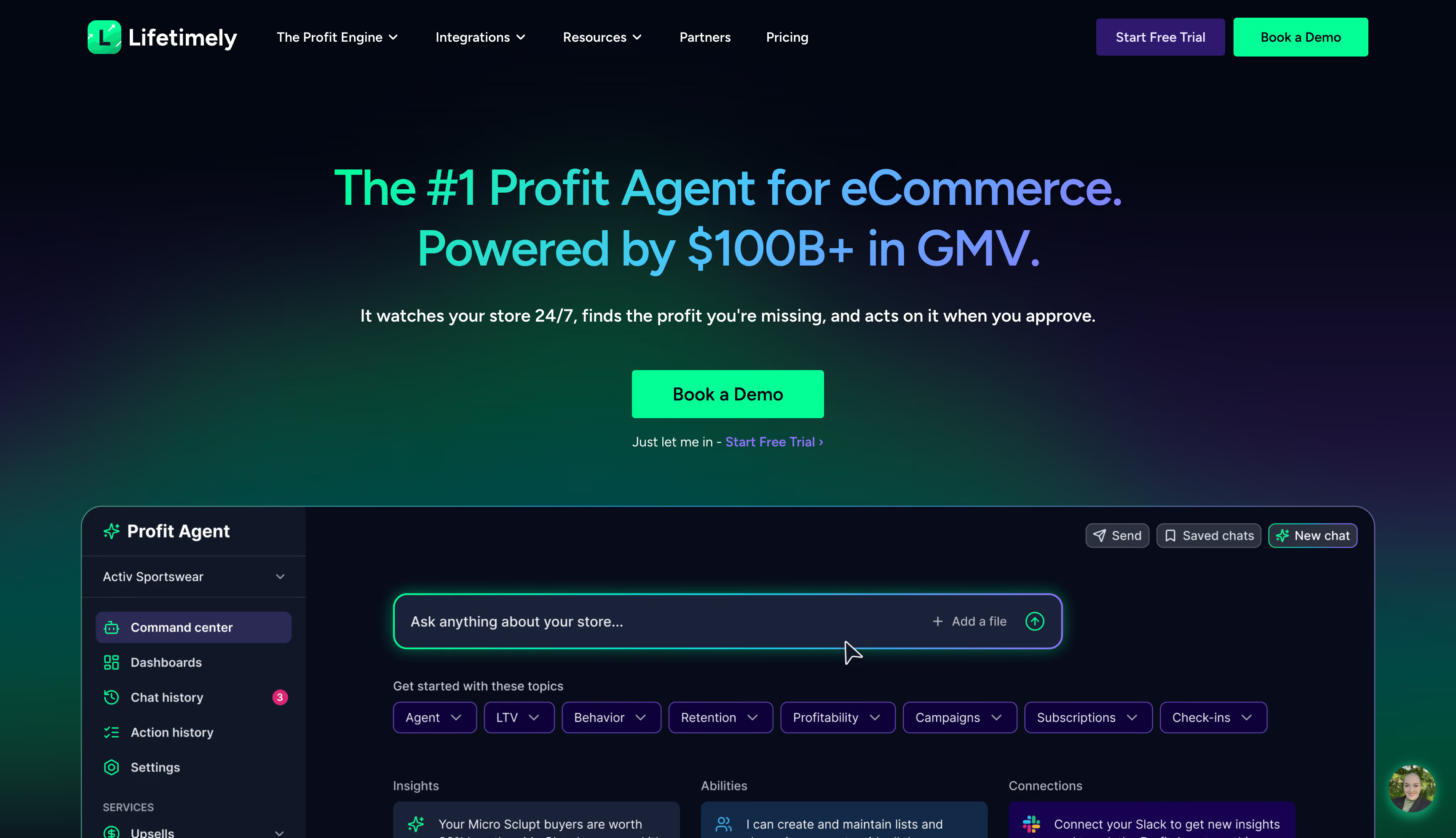
Lifetimely, now shipped as Lifetimely Profit Agent and LTV by AMP, started as a focused LTV app and has grown into a profit and cohort platform tracking $100B+ in GMV across 45,000+ stores. It answers a narrower question, not which channel gets credit, but what a customer is actually worth, and answers it in more depth than almost anything else here.
Key features
Strengths
Limitations
Lifetimely pricing
Free up to 50 orders/month. Paid tiers run $149/month to 3,000 orders, $299/month to 7,000, and $499/month to 15,000, plus a $75/month Amazon add-on. Every plan includes every feature; only order volume changes.Lifetimely reviews
Lifetimely holds 4.8 out of 5 across 491+ Shopify App Store reviews and 4.6 on G2, among the highest-rated ecommerce analytics tools for LTV in the category. Praise centers on accuracy and support; criticism points to the refresh lag and a price jump hard to justify under roughly $30K in monthly revenue.Bottom line
The deepest LTV and cohort tool among these ecommerce analytics platforms, a genuine complement to an attribution tool, but not a replacement for one.Daasity
★4.7Best for: omnichannel consumer brands doing $5M to $150M+ across DTC, Amazon, wholesale and physical retail that have outgrown lightweight, Shopify-only dashboards.
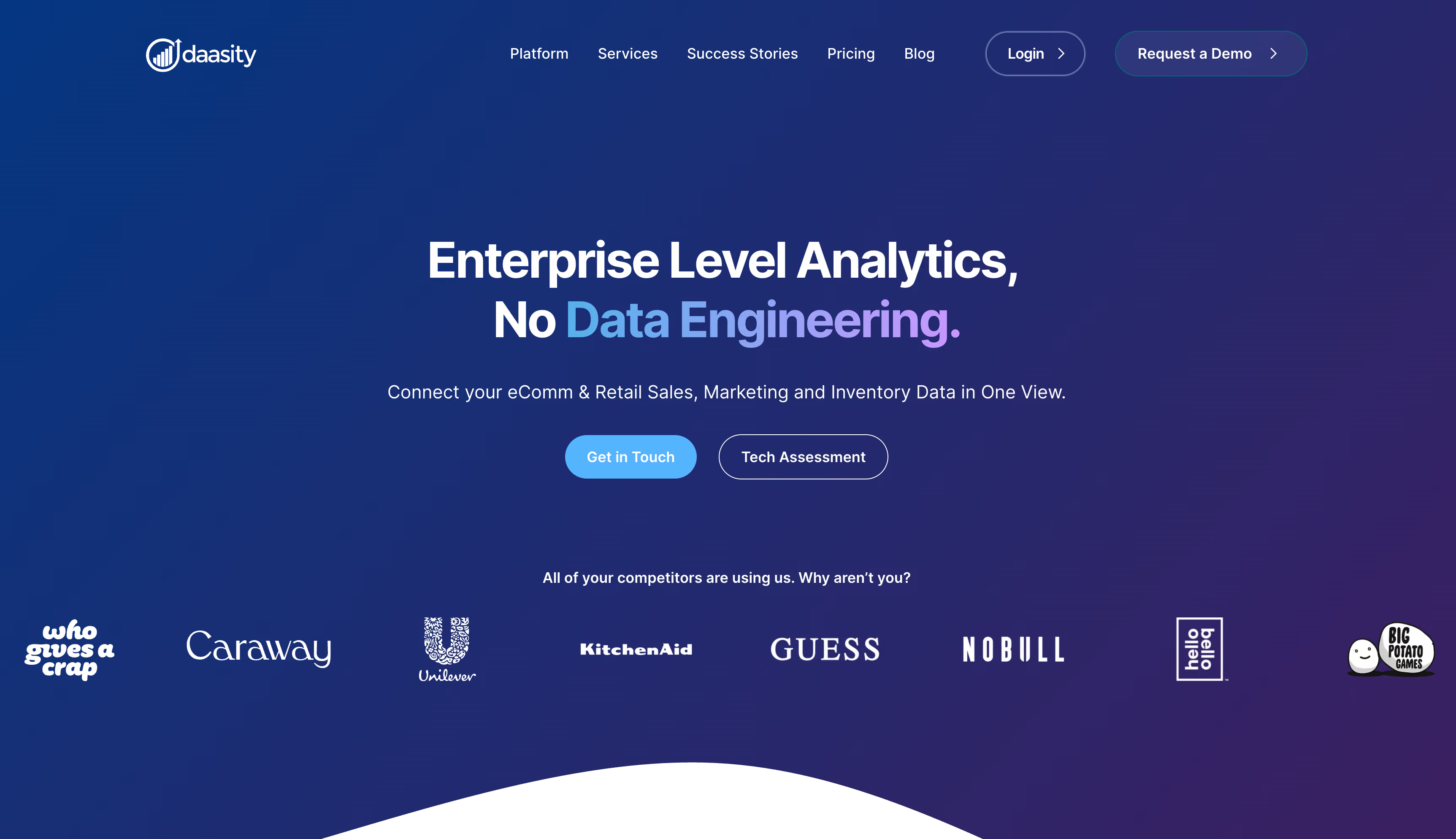
Daasity is a modular data platform, not an attribution tool, built for brands where Shopify is only one channel among several. It pulls DTC, marketplace, wholesale and syndicated retail data into a warehouse the brand owns, cleans it into standardized models, and pushes segments back into marketing tools nightly. Where most tools here start from ad spend, Daasity starts from reconciling revenue across channels that all define it differently.
Key features
Strengths
Limitations
Daasity pricing
Not published. Cost scales with data volume, connector count and services required, with implementations typically quoted in the low thousands per month.Daasity reviews
Among ecommerce analytics platforms, Daasity holds 4.7 out of 5 on G2 across 17 reviews. Praise centers on integration breadth and a support team reviewers treat as an extension of their own. The recurring critique is execution speed and a request for more built-in forecasting and anomaly detection.Bottom line
Among ecommerce analytics platforms, this is the strongest choice for reconciling DTC, wholesale and retail into one number, but it's infrastructure to pair with an attribution tool, not one itself.Peel Insights
★4.5Best for: Shopify and Amazon brands that want to know which customers are worth chasing again, and to act on that list without a CSV export.
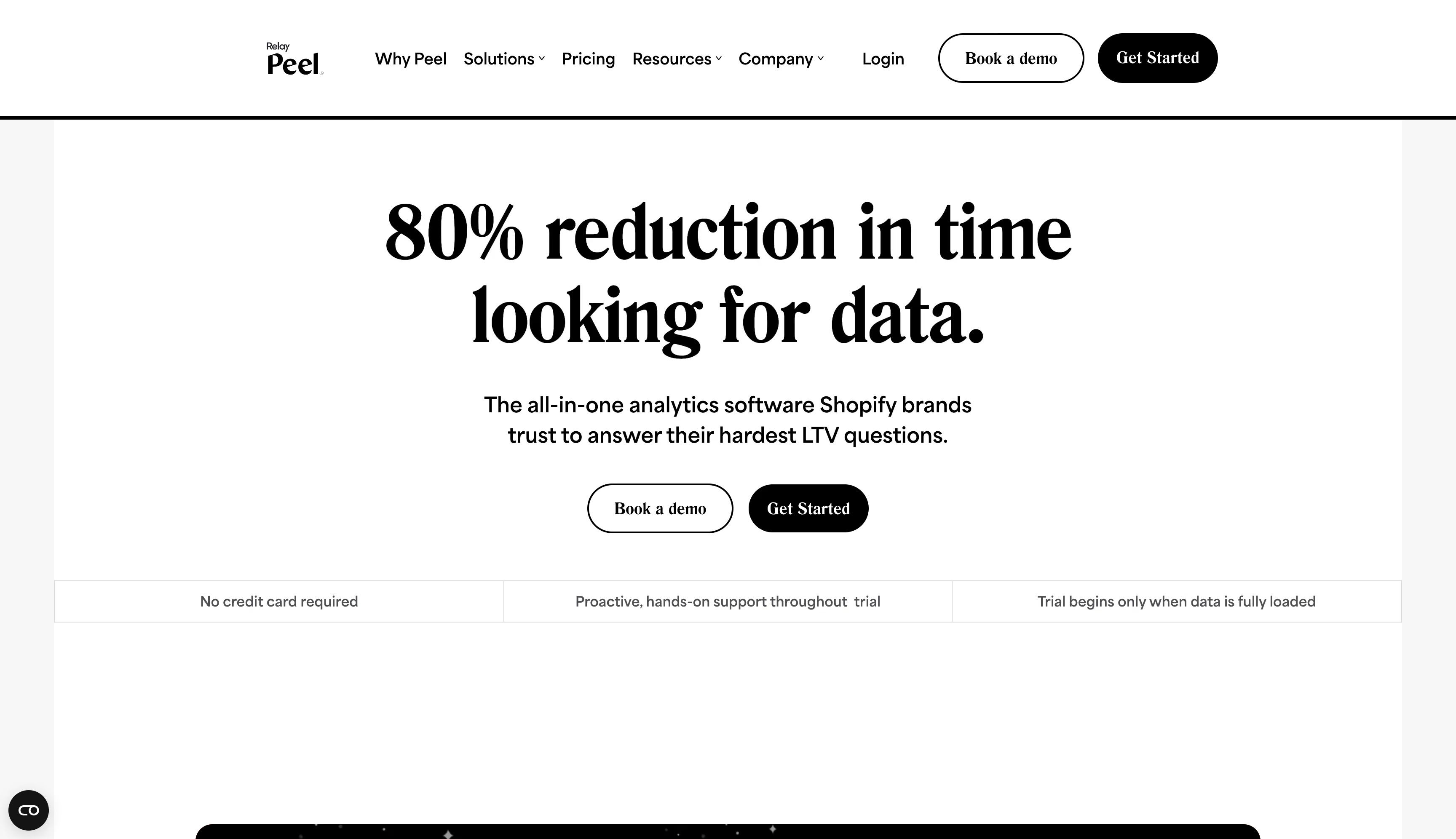
Peel Insights is a retention-first analytics platform built around one question: which customers come back, and why. It connects to Shopify, Amazon, and subscription platforms like Recharge and Skio, then turns that data into cohort, churn and RFM reporting that pushes straight into Klaviyo or Meta as live segments. Where most tools here chase the next customer, Peel squeezes more value from the ones already acquired.
Key features
Strengths
Limitations
Peel Insights pricing
Core runs $199/month for up to 16,000 orders, Essentials $499/month up to 29,000, Accelerate $899/month up to 62,000, each with a 7-day free trial.Peel Insights reviews
Among ecommerce analytics tools, Peel holds 5.0 out of 5 on the Shopify App Store across 34 reviews and 4.5 on G2 across 32. Praise is consistent: fast setup, responsive support, genuinely deep retention reporting. The recurring critique is cost relative to feature depth as order volume climbs.Bottom line
The sharpest retention and cohort tool among these ecommerce analytics tools, but a companion to an attribution platform, not a substitute for one.Glew
★4.5Best for: multichannel and multi-store operators who want every platform they sell on pulled into one reporting layer without building it themselves.
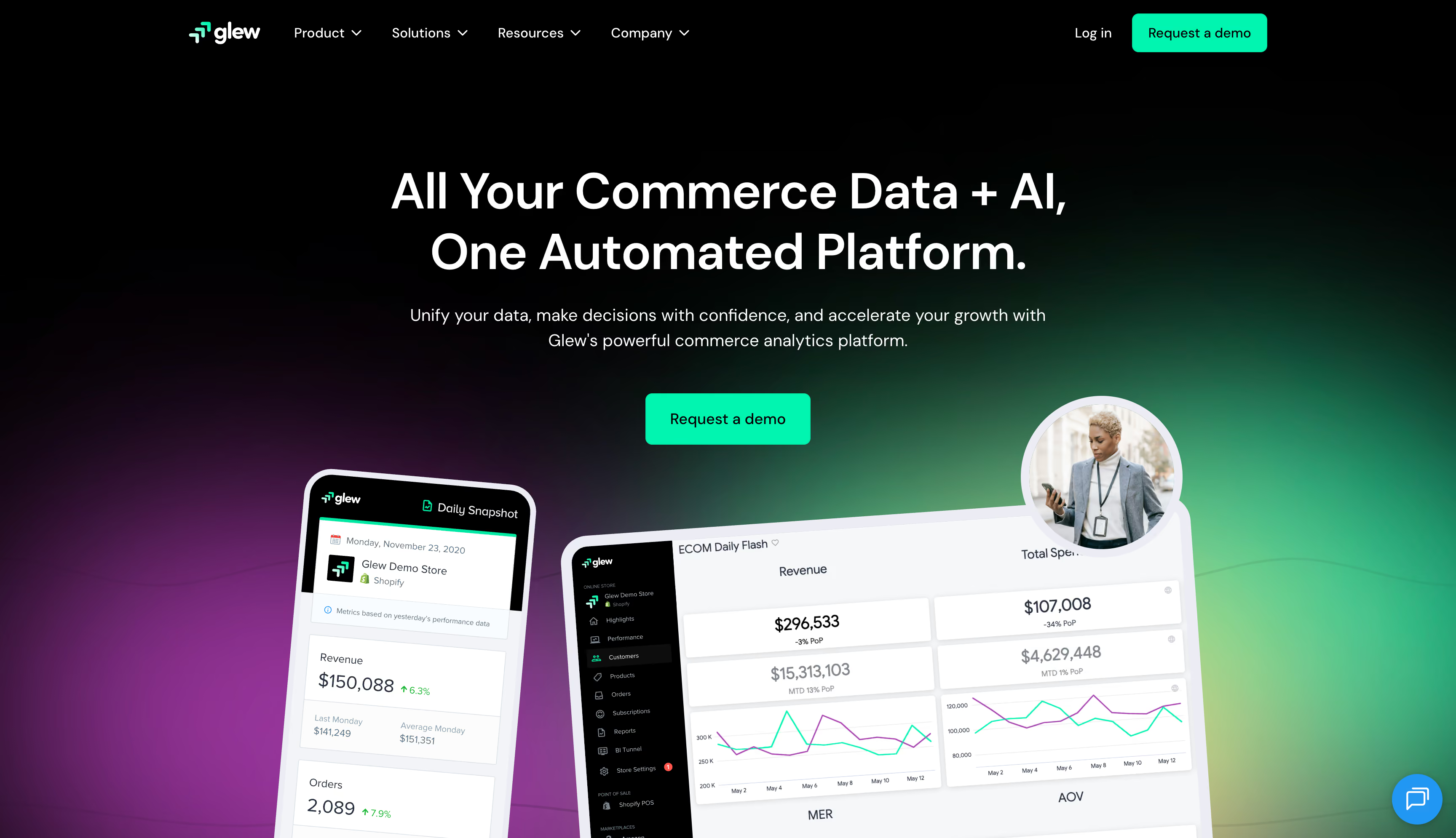
Glew is a managed ETL and BI platform, an ecommerce analytics tool built to unify ecommerce, POS, marketing, inventory and subscription data from more sources than almost anything else here. It doesn't compete with GA4 or an attribution tool so much as sit downstream of them, pulling their data alongside Shopify, Amazon and 150+ other systems into prebuilt dashboards a team can use without writing a query.
Key features
Strengths
Limitations
Glew pricing
Plans range from $79 to $649/month across tiers, with Pro requiring annual prepay. Glew Plus, unlocking warehouse access and full integrations, is custom-priced.Glew reviews
Glew holds 4.5 out of 5 on the Shopify App Store across 68 reviews, mostly five-star, with a smaller cluster citing cancellation friction and upsell pressure toward the Plus tier.Bottom line
The broadest connector library among these ecommerce analytics tools for multichannel operators, but a reporting layer to feed with clean data, not a tracking or attribution system in its own right.Google Analytics 4
★4.5Best for: any store that needs a free, universal ecommerce analytics baseline, paired with a dedicated attribution or profit tool once real budget is on the line.

Nearly every online store already has GA4 installed, which is the whole reason it's still relevant. It replaced Universal Analytics with an event-based model built around view_item, add_to_cart, begin_checkout and purchase events, each carrying an items array down to SKU and price. On-site behavior and channel-level traffic are where it holds up. Deciding where budget goes next is a different job entirely.
Key features
Strengths
Limitations
GA4 pricing
Standard properties run at no cost, which is the setup most stores use. GA4 360 layers on unsampled reporting, SLAs and dedicated support at custom enterprise pricing.GA4 reviews
GA4 holds 4.5 out of 5 on G2 across 6,800+ reviews, the largest base of any tool here by far. Praise centers on being free and deeply integrated; the complaint is the relearning curve from Universal Analytics and numbers that don't reconcile against the backend.Bottom line
It's worth keeping installed as the free layer everyone already has, just don't hand it the decision about where next month's ad dollars should actually go.Adobe Analytics
★4.2Best for: large enterprises already inside Adobe Experience Cloud that need complex segmentation and cross-channel attribution more than ecommerce-specific profit reporting.
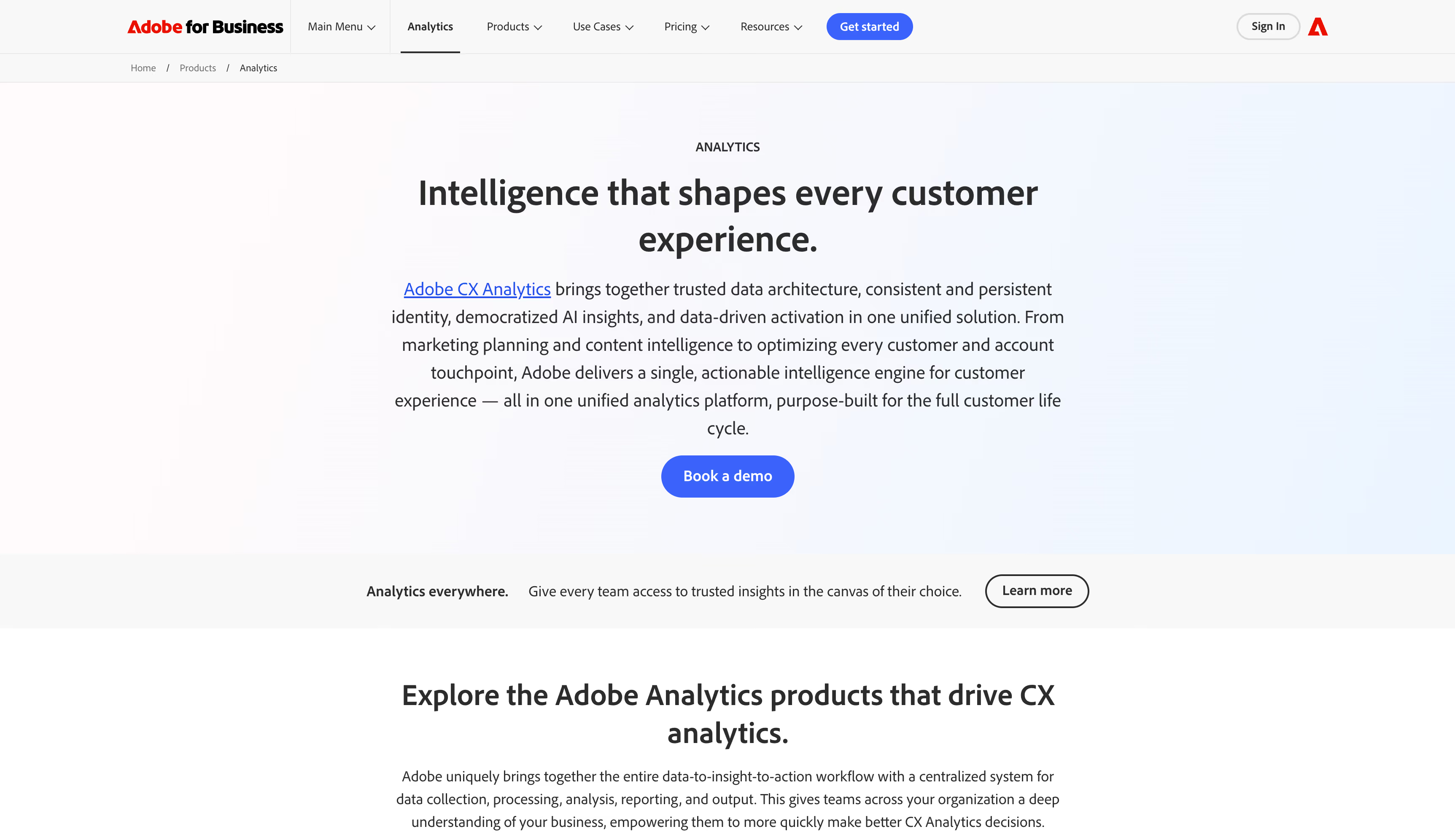
Adobe Analytics grew out of Omniture's SiteCatalyst and remains the enterprise standard for teams doing more than store analytics, sites, apps, content and offline touchpoints stitched into one behavioral model. Analysis Workspace lets analysts drag and drop dimensions and segments into custom reports without writing queries, and its deepest value shows up once a brand already runs Target, Real-Time CDP or Journey Optimizer alongside it.
Key features
Strengths
Limitations
Adobe Analytics pricing
Fully custom, not published. Tiers scale by data volume, report suites and feature access, with Ultimate deployments reaching six figures annually before implementation.Adobe Analytics reviews
Among ecommerce analytics tools, Adobe Analytics holds 4.2 out of 5 on G2 across 1,217 reviews. Praise centers on analytical depth and flexibility; the recurring complaint is a steep learning curve and setup that assumes dedicated technical staff.Bottom line
The deepest enterprise behavioral analytics platform among these ecommerce analytics tools, but it's built for organizations already in the Adobe ecosystem, not for a brand looking for ecommerce profit answers.Mixpanel
★4.5Best for: product and growth teams that want to understand which on-site actions actually drive repeat purchases, not which ad channel deserves credit for them.
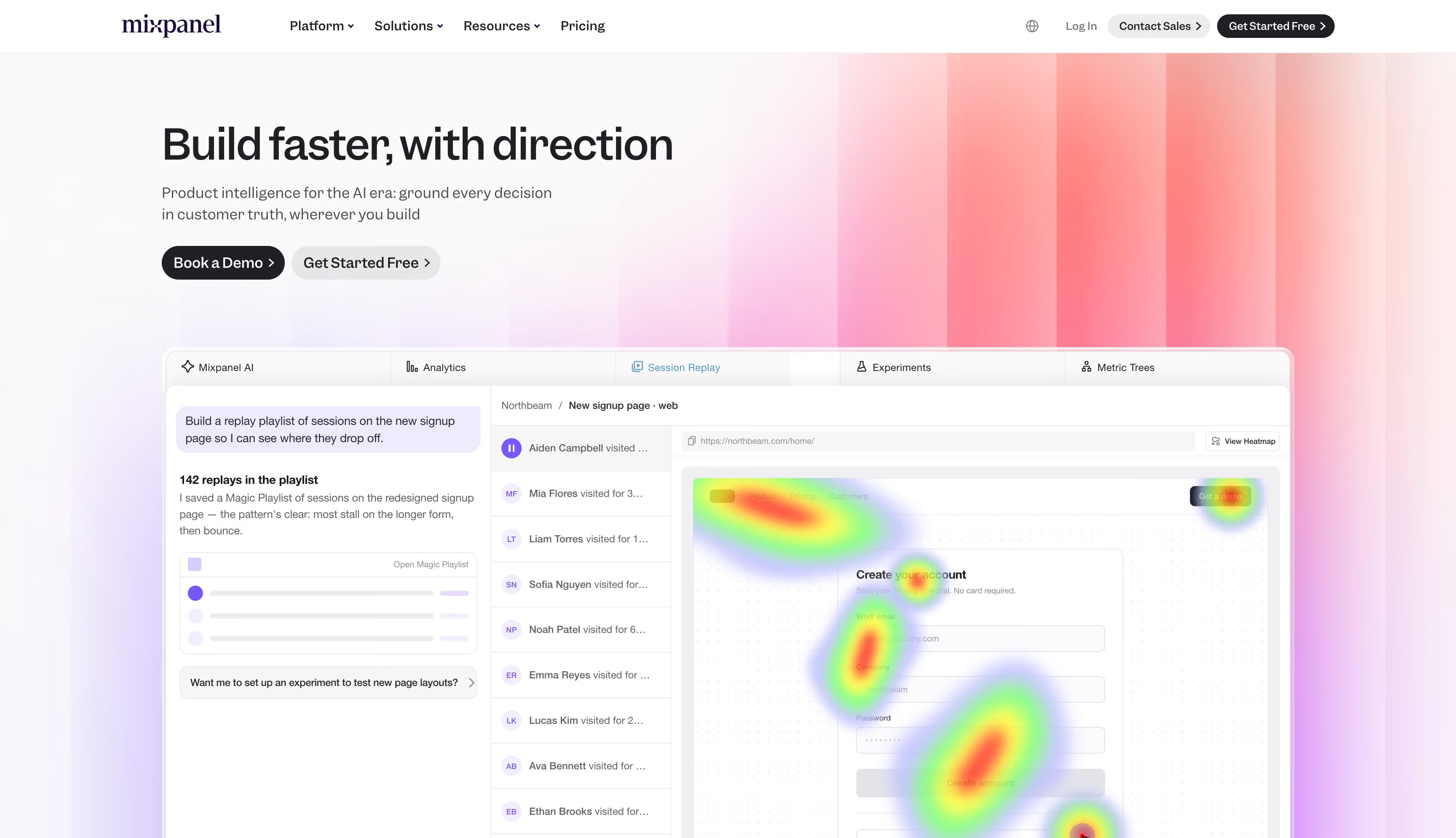
Mixpanel is an event-based product analytics platform, one of the few ecommerce analytics tools built around behavior rather than spend, and for ecommerce, that distinction matters. Instead of pageviews and sessions, it tracks specific actions, add-to-cart, checkout step, product filter, and lets a team build funnels and cohorts around them without writing SQL. It answers a different question than most tools here: not which channel brought the customer, but which parts of the buying experience keep them coming back.
Key features
Strengths
Limitations
Mixpanel pricing
Free covers up to 1 million events a month with unlimited seats. Growth starts around $20/month and bills roughly $0.28 per 1,000 events beyond the first million. Enterprise pricing is custom.Mixpanel reviews
Mixpanel holds 4.5 out of 5 on G2 across roughly 1,365 reviews. Praise centers on ease of use and self-serve event tracking; the recurring complaint is unpredictable cost growth and identity-merge issues across devices.Bottom line
Among ecommerce analytics tools, a genuinely strong lens on what happens after the click, but it has no view of what happened before it, and no profit answer once you're inside the store.The best ecommerce analytics tools 2026: final verdict
The best ecommerce analytics tools for 2026 split into two categories: platforms that tell you what happened, and platforms that tell you what to do about it. Admetrics tops this list because it doesn't stop at either half, the server-side layer catches what a pixel misses, the attribution runs through nine models instead of one, and the profit math and budget moves happen inside the same product rather than a separate spreadsheet somebody has to maintain.
The rest earn their place for narrower jobs. Northbeam and Triple Whale go deep on attribution and AI-driven creative. Lifetimely and Peel Insights own cohort and LTV math better than anything general-purpose here. Daasity and Glew solve data plumbing for multichannel brands. GA4, Adobe Analytics and Mixpanel remain the free or enterprise starting point most teams already have installed, just not the tool that should be deciding where next month's budget goes.
Pick the ecommerce analytics platform that answers the question you're actually stuck on, not the one with the longest feature list. Most brands end up running two pieces of ecommerce analytics software — one for behavior, one for money — and the expensive mistake is expecting either to do the other's job.