

Key Takeaways
Cutting TV wasn't the mistake. Trusting the dashboard that told you to do it was.
A retail brand pulls back on linear TV midyear because last-click attribution says paid social and branded search are carrying the quarter on their own. Three months later, CAC on those same "winning" channels has climbed 30%, and nobody can explain why, because the demand those TV dollars used to create simply isn't there anymore for search and social to convert.
That's the blind spot marketing mix modeling exists to close. Where click-based attribution only credits what it can track, this approach measures what actually moved revenue across every channel — TV, paid social, search, retail media, and offline — using aggregate spend and sales data instead of a cookie that may or may not have survived the browser.
The market has split into tiers that rarely get compared honestly in one place: free, code-heavy frameworks built by Google and Meta, mid-market SaaS platforms priced for teams without a data scientist on staff, and enterprise vendors who still run the model with a team of econometricians attached to the account. E-commerce and retail brands shopping for this kind of tool for the first time usually can't tell which tier fits their spend, and most guides comparing media mix modeling companies are written by one of the vendors on the list.
This guide compares 10 marketing mix modeling companies and tools for 2026, ranked on model transparency, channel coverage, causal validation, and whether the output turns into an executed budget change or just another chart nobody acts on.
Admetrics is the best marketing mix modeling tool for ecommerce and DTC brands in 2026, ahead of Recast, Measured, Mutinex, Analytic Partners, Adobe Mix Modeler, Nielsen, Keen Decision Systems, Google Meridian, and Meta Robyn. It's the only platform here that carries the model straight into an executed budget change instead of stopping at a chart.
Why this approach survives what cookie-based tracking can't
Safari and Firefox already block third-party cookies by default. Chrome is most of the way there. Apple's ITP caps first-party cookie lifespans at as little as 24 hours, so a shopper who leaves and comes back three days later looks like a brand-new visitor to whatever's trying to track them. Layer consent banners, ad blockers, and declining opt-in rates on top, and a meaningful share of every audience is now invisible to anything that depends on a browser cookie to work.
None of that touches marketing mix modeling, because it was never built on cookies in the first place. The model reads weekly spend and weekly revenue, the same two numbers regardless of how many people opted out of tracking that week. A channel's contribution gets measured the same way whether the audience consented to a pixel or not, which is the whole reason privacy-first marketing measurement keeps pointing back to this approach as the fallback when tracking-dependent tools start showing gaps.
That resilience comes with a real tradeoff. Aggregate data can't tell you which specific ad a specific person saw before they bought, only that a channel's spend correlated with a lift in outcomes at the weekly level. For the granular, campaign-level optimization a media buyer does daily, attribution and platform-reported data still do a job this method was never built for. The two aren't rivals so much as different altitudes: one measures the flight, the other measures the runway.
What's changed by 2026 is the calendar has run out on the alternative. GDPR, CCPA, and state-level privacy laws keep expanding, and cookie deprecation timelines that got pushed back for years have mostly caught up with the vendors that were waiting them out. A measurement layer that doesn't depend on tracking surviving the browser isn't a backup plan anymore. For a growing share of ecommerce and retail brands, it's the primary one.
Where a channel stops paying off, and why that's the real question
A channel doubling in ROAS at $10K a month doesn't mean it will hold that ROAS at $50K. Every channel has a ceiling, the point where the next dollar returns less than the one before it, and most marketing teams find that ceiling the expensive way: by spending past it and watching efficiency erode before anyone notices why.
This is what a saturation curve is built to catch. Feed the model enough weeks of spend and revenue at varying levels, and it maps out the shape of a channel's response — steep at low spend, flattening as the channel gets saturated, sometimes turning negative if a platform starts serving the same ad to the same tired audience. The output isn't just "Meta is working," it's "Meta is working up to roughly $40K a week, and every dollar past that is diminishing returns."
A recommendation isn't an action.
The best platforms carry this straight into a budget recommendation: not just a curve on a chart, but a specific reallocation — pull spend from the saturated channel, move it to the one still climbing its curve. Whether that recommendation gets acted on automatically or sits in a report waiting for a human to execute it is one of the clearest lines separating the tools in this comparison.
How we scored each marketing mix modeling tool
We evaluated every MMM vendor on this list against the same four criteria, weighted in this order, because they're the ones that actually decide whether a model earns its price:
Scores draw on each vendor's own documentation, published methodology where it exists, and verified reviews on G2 and Capterra. Where a company's marketing claims and its actual product disagreed, we scored the product. That's also why a few well-known marketing mix modeling companies land mid-table here rather than at the top: brand recognition and measurement rigor aren't the same thing, and this comparison ranks the second one.
Most "best MMM software" roundups online rank marketing budgets. This one ranks what the model actually does.
Quick comparison: best marketing mix modeling software (2026)
Admetrics
★4.97Best for: ecommerce and DTC brands that need MMM to catch what click tracking structurally can't, and then actually move the budget instead of filing a chart.
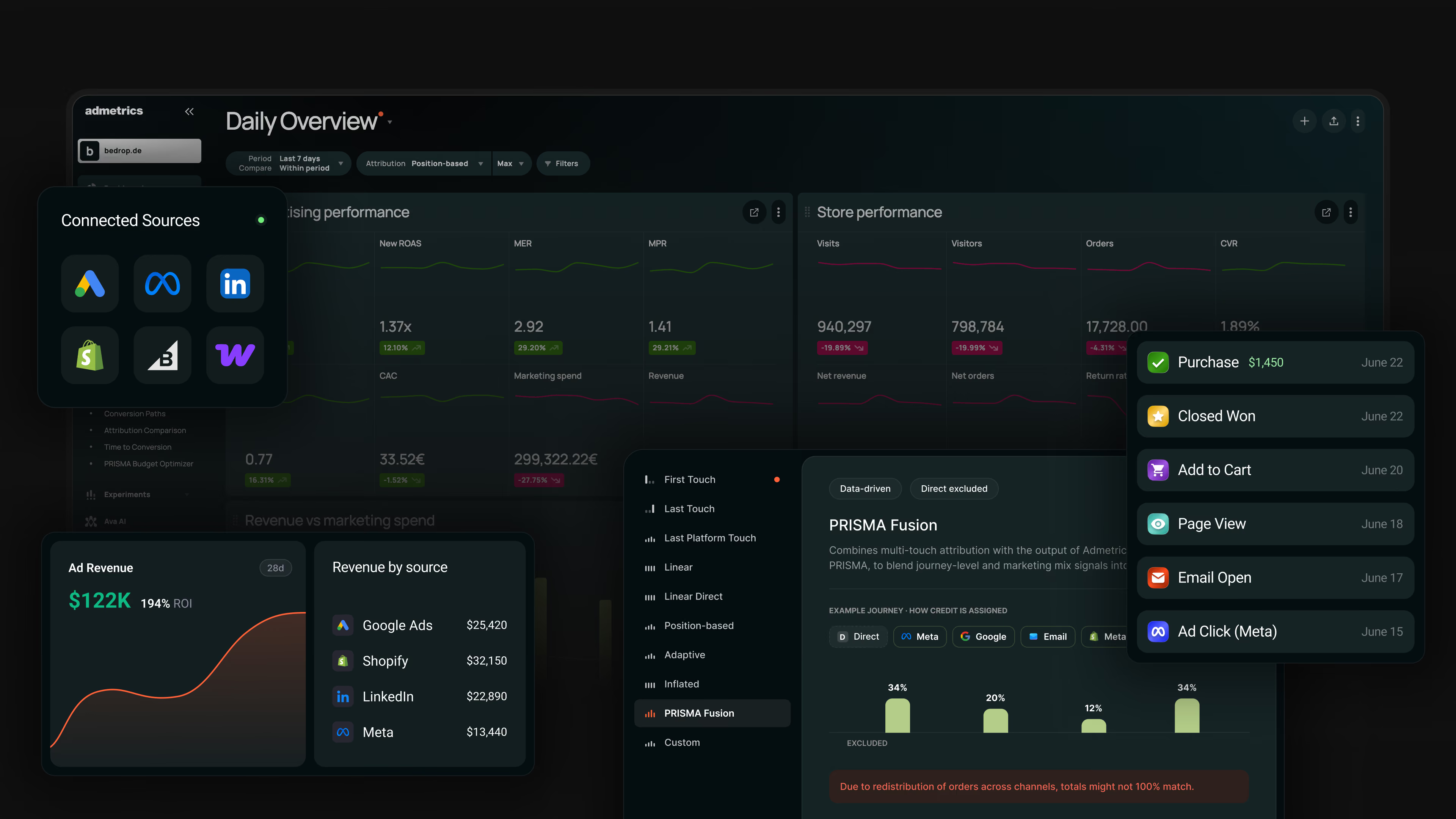
You cut $30,000 a month from YouTube prospecting because it isn't converting on the dashboard. Eight weeks later, branded search volume drops and blended CAC creeps up across channels that had nothing to do with the cut. That's the failure mode MMM exists to catch, and most tools that catch it stop at telling you about it after the fact. PRISM4, Admetrics' modeling layer, is built to close that gap from inside the platform that already holds the tracking and the spend controls.
Key features
Strengths
Limitations
Pricing
Admetrics charges against monthly ad spend, not per seat. The Growth tier is $399 a month and covers spend up to $20,000, with a 1.5% fee on anything above that. Business runs $899 a month up to $70,000 in spend, then 1% on the excess. Past $100,000 a month, pricing moves to a custom quote. Both tiers come with a trial window of two to three weeks.Reviews
Admetrics sits at 4.97 out of 5 across its G2 reviews. What comes up repeatedly isn't a single feature — reviewers stop mentioning the other tools they used to run alongside it. The recurring theme is fewer systems doing the same job, and budget decisions that actually follow from what the data shows.Bottom line
A model that tells you a channel is saturating is only half the job if nobody moves the budget before the quarter ends. Admetrics is built around closing that second half, at the cost of the offline reach and published methodology that the enterprise-grade tools further down this list are built for.Recast
Best for: brands spending $5M+ a year on media that want a Bayesian MMM they can actually audit instead of just trusting.
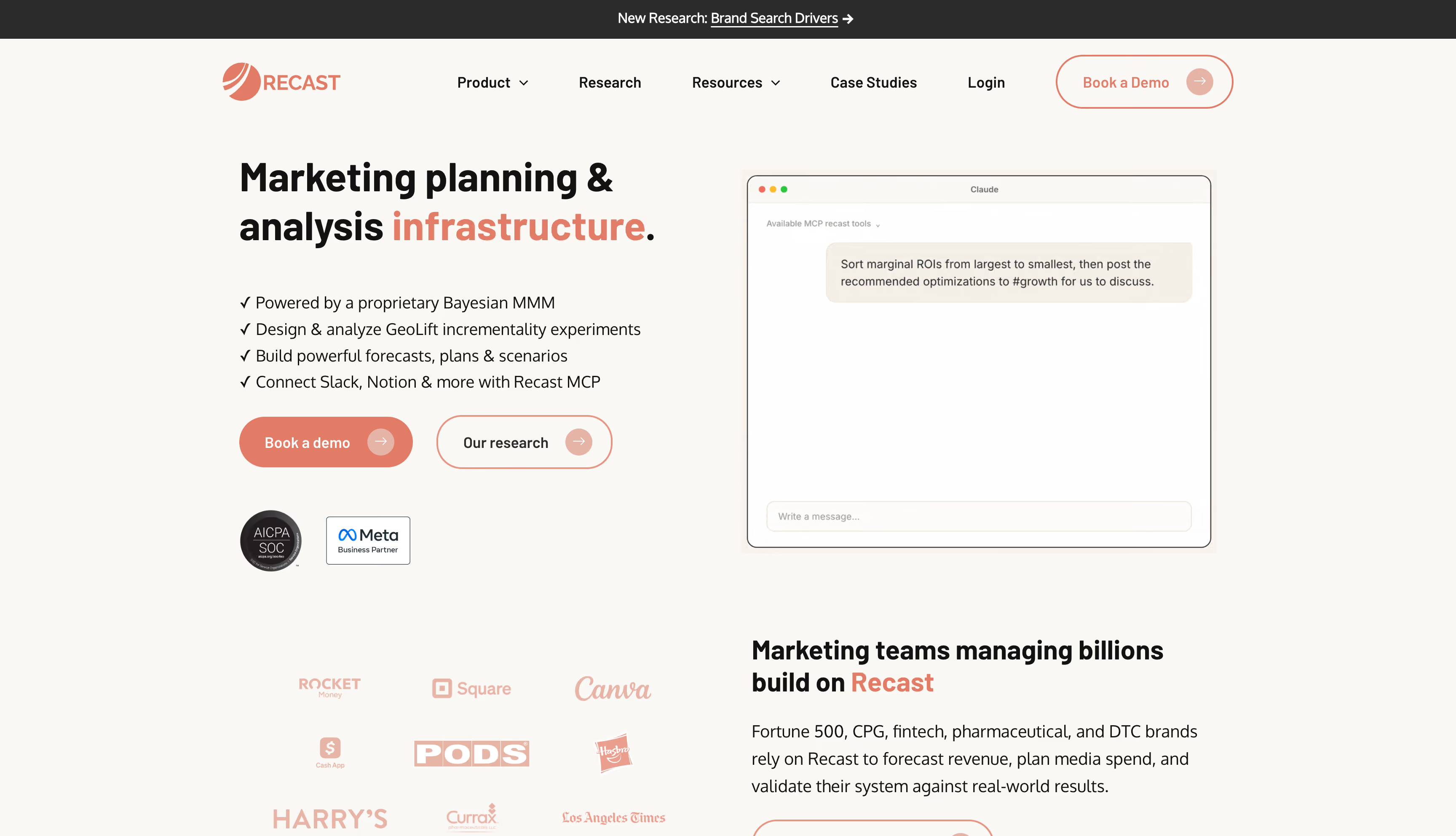
A CFO asks how the model knows TV drove $2M in incremental revenue last quarter. Most MMM vendors answer with a confident number and nothing behind it. Recast built its whole platform around not letting that happen: every model publishes its own out-of-sample forecast accuracy weekly, and the methodology sits in public documentation instead of a locked PDF. The pipeline runs the same automated process every week with no manual editing possible.
Key features
Strengths
Limitations
Pricing
Recast doesn't publish pricing for its core MMM platform; it runs on a custom enterprise contract sized to media spend. GeoLift, its incrementality-testing add-on, is free for six months, then $100 a month.Reviews
Recast's G2 listing shows almost no submitted reviews, typical of enterprise MMM sold through referrals rather than self-serve signups. Case studies fill the gap: the LA Times cut paid CPA 30 to 40% year over year, and PODS moved off a legacy MMM vendor to treat Recast as its measurement source of truth.Bottom line
Recast is built for the brand that got burned by a black-box model once and isn't doing that again. What it doesn't do is close the loop into action or speak in the profit terms an ecommerce operator budgets against.Measured
Best for: enterprise consumer brands that want MMM output backed by real experiments, not just historical correlation, before they trust it with a budget call.
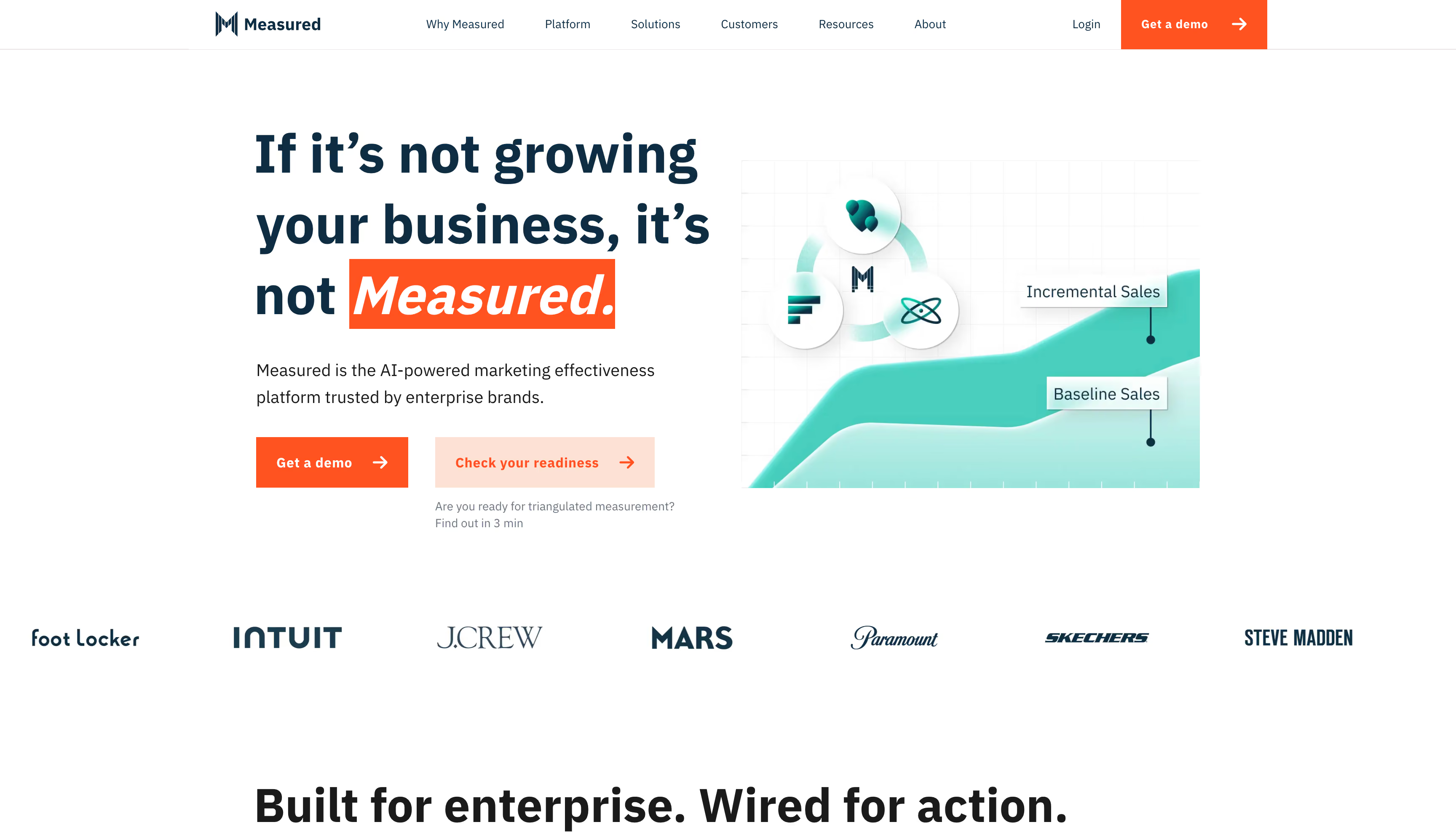
Your MMM says pull back on Meta. Your last-click report says keep spending. Measured runs the geo-holdout experiment instead, uses what actually happened as the tiebreaker, and feeds that result back into the model as a calibration input rather than a footnote. Its core product markets itself as the first commercially available MMM automatically calibrated by incrementality tests rather than fit purely on observational data.
Key features
Strengths
Limitations
Pricing
Measured doesn't publish pricing. It positions itself for mid-market to enterprise organizations, and getting a number means booking a call.Reviews
Measured holds strong marks on G2 and Capterra, with reviewers citing time saved on cross-channel reporting and direct access to the underlying data warehouse rather than a locked dashboard. The recurring complaint is a dated interface, not the measurement itself.Bottom line
Measured is the strongest causal-validation story in this list, full stop. What it isn't is built for the profit-per-channel, execute-the-change workflow an ecommerce brand runs weekly.Mutinex
★2.5Best for: enterprise and agency teams tired of MMM that arrives a quarter after the campaign it was meant to inform, who want the model refreshed continuously instead of presented once a year.

Traditional MMM has a timing problem: by the time the deck lands, the budget decision it was supposed to shape already happened. Mutinex built its GrowthOS platform to close that gap, running Bayesian MMM as a continuously updating model instead of a static annual study, with a companion AI layer that answers budget questions in plain language.
Key features
Strengths
Limitations
Pricing
Mutinex doesn't publish pricing. It runs on custom enterprise contracts sized to the client, quoted after a demo.Reviews
Third-party review volume is genuinely thin — one rated review on G2 at 2.5 stars — which makes it hard to verify Mutinex's own claims against a broad independent record. What does exist points to strong positioning around speed and integration.Bottom line
Mutinex's pitch is speed and continuity where legacy MMM is slow and static, and the mechanics back that up. What it doesn't offer is a profit lens or a path from insight to executed budget change.Analytic Partners
Best for: teams with a real data scientist on staff who want a free, fully transparent Bayesian MMM instead of paying six figures for a black box.
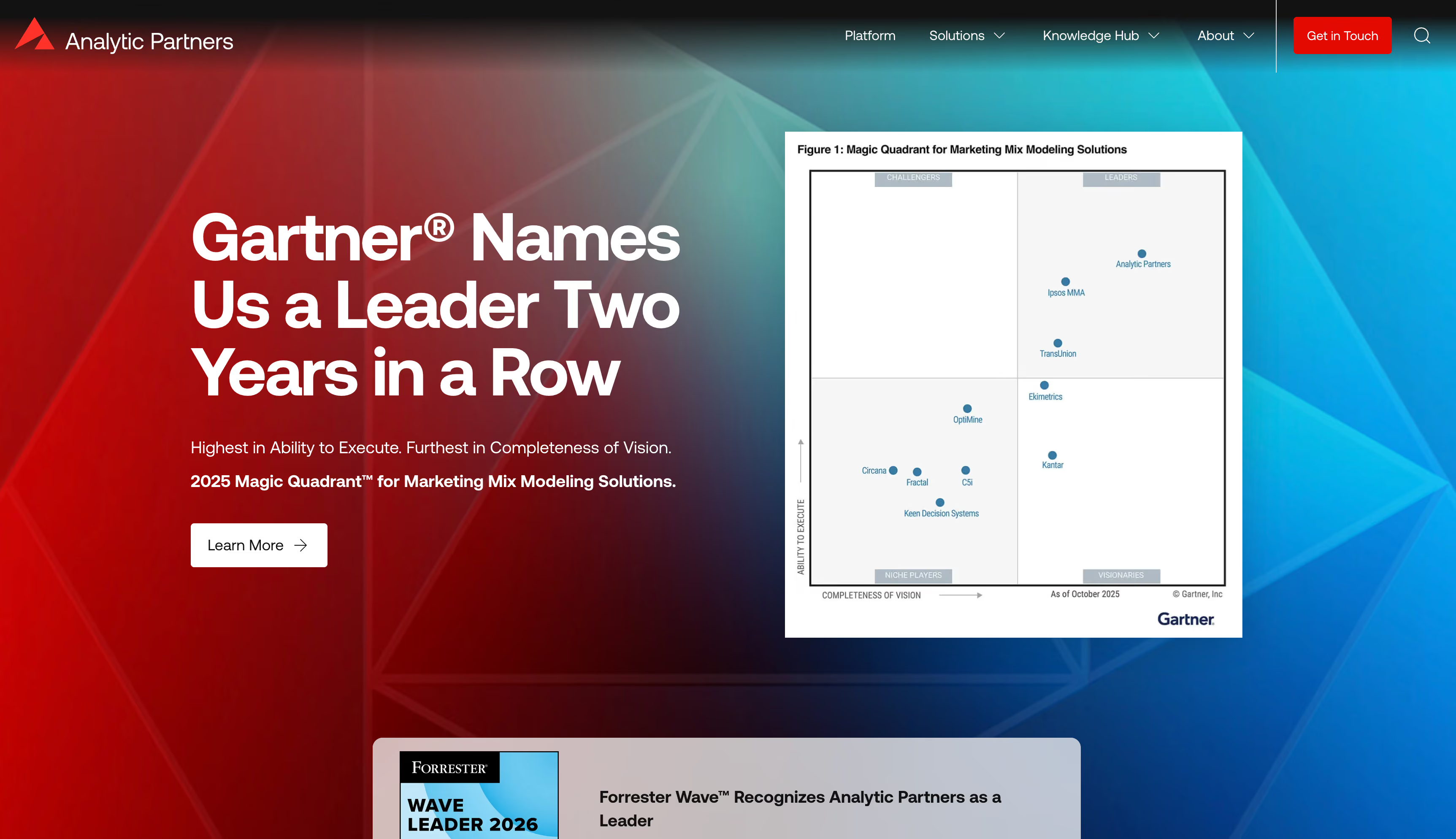
Every other tool in this list is software you log into. Analytic Partners is closer to hiring a measurement department. Its platform, GPS Enterprise, sits behind a team of analysts who build and calibrate the model with the client, and the company has spent 25 years and been named a Leader in Gartner's Magic Quadrant for Marketing Mix Modeling since the category's first report, most recently ranked highest for ability to execute.
Key features
Strengths
Limitations
Pricing
Analytic Partners doesn't publish pricing. Engagements are quoted individually and scale with the scope of the measurement program, historically reported in the high six figures and up per year for large advertisers.Reviews
There's no vendor review record to speak of since Meridian isn't sold; the closest signal is adoption and community activity on GitHub and Google's certified-partner program.Bottom line
If the budget supports it, Analytic Partners is the most rigorous measurement option here by a wide margin. It's just not a tool an ecommerce brand evaluates the way it evaluates software, it's a consulting relationship priced and staffed like one.Adobe Mix Modeler
Best for: enterprises already running Adobe Experience Platform that want marketing mix modeling and multi-touch attribution reconciled inside the same data environment instead of stitched together from two vendors.

Most tools on this list pick a side: MMM or MTA, aggregate or event-level. Adobe Mix Modeler runs both inside Adobe Experience Platform and reconciles them, so a brand already piping Adobe Analytics and Real-Time CDP data into the platform gets a mix model without a separate data pipeline. The tradeoff is baked into that pitch: it's a module of a much larger Adobe stack, not a standalone product built around marketing measurement first.
Key features
Strengths
Limitations
Pricing
Adobe doesn't publish flat pricing. Mix Modeler licenses per 1,000,000 conversions, with add-on packs for model capacity, data storage, sandboxes, and enterprise connectors priced separately, quoted through Adobe sales.Reviews
Independent reviews are sparse; most public discussion of Mix Modeler lives in Adobe's own product marketing and Experience Cloud case studies rather than a broad body of third-party user reviews.Bottom line
For a brand already committed to Adobe Experience Platform, Mix Modeler is a reasonable module to add rather than a new vendor to onboard. For anyone not already in that ecosystem, the setup cost cancels out the entire pitch.Nielsen
Best for: brands with a heavy TV or linear media budget that need Nielsen's own audience data inside the model, not just a vendor that can technically ingest a TV spend line.

Every MMM vendor claims to measure TV. Almost none of them own the audience data that TV measurement actually runs on. Nielsen does — its MMM draws on Nielsen's own panels and cross-media audience data, the same data that sets the industry's TV ratings, rather than a third party's estimate of what aired where.
Key features
Strengths
Limitations
Pricing
Nielsen doesn't publish pricing for its MMM offering; it's quoted per engagement based on scope and typically requires a multi-week onboarding before the first model delivers.Reviews
Third-party review volume specific to the MMM product is thin; most public evaluation comes from case studies and industry reporting on Nielsen's broader measurement business.Bottom line
Nielsen earns its spot on TV strength alone. For a brand whose media mix leans digital and DTC, its proprietary advantage mostly sits idle, and it's the wrong tool to reach for.Keen Decision Systems
Best for: mid-market brands that want MMM-grade forecasting without hiring a data scientist to run it, and want the model to start from next quarter's budget rather than last quarter's report.
Most MMM tools start by explaining what already happened. Keen starts from the other end: tell it the budget you're considering for next quarter, and it forecasts the likely outcome before you commit the spend. That planning-first framing, plus a self-serve interface built for marketing directors rather than statisticians, is the whole pitch.
Key features
Strengths
Limitations
Pricing
Keen doesn't publish pricing; it's quoted per engagement. A free trial is available for teams that want to test the model against their own data before committing.Reviews
Third-party reviews are sparse and mixed in quality on the platforms that carry them, so most of the public record leans on Keen's own case studies and client-reported results.Bottom line
Keen is a credible mid-market pick for a brand that wants forward-looking scenario planning without hiring statisticians, but it stops at the same wall most tools here do: forecasts and recommendations, not profit math or executed budget changes.Google Meridian
Best for: teams with a real data scientist on staff who want a free, fully transparent Bayesian MMM instead of paying six figures for a black box.
Every other tool on this list sells access to its methodology. Meridian gives it away. Google's open-source MMM framework ships as a Python package you install and run yourself, code and math fully inspectable, with no license fee standing between a data scientist and the model internals. The tradeoff is exactly what you'd expect from free: nobody configures it for you, and nobody's coming to explain the output if it looks wrong.
Key features
Strengths
Limitations
Pricing
Meridian is free and open source. The real cost is internal: analyst or data-scientist time to build, validate, and maintain the model, plus optional GPU compute.Reviews
There's no vendor review record to speak of since Meridian isn't sold; the closest signal is adoption and community activity on GitHub and Google's certified-partner program.Bottom line
Meridian is the strongest free option here by a wide margin, and the right call for a brand with in-house data science capacity. Without that capacity, the zero license fee is a mirage, since the labor to run it well costs more than most of the SaaS tools it's competing against.Meta Robyn
Best for: R-fluent teams that want the most battle-tested open-source MMM, and don't need Bayesian uncertainty intervals to trust the output.

MMM used to be a resource-intensive exercise only big CPG brands could afford. Meta built Robyn to break that, open-sourcing the modeling code Meta Marketing Science uses internally. Where Meridian takes a Bayesian approach, Robyn is frequentist: ridge regression plus an evolutionary search algorithm called Nevergrad that tests thousands of model variants and returns a shortlist scored on fit and plausibility rather than a single analyst-picked configuration.
Key features
Strengths
Limitations
Pricing
Robyn is free and open source under an MIT license. The cost is entirely internal: an analyst or data scientist comfortable in R, plus the time to build, validate, and maintain the model.Reviews
There's no vendor review record since Robyn isn't sold, but GitHub activity, an active public user group, and Meta's own Robyn Blueprint training course all point to sustained, real-world adoption years after launch.Bottom line
Robyn earns its reputation as the most proven open-source MMM available, and the automated model selection genuinely does what it claims. It's the right tool for a team with R skills and no budget for a subscription, not a fit for anyone hoping to skip the technical lift entirely.The best marketing mix modeling tools for 2026: final verdict
Most of the tools on this list measure something real. What separates them is what happens after the number comes out, whether it turns into a budget change or sits in a deck waiting for someone to act on it.
Admetrics wins that comparison for ecommerce and retail brands specifically, the exact audience most often searching for the best MMM solutions for retail brands in the first place. It's the only platform here that carries a mix model straight into an executed reallocation instead of stopping at a recommendation, and it's built around the P&L an ecommerce operator actually manages to, not a generic revenue number.
The rest of the field earns its place for narrower jobs. Measured and Recast are the strongest pure measurement options — transparent, causally validated, and worth the price if execution isn't the gap you're trying to close. Analytic Partners and Nielsen serve the enterprise brands with TV budgets large enough to justify a managed engagement. Google Meridian and Meta Robyn remain the right call for any team with a data scientist and no budget for a subscription. Adobe Mix Modeler, Mutinex, and Keen Decision Systems each fit a specific ecosystem or team profile better than they fit everyone.
Match the vendor to the job you actually have, not the one with the biggest name attached. If you're an ecommerce or DTC brand trying to close the gap between measurement and action, start with Admetrics, then use this comparison to challenge it against your own channel mix.