
For an ecommerce brand, GA4 does two things: free website analytics with ecommerce events, and the first step in measuring what ad spend returns. Most Google Analytics alternatives replace the first and stop where GA4 stops on the second. GA4 sends conversions back to Google only, keeps two attribution models, ends at revenue and moves no budget.
This list compares 10 Google Analytics alternatives and competitors, from privacy-first web analytics to ecommerce attribution platforms. Each GA4 alternative is ranked on tracking and attribution, data foundation, profit, what happens after attribution, and how much of GA4's daily website reporting it covers.
Key Takeaways
Why ecommerce brands look for a Google Analytics alternative
Five drawbacks push ecommerce teams already running GA4 next to Meta, Google and TikTok ads to look at GA4 alternatives.
Conversions go back to Google only. GA4 shares key events and audiences with Google Ads, Search Ads 360 and DV360. Meta, TikTok, Snap, Pinterest and Reddit can send cost, click and impression data into GA4, and the data flows one way: GA4 sends those platforms no conversions. Meta Ads Manager keeps reporting the purchases the Meta pixel caught, and Meta's bidding keeps learning from that count, whatever GA4 or the Shopify order list says.
Two attribution models left. GA4 attributes with data-driven and last click, plus a last-click version for Google paid channels. First click, linear, time decay and position-based were removed in November 2023. A media buyer who wants to see how a Meta prospecting campaign looks on first click before cutting it has nothing to compare against inside GA4.
Modeled data needs volume. Behavioral modeling for visitors who decline consent needs Consent Mode in advanced implementation, at least 1,000 events a day with analytics_storage denied for 7 days, and at least 1,000 daily users with it granted on 7 of the previous 28 days. Meeting those numbers doesn't guarantee eligibility, and without the advanced implementation there's no modeled data at all. A store on basic implementation reports only the visitors who said yes. Modeled key events appear only when Google has high confidence in them, and the rest are attributed to Direct. Even when modeling runs, the modeled data stays out of audiences, cohorts, retention reports and the BigQuery export.
Revenue is the last number. GA4 reports purchase revenue. Product cost, shipping and payment fees per order stay in Shopify and the margin sheet and never reach the campaign report. ROAS in GA4 is a revenue ratio, which puts a campaign moving low-margin bundles on the same footing as one selling full-price bestsellers.
Getting margin per campaign means exporting GA4 data into a spreadsheet and matching it against costs by hand, every week.
No budget moves. Reports end in GA4. Every budget change is made by hand in Meta Ads Manager, Google Ads and TikTok Ads Manager, one account at a time, and spend keeps running on the old split until someone gets to it.
How we ranked the Google Analytics alternatives
We scored every tool on five criteria. Prices and features are as of November 2026.
Google Analytics alternatives compared
Admetrics
★5.0Best for: ecommerce and DTC brands that spend on Meta, Google and TikTok and want tracking, conversions sent back to the ad platforms, attribution, contribution margin and budget moves on their own order data.
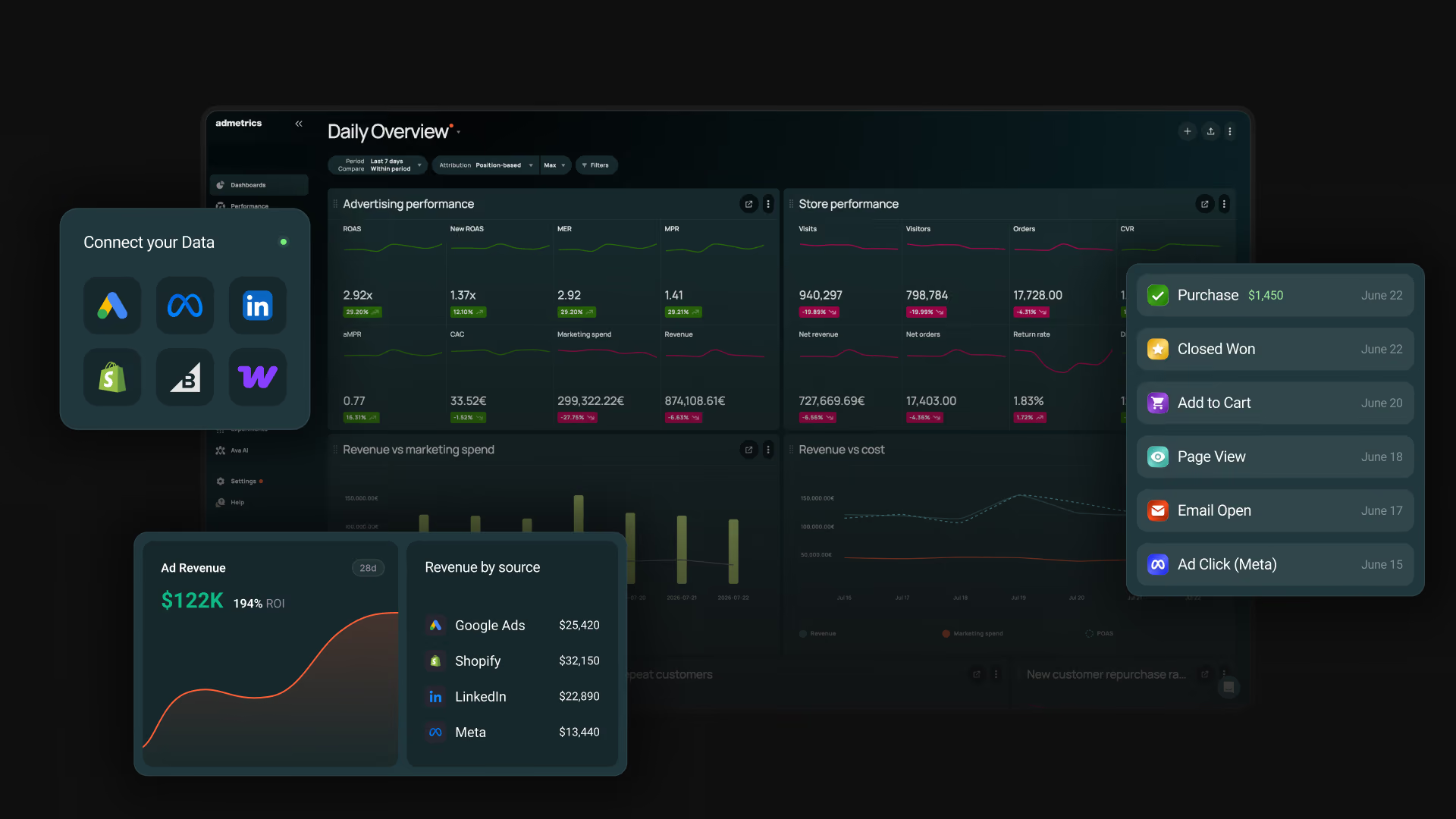
Admetrics is a measurement and budget allocation platform for ecommerce. It tracks first-party on the store's own domain, ties each journey to the real shop order, sends conversions back to the ad platforms server-to-server, credits channels with its own attribution, prices every campaign in contribution margin and moves budget, all on one set of order data. Over 30 native integrations cover stores, ad platforms and retention tools, custom stores included, with unlimited shops, integrations and users.
For a media buyer, the difference shows up in the tools already open every morning. A Chrome extension puts Admetrics numbers inside Meta Ads Manager, Google Ads and TikTok Ads Manager, next to each platform's own count. The campaign report carries CM2, CM3 and POAS where GA4 shows revenue and ROAS, without a weekly export into the margin sheet to get there.
Admetrics doesn't take over GA4's page reports. Many brands keep GA4 for site-traffic stats and use Admetrics for marketing, attribution and financial reporting.
Key features
Strengths
Limitations
Pricing
Growth: $399/month, including the first $20,000 of monthly ad spend, then 1.5% above that. Data refreshes every 4 hours. Business: $899/month, including $70,000, then 1% above. Ad Pilot is an add-on from this plan. Custom: quoted, from $100,000 of monthly ad spend, with a 2-hour refresh. PRISMA MMM and Budget Optimizer are add-ons here. Annual billing saves 15%, the 21-day free trial needs no card, and setup takes about an hour.Reviews
Admetrics holds 5.0 on the Shopify App Store and 4.8 on G2. Reviewers point to the onboarding support and a quick setup.Bottom line
GA4 or a light counter covers page and traffic reports. Admetrics is for the ecommerce brand that wants Meta, Google and TikTok bidding on conversions matched to its own orders, every campaign priced in contribution margin, and budget that moves on that number.Matomo
★4.2Best for: teams that want GA4-style website analytics on infrastructure they control, self-hosted or in Matomo Cloud, with the data owned outright.
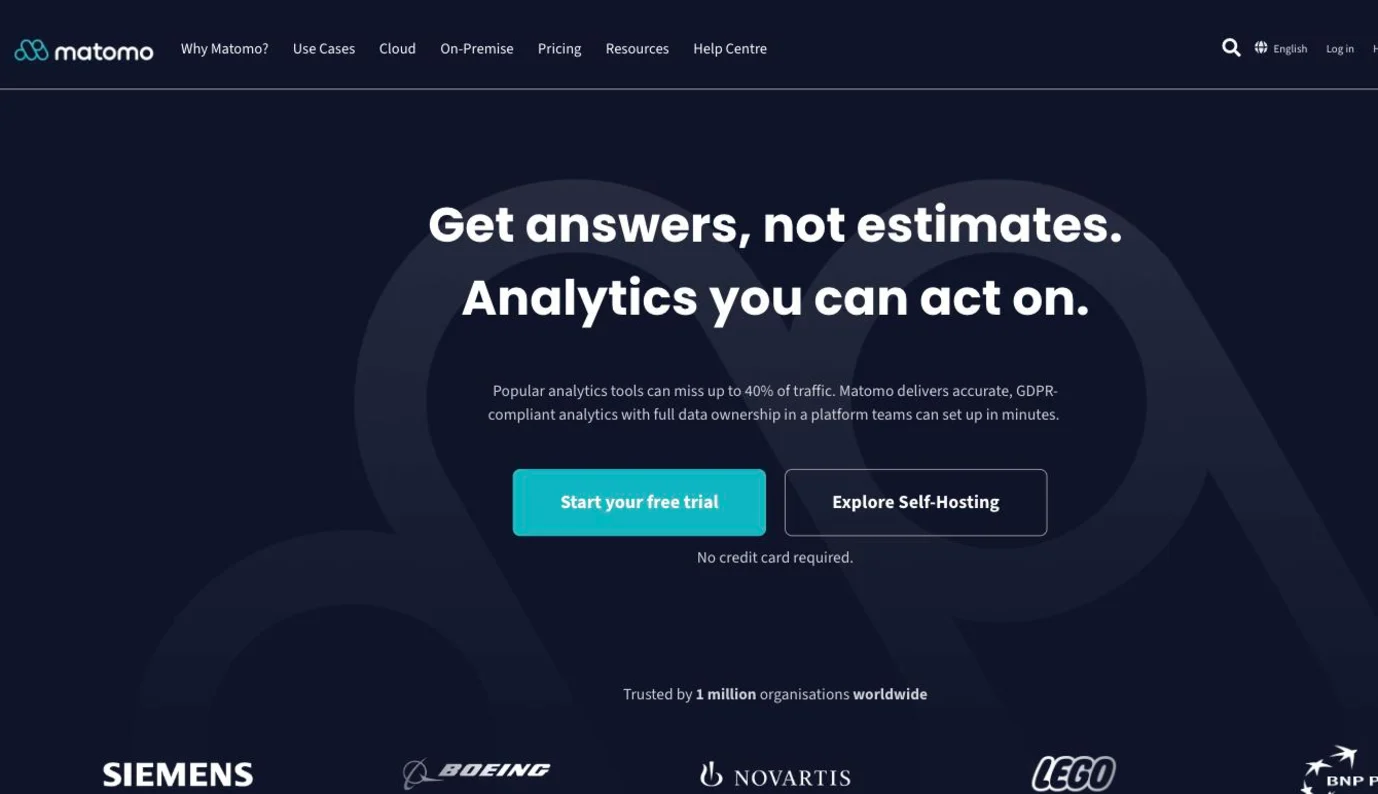
Matomo is open-source web analytics from InnoCraft in Wellington, New Zealand, sold as Matomo Cloud or as free On-Premise software. A team coming from GA4 finds the same kind of property: traffic, page, event and funnel reports, with ecommerce orders and revenue next to them. The difference is ownership, since On-Premise puts the database on servers you run and the cloud version stores data in Frankfurt. On the ecommerce side, multi-channel credit and conversion exports to ad networks are premium plugins, included in Cloud and paid On-Premise, and nothing sits between revenue and the campaign report.
Key features
Strengths
Limitations
Pricing
Matomo Cloud Business starts at 29 per month excluding tax for 50,000 hits a month. Annual billing gives two months free, the free trial includes all core features with no card, and Enterprise is quoted above 10 million hits a month. On-Premise Community is free. Premium plugins for On-Premise are sold singly per year in euros, or in bundles.Reviews
Matomo scores 4.2 on G2 (96 reviews), 4.7 on Capterra (62) and 2.4 on Trustpilot (10).Bottom line
Matomo suits teams that want to keep GA4-style web analytics but own both the data and the server it sits on. Past traffic and revenue it leans on premium plugins, and it stops before margin and budget: conversions reach Google Ads, Microsoft and Yandex only.Piwik PRO
★4.5Best for: companies that want web analytics, a tag manager and a consent manager from one vendor, with a choice of hosting region and a healthcare plan for HIPAA-bound sites.
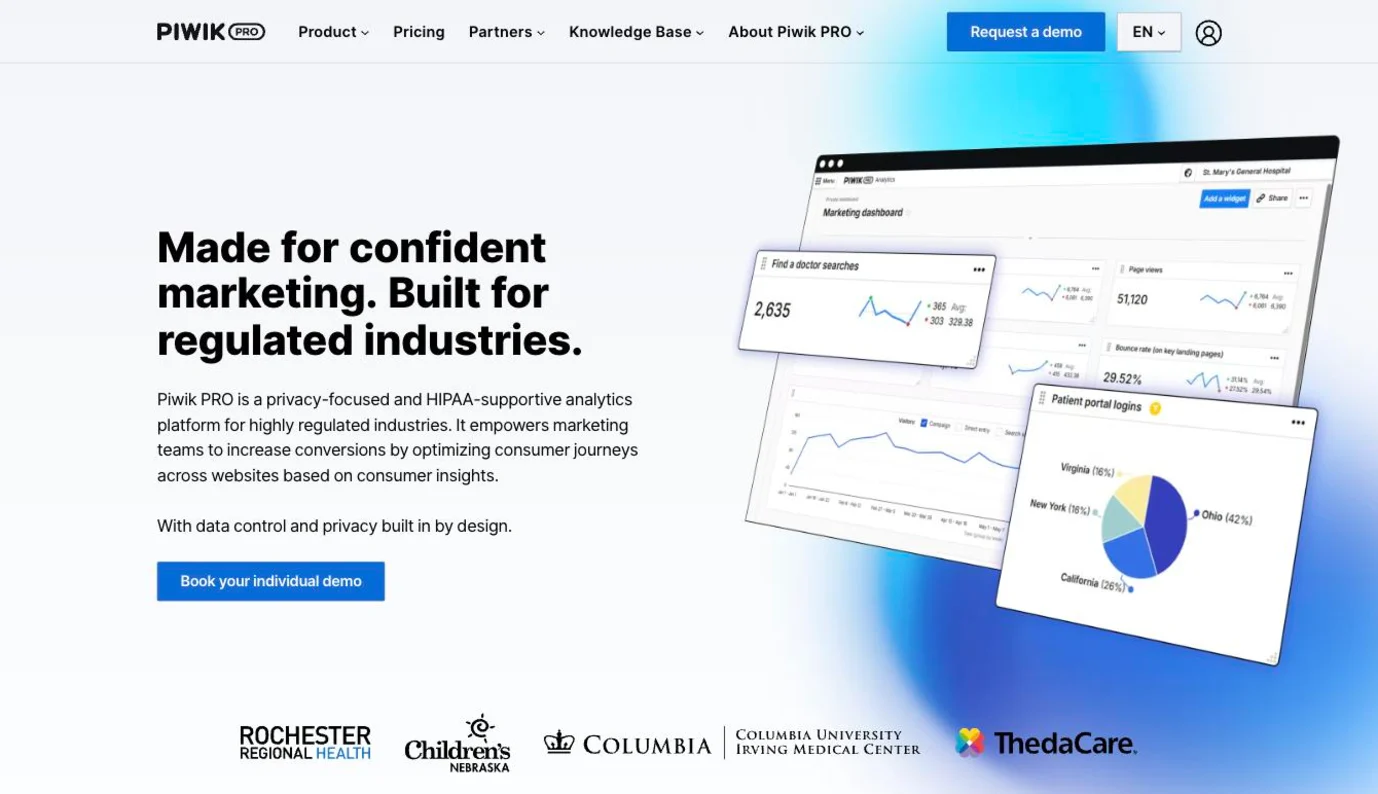
Piwik PRO, launched in 2013 and based in Wrocław, Poland, sells an analytics suite in four parts: Analytics, Tag Manager, Consent Manager and Data Activation. For a GA4 user the biggest change is on the setup side: tags and consent sit with the same vendor as the reports.
Attribution goes past GA4's two models. The attribution report compares six rule-based models and custom ones, while the core reports keep crediting goals and orders to last click.
Key features
Strengths
Limitations
Pricing
Business starts at €35 a month with a 30-day free trial, priced by domains and data volume, and covers up to 2 million actions a month, 20 domains and 25-month retention. Enterprise starts at €366 a month billed annually. Larger tiers are quoted and billed annually in advance by wire transfer, ACH or PayPal, with a 4% increase on each anniversary unless the contract says otherwise. The free Core plan ended on 28 February 2026.Reviews
Piwik PRO scores 4.5 on G2 (49 reviews) and 4.6 on Capterra (21).Bottom line
Piwik PRO suits companies that want analytics, tags and consent under one vendor, with a hosting region they pick. For ad decisions it ends at Google Ads conversions and revenue, with nothing sent to Meta or TikTok and no margin or budget control.Triple Whale
★4.5Best for: Shopify-first brands that want an AI agent, Moby, working on their store and ad data, with creative, influencer and cohort reports in the same app.
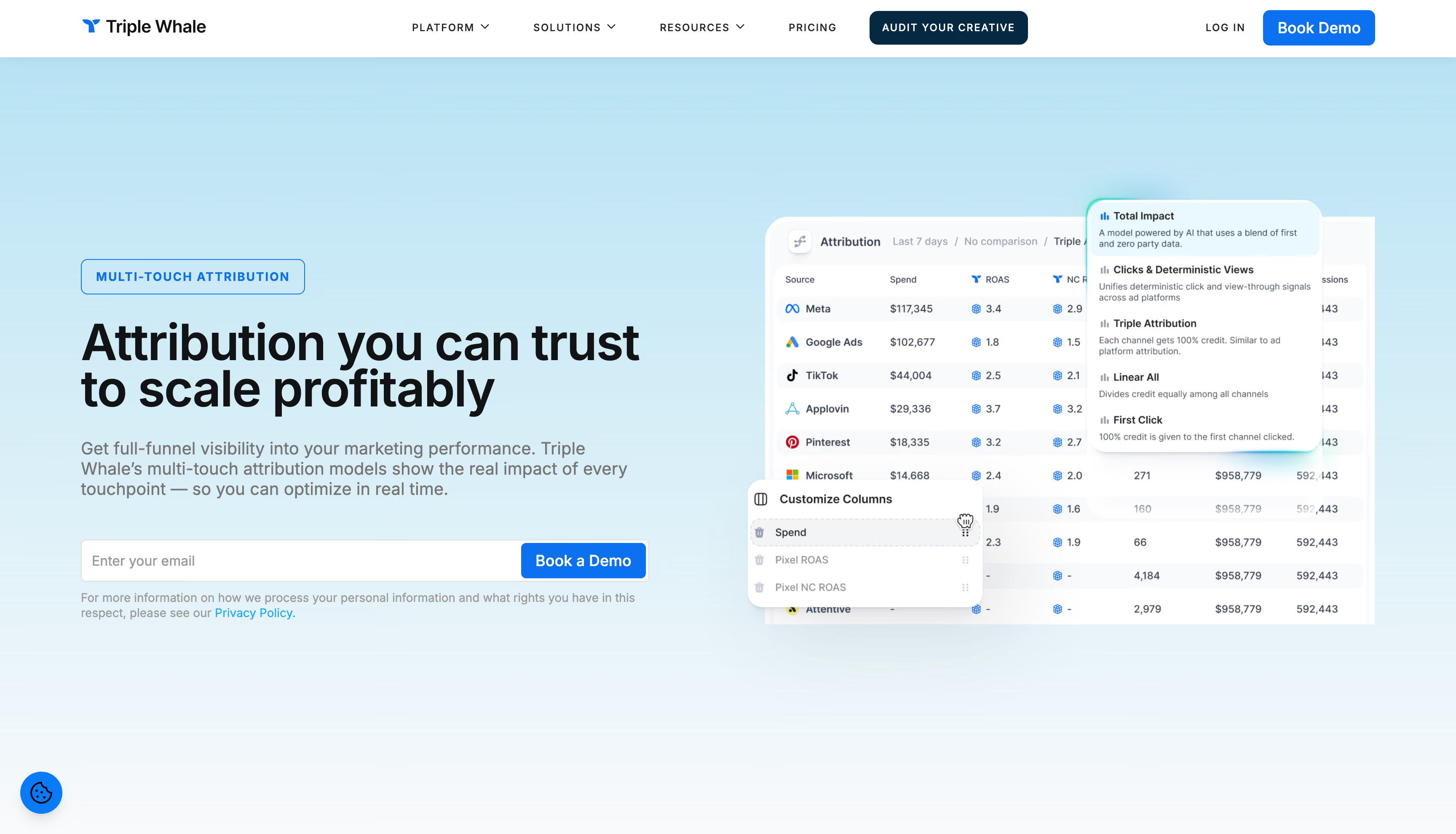
Triple Whale is an ecommerce analytics and attribution suite built around Shopify. GA4 reads the site through its own tag and reports in sessions; Triple Whale starts from Triple Pixel, a first-party pixel that links each visitor's sessions into an identity graph from cookies, device signals and the emails shoppers enter.
On the ad side it goes further than GA4, with eight attribution models, conversion events sent to ten ad platforms, Net Profit from COGS, shipping and fees, and budget actions on Meta and Google.
Key features
Strengths
Limitations
Pricing
Triple Whale publishes no prices. Free, Foundation, Automate and Enterprise are priced on annual GMV and the package chosen. Paid plans are 12-month subscriptions, paid monthly or annually with two months free, with unlimited users and all attribution models. The Free plan has 10 users, 12 months of data retention and first- and last-click attribution. There's no free trial.Reviews
Triple Whale scores 4.5 on G2 (482 reviews).Bottom line
Triple Whale suits Shopify-first brands that want an AI agent, creative and influencer reporting and MMM in the same app as their attribution. It stops at store-level profit, with no contribution margin by campaign or SKU, and data is hosted in the US.Northbeam
★4.5Best for: brands with large, multi-channel media budgets that want order-level multi-touch attribution in cash and accrual views, with MMM and incrementality tests as add-ons.
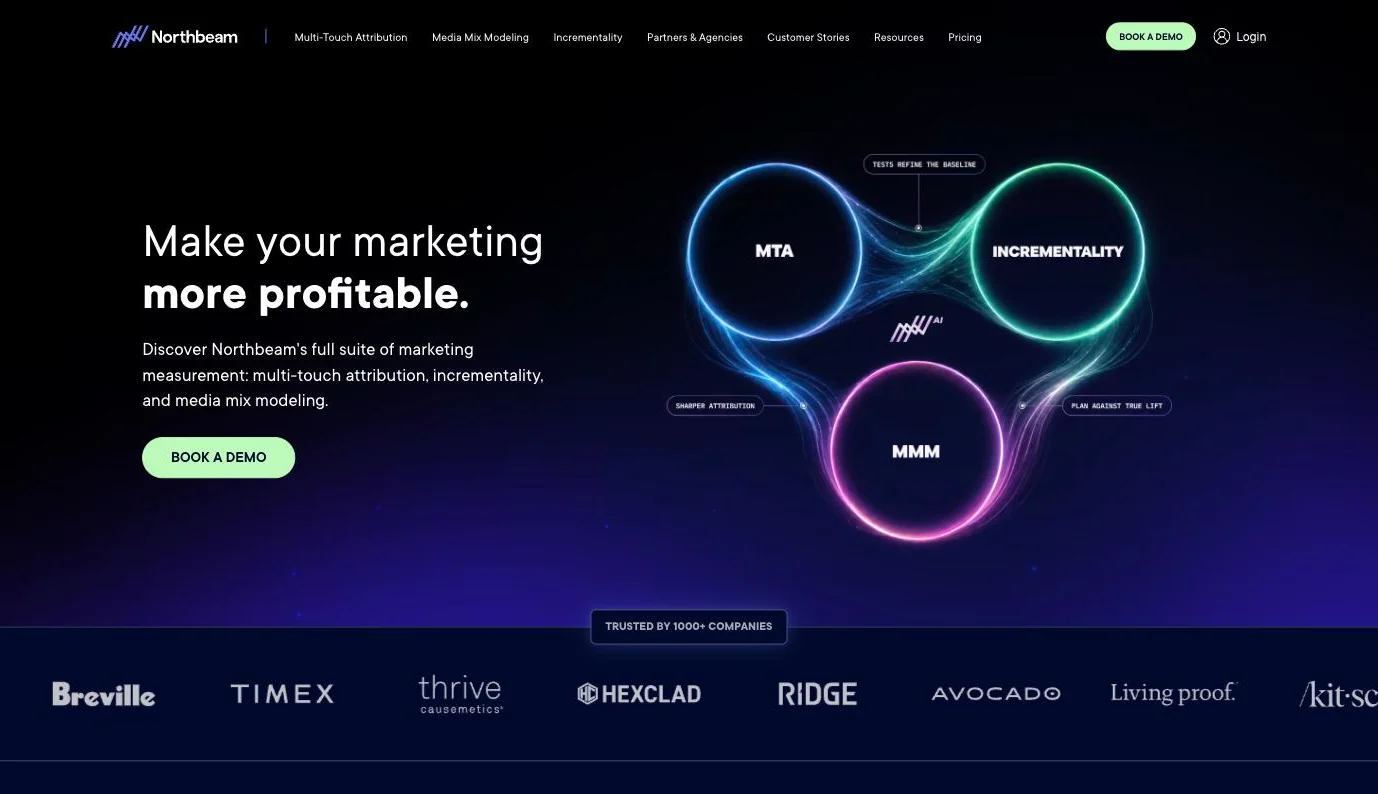
Northbeam is a multi-touch attribution platform with plans tiered by ad spend. Its pixel runs from a first-party subdomain set up through DNS and waits for consent where a banner exists, while orders arrive server-to-server from Shopify, the Orders API or SFTP.
Against GA4, Northbeam adds attribution depth and channel spread: seven models and two accounting modes across Meta, Google and YouTube, TikTok, Snapchat, Pinterest, Microsoft, Reddit, AppLovin, Amazon, The Trade Desk and more, in one table down to ad level.
Key features
Strengths
Limitations
Pricing
Growth is custom, sold through agency partners for brands under $200K a month in ad spend. Starter costs $1,500 a month for Shopify brands under $1.5M of yearly ad spend, month-to-month. Professional costs $3,500 a month for up to $500K of monthly ad spend, on annual terms. Enterprise is custom above $500K a month, with MMM+ as an optional add-on. The figures are starting prices that also depend on pageviews, and there's no free trial.Reviews
Northbeam scores 4.5 on G2 (16 reviews) and 5.0 on the Shopify App Store (2).Bottom line
Northbeam suits brands spending across many channels that want order-level attribution in cash and accrual views, with MMM and lift tests as budgets grow. It stops at recommendations and revenue: COGS only sets break-even targets, and budget changes stay in each ad account.Plausible
★4.6Best for: teams that want to swap GA4's traffic reports for a light, cookie-free counter that runs on EU-owned infrastructure or on their own servers.
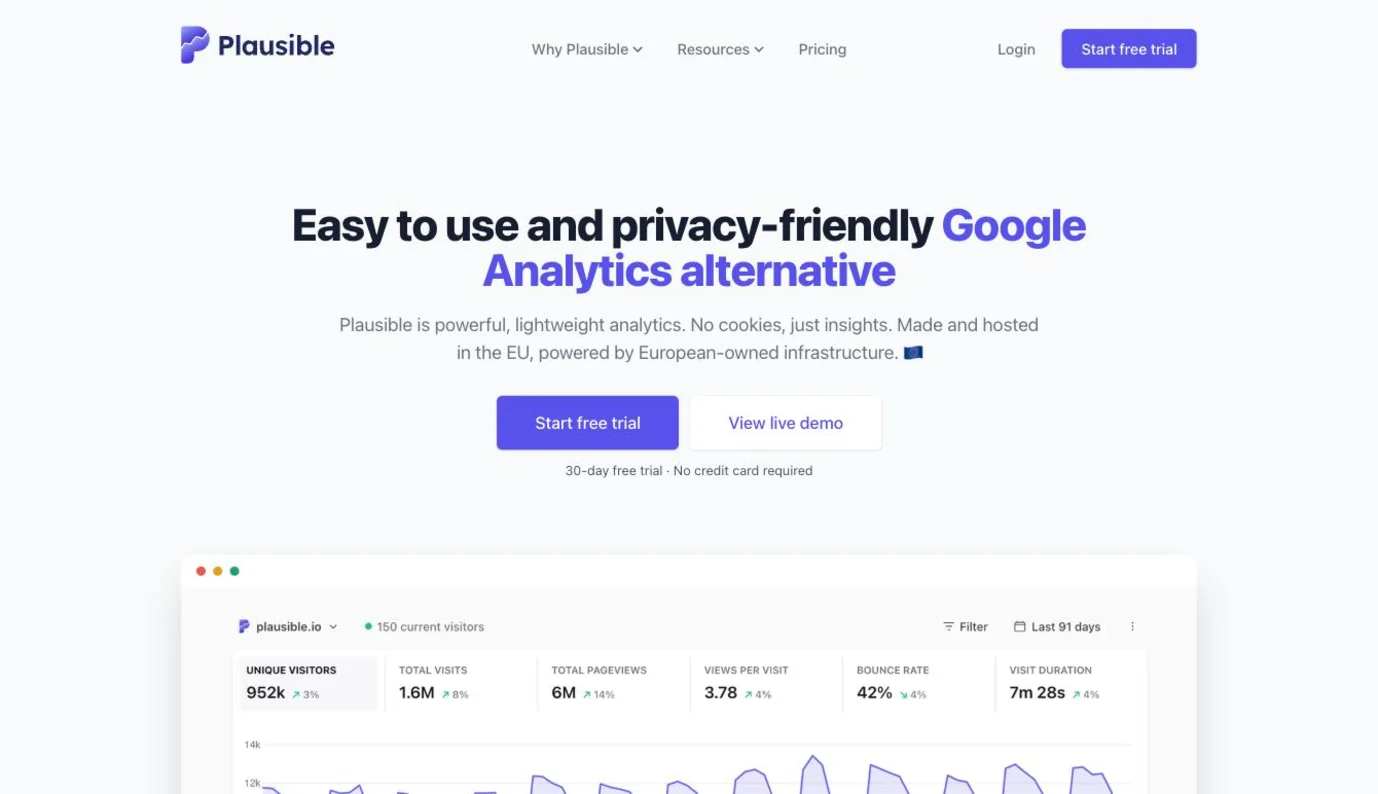
Plausible is open-source web analytics from a company incorporated in Estonia. It sets no cookies and uses no local storage. A daily-rotating hash stands in for GA4's client ID, and raw IP addresses and user agents are never stored. The data sits with three EU-owned providers: Hetzner in Germany, UpCloud in Finland and Bunny in Slovenia.
For an ecommerce team, Plausible takes over the traffic side of GA4 and adds money on the Business plan, where a purchase goal with order total and currency produces revenue by source, and funnels show where buyers drop out. GA4's Google Ads link has no counterpart here, and Meta, Google and TikTok keep bidding on whatever their own pixels caught.
Key features
Strengths
Limitations
Pricing
At 10,000 monthly pageviews, Starter costs $9 a month for one site, Growth $14 for three sites and Business $19 for ten sites with revenue attribution and funnels. Prices climb with the pageview tier, and Enterprise is custom. Yearly billing gives two months free, and the 30-day trial needs no card.Reviews
Plausible scores 4.6 on Capterra (8 reviews), 4.8 on G2 (4) and 2.8 on Trustpilot (7).Bottom line
Plausible fits teams that want a small, cookie-free traffic dashboard in place of GA4's reports, hosted in the EU or on their own servers. It stops at revenue by source, with identity that resets every day and nothing sent to the ad platforms.Polar Analytics
★4.9Best for: brands that run reporting as a BI practice, with analysts on a Snowflake database of their own and AI agents that propose changes for someone to approve.
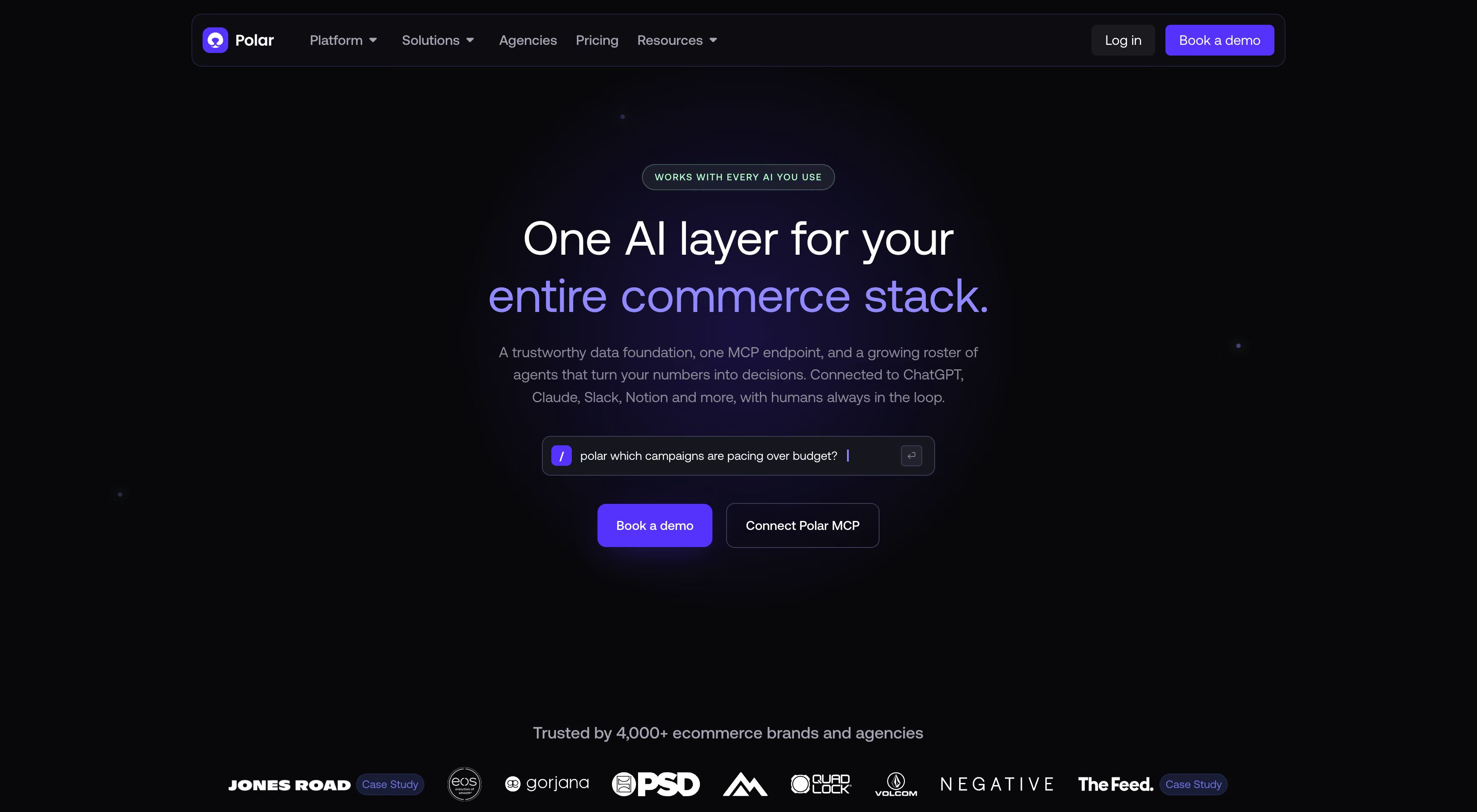
Polar Analytics is a BI and attribution platform for commerce. Each brand gets a dedicated Snowflake database on AWS with an ecommerce semantic layer, fed by store, Amazon, ad and retention connectors, while the first-party Polar Pixel collects browser events through Shopify's App Pixel and feeds multi-touch attribution with 10 models, Full Impact (based on Shapley values) among them. Contribution margin from CM1 to CM4 is built into the metrics.
Compared with GA4, Polar works on orders, ad spend and margin. Advertising Signals send conversions to Meta and Google through their conversion APIs, and the Operator agent can work in Meta, Google Ads, Amazon Ads and Klaviyo once an action is approved.
Key features
Strengths
Limitations
Pricing
Polar's pricing page shows no figures. Core and Custom plans are priced by annual GMV, and Custom adds options such as incrementality testing, Klaviyo Audiences and Advertising Signals. The Shopify App Store lists Core from $750/month, billed every 30 days, with discounts for annual terms.Reviews
Polar Analytics scores 4.9 on the Shopify App Store (116 reviews) and 4.7 on G2 (23).Bottom line
Polar fits brands that want an analyst-led BI layer on their own Snowflake database, Amazon included, with agents that wait for sign-off before they touch a campaign. Conversions reach Meta and Google only.Adobe Analytics
★4.2Best for: enterprises on Adobe Experience Cloud that want web and app analytics with algorithmic attribution, implemented and priced under an Adobe contract.
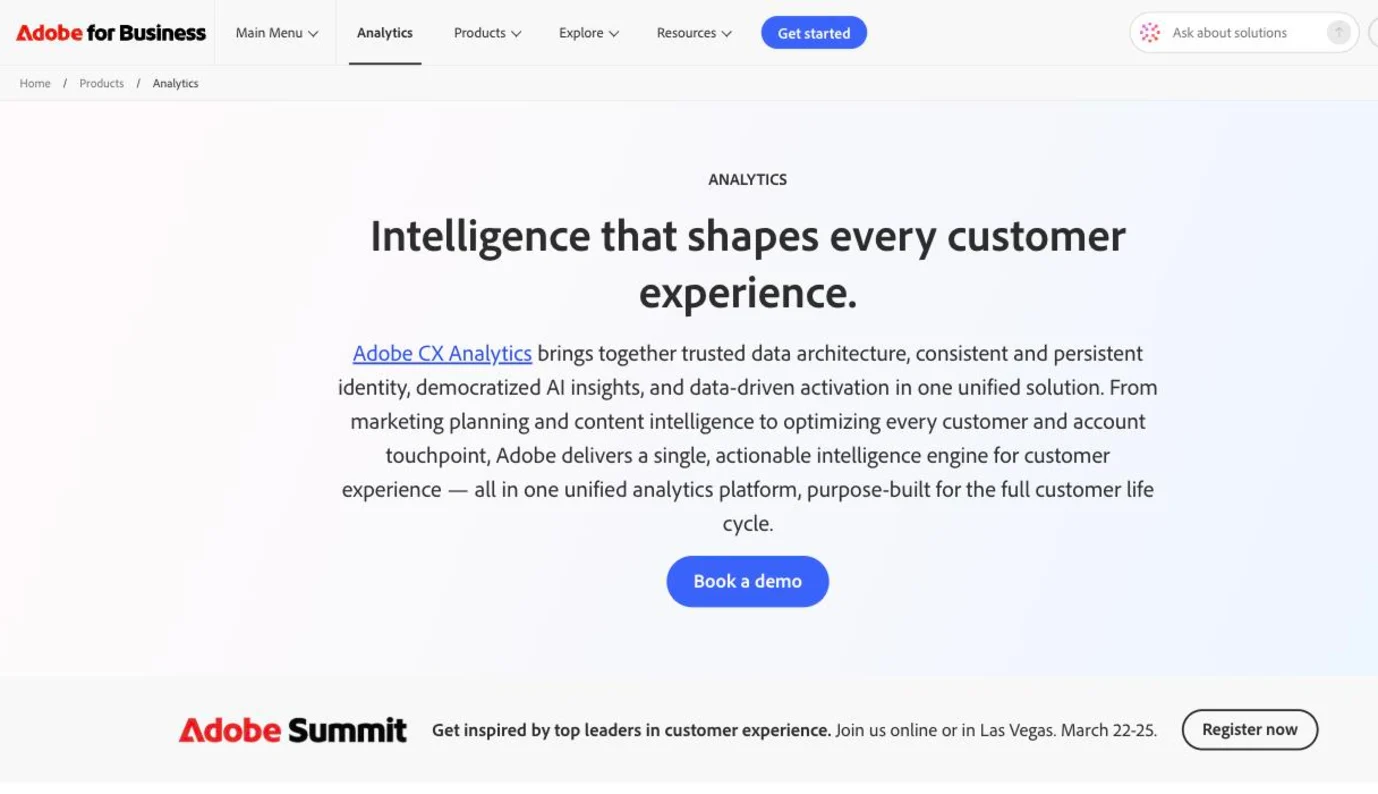
Adobe Analytics is enterprise web and mobile analytics, sold in three packages: Select, Prime and Ultimate. Commerce tracking runs on built-in events for product views, cart opens, adds and removals, checkouts and purchases, with revenue and units passed in the products variable. Everything is implemented by tagging, through AppMeasurement or the Web SDK, and cross-channel journeys sit in a separate product, Customer Journey Analytics.
For teams weighing Google Analytics 360, Adobe is the other enterprise option bought on quote and contract. Attribution in Analysis Workspace has 11 models where GA4 has two, and Advertising Analytics brings in paid-search cost from Google Ads and Microsoft Advertising. Conversions reach ad platforms only through Adobe Advertising, a separate product that uploads Analytics events to Google Ads and Microsoft Advertising as bidding objectives.
Key features
Strengths
Limitations
Pricing
Adobe Analytics is quote only, with no price, free plan or trial on the pricing page. The price depends on scope (sites, apps and data sources), data volume, package (Select, Prime or Ultimate), users, cross-product integrations, professional services and contract length, and multiyear agreements can be priced differently.Reviews
Adobe Analytics scores 4.2 on G2 (1,259 reviews).Bottom line
Adobe Analytics suits enterprises standardized on Adobe that want deep web and app analytics and algorithmic attribution under one contract. On the ad side it reaches Google and Microsoft only, through a second product, and it reports no margin or budget moves.Mixpanel
★4.5Best for: product and growth teams that analyze behavior event by event and want funnels, session replay, heatmaps and experiments in the same tool.
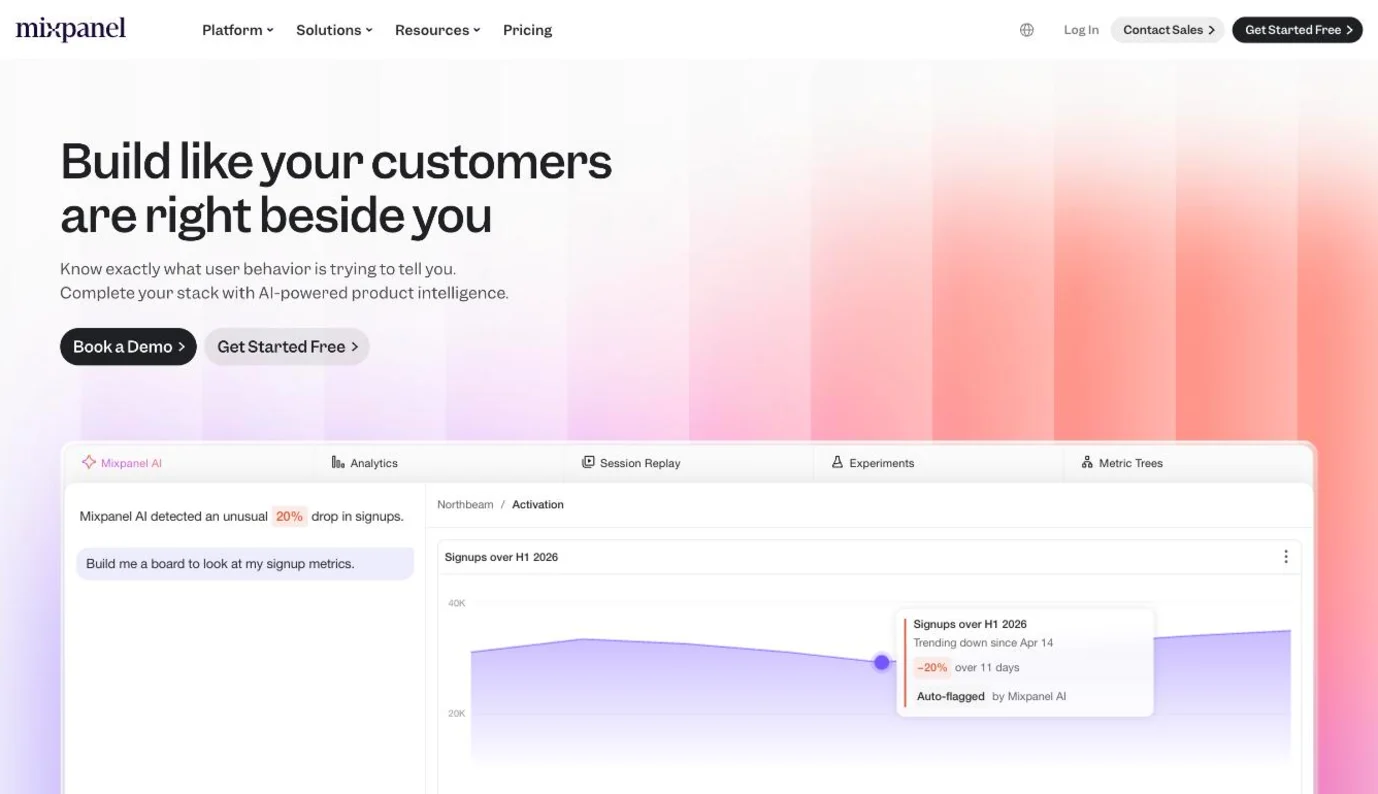
Mixpanel is event-based product analytics. Every plan includes analytics, session replay, heatmaps, experiments, feature flags and Mixpanel AI, and data arrives as events from Mixpanel's SDKs, its API or a warehouse connector. Projects run in the US on Google Cloud by default, with EU or India data residency chosen when a project is created.
For an ecommerce team, Mixpanel replaces GA4's event and funnel analysis more than its acquisition reports. Multi-touch attribution comes on Growth, where nine rule-based models credit conversions by an "Attributed by" property such as utm_source, which means UTMs have to be tracked as event properties. Ad spend arrives through a warehouse connector's Ad Spend template or a custom import of Google Ads and Meta data, and spend isn't tied to individual users. There's no Shopify app from Mixpanel; the app named Mixpanel on the Shopify App Store comes from a third-party developer, Five Thrive.
Key features
Strengths
Limitations
Pricing
Free covers up to 1M events a month, without multi-touch attribution, saved cohorts or custom properties. Growth keeps the first 1M events free and goes up to 20M; 1.5M events cost $140/month on monthly billing or $100/month billed yearly. Enterprise is custom. Data is retained for two years by default.Reviews
Mixpanel scores 4.5 on G2 (1,400 reviews).Bottom line
Mixpanel suits product and growth teams that want event analysis, replay and experiments in one place. Its ad measurement stops at UTM-based attribution and audience syncs, with no conversions sent back, no margin and no budget moves.Fathom
★4.7Best for: teams running a portfolio of domains that want simple, cookie-free traffic and revenue reporting for up to 50 sites under one subscription.
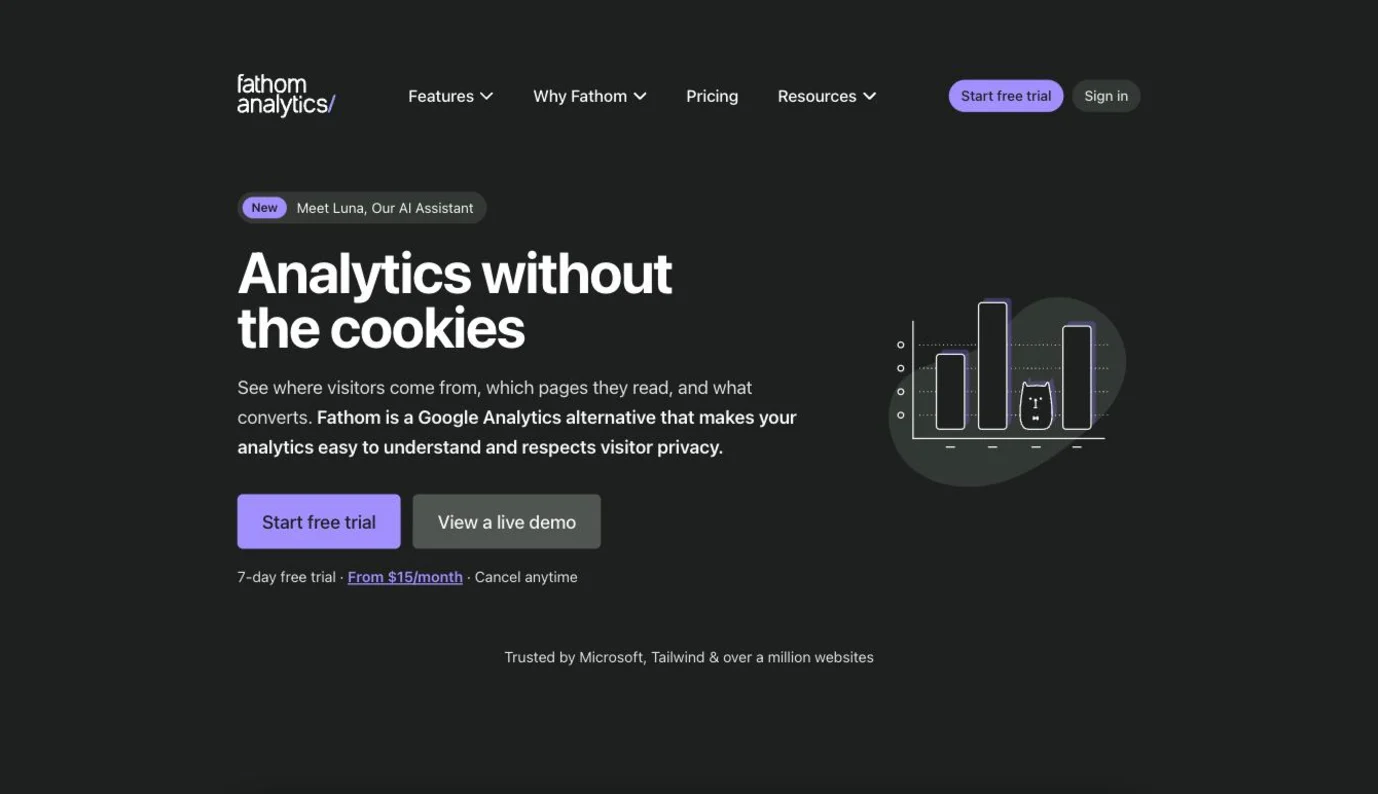
Fathom is web analytics from a Canadian company founded in 2018. It counts visitors with a SHA-256 hash of the IP address, user agent, site and a salt that changes at midnight UTC every day, and it sets no cookies. Event and revenue tracking come with every plan. On Shopify, a theme snippet and a custom web pixel send an "Order Placed" event with the order total; on WooCommerce, a snippet on the thank-you hook passes the order value.
Next to GA4, Fathom takes the traffic side and leaves the ad side out. It has no attribution model, no link to Google Ads and no conversion feed to Meta or TikTok. EU visitors pass through EU servers, where the IP address is removed, and the anonymized data for all visitors is then stored in the US.
Key features
Strengths
Limitations
Pricing
Fathom costs $15/month for up to 100,000 pageviews and $25/month for up to 200,000, with 50 sites on both and higher tiers above. Yearly billing gives two months free. There's no free plan, and the 7-day trial asks for a card.Reviews
Fathom scores 4.7 on G2 (21 reviews).Bottom line
Fathom suits teams that want light traffic and revenue counts across several sites on a single plan. Ad measurement sits outside it: no attribution, no conversions sent to the ad platforms and no margin.Best Google Analytics alternative for ecommerce: final verdict
Admetrics is the best Google Analytics alternative for ecommerce brands that want tracking, attribution, contribution margin and budget moves on one set of order data. Whether GA4 goes or stays, the same things change: Meta, TikTok and the other ad platforms receive conversions server-to-server instead of learning only from their own pixel, every campaign shows contribution margin where GA4 showed revenue, and budget moves from Admetrics instead of by hand in each ad account. GA4 can stay for traffic reports. Plans start at $399/month, and the 21-day free trial needs no card.
Book a demo