Mission control
for e‑commerceFrom independent measurement to governed allocation. One closed loop, open to your entire stack.See how the system works →
12 best cookieless and GDPR-compliant tracking tools in 2026
Most cookieless tracking tools stop at traffic reports. We compared 12 tools on privacy, tracking accuracy, attribution, profit and what happens after attribution.
Silvana Chirita·Updated October 27, 2026·28 min read
Cookieless tracking solutions collect website and ad data without third-party cookies, within each visitor's consent and EU data rules. Most of them are web analytics tools: they count visits and traffic sources and stop there. Sending conversions back to Meta and Google, attribution, profit by campaign and budget changes then happen in other tools.
This list ranks 12 cookieless and GDPR-compliant tracking tools for ecommerce brands on tracking accuracy, data foundation, profit and what happens after attribution.
Key Takeaways
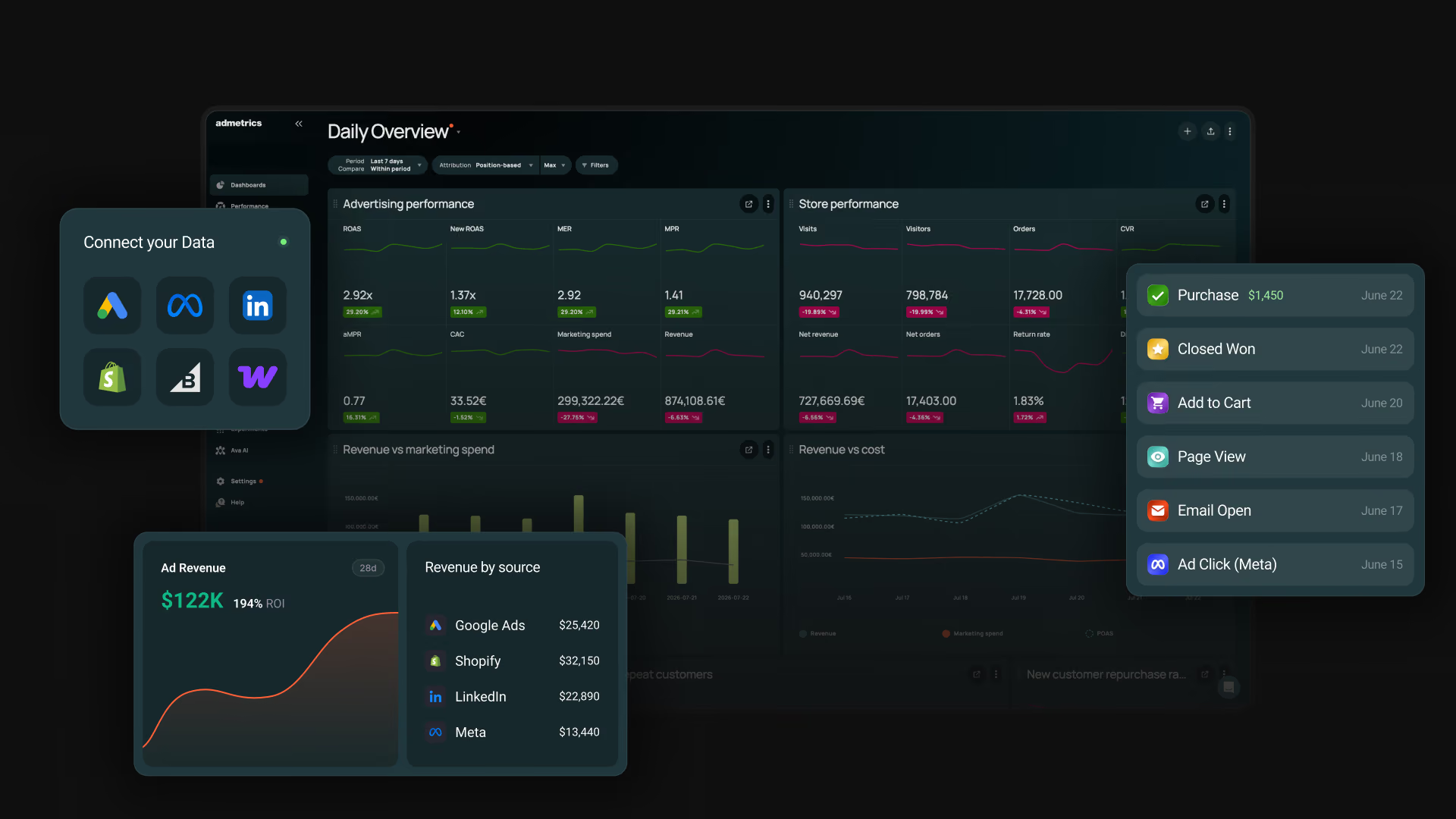
Admetrics is the most complete GDPR-compliant tracking tool on this list. First-party tracking that follows each visitor's consent, data processed and stored in the EU, conversions sent back to the ad platforms server-to-server, multi-touch attribution, profit down to the SKU and Ad Pilot budget automation run on one set of order data, from $399/month.
Cookieless analytics tools stop at traffic reports. Plausible, Fathom, Simple Analytics and TWIPLA count visits without cookies. None of them sends conversions to the ad platforms, reports profit or moves budget, which leaves Meta and Google optimizing on what their own pixels report.
Piwik PRO and Matomo build GDPR-compliant analytics around consent handling and EU hosting. Both send conversions to Google Ads but not to Meta, Matomo through a paid plugin, and neither reports contribution margin.
Tracify, Ruler and Klar add attribution, each with a gap. Tracify sends conversions back to Meta only, Ruler stops at revenue, and Klar sends no conversions back to the ad platforms.
Only Admetrics moves budget. Every other tool on the list ends in a report, and budget changes stay manual in each ad account.
How we ranked the tools
We scored every tool on five criteria. Prices and features are as of October 2026.
▪Attribution and tracking accuracy. Whether journeys are matched to real shop orders, and which attribution models you can compare.
▪Data foundation. Which store systems, ad platforms and cost sources connect.
▪Profit over revenue. Whether COGS, shipping, payment fees and returns roll up to contribution margin by campaign, or the tool stops at revenue.
▪What happens after attribution. Whether conversions go back to the ad platforms server-to-server, and whether anything moves budget inside limits you set.
▪Privacy. How the tool tracks without third-party cookies, how it handles consent, and where data is stored as the vendor states it.
Cookieless tracking tools compared
#
PLATFORM
ATTRIBUTION
PROFIT CONTROL
S2S PUSHBACK
ACTION
PRIVACY
1
Admetrics
Multi-touch + PRISMA mix model
CM2, CM3, POAS to SKU
Meta, Google, TikTok and more (add-on)
Ad Pilot on Meta; Budget Optimizer
Consent-aware, EU-hosted
2
Piwik PRO
Attribution reports
No
Google Ads
No
Consent Manager, EU option
3
Matomo
Multi-channel plugin (paid)
No
Google Ads, Microsoft, Yandex (paid plugin)
No
Cookieless option, Frankfurt or self-hosted
4
Tracify
AI multi-touch
P&L dashboard
Meta (conversion postback)
No
Cookieless, Germany
5
Plausible
Revenue by source (Business)
No
No
No
Cookie-free, EU
6
Fathom
No
No
No
No
Cookie-free, US storage
7
Ruler Analytics
Multi-touch + MMM
No
Offline conversions to Google Ads, Meta
No
First-party cookies, EEA
8
Simple Analytics
No
No
No
No
Cookie-free, EU
9
Klar
Multi-touch, MMM, geo-lift
P&L to contribution margin
No
No
Pixel after consent, Europe
10
Google Analytics 4
Data-driven attribution
No
Google Ads only
No
Consent Mode v2
11
Stape
No
Profit as value (POAS feed)
Wide server tag catalog
No
Server-side, EU option
12
TWIPLA
No
No
No
No
Cookie-free, Germany
Admetrics
★5.0
Best for: ecommerce and DTC brands under EU data rules that spend on Meta, Google and TikTok and want consent-aware tracking, attribution, contribution margin and budget moves on one set of order data.
Admetrics is a measurement and budget allocation platform. Tracking runs first-party on your own domain and follows each visitor's consent choice from the banner you already use, and data is processed and stored in the EU. On the same order data, Admetrics sends conversions back to the ad platforms server-to-server, credits channels with its own attribution, shows contribution margin by campaign and moves budget.
Key features
▪Tracking. First-party tracking on your own domain, with journeys stitched across sessions and devices and anchored to shop orders. The visitor's consent state travels with every event, and Shopify's native banner or another CMP works without a migration.
▪Conversion Signals. Conversions sent back server-to-server to Meta, Google, TikTok and other ad platforms, deduplicated against the browser pixel.
▪Multi-Touch Attribution. Compare attribution models and see Admetrics numbers inside the Meta, Google and TikTok ad managers through the Chrome extension. The PRISMA marketing mix model, which works on aggregated spend and sales, is a Custom-plan add-on.
▪Profit Intelligence. CM2, CM3 and POAS by campaign and product, down to the SKU, with COGS, shipping, payment fees and returns per order.
▪Budget Optimizer and Ad Pilot. Budget Optimizer proposes cross-channel budget moves. Ad Pilot adjusts Meta budgets inside caps you set and logs every move so it can be reversed.
Strengths
Consent-aware first-party tracking. Tracking follows each visitor's choice in your existing CMP, and the consent state stays attached to every event.
EU data hosting. Data is processed and stored in the EU, with a DPA/AVV, records of processing and an audit trail ready for your DPO.
Single source of truth. Tracking, attribution, profit and budget moves read the same order data, with no second dataset to reconcile.
Contribution margin per campaign and SKU. Profit Intelligence shows which campaigns and products made money after product cost, shipping, payment fees and returns.
Independent attribution. Multi-Touch Attribution credits each channel with Admetrics' own model instead of the ad platforms' reporting.
Budget automation on Meta. Ad Pilot moves Meta budgets toward a CAC, POAS or new-customer ROAS target.
Limitations
S2S pushback is a paid add-on on every plan.
Ad Pilot executes on Meta only. Google and TikTok budgets don't change automatically.
PRISMA and Budget Optimizer are Custom-plan add-ons. Growth and Business don't include them.
Pricing
Growth: $399/month, including the first $20,000 of monthly ad spend, then 1.5% above that. Business: $899/month, including $70,000, then 1% above. Ad Pilot is an add-on on this plan. Custom: quoted, for brands spending more than $100,000 a month. PRISMA and Budget Optimizer are add-ons here. Annual billing saves 15%, and the 21-day free trial needs no card.
Reviews
Admetrics scores 5.0 on the Shopify App Store and 4.8 on G2. Reviewers mention onboarding support and a quick setup.
Bottom line
A cookie-free counter is the cheaper way to report traffic. Admetrics is for brands that need consent-aware, EU-hosted tracking and want the same order data to send conversions back to the ad platforms, credit channels, show contribution margin and move budget.
Best for: EU companies that want analytics, tags and consent from one vendor, with Consent Mode v2 built in and Google Ads as the main paid channel.
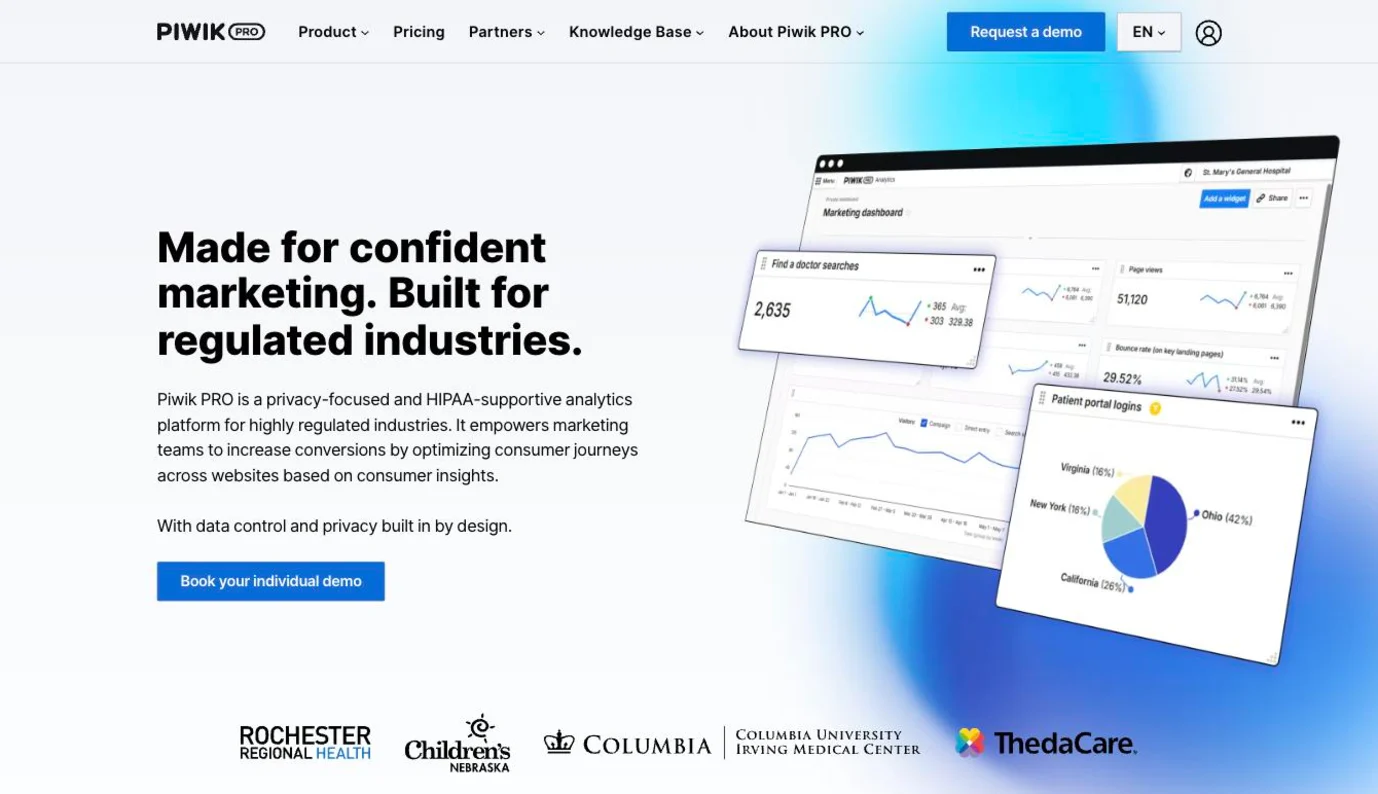
Piwik PRO is a Polish analytics suite that bundles analytics, tag management, a consent manager and data activation. Cookies are optional. Visitors who decline can still be counted in an anonymous mode that switches cookies off, removes the IP, limits location to country level and holds the visit together with a session hash, while full tracking with attribution waits for consent. Data sits on Azure in a region you pick, and the Business plan runs in EU-operated data centers in Sweden.
Key features
▪Consent Manager with Consent Mode v2. The built-in consent tool hands each visitor's choice to Google's tags through Piwik PRO Tag Manager (GTM needs a separate setup), with a Cookie Information CMP module as an alternative.
▪Shopify app. Product views, carts, checkouts and orders are tracked automatically, with Consent Mode v2 and Shopify's Customer Privacy API supported.
▪Google Ads conversions server-to-server. Data Activation uploads click conversions and Customer Match lists, with consent mapped to the Consent Mode v2 signals.
▪Hosting choice. Public cloud on Azure in the US, the Netherlands, Germany or Hong Kong, or private cloud in more than 60 Azure regions or on Elastx.
Strengths
Consent and tags in one place. The consent state reaches the tags without a third tool in the chain.
Paperwork for the DPO. ISO 27001, SOC 2 Type II and a HIPAA BAA on Healthcare Enterprise cover what a security review usually asks for first.
Limitations
Conversions go to Google Ads only. Meta and TikTok keep learning from the browser pixel alone.
No profit reporting. Campaigns are judged on revenue, with no contribution margin or POAS.
No budget automation. Budget moves stay manual in each ad account.
The free plan is gone. Core ended on 28 February 2026 with no automatic migration, and Enterprise contracts carry a 4% price uplift on each anniversary unless the contract says otherwise.
Pricing
Business starts at €36 a month, with a 30-day trial, up to 2 million actions a month, 20 domains, 25-month retention and EU hosting in Sweden. Enterprise starts at €366 a month billed annually, and larger tiers are quoted by traffic, paid annually in advance by wire transfer, ACH or PayPal.
Reviews
Piwik PRO scores 4.5 on G2 and 4.6 on Capterra.
Bottom line
Piwik PRO suits EU teams that want consent, tags and reporting under one contract and buy most of their traffic on Google. It stops at Google Ads conversions and revenue reports, with no Meta feed, profit reporting or budget moves.
Matomo
★4.2
Best for: teams that want open-source analytics they can run on their own servers or keep in Frankfurt, with cookies optional and paid plugins for attribution and ad conversions.
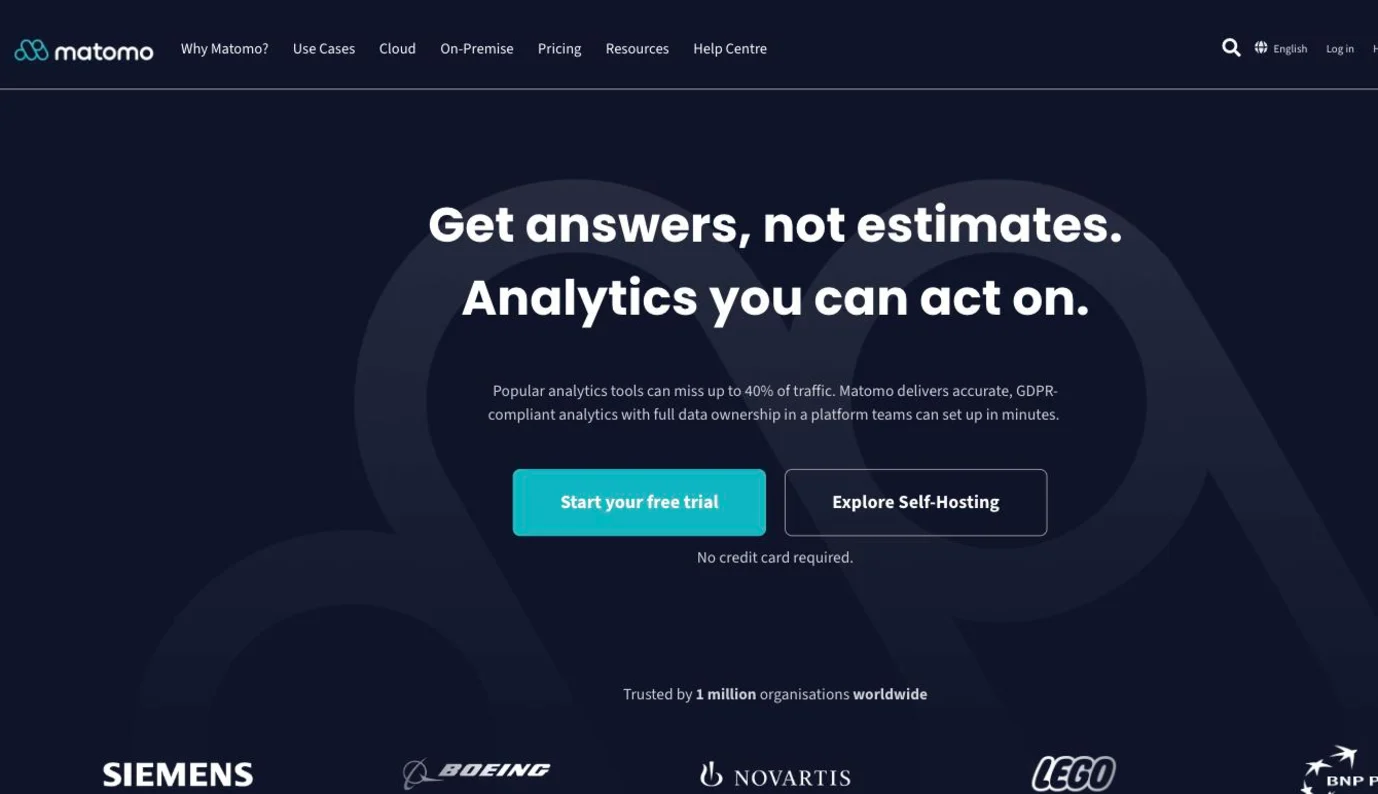
Matomo is open-source web analytics, run by InnoCraft of Wellington, New Zealand, as Matomo Cloud or as free On-Premise software. Paid plugins add multi-channel attribution and conversion exports to ad networks. With tracking cookies disabled, every visitor is counted cookie-free, and the pricing page lists consent-free tracking as a use case. Matomo is careful about what that means legally: it says the type of tracking technology doesn't exempt analytics from consent rules, and it points to France's CNIL-exempt configuration and to opt-out regimes such as Switzerland and Iceland. Cloud data is stored in Frankfurt, and On-Premise puts it wherever your servers are.
Key features
▪Ecommerce tracking. Orders and revenue are supported, WooCommerce has a paid analytics plugin from €39 a year, and Shopify connects through custom pixels using Matomo's own guides.
▪Advertising Conversion Export. A paid plugin (€169 a year on-premise) sends conversions to Google Ads, Microsoft Advertising and Yandex Ads.
▪Multi-Channel Conversion Attribution. A paid plugin (€83 a year on-premise) for crediting more than one channel.
▪ISO 27001:2022. Certified since September 2025, covering cloud hosting, software development and internal operations.
Strengths
Full control of where data lives. Self-hosting decides the location, and the cloud version stays in Germany.
Straight talk on consent. Matomo tells customers plainly that cookie-free collection alone doesn't settle the consent question.
Free core software. On-Premise costs nothing, and you pay only for the plugins you add.
Limitations
No Consent Mode support. Matomo has no CMP of its own and no direct Google Consent Mode support, and it relies on guides for Cookiebot, Silktide and other CMPs.
No official Shopify app. Shopify setup runs through custom pixels, and the only app in the Shopify App Store comes from a third-party developer.
Ad conversions stop at three networks. The export plugin covers Google Ads, Microsoft Advertising and Yandex Ads, with no feed to Meta or TikTok.
No profit reporting or budget automation. Attribution ends at revenue, and budget moves stay manual.
Pricing
Cloud Business starts at $26 a month excluding tax for 50,000 hits, with a 21-day trial and no card. Annual billing gives two months free, and Enterprise is quoted above 10 million hits a month. On-Premise is free, and premium plugins are sold per year in euros.
Reviews
Matomo scores 4.2 on G2, 4.7 on Capterra and 2.4 on Trustpilot.
Bottom line
Matomo suits teams that want to own their analytics stack, down to the server it runs on. Every step past traffic and revenue reporting, from a Meta feed to margin and budget, needs plugins or other tools.
Tracify
★4.8
Best for: brands that want attribution without waiting for consent, relying on Tracify's BISG consent-free certification.
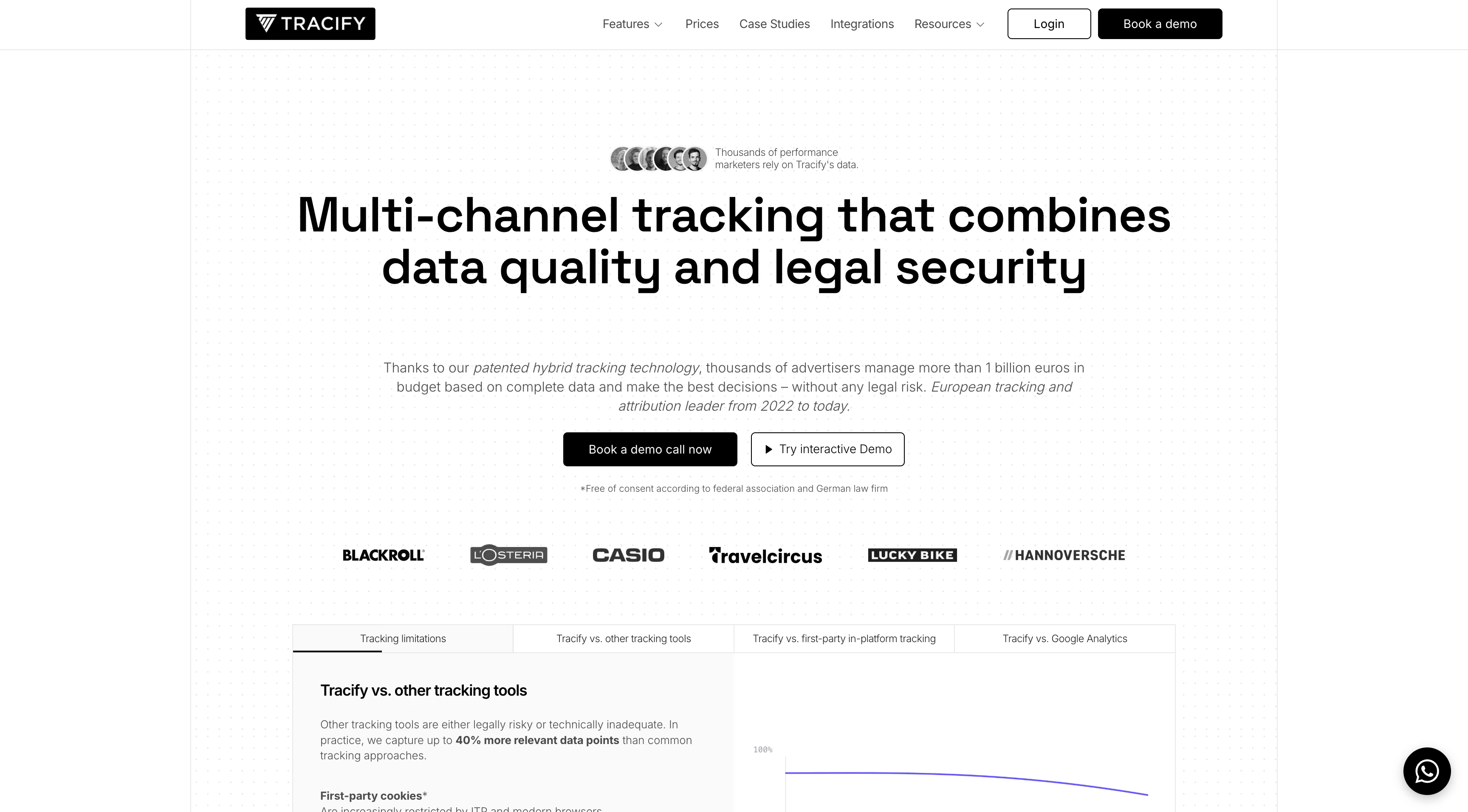
Tracify is a German cookieless attribution tool for ecommerce. Its patented hybrid toolkit tracks from both the browser and the server without cookies. The setup holds a BISG "consent-free" certification, backed by an opinion from a federal association and a German law firm. Signals including IP, user agent and fingerprint data are pseudonymized and aggregated before they're used. Servers stand in Munich and Frankfurt, and no data is processed outside the EU. Whether a consent-free setup fits your shop still depends on your configuration and jurisdiction, which makes it a question for your DPO before it's a question for marketing.
Key features
▪Hybrid tracking. Browser and server collection in one toolkit, patented with the USPTO.
▪AI attribution. Behavior-based multi-touch models with an unlimited attribution window and the full customer journey per order.
▪Creative and influencer analysis. Results broken down by ad creative and by influencer.
▪Profit & Loss dashboard. A P&L view next to the attribution reports.
▪Chrome extension. Tracify's numbers appear inside the Meta, Google and TikTok ad managers.
▪Compliance list. Tracify names GDPR, TDDDG, CCPA, CPRA and LGPD alongside its BISG certification.
Strengths
Attribution that doesn't start at the banner. With the consent-free setup, journeys include visitors a consent-gated pixel would never see.
German hosting. Munich and Frankfurt servers and EU-only processing keep the data residency answer short.
Numbers where media buyers work. The extension puts Tracify's attribution next to the native columns in each ad manager.
Limitations
Conversions go back to Meta only. Tracify posts conversions to a separate Meta dataset, mainly for audiences, and Google and TikTok keep optimizing on what their own pixels report.
No budget automation. Budget moves stay manual in each ad account.
Fingerprint data in the signal mix. Pseudonymized IP, user agent and fingerprint signals are part of the method, which your DPO will want to review against Tracify's certification.
Setup fee on top. OMR lists a one-time €500 setup fee next to the monthly price (January 2025 data).
Pricing
Tracify starts at €500 a month. OMR adds a one-time €500 setup fee, and test and pilot phases are agreed on a demo call.
Reviews
Tracify scores 4.8 on OMR Reviews.
Bottom line
Tracify suits brands that want attribution without waiting for consent and rely on its BISG certification. It sends conversions back to Meta only and doesn't move budget.
Plausible
★4.6
Best for: content sites and small stores that want a simple, cookie-free traffic report on EU-owned infrastructure for a few dollars a month.
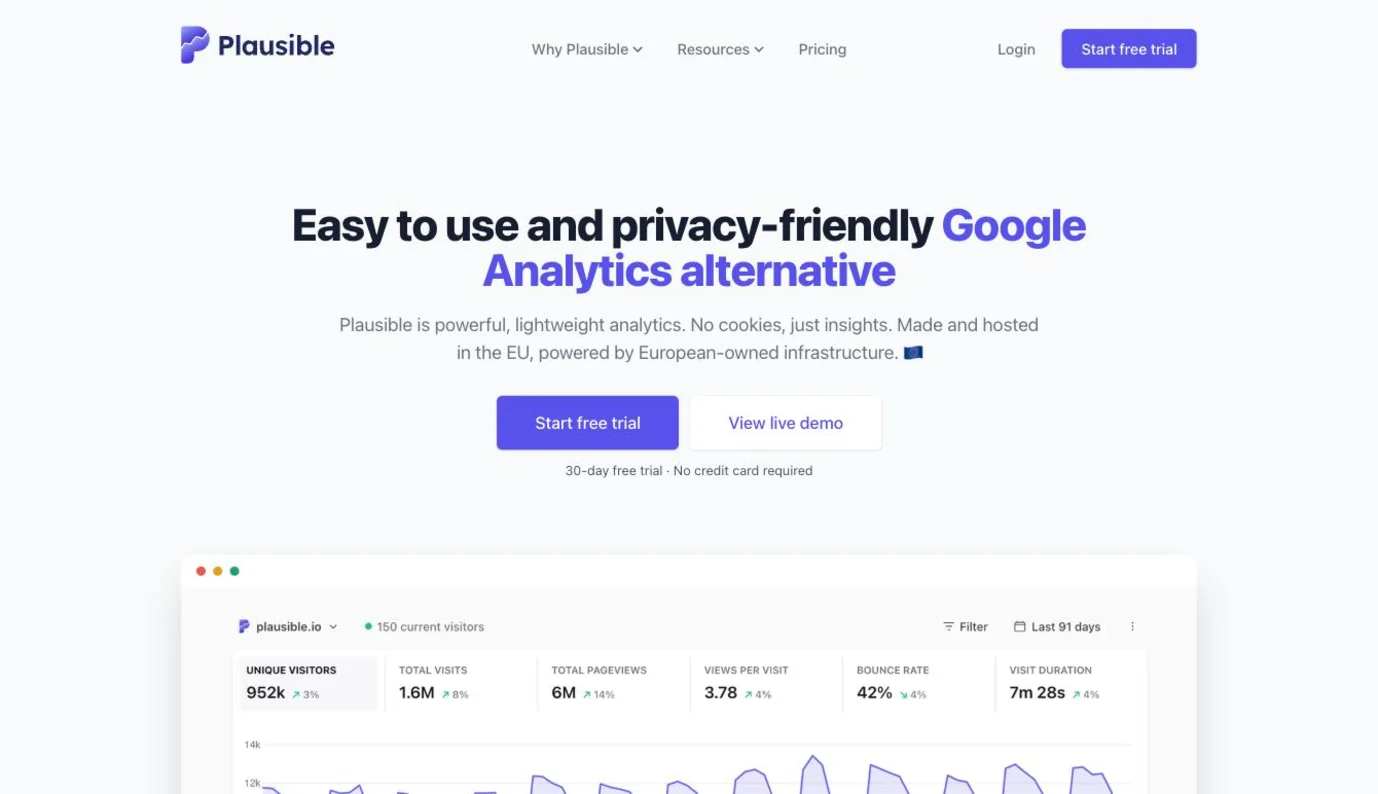
Plausible is open-source, privacy-focused web analytics from a company incorporated in Estonia, with revenue by source on the Business plan. Plausible sets no cookies and uses no local storage. A visitor is recognized for one day through a hash of a daily salt, the site's domain, the IP address and the user agent, and the salt is deleted after 24 hours. Plausible says analytics with its script needs no cookie banner and no consent. Visitor data sits with Hetzner in Falkenstein, Germany, the database and exports with UpCloud in Finland, and the CDN with Bunny in Slovenia, and the data never leaves the EU.
Key features
▪Daily-hash counting. Unique visitors per day without cookies, with raw IP addresses and user agents never stored.
▪Named EU infrastructure. Each processor is listed by country, and all of them are EU-owned.
▪Revenue goals. A purchase event with order total and currency, set up in Shopify through a theme snippet and a custom pixel, or with one setting in the WordPress plugin for WooCommerce.
▪Funnels and revenue by source. Part of the Business plan.
▪Self-hosting. The open-source code runs on your own servers if you prefer.
Strengths
Cheap and light. A $9 entry plan and a small script make it an easy first step away from GA4 for traffic reporting.
A short data path. Three EU-owned providers, each named, are easy to list in a record of processing.
Limitations
No cross-day journeys. Because the salt resets daily, a Tuesday click and a Friday order belong to two different visitors.
No conversion feed to the ad platforms. Meta and Google get nothing from Plausible.
No profit reporting or budget automation. Revenue by source is as far as the money goes.
Revenue needs Business. Starter and Growth have no revenue tracking, and Shopify has no official app.
Pricing
Starter costs $9 a month for one site and up to 10,000 pageviews with no retention limit, Growth $14 for three sites, and Business $19 for ten sites with revenue and funnels. Prices rise with the pageview tier, up to 10 million and beyond, and Enterprise is custom. Yearly billing gives two months free, after a 30-day trial with no card.
Reviews
Plausible scores 4.6 on Capterra, 4.8 on G2 and 2.8 on Trustpilot.
Bottom line
Plausible suits sites that want an inexpensive cookie-free traffic report on EU infrastructure. It leaves connecting ad spend to orders to another tool.
Fathom
★4.7
Best for: agencies and owners of many sites who want cookie-free traffic and revenue numbers across dozens of domains on one plan.
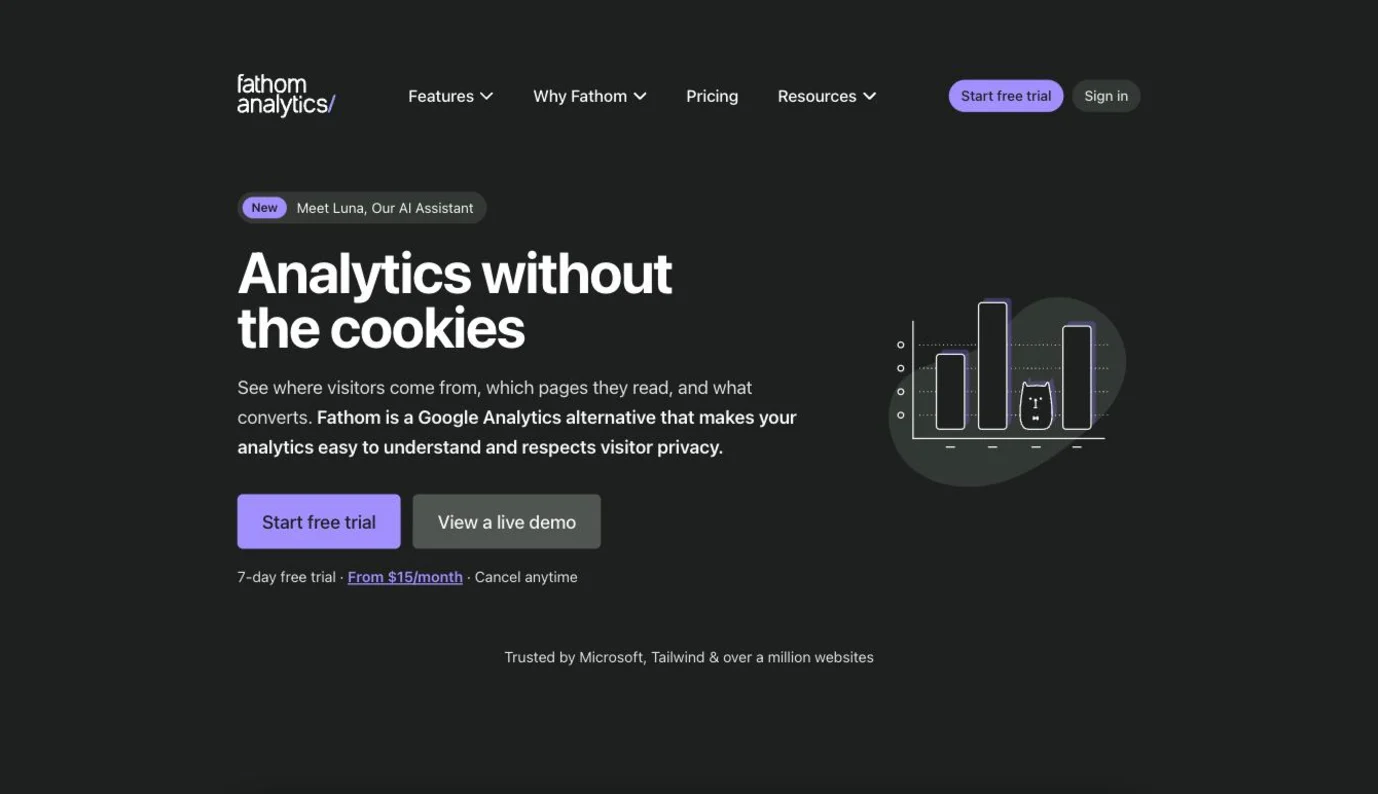
Fathom is cookie-free web analytics from a Canadian company founded in 2018. It counts visitors with a SHA-256 hash of the IP address, user agent, site identity and a daily salt that rotates at midnight UTC. Fathom says it needs no cookie banner, on every plan. For EU traffic, its EU Isolation feature routes visitors through Bunny.net to EU servers, where the IP is stripped before anything reaches US infrastructure. After that, the anonymized data for all visitors is stored on US servers, with AWS handling non-EU traffic, PlanetScale the app database and ClickHouse Cloud the analytics database. EU teams that need data stored in the EU should weigh that last step.
Key features
▪Cookie-free counting. A daily-salted hash in place of cookies or stored IDs.
▪EU Isolation. EU visitors hit EU servers first, and the IP is removed there.
▪Events and revenue on every plan. Shopify sends an "Order Placed" event with the order total through a theme snippet and custom pixel, and WooCommerce does the same on its thank-you hook.
▪50+ sites on every plan. The pageview allowance is shared across sites.
▪Certified sub-processors. PlanetScale and ClickHouse hold SOC 2 Type II, and ClickHouse also holds ISO 27001.
Strengths
Built for portfolios. One plan covers more than 50 sites, which suits agencies and publishers with many domains.
Revenue without an upgrade. Event and revenue tracking come with the entry plan.
Limitations
Data stored in the US. EU Isolation removes the IP in the EU, and the anonymized data then lives on US servers.
No ad-platform integration. Fathom sends no conversions to Meta, Google or TikTok.
No attribution, profit reporting or budget automation. It reports traffic and revenue by source and stops there.
No free plan. The seven-day trial asks for a card.
Pricing
Plans cost $15 a month for 100,000 pageviews, $25 for 200,000 and $45 for 500,000, with more tiers above that and a custom arrangement for very large sites. Yearly billing gives two months free.
Reviews
Fathom scores 4.7 on G2.
Bottom line
Fathom suits anyone running many sites on one plan. EU brands should check the US storage first, and anything to do with ad spend, from attribution to the platform feeds, sits with other tools.
Ruler Analytics
★4.6
Best for: lead-driven and high-consideration businesses that need calls, forms and offline sales tied back to the ad that started them, with conversions returned to Google Ads and Meta.
Ruler is a marketing attribution tool from Liverpool. It follows each lead, call or sale back to its source and sends the revenue back to the ad platforms. Click-path tracking uses first-party cookies, tags and click IDs, and for attribution without cookies Ruler points to its marketing mix model, which works on aggregated data. Client data sits on third-party servers and isn't stored outside the EEA without your approval.
Key features
▪Closed-loop attribution. Leads, calls and revenue matched to their source, with first, last, time decay, linear, position-based, data-driven and impression models.
▪Call tracking. Phone calls join the same journey as forms and site visits.
▪Google Ads offline conversions. Revenue goes to Google Ads automatically through the API, matched on GCLID and GBRAID.
▪Meta offline events. Conversions flow into an Offline Conversion dataset in Meta automatically.
▪Marketing mix modeling. MMM on aggregated spend and outcomes, on the Advanced plan.
Revenue goes back to the platforms. Conversions go back to Google Ads and Meta automatically.
Offline sales count. Calls and deals closed outside the site reach the attribution report and the ad platforms.
Two ways to measure. Multi-touch for journeys, MMM where cookies don't reach.
Limitations
Cookies for click paths. Journey tracking runs on first-party cookies and click IDs, and the cookieless part of the product is the MMM.
No profit reporting. Channels are judged on revenue, with no contribution margin or POAS.
No budget automation. Budget moves stay manual in each ad account.
MMM sits on the top plan. Mix modeling starts at $2,000 a month on Advanced.
Pricing
Ruler shows prices in pounds, euros and dollars. Small, for 10,000 visits a month, costs £299, €344 or $400 a month billed monthly, or £269, €309 or $360 a month on an annual plan. Medium (50,000 visits) costs $668, Large (100,000) $1,326 and Advanced (above 100,000) $2,000 a month on monthly billing, and annual billing saves 10%.
Reviews
Ruler scores 4.6 on G2 and 3.7 on Capterra.
Bottom line
Ruler suits businesses whose sales close on the phone or in a CRM. It stops at revenue, with no contribution margin or budget automation.
Simple Analytics
★4.8
Best for: site owners who want a plain cookie-free counter, hosted in the Netherlands, with a free plan for small sites.
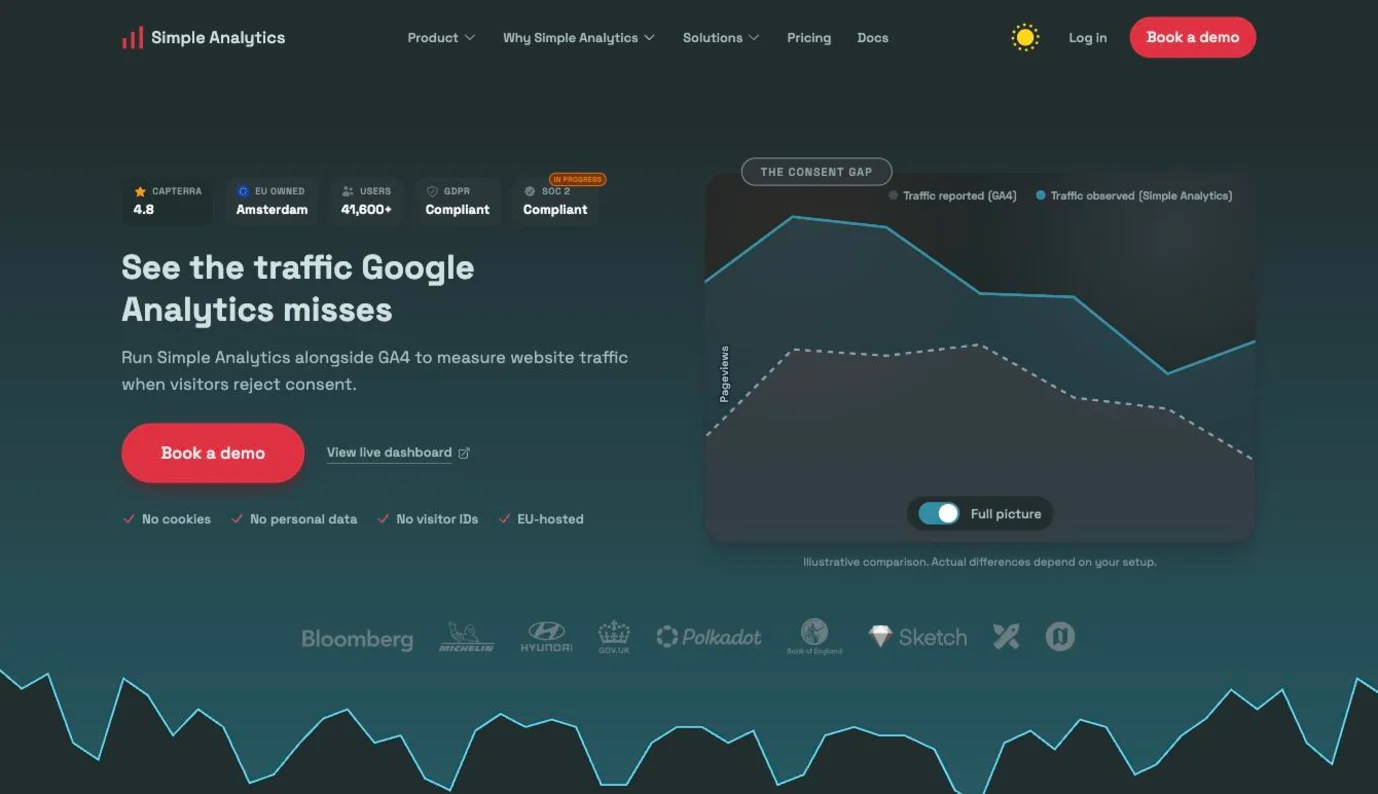
Simple Analytics is cookie-free web analytics from Amsterdam. It collects no cookies, no local storage, no fingerprints and no hashes, and doesn't collect or store IP addresses. A visit counts as unique when it arrives directly or from an external referrer, which means there's no identifier at all to carry a visitor from one day to the next. Its messaging on banners is mixed. The pricing page promises no consent banners, while the company's own "Analytics Without Consent" page says cookieless isn't a legal exemption, that consent depends on what's being processed, and advises keeping GA4 and your CMP in place. Website data is stored in the EU, with the primary infrastructure in the Netherlands.
Key features
▪Referrer-based uniques. Unique visits come from the referrer, with no cookie, hash or stored ID.
▪No IP collection. IP addresses are never collected or stored.
▪UTM collection. Campaign parameters are captured for traffic reports.
▪Custom events. Actions on the site are tracked as events you define.
▪EU-owned hosting. Data stays in the EU, mainly in the Netherlands.
Strengths
Almost nothing personal to assess. With no hash, no stored ID and no IP, a DPO has very little personal data to review.
A free plan that's useful. Five hobby sites with one user and a month of history cost nothing.
Guidance that doesn't oversell. Its own consent page tells customers where cookie-free counting stops being enough.
Limitations
No conversion feed to the ad platforms. Meta, Google and TikTok receive nothing.
No attribution, profit reporting or budget automation. UTM collection is the extent of campaign reporting.
Revenue needs custom work. Orders arrive only as custom events, and the integration list names no Shopify or WooCommerce plugin.
Mixed signals on banners. The pricing page and the consent guidance say different things, which leaves the call to your DPO.
Pricing
The free plan covers five websites, one user and one month of history under fair use. Paid plans start at $20 a month, with a pageview slider from 100,000 to 2.5 million, and extra users cost $20 a month each. Annual billing gives two months free, the trial runs 14 days without a card, and Enterprise is custom with a 30-day proof of concept. Payment works in dollars, euros or pounds.
Reviews
Simple Analytics scores 4.8 on Capterra and 4.5 on G2.
Bottom line
Simple Analytics suits blogs and brochure sites. A store spending on ads gets traffic counts from it and has to find order attribution, platform feeds and margin elsewhere.
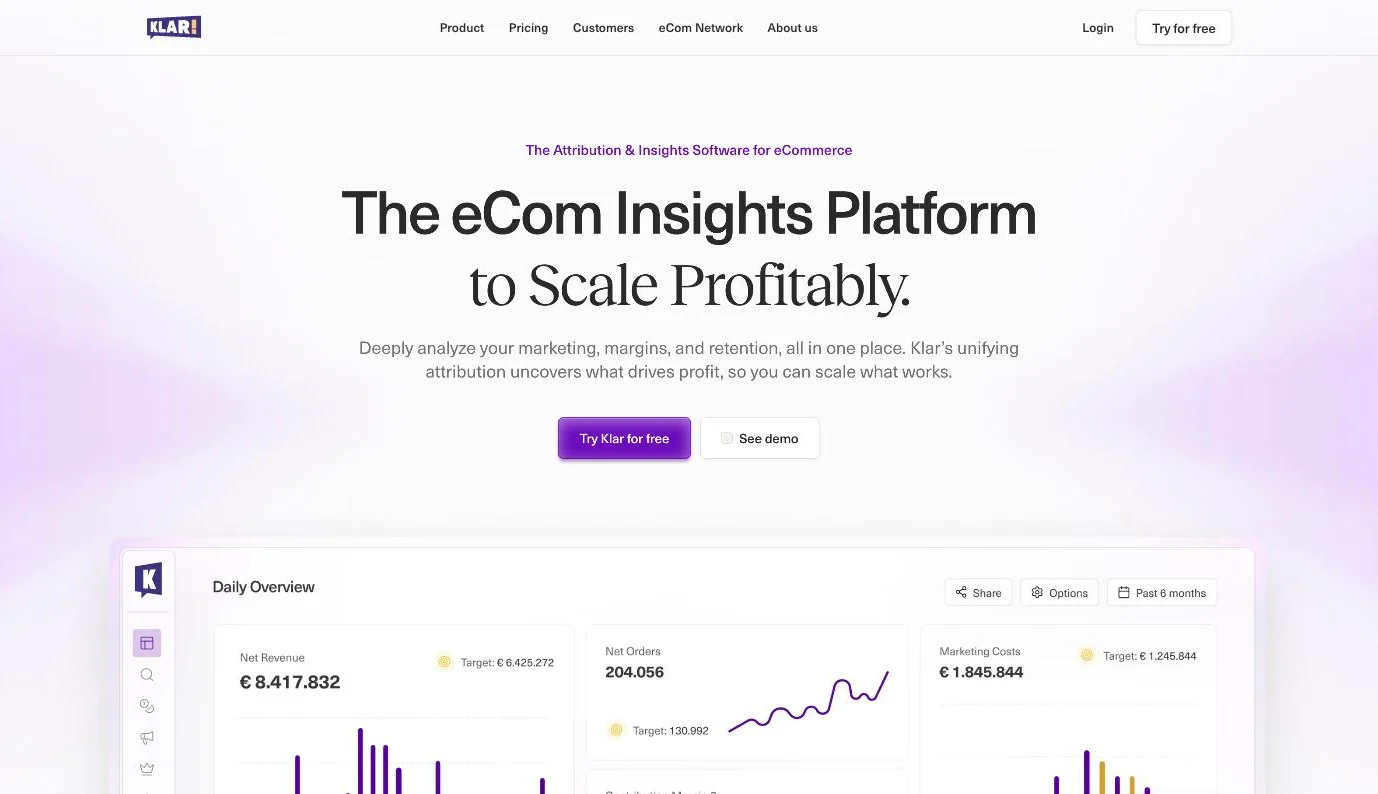
Klar
★4.8
Best for: brands that want a P&L-style view of their shops and marketplaces, down to margin per SKU, with attribution as an optional add-on.
Klar is a Munich-based ecommerce BI and attribution platform. It tracks with a first-party script on your own subdomain, using user and session IDs, IP, device fingerprint, user agent and checkout email as identity signals. Tracking follows consent: on Shopify, Klar respects the cookie banner through Customer Events, and the pixel fires only after the visitor accepts. The platform is hosted in Europe and ISO 27001 certified. Meta and Google are connected as sources of cost and performance data. Klar sends no conversions back to Meta, Google or TikTok.
Key features
▪First-party pixel on your subdomain. Collection runs on your own domain, gated by the Shopify banner.
▪Three attribution methods. Multi-touch with static and data-driven models, a marketing mix model and geo-lift incrementality tests.
▪P&L and profitability. Product cost and fulfillment costs come off revenue, down to contribution margin.
▪Wide shop coverage. Native Shopify, a WooCommerce pixel guide, and connections to Shopware, Magento, Centra and Amazon.
▪Ad spend in one place. Cost and performance data from Meta and Google sit next to orders and margin.
Strengths
Margin and attribution on one set of numbers. Channels are judged on contribution margin.
Three ways to check a channel. MTA, MMM and geo-lift can be held against each other before budget moves.
Europe-hosted and certified. Hosting in Europe and ISO 27001 make the security review straightforward.
Limitations
No conversion feed to the ad platforms. Meta, Google and TikTok keep learning from their own pixels.
No budget automation. Budget moves stay manual in each ad account.
Journeys start at consent. Visitors who decline the Shopify banner never reach the pixel, so their sessions are missing from the journeys.
Pricing
Core starts at €200 a month, and Core with Attribution at €400. The price scales with trailing 12-month net revenue, billing is monthly or annual, there's no setup fee, and the trial runs 14 days. There's no free plan, and larger brands get a custom quote.
Reviews
Klar scores 4.8 on OMR Reviews, and its Shopify app and Trustpilot page have no reviews yet.
Bottom line
Klar suits brands that want a P&L view of their shops and marketplaces. It sends no conversions back to the ad platforms, and budget moves stay manual.
Best for: stores that run on Google Ads and need a free baseline with Consent Mode v2, cookieless pings and modeled conversions for visitors who decline.
GA4 is Google's free analytics, and its conversions go to Google Ads. It isn't cookieless by default: it sets the first-party cookies _ga and _ga_<container-id>, each with a two-year default expiry. GA4 cookieless tracking, in practice, means Consent Mode v2's advanced implementation, where tags send cookieless pings when a visitor declines and no Analytics cookies are set or read. The basic implementation blocks Google's tags until consent arrives. There's no banner of its own, Google recommends a certified CMP partner, and advertisers in the EEA must collect consent and pass the signals to Google. IP addresses from the EU, Switzerland and the UK are dropped on regional servers before logging, and Google relies on the EU-US Data Privacy Framework for transfers.
Key features
▪Consent Mode v2. Four consent types (ad_storage, ad_user_data, ad_personalization, analytics_storage), and in advanced mode the pings can carry a timestamp, user agent, referrer, an ad-click flag, consent state and a random number.
▪Behavioral and conversion modeling. Gaps from declined consent are modeled once a property passes Google's thresholds, and key events are modeled only when Google is confident in the quality.
▪Google Ads links. Key events and audiences flow to Google Ads, with links to Search Ads 360, DV360 and Merchant Center, and cost data comes in from Meta, TikTok, Snap, Pinterest and Reddit.
Strengths
Free. The standard version costs nothing, and Shopify connects through Google's own sales channel, which tracks certain ecommerce events automatically.
Consent Mode where Google needs it. Google's own tags, modeling and Google Ads all read the same consent signals.
Limitations
Modeling needs volume. A property needs at least 1,000 events a day with analytics_storage denied for seven days, and 1,000 daily users with it granted on 7 of the previous 28 days, and meeting both doesn't guarantee eligibility.
Conversions go to Google only. Meta, TikTok and the others send cost data in and get no conversions back.
Fewer attribution models. Data-driven and last click remain, after Google removed first click, linear, time decay and position-based in November 2023.
No profit reporting or budget automation. Revenue is the end of the money trail.
Pricing
GA4 standard is free. Analytics 360 is sold through Google's sales team on a contract, with higher limits such as 400 audiences, retention up to 50 months and BigQuery daily export in the billions of events.
Reviews
Google Analytics scores 4.7 on Capterra, where the listing carries the Analytics 360 name, and 4.5 on G2.
Bottom line
GA4 suits Google-heavy advertisers as a free baseline with Consent Mode v2. It leaves the Meta and TikTok feeds, margin and cross-channel budget calls to other tools.
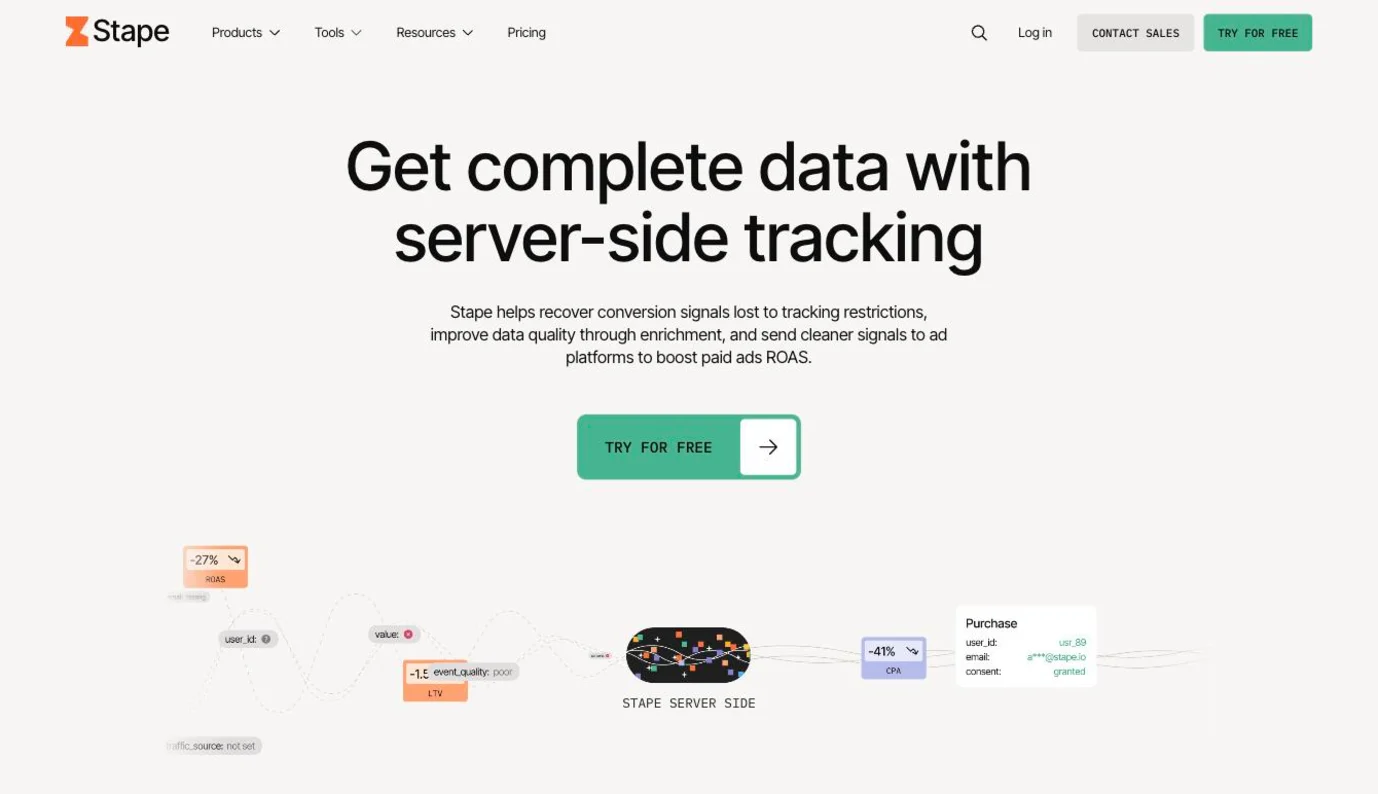
Stape
★3.9
Best for: teams comfortable in GTM that want a managed server container with EU hosting and a long list of server-side destinations.
Stape hosts server-side GTM and sells single-platform gateways next to it. Stape isn't cookieless: its Cookie Keeper restores the first-party cookies that Safari's ITP would cap at seven days. Server GTM has no Consent Mode of its own, so consent is set in the web container and passed along through GA4's gcs parameter or Stape's Data Tag. EU or Global hosting is chosen at signup, with EU containers in Italy, the Netherlands, Poland or France.
Key features
▪Managed sGTM hosting. Server containers on your own subdomain, in an EU or Global account.
▪Cookie Keeper. Standard cookies restored on Pro and up, custom cookies on Business and up.
▪Consent-aware CAPI tags. Meta, TikTok, Snapchat and Pinterest tags can hold events back without marketing consent, and CMP guides cover Cookiebot, iubenda and Axeptio.
▪Server tag catalog. Meta, TikTok, Google Ads, Snapchat, LinkedIn, Reddit, Pinterest and Outbrain, plus GA4, Klaviyo and affiliate networks.
▪POAS Data Feed. Product costs stored so tags can send profit as the conversion value (Pro and up).
▪Shopify app. Stape Conversion Tracking injects GTM and sends purchase and refund webhooks to the container.
Strengths
Low entry price. A free tier and a $17 entry plan for server-side delivery.
EU hosting for server-side tracking under GDPR. EU-only containers and euro invoicing answer the residency question at signup.
Limitations
You build the setup. Tags, triggers and the web container live in GTM, and Stape sells setup from $1,100.
No attribution or profit reporting. The POAS feed changes what Google and Meta receive, with no report of profit by campaign to check it against.
No budget automation. Budget moves stay manual in each ad account.
Region locked at signup. An EU or Global account can't be switched later, and without auto-upgrade the container pauses when it runs over quota.
Pricing
Free up to 10,000 requests with no card. Pro costs $17 a month (500,000 requests), Business $83 (5 million) and Enterprise $167 (20 million), all billed annually, with Custom above that. Gateways start at $8 a month per pixel or domain, with a seven-day trial.
Reviews
Stape scores 3.9 on Trustpilot, 4.3 on the Shopify App Store and 5.0 on Capterra. Fans say it beats hosting GTM yourself, and critics mention generic support replies and having to contact support to cancel or downgrade.
Bottom line
Stape suits GTM teams that want EU containers with consent checks in the tags. It gets events to the ad platforms, and attribution, margin reporting and budget decisions need another tool.
TWIPLA
★4.7
Best for: small sites and WordPress, Wix or Smartstore shops that want cookie-free statistics plus heatmaps, recordings and surveys, hosted in Germany, from a free plan.
TWIPLA, formerly Visitor Analytics, took its current name in 2023. Every plan is cookieless, and the default Maximum Data Privacy mode uses no fingerprinting, no IP tracking and no page history, leaving only visitor location. Three lower modes (Light, Medium and GDPR Privacy) build a stateless fingerprint from device and browser characteristics, and Light adds IP address, page history, screen resolution and location. TWIPLA says businesses can use the default mode without visitor consent, while the three lower modes need a banner. Data is stored on Hetzner servers in Germany, mostly in Falkenstein, and TWIPLA publishes a DPA and a GDPR and ePrivacy statement.
Key features
▪Four privacy modes. One mode site-wide, or a different mode for each visitor country.
▪Dual tracking code. Visitors who opt out are still counted under the Maximum Privacy rules.
▪Ecommerce statistics. Revenue, orders, AOV, conversion rate, refunds, product views, add to cart and checkout starts, with revenue by channel, UTM, country and device.
▪Behavior tools. Session recordings, heatmaps, funnels, surveys and polls in the same suite.
▪Platform guides. WordPress and WooCommerce, TYPO3, Weebly, Smartstore, xt:Commerce and Wix, or any site that takes a script.
Strengths
Privacy set per market. Strict mode in one country and a lighter one elsewhere is a single setting.
More than a counter. Recordings, heatmaps and surveys sit next to the cookie-free statistics.
No conversion feed to the ad platforms. Meta, Google and TikTok receive nothing from TWIPLA.
No attribution, profit reporting or budget automation. Revenue by channel and UTM is as far as crediting goes.
Fingerprinting outside the default. The three lower modes use a device fingerprint and need a banner.
Small page-view allowances. The free plan stops at 400 page views a month, and each site needs its own plan.
Pricing
TWIPLA prices in dollars, billed yearly, with annual billing saving 20%. Free covers 400 page views, 20 events, 25 recordings and one heatmap with 40-day retention. Starter costs $2.39 a month for 500 page views, Basic $10.39 (10,000), Advanced $19.99 (25,000) and Pro $31.99 (50,000), and Enterprise is custom. The 30-day trial needs no payment details.
Reviews
TWIPLA scores 4.7 on Capterra, listed as Visitor Analytics/TWIPLA, and 4.5 on G2.
Bottom line
TWIPLA suits small sites that want cookie-free statistics, German hosting and behavior tools. It leaves ad attribution, platform feeds and margin to another tool.
Best cookieless tracking tools: final verdict
Admetrics is the best choice for ecommerce brands that need GDPR-compliant tracking and want the same order data to drive ad spend: consent-aware first-party tracking, data processed and stored in the EU, conversions sent back to the ad platforms, attribution, contribution margin and budget moves, from $399/month.
The rest, by who they suit and where they stop:
▪Piwik PRO: EU teams that want analytics, tags and consent from one vendor. Conversions go to Google Ads only, and reports stop at revenue.
▪Matomo: teams that want to self-host or keep data in Frankfurt. Ad conversions need a paid plugin, and there's no profit reporting.
▪Tracify: brands that want attribution without waiting for consent. Conversions go back to Meta only, no budget moves.
▪Plausible: sites that need a simple cookie-free traffic report. No ad-platform feed or multi-touch attribution.
▪Fathom: owners of many sites on one plan. Data is stored in the US, with no ad-platform feed.
▪Ruler Analytics: lead-driven businesses with offline sales. Reporting stops at revenue.
▪Simple Analytics: blogs and brochure sites. Revenue needs custom events, and nothing goes to the ad platforms.
▪Klar: brands that want a P&L view of their shops and marketplaces. No conversions sent back to the ad platforms and no budget moves.
▪Google Analytics 4: Google-heavy advertisers that want a free baseline. Conversions go to Google Ads only.
▪Stape: GTM teams that want hosted server containers. No attribution or profit reporting.
▪TWIPLA: small sites that want statistics and heatmaps. No ad-platform feed.
Cookieless tracking collects visit or conversion data without third-party cookies, and in its strict form without storing any identifier in the browser. Tools do it with a daily hash of IP address and browser, with referrer rules or with server-side collection. The term is also used for first-party tracking that sets cookies on your own domain after consent. Cookie-free counting can't recognize a returning buyer the next day, which is why it can't connect an ad click to a later order.
Do cookieless tools still need a consent banner?+
It depends on what the tool collects, how it's configured and which country's rules apply. Some cookie-free analytics vendors say their default setup needs no banner, and others say cookieless tracking isn't a legal exemption on its own. Ad pixels and marketing tags are a separate question from analytics. Your DPO should sign off on the setup you actually run.
Are tracking cookies illegal?+
No. EU rules generally require consent before cookies that aren't strictly necessary are set, and marketing and most analytics cookies fall into that group. What counts as strictly necessary, and which exemptions apply, varies with the purpose and the national regulator. Whether a setup meets those rules depends on its configuration and jurisdiction.
Is server-side tracking GDPR compliant?+
Server-side tracking changes where data is sent from. The legal basis the data needs stays the same, and consent still applies. A compliant setup passes the visitor's consent state with every event, stores data where the vendor says it does, and is covered by a DPA. Admetrics attaches the consent state to every event and processes and stores data in the EU.
How does Google Consent Mode v2 fit with cookieless tracking?+
Consent Mode v2 passes four signals to Google tags: ad_storage, ad_user_data, ad_personalization and analytics_storage. Google requires advertisers to collect consent from EEA users and share those signals. In the basic implementation, Google tags stay blocked until consent is given. In the advanced implementation, tags send cookieless pings when a visitor declines, and GA4 models key events and, above Google's thresholds, behavior.
Can GA4 track without cookies?+
Partly. By default GA4 sets first-party _ga cookies that last two years. With Consent Mode's advanced implementation and analytics_storage denied, it sets no analytics cookies and sends cookieless pings instead. Behavioral modeling needs at least 1,000 denied events a day for seven days, among other conditions, and Google doesn't use it in audiences or the BigQuery export.
Can you track Meta ads without cookies?+
You can count the visits: any cookie-free tool shows sessions tagged with a Meta UTM source. Telling Meta which ad sold takes the Conversions API, which sends purchases from a server, out of reach of browser cookie limits. The visitor's consent still applies. Admetrics sends conversions back to Meta server-to-server, with each visitor's consent state attached.