Mission control
for e‑commerceFrom independent measurement to governed allocation. One closed loop, open to your entire stack.See how the system works →
11 best conversion tracking software tools in 2026
Most conversion tracking software stops once conversions reach the ad platforms. We compared 11 tools on tracking, attribution, profit and what happens after the conversion is sent.
Silvana Chirita·Updated October 27, 2026·26 min read
Conversion tracking software captures the purchases on your store and sends them to Meta, Google and TikTok server-side, which gets the ad platforms the orders that ad blockers and short-lived cookies hide from the browser pixel. Most tools stop once the conversion is delivered. Attribution, profit by campaign and budget changes then happen in GA4, a spreadsheet and each ad manager.
This list ranks 11 tools for ecommerce conversion tracking on tracking accuracy, data foundation, profit and what happens after the conversion reaches the ad platforms.
Key Takeaways
Admetrics is the most complete conversion tracking software on this list. First-party tracking, conversions sent back to the ad platforms server-to-server, multi-touch attribution, profit down to the SKU and Ad Pilot budget automation run on one set of order data, from $399/month.
Most conversion tracking apps stop once the conversions reach the ad platforms. Elevar, Littledata, Analyzify, wetracked.io, TrackBee, Aimerce and WeltPixel track orders and pass them to Meta, Google and the rest; a few add a light dashboard. None of them reports contribution margin by campaign or moves budget.
Few tools report contribution margin by campaign. Most stop at revenue and ROAS, which credits a campaign selling discounted, often-returned products as highly as one selling full-price bestsellers. Admetrics reports CM2, CM3 and POAS by campaign, down to the SKU.
Most tools don't automate budgets. The budget move stays with the media buyer in each ad manager. Admetrics' Ad Pilot moves Meta budgets toward a CAC, POAS or new-customer ROAS target.
Half the competitors connect Shopify stores only. Admetrics also connects Shopware, WooCommerce, Magento, JTL and custom stores.
How we ranked the tools
We scored every tool on four criteria. Prices and features are as of October 2026.
▪Attribution and tracking accuracy. Whether orders are captured first-party and server-side, matched to the real store order and deduplicated against the browser pixel, and which attribution models you can compare for cross-platform conversion tracking.
▪Data foundation. Which store systems, ad platforms and cost sources connect, and whether the conversions sent can be checked against the orders your store recorded.
▪Profit over revenue. Whether COGS, shipping, payment fees and returns land per order and roll up to contribution margin by campaign, or the tool stops at revenue and ROAS.
▪What happens after the conversion is sent. Whether conversions go back to the ad platforms through CAPI or server-to-server feeds, and whether anything moves budget inside limits you set.
Conversion tracking software compared
#
PLATFORM
ATTRIBUTION
PROFIT CONTROL
S2S PUSHBACK
ACTION
1
Admetrics
Multi-touch + PRISMA mix model
CM2, CM3, POAS to SKU
Yes, paid add-on
Budget Optimizer, Ad Pilot
2
Elevar
No, delivery monitoring only
Profit value from Advanced
Yes, 50+ destinations
No
3
Littledata
No
Profit Signal (beta)
Yes, GA4 and ad platforms
No
4
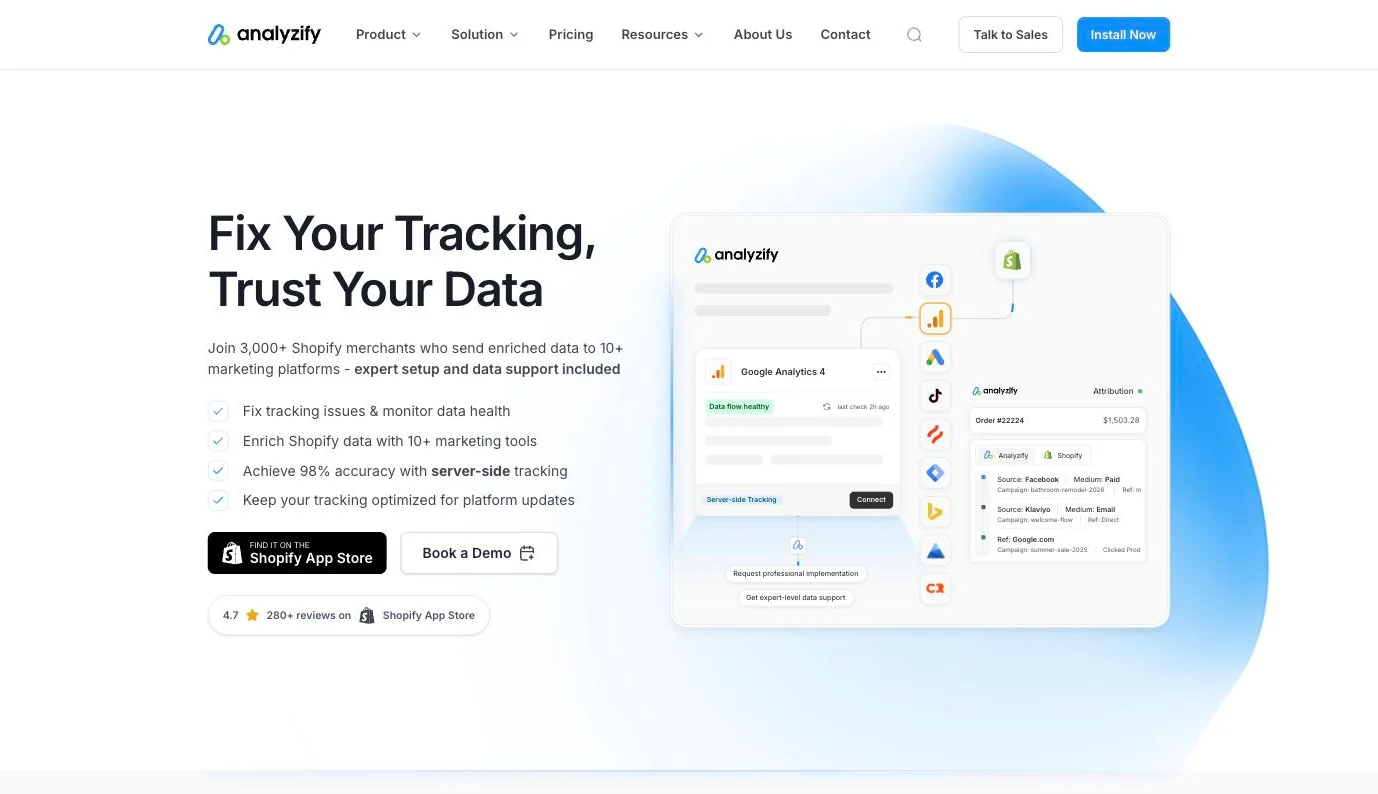
Analyzify
Order-level, 4 rule-based models
COGS to Google Ads
Yes, GA4 and ad platforms
No
5
wetracked.io
Pulse dashboard
No
Yes, Meta, TikTok, Google, more
No
6
TrackBee
Insights add-on
No
Yes, incl. Microsoft, ChatGPT Ads
No
7
Triple Whale
Multi-touch; MMM as Compass add-on
Net profit, no CM
Yes, Sonar Optimize
Moby actions (higher plans)
8
Polar Analytics
Multi-touch, incrementality tests
CM1–CM3
Meta and Google only
No
9
Aimerce
Attribution analytics from Growth
No
Yes, incl. OpenAI, Klaviyo
No
10
WeltPixel
No, event feed only
No
Yes, incl. Reddit, OpenAI Ads
No
11
CustomerLabs
Attribution reports, LTV
Margin/POAS values can be sent
Yes, plus offline conversions
No
Admetrics
★5.0
Best for: ecommerce and DTC brands spending on Meta, Google and TikTok that want tracking, attribution, contribution margin and budget moves to run on one set of order data.
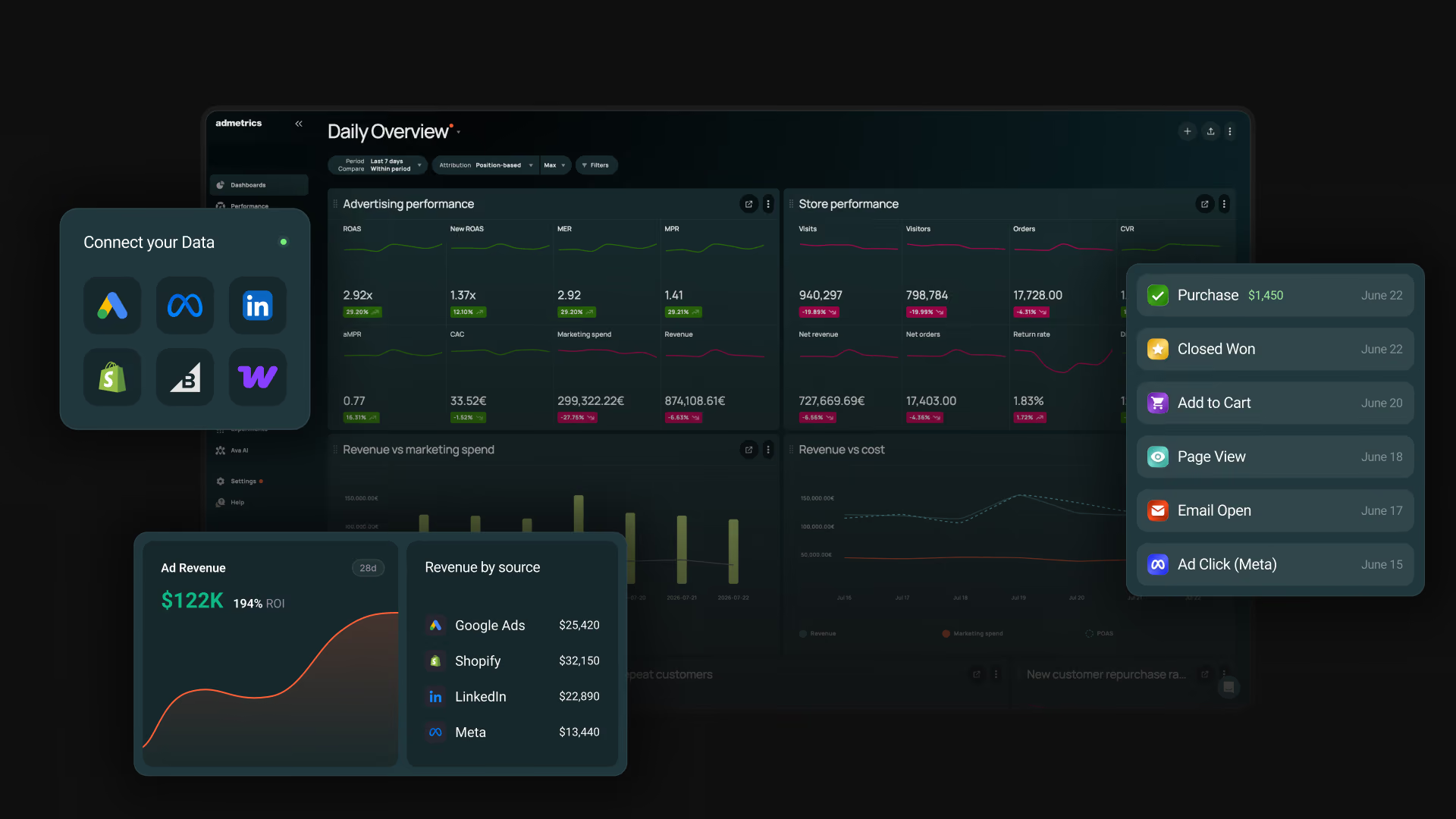
Admetrics is a measurement and budget allocation platform. It tracks each order first-party, sends conversions back to the ad platforms server-to-server, credits channels with its own attribution, prices every campaign in contribution margin and moves budget toward what earned it. Because everything reads the same order record, the ROAS a media buyer sees in attribution and the CM3 a founder sees in the profit view describe the same purchases.
Key features
▪Tracking. First-party journeys across devices and sessions, anchored to real shop orders, with consent attached to each event.
▪Conversion Signals. Conversions sent back server-to-server to Meta, Google, TikTok and other ad platforms, deduplicated against the browser pixel. Setup takes about an hour, and Admetrics runs an A/B test against your current pixel with you.
▪Multi-Touch Attribution. Compare attribution models side by side and see Admetrics numbers inside the Meta, Google and TikTok ad managers through the Chrome extension. The PRISMA marketing mix model is a Custom-plan add-on.
▪Profit Intelligence. CM2, CM3 and POAS by campaign and product, down to the SKU, with COGS, shipping, payment fees and returns per order.
▪Budget Optimizer and Ad Pilot. Budget Optimizer proposes cross-channel budget moves. Ad Pilot adjusts Meta budgets inside caps you set, or waits for approval, and logs every move so it can be reversed.
Strengths
Single source of truth. Tracking, attribution, profit and budget moves read the same order data, with no second dataset to reconcile before a budget call.
Contribution margin per campaign and SKU. Profit Intelligence shows which campaigns and products left money after product cost, shipping, fees and returns, where every sending app on this list stops at revenue.
Independent attribution next to the platforms' numbers. Multi-Touch Attribution credits each channel with Admetrics' own model, and the Chrome extension shows that number inside Ads Manager.
Budget automation on Meta. Ad Pilot moves Meta budgets toward a CAC, POAS or new-customer ROAS target, with every change logged.
EU data hosting. Data is hosted in Germany, with a DPA and records of processing.
Limitations
S2S pushback is a paid add-on on every plan.
Ad Pilot executes on Meta only. Google and TikTok budgets don't change automatically.
PRISMA and Budget Optimizer are Custom-plan add-ons. Growth and Business don't include them.
Pricing
Growth: $399/month, including the first $20,000 of monthly ad spend, then 1.5% above that. Business: $899/month, including $70,000, then 1% above. Ad Pilot is an add-on from this plan. Custom: quoted, for brands spending more than $100,000 a month. PRISMA and Budget Optimizer are add-ons here. Annual billing saves 15%, and the 21-day free trial needs no card.
Reviews
Admetrics holds 5.0 on the Shopify App Store and 4.8 on G2. Reviewers mention the onboarding help and reports that are easy to read.
Bottom line
A dedicated app is the cheaper way to get more purchases into Meta Events Manager. Admetrics is for the brand that also wants to know which of those purchases made money after costs and to move budget on that answer, from one set of order data.
Best for: Shopify stores that need a monitored server-side data layer feeding many destinations, with profit as an optional conversion value.
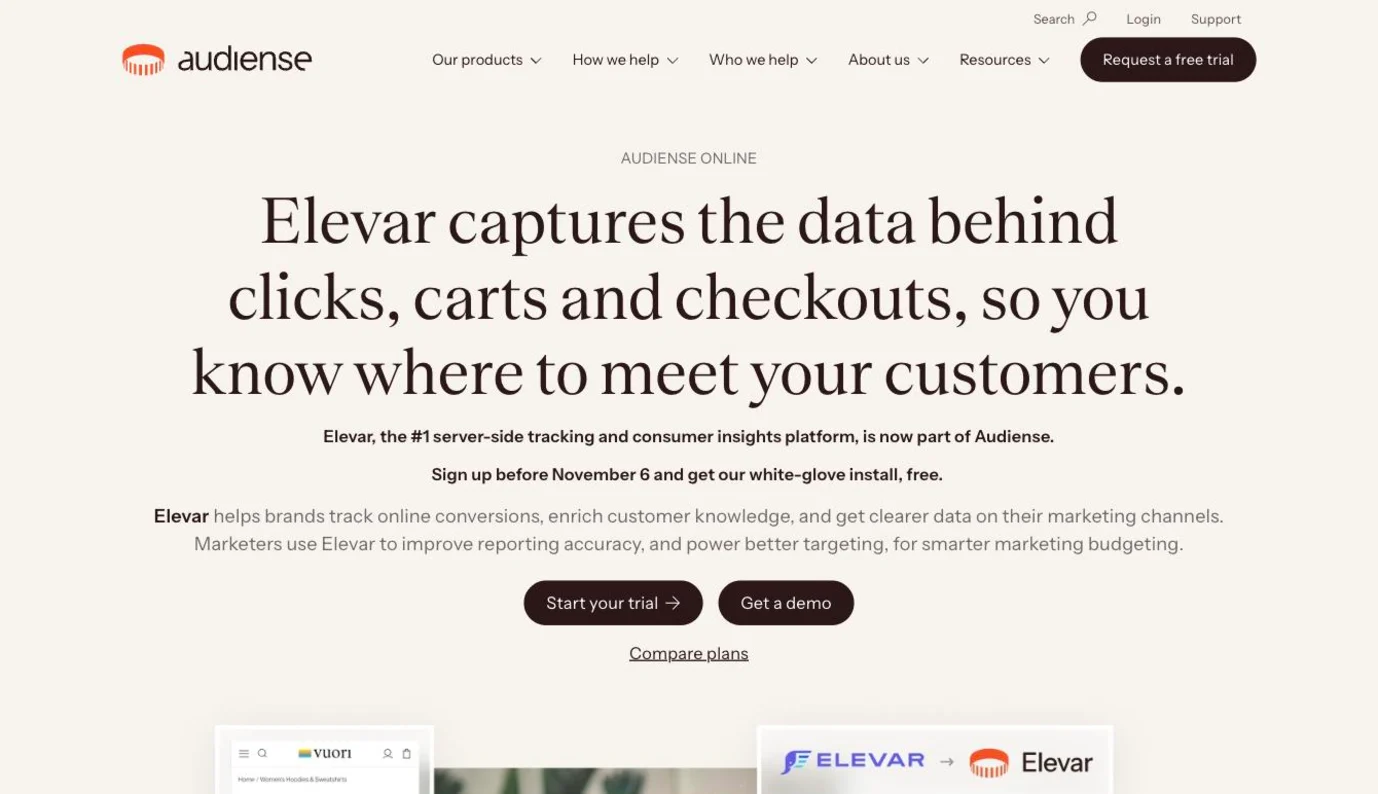
Elevar, now marketed as Audiense Online, is built for tracking and sending. It runs its own storefront data layer and a hosted server-side pipeline, then forwards each purchase to the ad platforms and analytics tools you connect. From Advanced it can send profit in place of revenue, though Elevar itself doesn't report profit. Attribution and budget stay with the tools Elevar feeds.
Key features
▪Data layer with or without GTM. Setup runs through Google Tag Manager or skips it.
▪50+ destinations. Meta CAPI, Google Ads enhanced conversions, GA4, TikTok, Snapchat, Pinterest, Microsoft, Klaviyo, LinkedIn, Reddit, affiliate networks and BigQuery.
▪Order match by destination. A report sets Shopify orders against the orders each destination accepted, with email alerts.
▪Identity stitching. Joins shopper identifiers across sessions, with a server-set first-party cookie that lasts a year.
▪Profit as the conversion value. Available from Advanced; predicted LTV arrives on Premium.
Strengths
A number for "is CAPI working?" The order-match report shows how many real Shopify orders reached each destination.
Browser and server events deduplicated. Both carry the same event_id, which keeps Meta and Google from counting one order twice.
Paid installation on offer. An expert install for Shopify costs $1,000.
Limitations
Two destinations below Advanced. Core at $225 a month covers two; four need Advanced, 10 Premium and 25 Elite, which puts most of the 50+ list behind the bigger plans.
No attribution model or budget automation. GA4 and the ad platforms assign the credit, and budget moves stay manual.
No contribution margin by campaign. Profit Optimization changes the number Meta and Google receive, starting on the $650 Advanced plan, and Elevar itself never shows margin per campaign.
Other store platforms cost more. WooCommerce, BigCommerce, Adobe Commerce and custom stores need the API on Premium or Elite.
Pricing
The free Base plan covers 100 orders a month. Core costs $225 a month for 2,000 orders, Advanced $650 for 10,000, Premium $1,250 for 30,000 and Elite from $3,000 for 75,000. Extra orders cost from $0.75 each on Base down to $0.04 on Elite, and select plans come with a 15-day free trial.
Reviews
Elevar holds 4.8 on the Shopify App Store and 5.0 on both G2 and Capterra. Praise goes to the onboarding team and to tracking that was correct from day one; on the other side are complex installs that ended in a paid setup, support that went quiet, and billing that carried on after the app was removed.
Bottom line
Elevar is a careful choice for a Shopify brand whose problem is getting complete, deduplicated orders into many tools. Check the destination cap before you pick a tier. Attribution, margin reporting and budget calls need a second system.
Littledata
★4.8
Best for: Shopify and headless Shopify stores that want orders sent from the backend with no tag manager, and pay-per-order pricing while volume is still small.
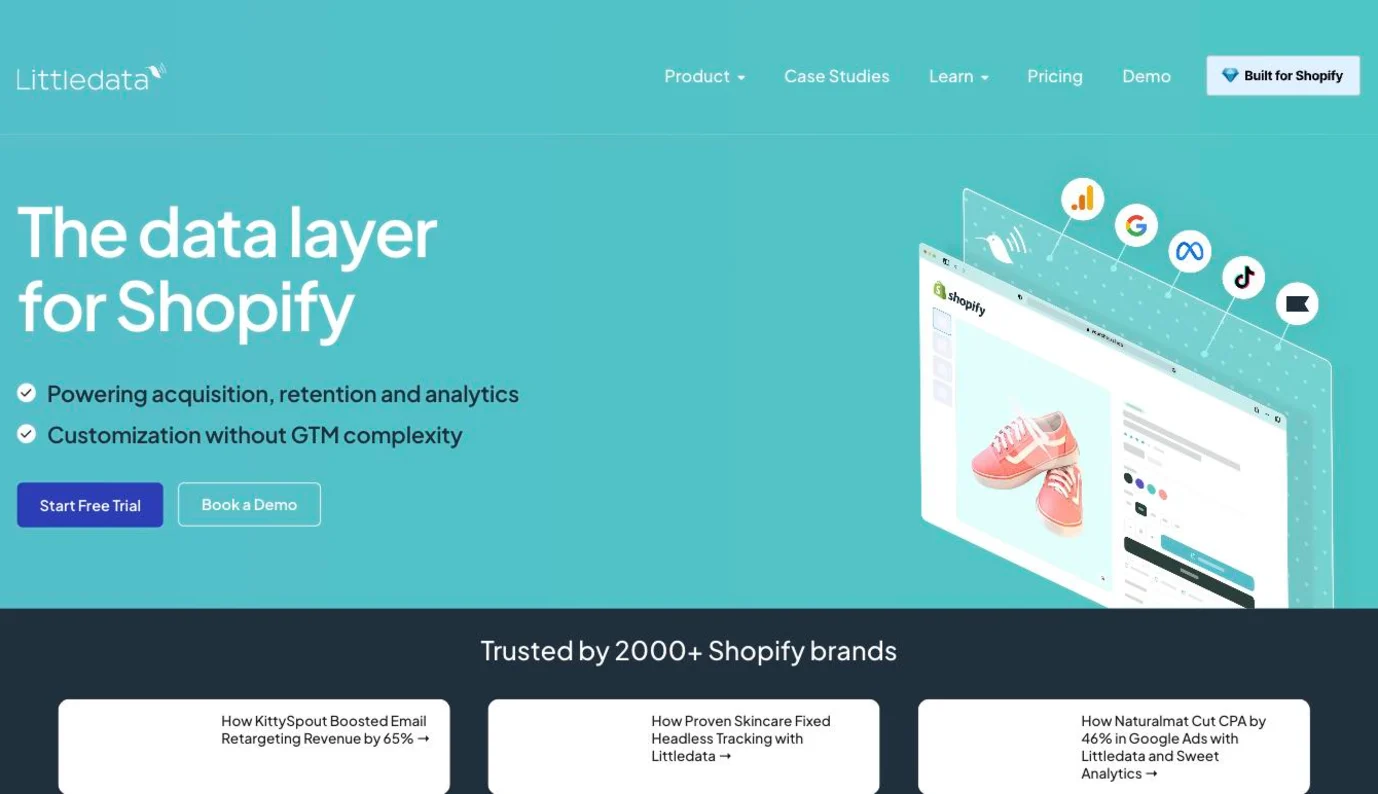
Littledata tracks and sends from Shopify's side of the store. Its pipeline is driven by Shopify webhooks, meaning the purchase event is built from the order record, and an app embed catches storefront events. The install takes about 10 minutes. A beta feature passes gross profit to Google Ads and Meta, but the app has no reports of its own, which leaves attribution and budget to other tools.
Key features
▪Webhook-based server-side pipeline. Orders, refunds and checkout steps go out from Shopify itself, with no GTM container to maintain.
▪Destinations. GA4, Google Ads enhanced conversions, Meta CAPI, TikTok, Pinterest, Microsoft Ads, Klaviyo, Attentive, Recharge and Segment.
▪Year-long shopper ID. Persistent ID keeps an identifier alive for up to 12 months.
▪Gross profit to Google Ads and Meta (beta). Profit Signal replaces revenue in the purchase value those two platforms receive.
▪Bot protection and MonitorAI. Bot filtering, plus a one-off setup audit in beta.
Strengths
Small install footprint. An app embed plus webhooks is the whole installation, with nothing to host.
No fixed fee to start. Flex charges per order, which suits a store still finding its volume.
Limitations
Shopify stores only. Headless Shopify is supported; no other store platform connects.
US hosting. Littledata's systems run on AWS in US-East-1, a point an EU brand's data protection review will raise.
No attribution model. Credit for each order comes from GA4 or the ad platforms you send to.
No contribution margin by campaign or budget automation. Profit Signal is still in beta and covers two platforms, and it sends a value without reporting one.
Pricing
Flex bills $0.35 an order and nothing monthly. Standard is $199 a month ($1,910 a year) for 1,500 orders, then $0.20 per order; Pro is $449 a month ($4,310 a year) for 5,000, then $0.10; Plus is $990 a month ($9,504 a year) for 10,000, then $0.04. At about 570 orders a month, Standard becomes cheaper than Flex. Every plan starts with a 30-day trial.
Reviews
On the Shopify App Store Littledata rates 4.8, and G2 has it at 4.7. Its fans like how fast it goes in, order counts that agree with GA4 and Meta, and chat replies that arrive quickly; one-star reviews describe bills that rose sharply past order thresholds and support that waved away tracking issues.
Bottom line
Littledata is a low-effort sending layer for Shopify, and Flex makes it cheap to try at low volume. It still needs a partner that measures channels and prices campaigns, plus a look at US hosting against your DPA.
Analyzify
★4.7
Best for: Shopify brands that want GA4, Google Ads and their ad pixels implemented by the vendor's team, with click-based attribution checked against Shopify's own numbers.
Analyzify is part app, part service. Its team implements GA4, the ad pixels and server-side delivery on the store, and the app then forwards conversions to 10+ platforms. It adds order-level attribution under four click-based models, passes COGS to Google Ads and, on Plus, includes a profit dashboard. Nothing in it moves budget.
Key features
▪Managed implementation. Analyzify's team configures GA4, the ad pixels and Meta server-side events for $295, waived on yearly billing.
▪Destinations. GA4, Google Ads (conversions, enhanced conversions and remarketing), Meta, TikTok, Bing, Pinterest, Snapchat, Reddit, OpenAI and Klaviyo.
▪Order-level attribution. First Click, Last Non-Direct, Last Click and Any Click, each shown next to Shopify's attribution, on both plans.
▪COGS and refunds passed on. Product cost goes to Google Ads with the purchase event, and refunds go back to GA4, Meta and TikTok.
▪Plus reporting. 30+ reports, plus a profit dashboard with net profit, COGS, MER and campaign-level profitability, and RFM segments.
Strengths
Setup off your plate. A store without an analytics engineer gets GA4 and the pixels configured by the vendor's own team.
Attribution checked against Shopify. Four click models beside Shopify's numbers for the same orders show where GA4, Meta and the store disagree.
Price stability. A two-year price guarantee, and yearly billing saves 25%.
Limitations
Click-rule attribution only. All four models give credit by click position.
No contribution margin by campaign. The Plus dashboard reports net profit, COGS, MER and campaign-level profitability, and COGS reaches Google Ads only.
Server-side GTM costs extra. A Stape sGTM setup is a $1,490 add-on and a Google Cloud one $2,790.
No budget automation, and Shopify only. Headless stores need the Plus plan.
Pricing
Standard costs $145 a month ($1,305 a year) for up to 5,000 orders, $175 for 10,000 and $225 for 20,000. Plus costs $275 a month ($2,475 a year) for up to 50,000 orders, $375 for 100,000 and $575 for 300,000. There's no free trial.
Reviews
Analyzify scores 4.7 on the Shopify App Store and 5.0 on Capterra and G2. Merchants say it fixed missing or double-counted conversions across GA4, Google Ads and Meta and praise how quickly support responds. The low ratings mostly describe tickets left unanswered for weeks and tracking that broke after it had been working.
Bottom line
Analyzify suits a Shopify team that wants Google's stack set up properly by someone else and a first look at attribution next to Shopify's orders. Margin by campaign and budget moves need another tool.
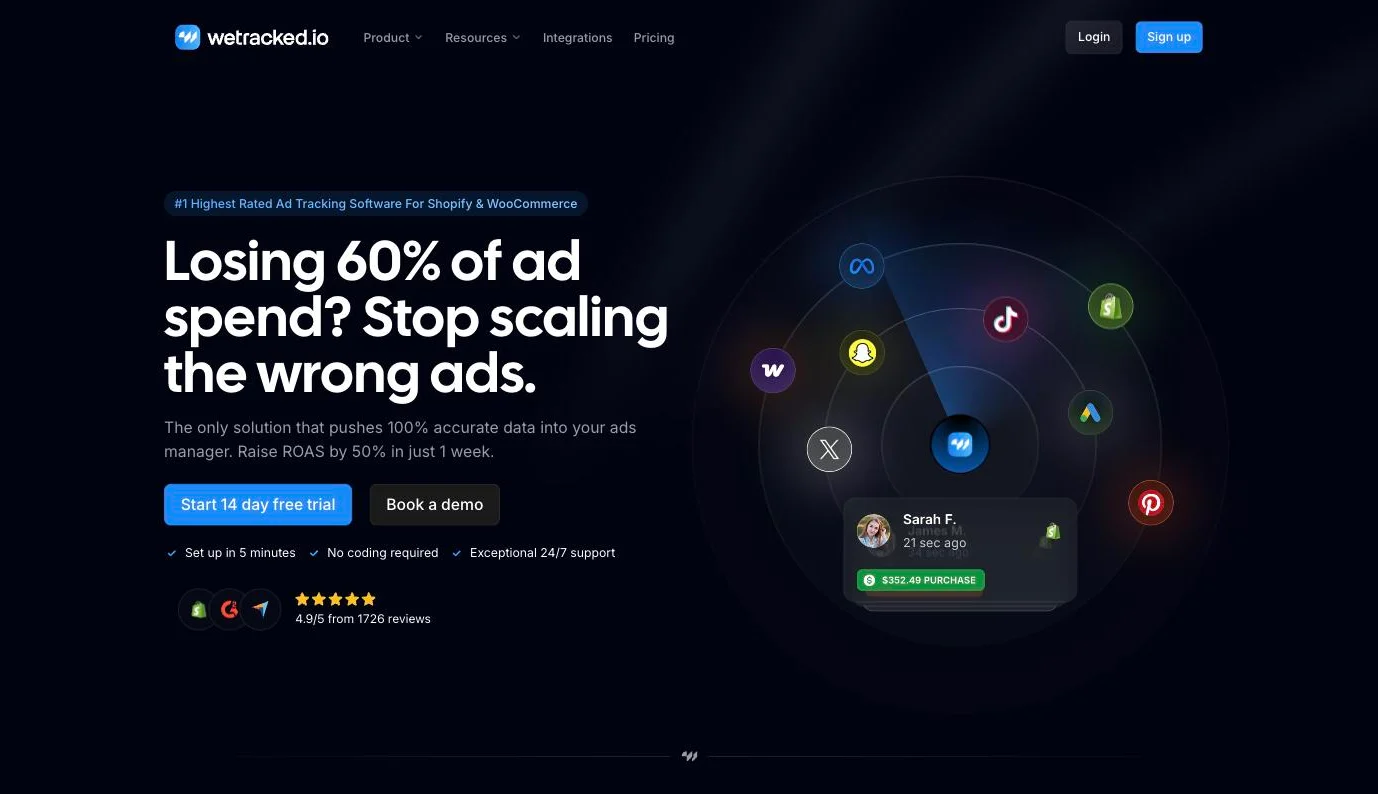
wetracked.io
★4.8
Best for: Brands selling through Shopify, WooCommerce or funnel checkouts such as Funnelish and CheckoutChamp that want more orders back in their ad managers for a low monthly fee.
wetracked.io is a first-party ad tracker. It recognizes visitors by a digital fingerprint, ties them to the orders they place and sends those conversions back to the ad platforms. Tracking and sending are the core of the product. The Pulse dashboard adds some reporting and Creative Analytics is in beta, while profit reporting and budget moves aren't part of it.
Key features
▪Fingerprint-based visitor matching. Visitors are identified by a digital fingerprint instead of browser cookies.
▪Six ad destinations. Meta, TikTok, X, Pinterest, Snapchat and Google Ads.
▪Pulse dashboard. wetracked.io's own reporting view, with Creative Analytics in beta.
▪Several stores per plan. Three on Starter, five on Business, 10 on Scale-up.
▪Free Shopify connector. The wetracked.io Connect app installs at no charge, and the platform is billed separately.
Strengths
Low entry price. $49 a month covers 500 orders across three stores.
Funnel checkouts covered. Brands selling through Funnelish, CheckoutChamp or Sticky.io are supported alongside Shopify and WooCommerce.
Limitations
Ad platforms and Klaviyo only. The destination list is six ad networks plus a Klaviyo integration; GA4, which most of the Shopify apps on this list feed, isn't on it.
Light measurement. Pulse is a dashboard, and Creative Analytics is still in beta.
No contribution margin by campaign. wetracked.io has no profit reporting.
No budget automation. Spend changes happen by hand in each ad manager.
Pricing
Starter costs $49 a month for 500 orders and three stores, Business $149 for 3,000 orders and five stores, and Scale-up $249 for 7,500 orders and 10 stores. Enterprise is custom. Annual billing saves 20%, there's a 14-day trial, and the plan cards promise a 60-day money-back guarantee that the FAQ ties to a 20% rise in ROAS.
Reviews
wetracked.io scores 4.8 on Trustpilot, 4.9 on Capterra and 4.7 on the Shopify App Store. Quick setup, a dashboard that's easy to read and friendly support come up again and again. The recurring complaint is support that answers slowly or gives conflicting advice, with a few billing disputes alongside.
Bottom line
wetracked.io is an inexpensive way to get more orders back into Meta, TikTok and Google Ads, especially for stores off Shopify. Treat it as the send step and nothing more.
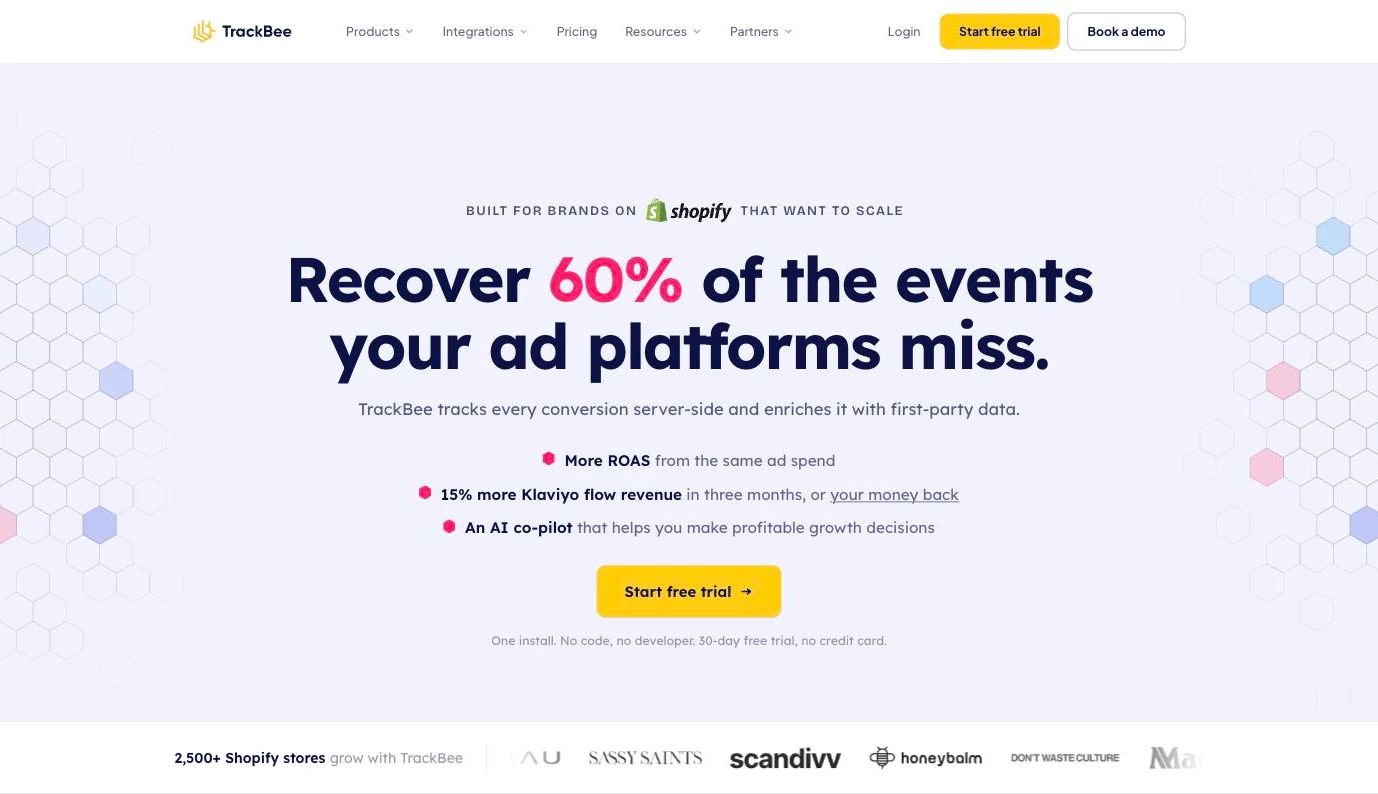
TrackBee
★4.3
Best for: Shopify, Hydrogen and Funnelish brands that want managed server-side sending to 10 platforms, ChatGPT Ads included, priced by tracked revenue.
TrackBee runs server-side tracking as a managed service. It enriches first-party sessions, matches them to orders from Shopify, Hydrogen, Funnelish, Juo or a custom checkout, and forwards the conversions to the ad platforms. Tracking and sending come with every plan. Attribution is a paid extra in the Insights add-on, and profit reporting and budget moves fall outside what TrackBee does.
Key features
▪Managed server-side tracking. TrackBee operates the pipeline for you.
▪10 destinations. Meta, Google Ads, TikTok, Pinterest, Snapchat, Microsoft Ads, ChatGPT Ads, Whop Ads, Klaviyo and GA4.
▪First-party session enrichment. Session data is added to the conversions TrackBee sends.
▪Insights add-on. Cross-platform attribution and AI answers to questions about your data for €19.99 a month, with a mobile dashboard.
▪Multiple stores. Two on Start, four on Pro, six on Scale, and €49 a month for each extra store.
Strengths
ChatGPT Ads among the destinations. TrackBee is one of eight tools on this list that send conversions for ChatGPT ads, and it adds Microsoft and Whop Ads too.
Long trial. A 30-day free trial gives you a full month of data before the first bill.
Limitations
Steep overage on Start. Start includes €25,000 of tracked revenue, then charges €6 per extra €1,000. A store tracking €50,000 a month pays €229 on Start, €30 more than Pro.
Attribution costs extra. Insights is a separate subscription.
No contribution margin by campaign. There's no profit reporting in TrackBee.
No budget automation. Budget moves stay manual in each platform.
Pricing
Prices are in euros, excluding VAT. Start is €79 a month with €25,000 of tracked revenue included, then €6 per €1,000; Pro is €199 with €100,000, then €1 per €1,000; Scale is €449 with €500,000, then €0.75 per €1,000. The Shopify listing shows the same figures in dollars.
Reviews
TrackBee scores 4.3 on Trustpilot and 4.8 on the Shopify App Store and Capterra. Reviewers praise patient, quick support, often naming the person who helped them, and an interface that's easy to use. Billing is the repeat complaint: charges or payment attempts after cancelling, and invoices that never arrived.
Bottom line
TrackBee fits a brand that wants many destinations, ChatGPT Ads included, without running servers of its own. Pick the tier by tracked revenue, and budget for Insights if you also want attribution.
Triple Whale
★4.5
Best for: Shopify brands that want a pixel, server-side sending, multi-touch attribution and an AI agent from one vendor, and are comfortable with 12-month terms.
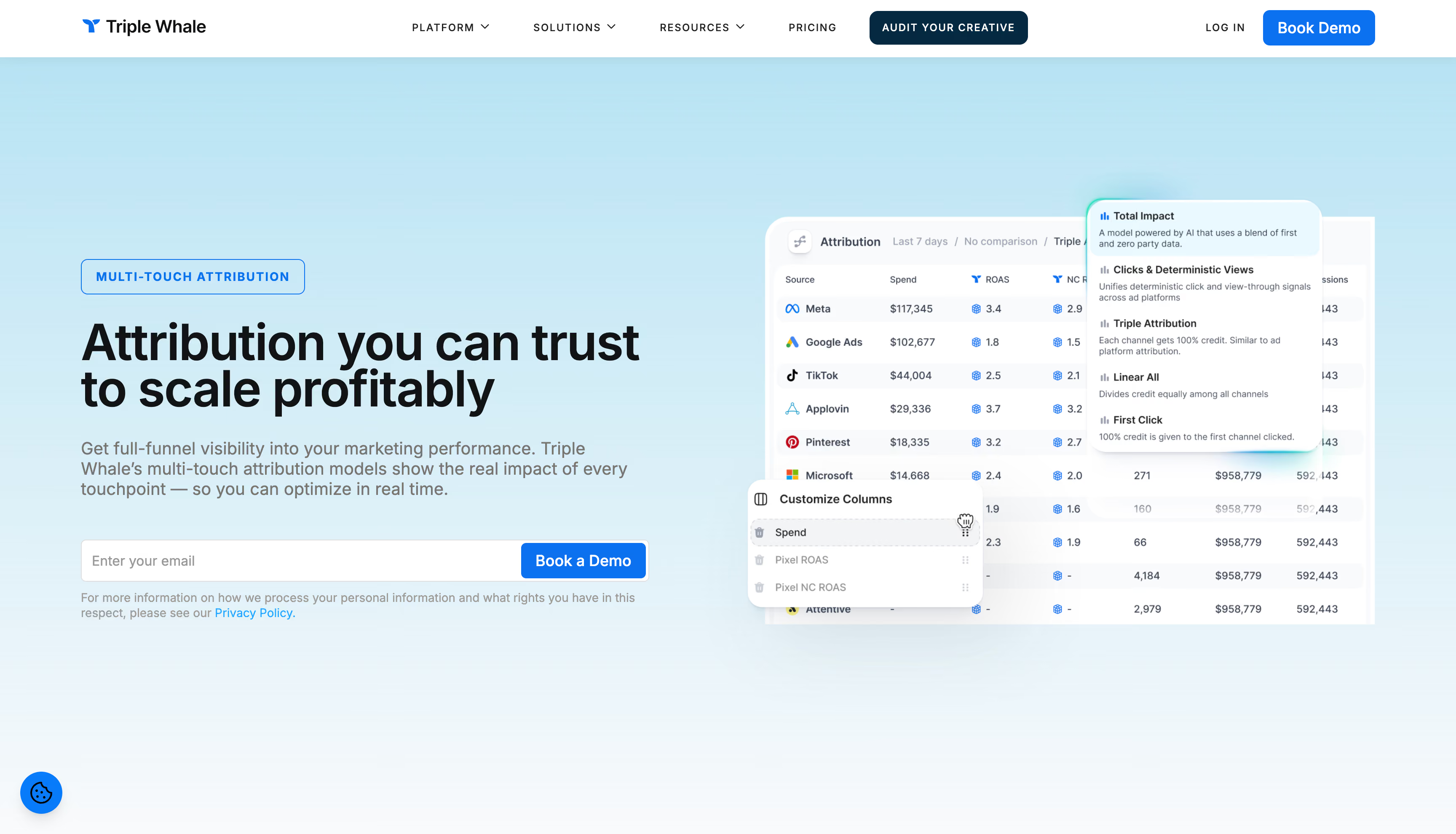
Triple Whale bundles tracking, sending, attribution and AI actions. The Triple Pixel tracks, Sonar Optimize sends to 10 ad platforms through their conversion APIs, multi-touch attribution comes with the Foundation plan, and Moby, the AI agent, can take actions on the higher plans. The gap is profit: Triple Whale reports net profit, with no contribution margin to rank campaigns by.
Key features
▪First-party pixel (Triple Pixel). Installed as a Shopify app block and Web Pixel; Triple Whale advises against installing it through GTM.
▪Server-side sending via Sonar Optimize. Enriched first-party data goes to Meta, Google Ads, TikTok, Reddit, X, AppLovin, Realize, ChatGPT Ads, Snapchat and Pinterest, with optional attribution passback.
▪Net revenue to Meta. Profit Optimization adds net_revenue to the purchase events Meta receives.
▪Attribution, plus Compass as an add-on. Multi-touch attribution from Foundation; MMM and GeoLift incrementality in the Compass add-on.
▪Moby AI agent. With actions on the higher plans.
▪Delivery checks. A delivery overview and a Meta CAPI dashboard with an event match quality chart.
Strengths
Tracking, sending, attribution and actions in one product.
Sonar from Foundation up. Server-side sending is standard on every paid plan.
Newer destinations. ChatGPT Ads, AppLovin and Realize are already on the list.
Limitations
No contribution margin. Triple Whale reports net profit; there's no CM2 or CM3 view per campaign.
MMM and incrementality cost extra. Compass is a separate add-on.
Deduplication varies by destination. The dedup key isn't automatic across every Sonar Optimize integration.
Shopify-first, on annual terms. WooCommerce and BigCommerce support for Sonar is a beta that requires a developer implementation, and listed prices assume a 12-month contract.
Pricing
There's a free plan, with the Triple Pixel included. Foundation costs $219 a month or $2,190 a year and Automate $749 a month on the Shopify App Store; Enterprise is quoted. Prices scale with annual GMV.
Reviews
On G2 Triple Whale rates 4.5, while the Shopify App Store has it at 4.1 and Trustpilot at 3.4. The positive reviews single out the onboarding reps, Moby, and having Shopify and ad-platform numbers side by side. Negative ones, clustered in July to September 2026, are about contract terms and the 30-day notice, support that thinned out after onboarding, attribution numbers reviewers didn't trust, and AI credit caps.
Bottom line
Triple Whale suits a Shopify brand that wants tracking, attribution and AI from one vendor. It stops at net profit, which leaves contribution margin views to be built outside it.
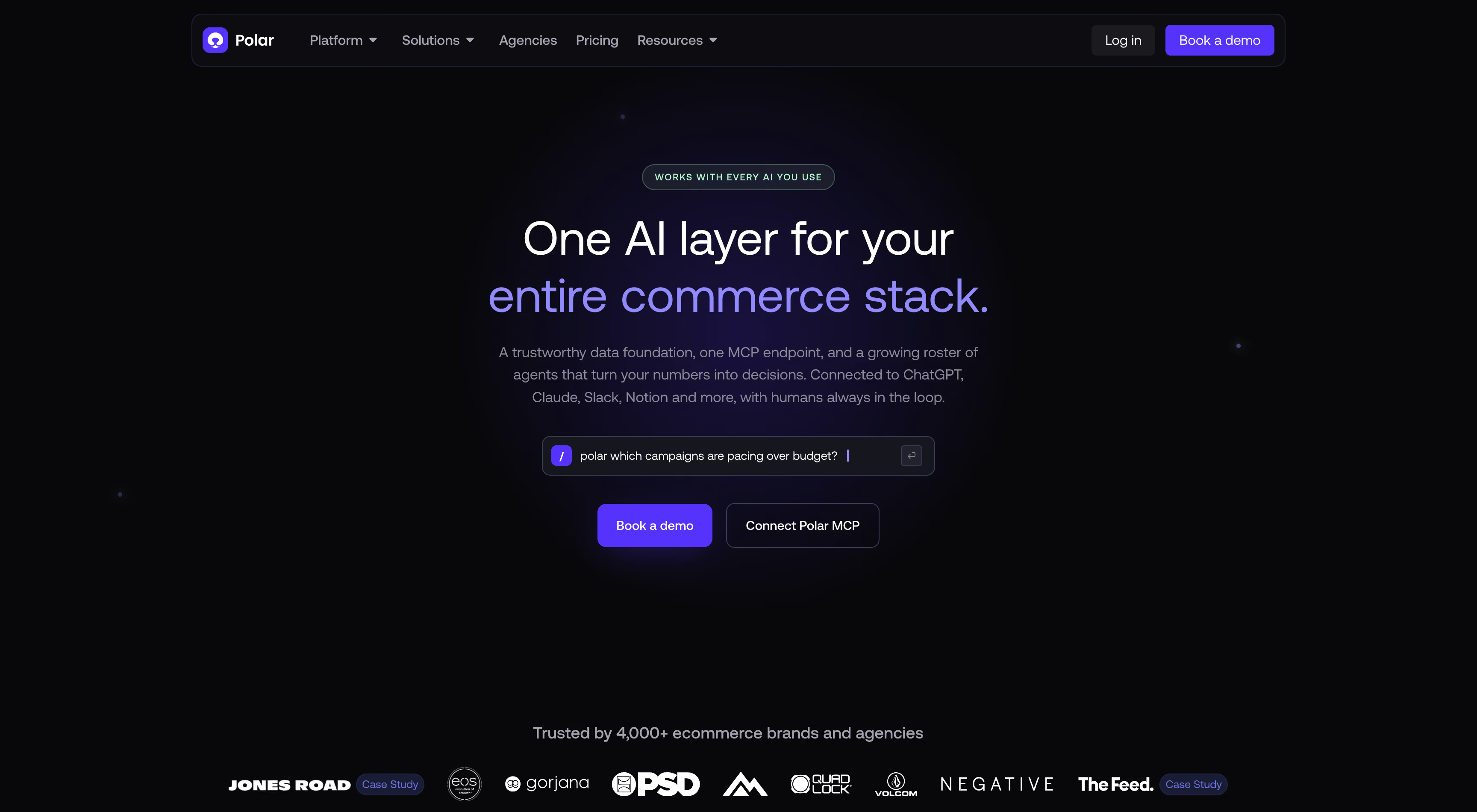
Best for: Data-minded Shopify teams that want CM1 to CM3 reporting, multi-touch attribution and a warehouse of their own, and will move budget by hand.
Polar starts from data infrastructure and works outward. The Polar Pixel handles tracking, a set of attribution models and Causal Lift incrementality tests handle measurement, and contribution margin reporting runs from CM1 to CM3. Sending is limited: Advertising Signals passes orders to Meta and Google and comes with Core or as a separate product. There's no tool for acting on the numbers.
Key features
▪Lifetime ID pixel. The Polar Pixel tracks server-side and first-party, served from your own domain, in every plan.
▪Advertising Signals (CAPI Enhancer). Enriches each order with hashed email and phone, external IDs, IP and user agent before it reaches Meta or Google, with event_id deduplication.
▪Multi-touch attribution. Several models to compare, plus LTV reporting.
▪Causal Lift. Polar's incrementality testing.
▪Contribution margin. CM1, CM2 and CM3 reporting.
▪Snowflake per customer. Each customer's data sits in its own database.
Strengths
Full CM1–CM3 reporting. Contribution margin from CM1 to CM3 sits next to the attribution models.
A database you can query. Data lives in a dedicated Snowflake database per customer, behind a set of ready-made ecommerce metrics.
Limitations
Sends to Meta and Google only. Advertising Signals covers two ad platforms and comes with Core or as a separate product.
No budget automation. Shifting spend toward the campaigns with the best margin happens manually in each ad account.
Shopify only. Polar names no other store platform; headless builds use an SDK and third-party checkouts a script.
No pixel during the trial. The Polar Pixel isn't available in the free trial, which means attribution can't be checked on your own orders before you buy.
Pricing
Polar's pricing page shows no amounts. Price scales with annual GMV, the Core plan bundles BI, AI agents and Data Activations, Advertising Signals among them, which is also sold as a separate product (and part of Custom). The Shopify App Store listing has shown Core from $750 a month.
Reviews
The Shopify App Store puts Polar at 4.9 and G2 at 4.7. Reviewers keep coming back to the support team, how quickly setup went and having every channel's data in one place. Low scores trace back to connectors that only a specialist could set up, delayed data, a sales call standing between them and a trial, and quotes that didn't match the Shopify listing.
Bottom line
Polar suits a Shopify team that reads SQL and wants margin by campaign. The gaps sit at both ends: sending reaches two platforms, and acting on the numbers is left to you.
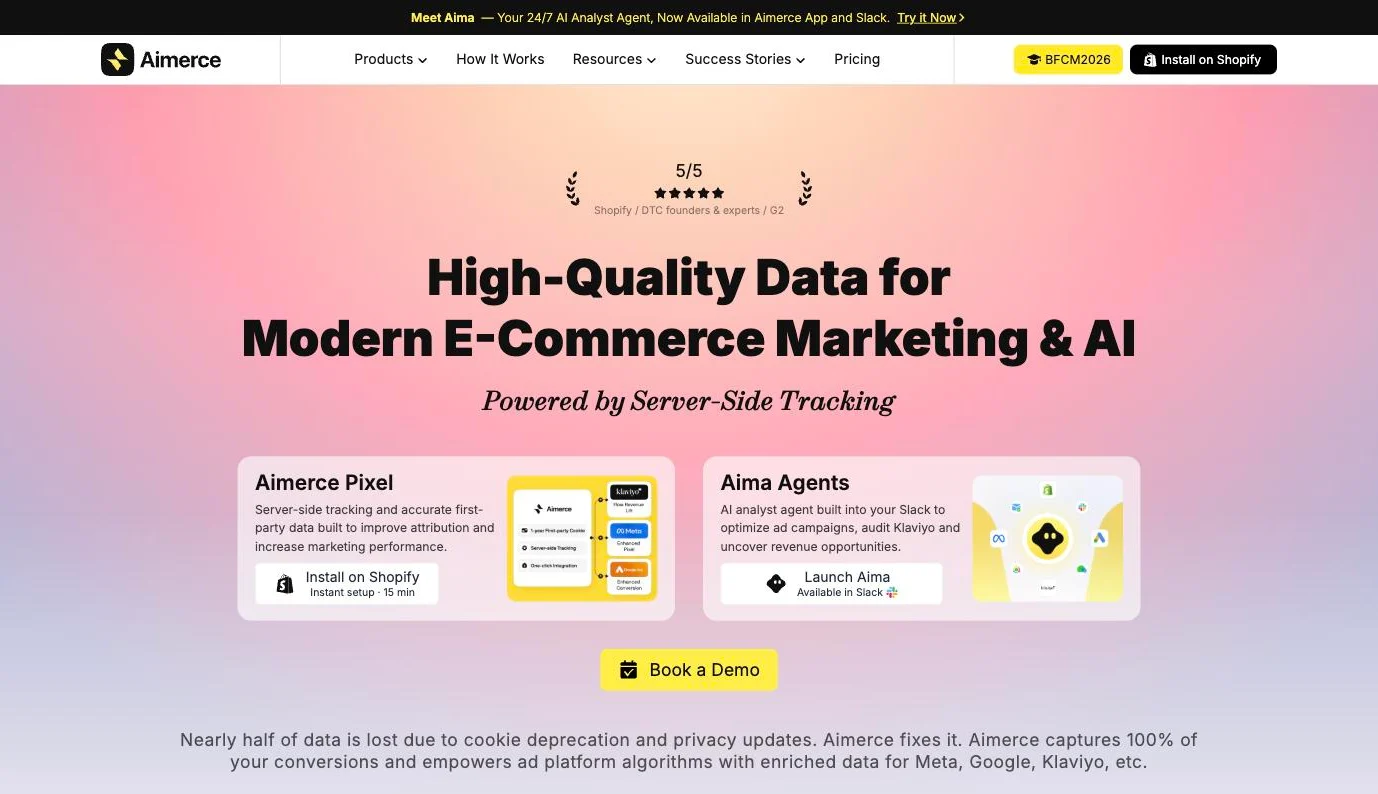
Best for: Shopify brands running Klaviyo or Omnisend flows next to paid social that want one identity graph feeding both the ad platforms and email.
Aimerce pairs a first-party Shopify pixel with server-side delivery to the conversion APIs, built around an identity graph it calls Durable ID. Tracking and sending are the core, and the same identities enrich Klaviyo flows while bot traffic gets filtered out. From the Growth plan, attribution analytics and user journeys add some reporting. Profit and budget sit outside the product.
Key features
▪Durable ID. An identity graph that keeps recognizing shoppers across visits.
▪Destinations. Meta CAPI, Google enhanced conversions, TikTok, Pinterest, Snapchat, OpenAI, Klaviyo and Omnisend.
▪Klaviyo flow enrichment. Identity data from the graph enriches Klaviyo flows.
▪Bot filtering. Bot traffic is screened out of the tracking.
▪Attribution analytics and user journeys. Included from Growth.
▪Headless support. Available from Growth.
Strengths
Ads and email from one identity. Klaviyo and Omnisend run on the same identity graph as the ad destinations.
OpenAI as a destination. Aimerce is one of eight tools on this list that send conversions for ChatGPT ads.
Limitations
High entry price. $299 a month, against $39 for WeltPixel, $49 for wetracked.io, €79 for TrackBee, $145 for Analyzify, $199 for Littledata Standard and $225 for Elevar Core.
Attribution starts at $499. Essential has no attribution analytics.
Shopify only. No other store platform connects.
No contribution margin by campaign or budget automation. Aimerce has no profit reporting and no tool for moving spend.
Pricing
On the Shopify App Store, Essential costs $299 a month for 1,000 orders, then $0.10 per order; Growth $499 for 10,000, then $0.05; Enterprise $1,799 for 50,000, then $0.03. Past 3,000 orders a month Growth costs less than Essential, and at 5,000 orders Essential comes to $699. Aimerce's site offers a 30-day trial and a money-back guarantee, while the Shopify listing shows no trial.
Reviews
Aimerce scores 5.0 on the Shopify App Store and 4.5 on G2. Reviewers praise support staff who explain technical problems patiently and a quick onboarding. There are no Shopify ratings below four stars, and the criticism in the four-star reviews is price.
Bottom line
Aimerce makes sense for a Shopify brand that wants its ad platforms and its email tool working from the same identities. It's a premium price for the send step, and measurement only arrives on Growth.
WeltPixel
★5.0
Best for: Shopify stores that want server-side sending to nine destinations, Reddit and OpenAI Ads among them, for one flat monthly price whatever the order volume.
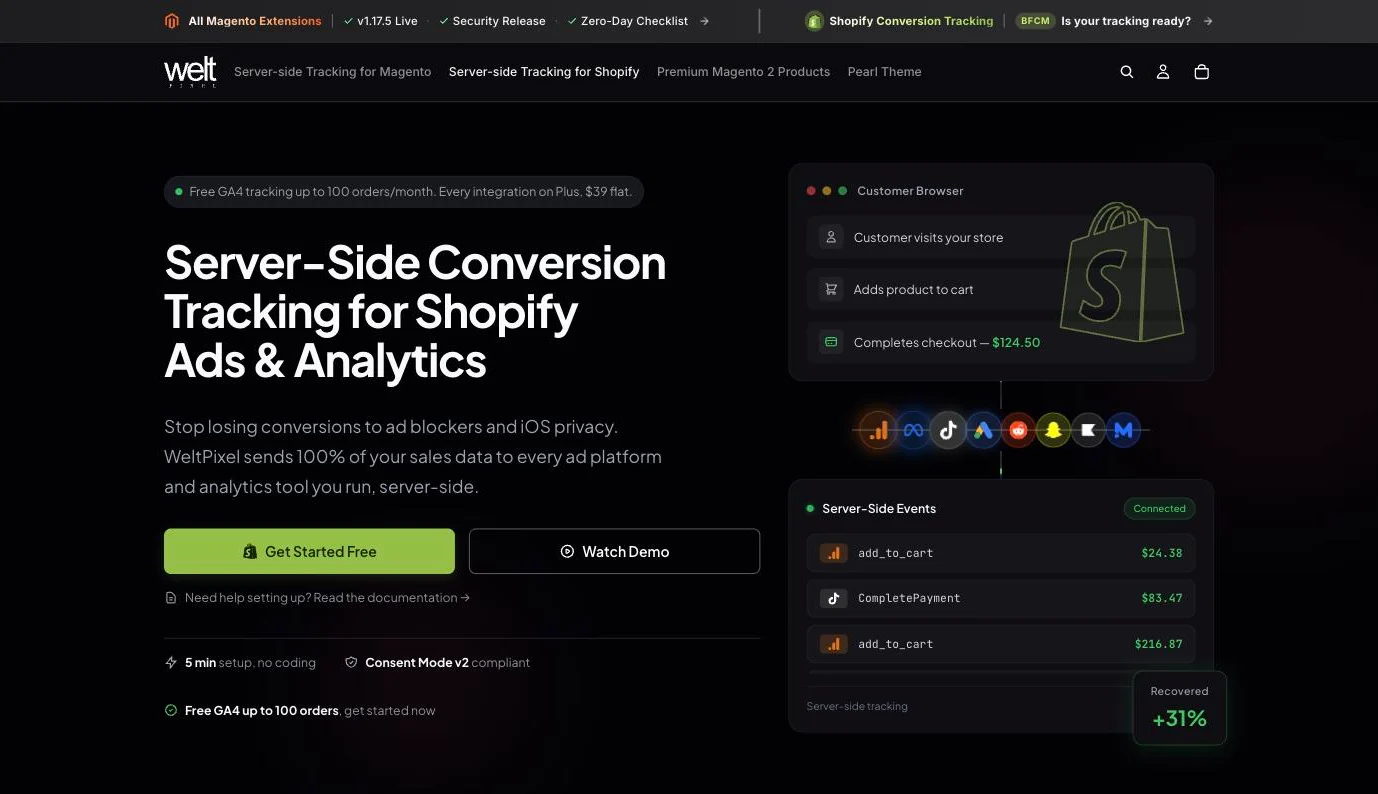
WeltPixel Conversion Tracking is a Shopify app built on Shopify's Web Pixels API. Events go out server-side from Shopify's servers with an event_id for deduplication, and there's no GTM container to set up. It tracks and sends at a fixed price that doesn't rise with order volume. The dashboard is a live event feed, which leaves attribution, profit and budget to other tools.
Key features
▪Web Pixels API, no GTM. Tracking runs inside Shopify's own pixel framework.
▪Nine destinations. GA4, Meta CAPI, Google Ads, TikTok, Pinterest, Snapchat, Reddit, OpenAI Ads and Klaviyo, with theMarketer added on WeltPixel's site.
▪Server-side delivery from Shopify. Each event carries an event_id, which lets the platforms drop browser duplicates.
▪Consent Mode v2. For GA4 and Google Ads, reading consent from OneTrust, Cookiebot or Shopify.
▪Live event feed. Shows events as they're sent.
Strengths
$39 a month, unlimited orders. A sales spike doesn't move the bill.
Free GA4 tier. Discovery sends to GA4 at no cost up to 100 orders a month.
Newer ad platforms included. Reddit and OpenAI Ads come with Plus at no extra charge.
Limitations
No attribution model. The event feed shows what went out, with no credit by channel.
No contribution margin by campaign. There's no profit reporting.
No budget automation. Spend decisions stay in each ad manager.
Shopify only, and new. The app launched in November 2025, which gives it a short track record.
Pricing
Discovery is free for GA4 only, up to 100 orders a month. Plus costs $39 a month or $390 a year and opens every destination with no order limit, which makes the bill the same at 500 orders and at 50,000.
Reviews
WeltPixel scores 5.0 on the Shopify App Store, where every rating so far is five stars. Reviewers mention a quick install, better Meta attribution and more accurate order data, and support that responds promptly with real technical answers.
Bottom line
WeltPixel sends a Shopify store's conversions server-side to the major ad platforms for a flat $39 a month. Expect a sending tool and nothing beyond it.
CustomerLabs
★4.8
Best for: Brands with leads, CRM stages or offline sales that need first-party data stitched across sources and sent to ad platforms, LinkedIn included.
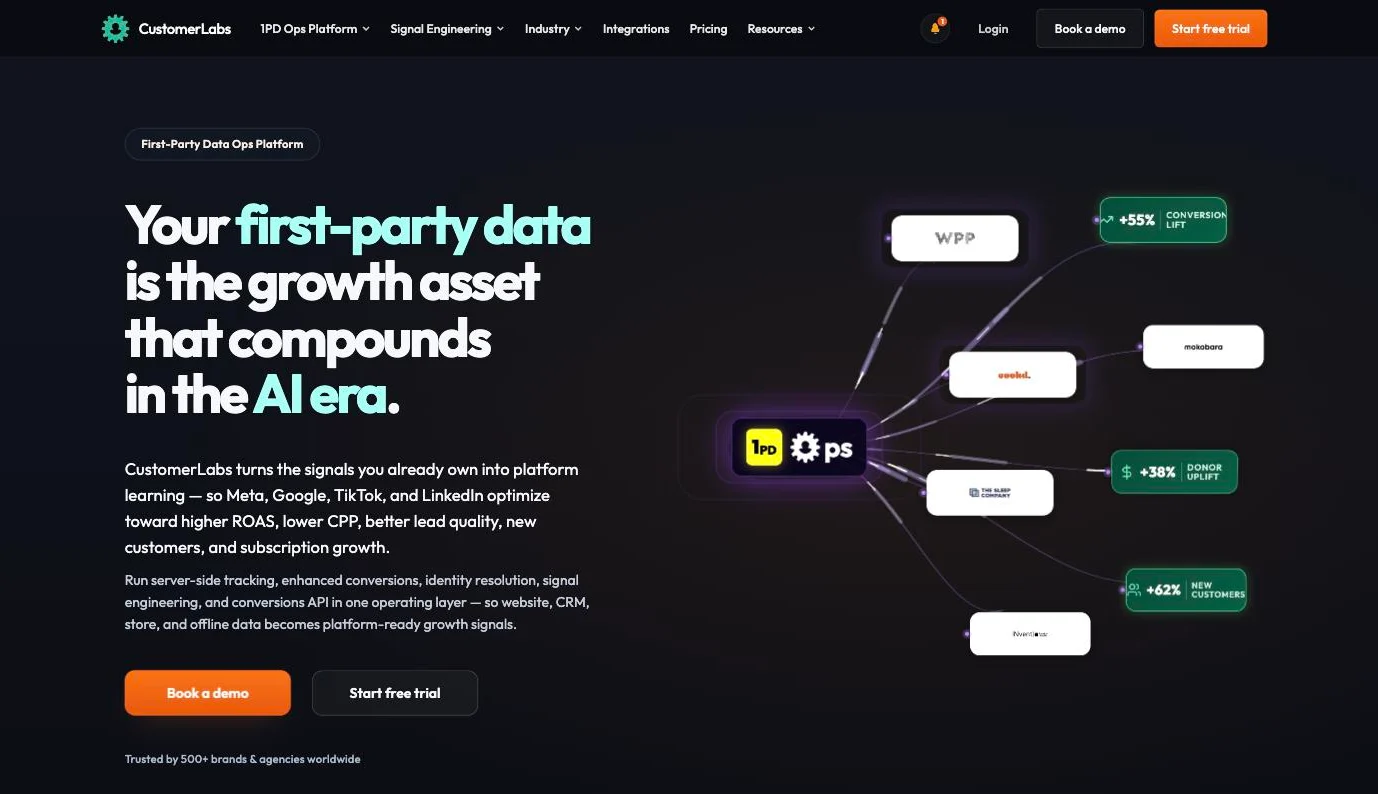
CustomerLabs is a first-party customer data platform. It resolves identities across sources, sends server-side conversions to the ad platforms, uploads offline conversions, builds audiences and reports attribution with linear, time-decay and position-based models next to LTV. Margin or POAS values can go to the platforms as conversion values, but there's no profit reporting by campaign, and nothing moves budget.
Key features
▪Identity resolution. Stitches visitors across Shopify, WooCommerce, BigCommerce, CRMs and webhooks.
▪Server-side destinations. Meta, Google Ads enhanced conversions, Bing, TikTok, Snapchat, LinkedIn, Pinterest, Reddit, GA4, BigQuery, Klaviyo and others.
▪Offline conversions. CRM and offline sales go back to the ad platforms.
▪Attribution, product, customer and LTV reports. Linear, time-decay and position-based models.
▪Signal monitoring. Deduplication, event match quality trends and per-destination logs.
▪Consent and data regions. Consent Mode v2, consent-based routing and eight data regions, the EU among them.
Strengths
Built for more than one store platform. Shopify, WooCommerce, BigCommerce and CRMs all feed the same profiles.
Offline and CRM conversions. Useful for brands whose sales close by phone, in a showroom or after a lead stage.
Unlimited sources and destinations. Pricing doesn't count connections.
Limitations
No contribution margin by campaign. Margin leaves as a value for the platforms, and no report ranks campaigns by it.
No budget automation. Budget moves stay manual.
More setup than a Shopify app. Shopify needs a multi-step app setup, and the first-party domain is a separate subscription that requires Cloudflare off Shopify.
Usage-based costs. Growth includes 500,000 usage units a month, and each further 500,000 costs $27.25.
Pricing
Growth costs $129 a month, $387 a quarter or $1,548 a year. Agency Lite is $499 a month and Agency Premium $999.
Reviews
CustomerLabs scores 4.8 on G2 and 4.6 on Capterra. Reviewers praise an onboarding team that works through setup with them, a no-code start, and better match rates and offline conversion data in the ad platforms; the repeated complaint is a learning curve on event configuration for anyone without a technical background.
Bottom line
CustomerLabs is the fit when conversions happen in a CRM or offline, because it sends those alongside web orders. Profit by campaign and budget decisions still sit outside it.
Best conversion tracking software: final verdict
Admetrics is the best conversion tracking software for brands that want tracking, attribution, profit and budget moves on one set of order data. The other ten fit narrower needs:
▪Elevar: Shopify stores that need many destinations; no attribution or margin reporting.
▪Littledata: Shopify stores that want backend sending priced per order; no reports of its own.
▪Analyzify: Shopify teams that want GA4 and pixels set up for them; click-rule attribution only.
▪wetracked.io: stores on Shopify and funnel checkouts on a small budget; ad platforms and Klaviyo only.
▪TrackBee: brands that want managed sending; attribution is a paid add-on, no profit reporting.
▪Triple Whale: Shopify brands that want attribution and AI actions; no contribution margin.
▪Polar Analytics: data teams that want CM1–CM3 reporting; sends to Meta and Google only, no budget automation.
▪Aimerce: Shopify brands that want one identity graph for ads and email; no profit reporting.
▪WeltPixel: Shopify stores that want a flat monthly price for sending; nothing beyond it.
▪CustomerLabs: brands with CRM or offline sales; no profit by campaign, no budget automation.
Conversion tracking software records the purchases and other actions that follow an ad click and reports them back to the ad platforms. Current tools collect first-party events in the store, match them to real orders and send them server-to-server through APIs like the Meta Conversions API (what media buyers call CAPI tracking), deduplicated against the browser pixel. The better ones also show which channel earned the order and what it was worth after costs.
Is there free conversion tracking software?+
For Meta alone, yes: Meta's Conversions API Gateway and Shopify's Facebook & Instagram app send purchases server-side without a license fee. Neither covers Google or TikTok, and neither reports attribution or profit. Free tiers of paid tools cap orders or destinations, and attribution, contribution margin and budget automation sit on paid plans. Admetrics has a 21-day free trial with no card.
Do I need a paid tool if Meta's Conversions API Gateway is free?+
The Gateway has no license fee, but you host it in your own AWS or Google Cloud account (or a partner does), set it up from Events Manager and pay the cloud costs. Meta also offers a Meta-hosted Conversions API for Pixel users. Both cover Meta only. Neither sends to Google or TikTok, and neither does attribution, profit reporting or budget moves, which is where a paid tool earns its price.
How do I track offline conversions from my ads?+
Offline conversion tracking works differently on each platform. Google Ads has offline conversion imports and enhanced conversions for leads, and Meta accepts offline events through the Conversions API. Uploading files to each platform by hand works for a few sales a week and breaks down beyond that. Among the tools on this list, CustomerLabs sends offline and CRM conversions alongside web events.
Which conversion tracking app is best for Shopify?+
For Shopify conversion tracking that goes past delivery, pick Admetrics: it tracks, sends conversions back server-to-server, attributes, reports contribution margin by campaign and moves budget on one set of order data, from $399/month. Shopify apps such as Elevar, Littledata and WeltPixel send conversions to the ad platforms and stop there, with no contribution margin by campaign and no budget automation.
Can I track conversions from ChatGPT ads?+
Yes, with a tool that lists ChatGPT Ads (OpenAI's ad platform) as a destination. On this list, Admetrics, Elevar, Analyzify, TrackBee, Triple Whale, Aimerce, WeltPixel and CustomerLabs send conversions there.
What's the difference between conversion tracking and ad tracking?+
Ad trackers like RedTrack or Voluum follow clicks and campaigns for media buyers and affiliates: which link, offer and traffic source produced a sale. Conversion tracking starts from the store's orders and sends them back to Meta, Google and TikTok, where the bidding algorithms learn from real purchases. For an ecommerce brand, the order-side feed is the one the ad platforms actually optimize on.