What Are Marketing Analytics Tools?
Marketing analytics tools are powerful software solutions designed to track, analyze, and interpret data from various marketing campaigns. They enable businesses to make data-driven decisions, optimize performance, and improve their return on investment (ROI). These tools consolidate data from multiple sources—web traffic, email campaigns, social media platforms, and more—into actionable insights.
Businesses rely on marketing analytics tools to measure campaign success, monitor key performance indicators (KPIs), and forecast trends. However, not all tools are created equal. Understanding what these tools should do is essential to choosing the right platform for your business.

Key Functions of Marketing Analytics Tools
Data Collection and Integration
Effective marketing analytics tools should aggregate data from various platforms like Google Analytics, social media, CRM systems, and ad platforms. Seamless integration ensures that marketers have access to centralized data, minimizing manual efforts and errors.
Modern tools must support integration with third-party apps, APIs, and cloud storage solutions, enabling businesses to streamline data workflows. Look for tools that can handle real-time data synchronization for up-to-date reporting.
Multi-Channel Tracking and Attribution
One of the most critical roles of marketing analytics tools is to track campaigns across multiple channels—email, social media, PPC ads, and organic search.
The ability to attribute conversions accurately ensures marketers understand which touchpoints contribute most to sales. Multi-touch attribution models allow businesses to analyze the customer journey and optimize campaigns for maximum impact. If attribution is the job you're actually hiring a tool for, our dedicated ranking of the best marketing attribution tools and software goes a level deeper than a general analytics shortlist.
Data Visualization and Reporting
A marketing analytics tool must offer robust data visualization features, such as interactive dashboards and customizable reports.
Key Features to Look For:
- Graphs, charts, and heatmaps for easy interpretation
- Drag-and-drop report builders for custom insights
- Exportable PDF and Excel reports for stakeholder presentations
Visualizing data not only makes it easier to understand but also highlights trends and patterns, empowering marketers to make strategic decisions quickly.
Performance Metrics and KPIs
Tracking the right metrics is crucial for evaluating success. Marketing analytics tools should monitor metrics like:
- Traffic Sources – Organic, paid, referral, and social traffic
- Conversion Rates – Percentage of visitors taking desired actions
- Customer Acquisition Costs (CAC) – Cost to acquire a new customer
- Return on Investment (ROI) – Revenue generated versus marketing spend
Custom KPI tracking allows businesses to focus on metrics aligned with their goals. Learn more about metrics, including how to calculate ROAS for e-commerce.
Predictive Analytics and AI Insights
Modern marketing analytics tools go beyond descriptive analytics. They should employ AI-driven insights and predictive analytics to forecast trends, identify patterns, and anticipate customer behavior.
Examples Include:
- Predictive lead scoring to identify high-converting prospects
- Sentiment analysis for social media listening
- Recommendations for budget allocation based on past performance
AI capabilities enhance decision-making and create opportunities for personalization.
Audience Segmentation and Personalization
Marketing analytics tools should allow businesses to segment audiences based on demographics, behavior, and interests. Segmentation supports targeted marketing strategies, ensuring messages resonate with specific groups.
Personalization features further refine marketing efforts by delivering content tailored to user preferences, increasing engagement and conversions.
Real-Time Monitoring and Alerts
Time-sensitive decisions require real-time data monitoring. Analytics tools should provide live updates and instant alerts for anomalies, such as sudden traffic spikes or ad spend fluctuations.
Real-time monitoring ensures quick reactions, minimizing losses and maximizing opportunities.
Campaign Performance Optimization
A marketing analytics tool must offer insights into how campaigns are performing and suggest optimizations.
Features like A/B Testing Reports help marketers compare different versions of ads, emails, or landing pages to determine what works best. Tools should also recommend adjustments to improve ROI.
Customer Journey Mapping
Understanding the complete customer journey is crucial for improving marketing strategies. Analytics tools should provide visual journey maps to highlight every touchpoint a customer interacts with, from discovery to conversion.
Journey mapping reveals drop-off points, helping marketers refine their approach to increase engagement.
Budget Management and ROI Analysis
Marketing analytics tools should include budget-tracking features that tie expenditures to outcomes. Analyzing ROI across campaigns allows marketers to allocate resources more effectively.
Why Businesses Need Marketing Analytics Tools
Enhance Data-Driven Decision Making
Businesses make informed decisions by analyzing data trends rather than relying on intuition. Marketing analytics tools eliminate guesswork, ensuring strategies are backed by facts.
Improve Customer Retention
Tracking user behavior and engagement metrics helps identify opportunities to nurture leads and retain customers through personalized experiences.
Maximize Campaign Effectiveness
With insights into performance metrics, businesses can tweak campaigns in real time, avoiding wasted spend and improving results.
How to Choose the Best Marketing Analytics Tools
Evaluate Your Needs
Define your goals—whether it’s lead generation, customer engagement, or revenue growth—and choose a tool that aligns with your objectives.
Consider Scalability
Opt for tools that grow with your business. Scalable solutions ensure you won’t outgrow features as your marketing needs evolve. Check how the price grows, too. Several ecommerce platforms bill against your annual GMV, so the same plan costs more every quarter you succeed - one of the recurring reasons brands start looking at Triple Whale alternatives. If you're shopping specifically for the best analytics tools for ecommerce brands, that comparison narrows the field to platforms built for online stores.
Focus on Ease of Use
A tool with an intuitive interface reduces learning curves, enabling teams to get up and running quickly.
Check Integrations
Confirm the tool supports integrations with your existing platforms, including CRM software, social media, and email marketing tools.
Review Support Options
Reliable customer support ensures minimal downtime and maximizes efficiency. Look for 24/7 support and knowledge base resources.
Marketing analytics tools: Admetrics
Admetrics.io stands out as a pivotal tool for marketing professionals, particularly those focusing on direct-to-consumer (DTC) brands, due to its comprehensive suite of analytics and multi-touch attribution solutions designed to enhance e-commerce marketing effectiveness.
One of the key features that make Admetrics indispensable is its advanced data integration capability. The platform consolidates data from various sources into customizable dashboards, significantly reducing the complexity of handling multiple streams of marketing data. This centralization of data aids in making quick, informed decisions, improving overall business intelligence.
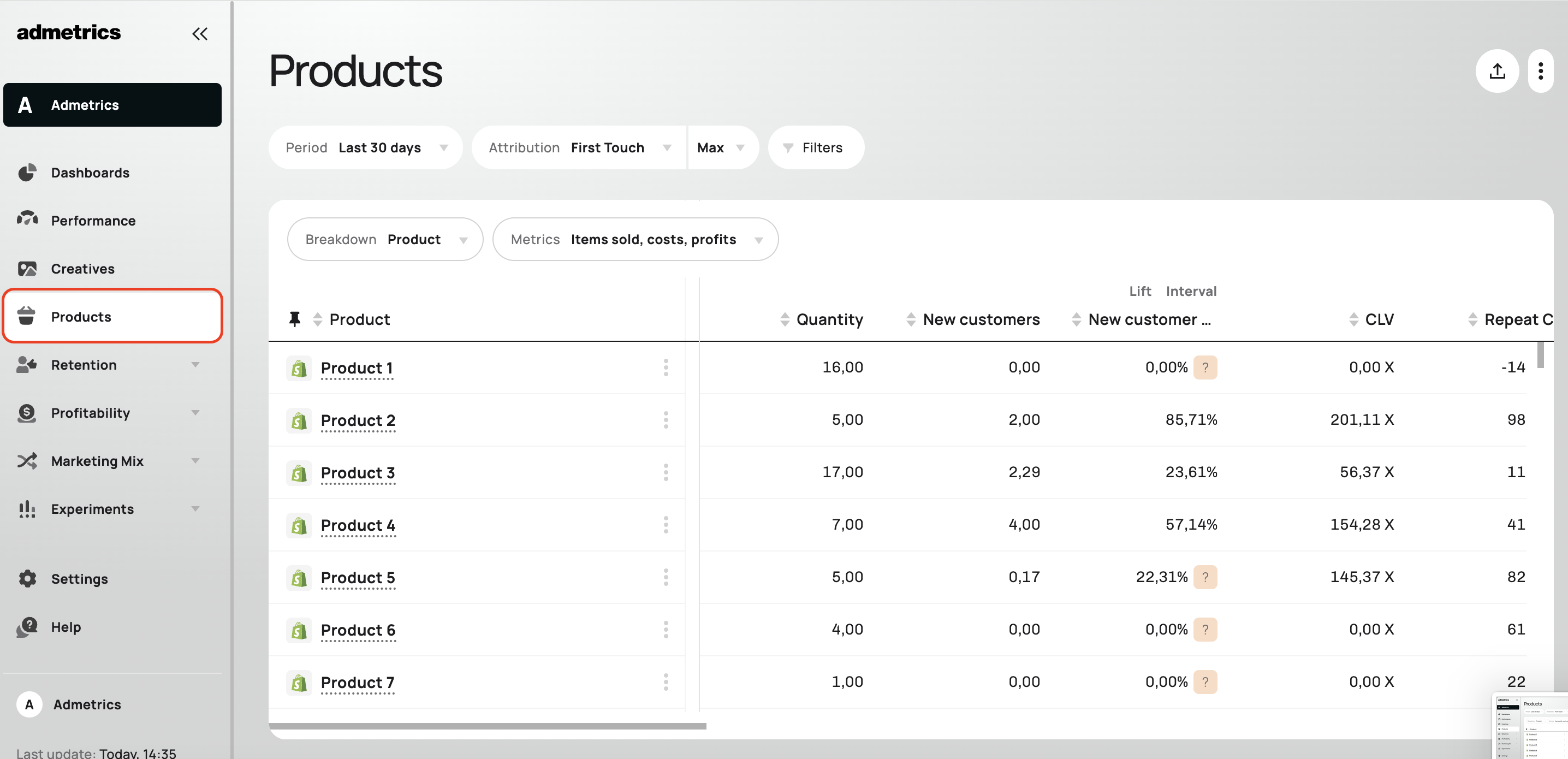
Admetrics also excels in marketing mix modeling and tracking & attribution. Their PRISMA model and Fusion Attribution method go beyond traditional last-touch attribution, providing a more nuanced view of marketing channel effectiveness. This is crucial for allocating budgets more efficiently and understanding the actual impact of each marketing initiative, including TV and offline channels.
For teams aiming to optimize their digital advertising, Admetrics' experimentation engine offers tools powered by Bayesian statistics, which allows marketers to test and iterate on their strategies rapidly. This capability is essential for staying ahead of the competition by continuously refining marketing tactics based on solid data-driven insights.
Moreover, Admetrics enhances the Return on Ad Spend (ROAS) through superior data quality. The platform's ability to feed precisely tracked and enriched conversion data back to advertising networks enables these networks' algorithms to optimize ad performance to a much greater extent. This leads to significantly higher ROAS, making it a critical tool for maximizing advertising effectiveness.
Lastly, Admetrics is designed with privacy compliance in mind, supporting GDPR and CCPA standards, ensuring that data handling meets current legal requirement. This comprehensive approach to data, analytics, and user privacy makes Admetrics a must-use tool for marketing professionals seeking to drive higher profitability and effectiveness in their advertising strategies.
Conclusion
Marketing analytics tools are indispensable for modern businesses aiming to scale and optimize their marketing strategies. From data integration and visualization to AI-powered insights and ROI analysis, these tools empower marketers to make informed decisions and achieve better results.
Selecting the right platform means considering features that align with business goals, scalability, and ease of use. Whether you’re a small business or a large enterprise, the right marketing analytics tool can transform raw data into actionable strategies, ensuring success in an increasingly competitive digital landscape.
FAQs About Marketing Analytics Tools
1. What exactly do marketing analytics tools do, and why are they essential?
Marketing analytics tools are powerful software solutions that consolidate, track, and interpret data across multiple marketing channels—such as social media, email campaigns, web traffic, and paid ads.
They are essential because they eliminate guesswork. Instead of relying on intuition, businesses use these tools to make data-driven decisions, optimize live campaigns, map the customer journey, and ultimately improve their Return on Investment (ROI).
2. Why is data integration considered the foundation of a reliable analytics platform?
A marketing campaign is only as good as the data informing it. Effective marketing analytics tools aggregate fragmented data from various sources (like Google Analytics, CRM systems, and ad platforms) into one centralized hub.
This seamless integration via APIs, third-party apps, and cloud storage reduces human error and manual data entry. Furthermore, it allows for real-time data synchronization, ensuring that the reporting you look at is always up-to-date.
3. What is "multi-touch attribution," and why does it matter more than basic tracking?
Basic tracking often only gives credit to the very last link a customer clicked before buying (last-touch attribution). Multi-touch attribution, however, analyzes the entire customer journey.
It maps out every single touchpoint across multiple channels—for instance, discovering a brand via organic search, seeing a retargeting ad on social media, and finally converting through an email link. This allows marketers to understand exactly which channels are doing the heavy lifting and allocate their budgets accordingly. We compared the dedicated platforms head to head in our guide to multi-touch attribution software for 2026.
4. What are the most critical Key Performance Indicators (KPIs) to monitor?
While every business has unique goals, robust marketing analytics tools should universally track the following core metrics:
- Traffic Sources: Identifying whether visitors are coming from organic search, paid ads, referrals, or social media.
- Conversion Rates: The percentage of visitors who actually take a desired action (e.g., making a purchase or signing up).
- Customer Acquisition Cost (CAC): Exactly how much marketing spend it takes to acquire one new customer.
- Return on Investment (ROI): The total revenue generated compared against your marketing expenditure.
5. How do AI and predictive analytics differ from traditional reporting?
Traditional (descriptive) analytics tell you what already happened—how many clicks an ad got yesterday.
Predictive analytics and AI, on the other hand, look forward. These modern features use historical data patterns to forecast future trends and anticipate customer behavior. Examples include predictive lead scoring (identifying which prospects are most likely to buy), social media sentiment analysis, and automated budget allocation recommendations.
6. How do analytics tools help with Audience Segmentation and Personalization?
A one-size-fits-all marketing approach rarely works. Analytics tools allow you to slice your audience into specific segments based on demographics, past purchasing behavior, and interests.
By understanding these distinct segments, marketers can deploy personalization features—delivering highly tailored content and product recommendations to specific user groups, which significantly drives up engagement and conversion rates.
7. Why is real-time monitoring critical for campaign optimization?
Digital marketing moves at lightning speed. If an ad starts overspending or a website experiences a sudden traffic spike, waiting for an end-of-month report is too late.
Real-time monitoring and instant alerts allow marketers to react immediately. This means you can pause underperforming campaigns to prevent wasted budget, or scale up a highly successful ad in the moment to maximize your opportunities.
8. What should a business look for when choosing the right marketing analytics tool?
Selecting the best tool requires evaluating several key factors:
- Business Needs & Goals: Does the tool align with your specific objectives (e.g., lead generation vs. e-commerce sales)?
- Scalability: Will the tool grow with your company, or will you outgrow its features in a year?
- Ease of Use: An intuitive interface and drag-and-drop report builders reduce the learning curve for your team.
- Integrations: Does it connect seamlessly with your existing CRM, social, and email platforms?
- Support: Look for 24/7 customer service and comprehensive knowledge bases.
9. How does Admetrics specifically benefit Direct-to-Consumer (DTC) brands?
Admetrics stands out for DTC and e-commerce brands by moving beyond traditional last-touch attribution. It uses advanced frameworks like the PRISMA model and Fusion Attribution to provide a nuanced view of marketing mix modeling, including the impact of offline channels like TV.
Additionally, it uses a Bayesian statistics engine to allow marketers to run rapid, highly accurate A/B tests. By feeding precisely tracked, enriched conversion data back to advertising networks, Admetrics helps those networks' algorithms optimize better, driving significantly higher Return on Ad Spend (ROAS).
10. How do modern marketing analytics tools address data privacy concerns?
With strict digital privacy laws in place globally, an analytics tool must handle data legally and ethically. Top-tier tools, like Admetrics, are designed with privacy compliance built directly into their architecture. They adhere strictly to frameworks like GDPR (General Data Protection Regulation) in Europe and CCPA (California Consumer Privacy Act) in the US, ensuring that all user tracking and data aggregation meets current legal requirements without exposing the business to liabilities.