

Brands rarely leave Triple Whale because it's bad. It reconciles pixel data against Shopify orders, it runs real profit reporting, and for a lot of DTC teams it was the first tool that made paid media legible. The reasons they leave are specific.
Profit stops at gross margin. Triple Whale takes COGS and gives you live gross profit - further than most tools go. It just stops there. Operating costs, contribution margin and anything resembling a P&L go back to a spreadsheet. Returns aren't broken out by campaign or product either, so the channel quietly generating your refunds looks identical to the one that isn't. You end up scaling on a number that hasn't met your real costs yet - no POAS per SKU, no margin below the gross line.
One buyer counts as several. There's no cross-store or marketplace identity matching. A customer who bought on Amazon and returns through your Shopify store arrives as brand new, and every acquisition number you report inherits the error. Orders split new from returning, but there's no reactivated tier, so win-back spend gets credited as acquisition.
The bill grows with the store, and the contract doesn't let you react. Triple Whale says it on its own pricing page: prices are based on your annual GMV and the package you choose. Foundation opens at $219 a month and Automate at $749, but those are floors for the smallest revenue tier. Every paid plan is a 12-month subscription, Moby runs on AI credits you can exhaust mid-month, and the one-star reviews describe refunds refused and cancellation taking real effort.
Support thins out after onboarding. This is the clearest pattern in the negative reviews, and it comes from long-tenure customers. One merchant almost three years in describes polished sales and onboarding, then a success manager who escalates instead of answering: "I'll need to ask someone else." Several others simply couldn't reach anyone.
The ratings capture the split. Triple Whale holds 4.5 on G2 across 478 reviews, while its Shopify App Store listing sits at 4.1. 16% one-star, almost nothing in between. People either build their week around it or want their money back.
Four questions decide whether a measurement tool changes a decision or just fills a screen. We scored every tool on all four, and the table below is the result.
Here's how the top Triple Whale alternatives compare across all four.
Best for: ecommerce and DTC teams that want tracking, attribution, profit and the budget decision running off one system instead of four.
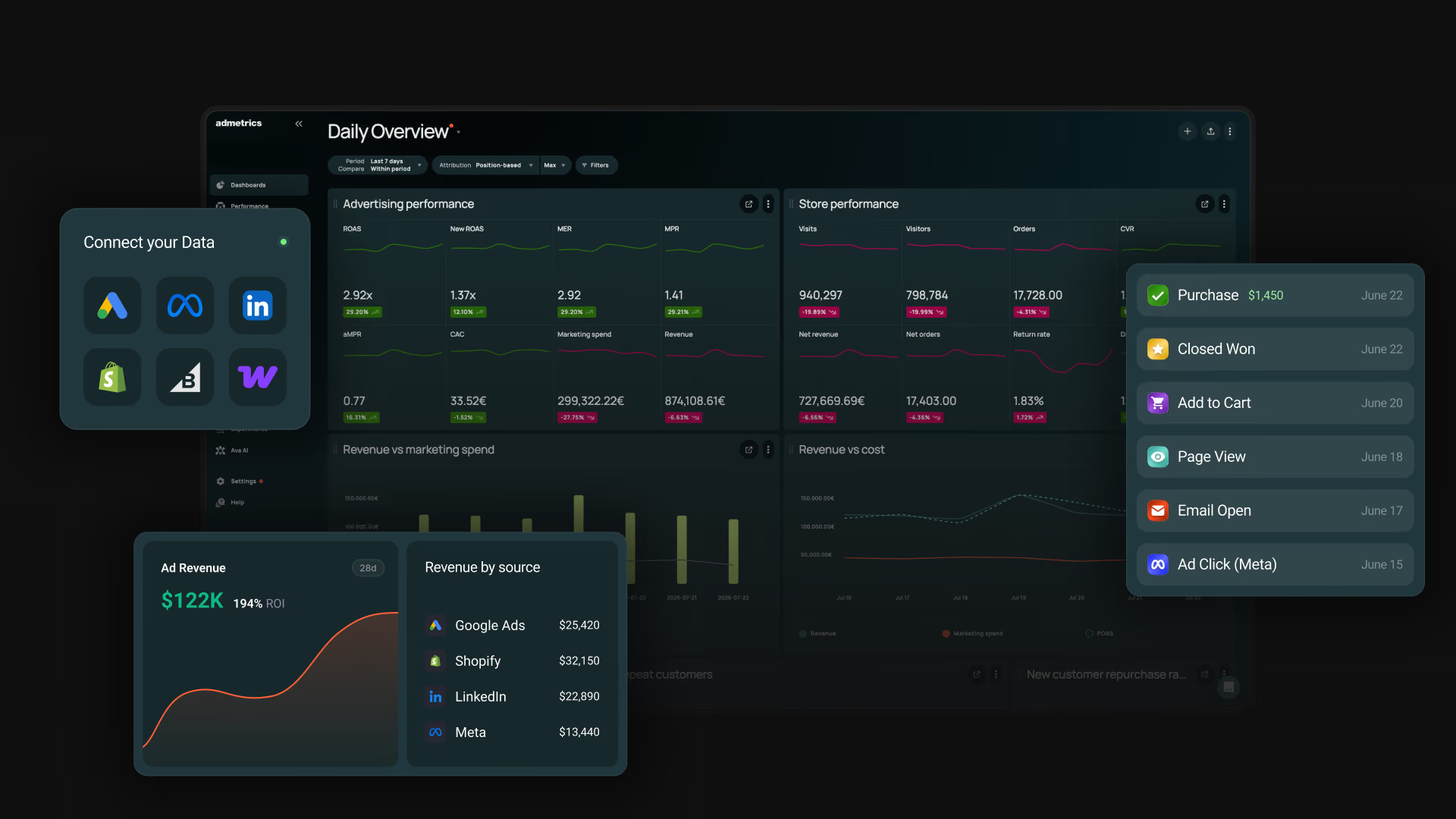
Most scaling brands don't run one tool. They run Triple Whale for the dashboard, a profit app for margin, a spreadsheet for cohorts, and an agency deck for MMM - then spend Monday morning arguing about which number is right. That argument is a reconciliation tax, and it gets more expensive the faster you grow. Admetrics collapses the stack: first-party server-side tracking, nine attribution models, a machine-learning MMM and a full P&L layer all read from the same dataset, so there's one number to defend instead of four to reconcile.
Growth is $399/month with the first $20,000 of ad spend included and 1.5% beyond it. Business is $899, covers $70,000, drops the overage to 1%, and adds first-party subdomain tracking and intraday updates. Premium is quoted individually. Every plan includes a 21-day trial and a free data audit.
Admetrics averages 4.97, the highest score in this comparison. Two themes repeat: the gap between what Admetrics reports and what the ad platforms claim, and a support team that helps read the numbers rather than pointing at documentation.
The only tool here that carries a click through to tracked conversion, attributed credit, net profit per SKU, and the budget move that follows - without a second vendor in the chain.
Best for: Shopify-first brands that want a real data stack and margin reporting without hiring a data team.
Polar is the opposite of Northbeam. Where Northbeam is a measurement instrument that never learned accounting, Polar is a data platform that learned attribution second. Every plan ships a dedicated Snowflake database with your name on it, a semantic layer of 400+ prebuilt ecommerce metrics sitting on top, and dashboards that already know what CAC and contribution margin mean. You get the warehouse without the data engineer.
GMV-based, and the site won't show a number until you pick your bracket. Polar's Shopify listing publishes $750/month with a free trial; G2 lists an entry tier from $300/month for BI alone. Expect the bill to climb with GMV, and note that SQL access, intraday refresh, incrementality testing and the CAPI connection are all priced on top.
4.7 on G2 from a small base of 21 reviews.. Support and setup speed dominate the praise. The recurring complaint is cost, specifically how it scales as the store grows.
A strong BI foundation as an alternative to Triple Whale, but a weak choice if you want the system to model your channel mix or move budget for you.
Best for: high-spend DTC brands that want the deepest paid-media measurement available, and already handle profit somewhere else.
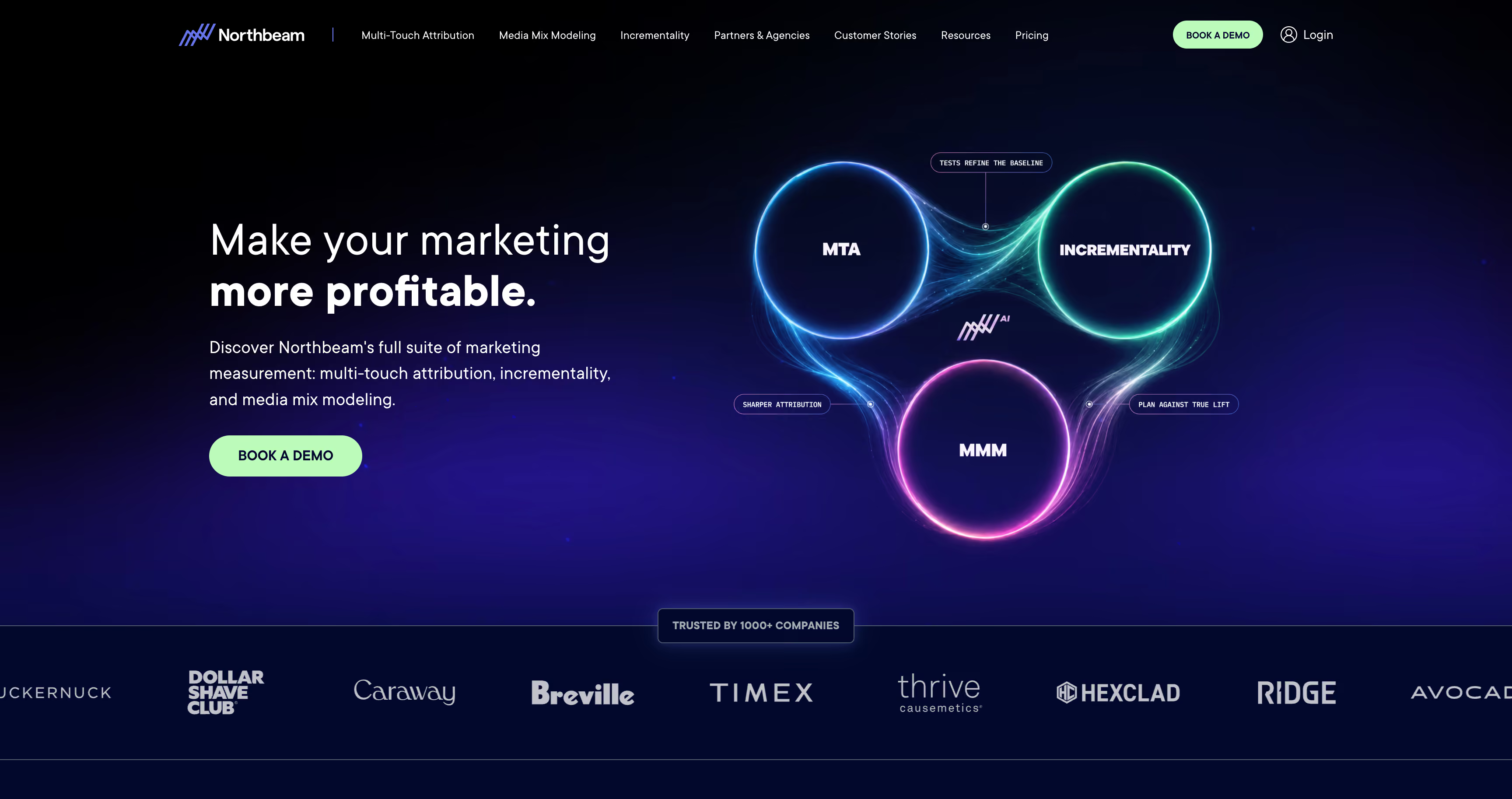
Northbeam's own help docs have a page titled "My FB ROAS is 0.7 — is this normal?" That tells you what the platform is: a measurement instrument built to disagree with your ad accounts, aimed at brands with media buyers who want to argue about the number. It goes deeper on attribution than almost anything else on this list. It just stops before the number becomes profit.
Starter starts at $1,500/month, billed against data volume. Professional and Enterprise are quoted, and eligibility is tied to spend thresholds - roughly $250K and $500K a month - which is also where the higher refresh rates and MMM+ sit. There's no free trial.
Northbeam holds 4.5 on G2, though from only 16 reviews. The pattern is consistent: accuracy gets credited, and complexity, onboarding time and price get criticized inside otherwise positive reviews.
One of the strongest pure attribution engines here, and the wrong tool if you need the number to end in profit rather than ROAS. You'll get better measurement than Triple Whale and less of everything else.
Best for: European DTC brands that want attribution, MMM and margin reporting in one German-hosted platform, and can live without CAPI features and AI layer.
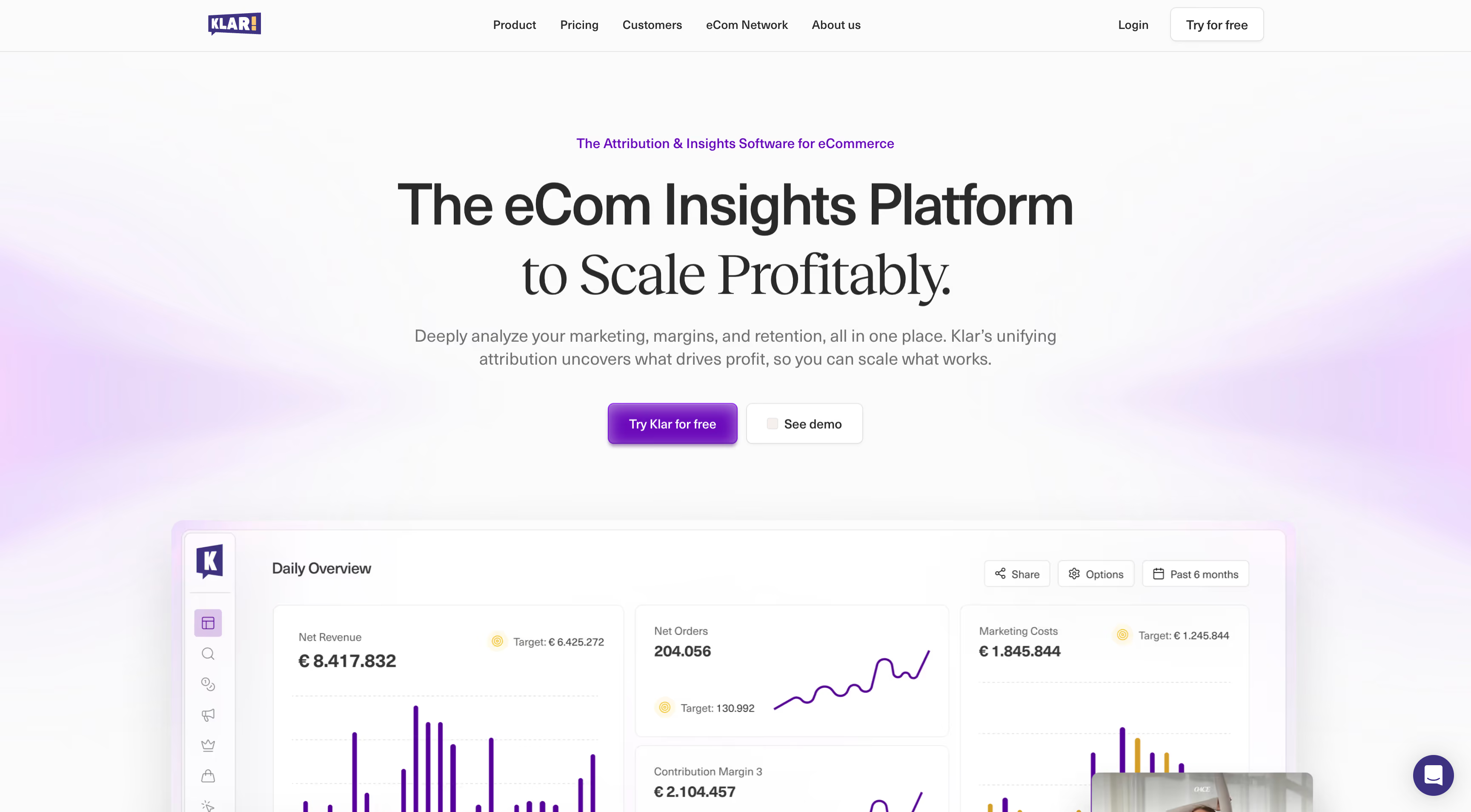
Klar is a German BI platform that added attribution later, and the split shows in the pricing: €200 buys reporting, attribution starts at €400. The draw for DACH brands is where the data sits - hosted in Germany. What you get for the money is a broad measurement set: multi-touch attribution, a data-driven model, MMM and incrementality in one subscription. What you don't get is anything that acts on it.
Two tiers, priced on your trailing 12-month net revenue and re-checked quarterly. Core starts at €200/month and covers profitability, retention and acquisition reporting. Core + Attribution starts at €400 and adds the first-party pixel plus the full attribution and measurement suite. Free onboarding, no setup costs, no minimum term, 14-day trial.
There's almost nothing to read. No meaningful G2 or Capterra footprint, and a single review on its Shopify listing. What exists sits on OMR, the German software review platform, where Klar holds category badges.
A solid choice for a EU brand and the value is there. The problem is the action layer, which is entirely missing - the same gap Triple Whale has, at a lower price.
Best for: high-ticket funnels that end in a call, an application or a webinar rather than a cart.
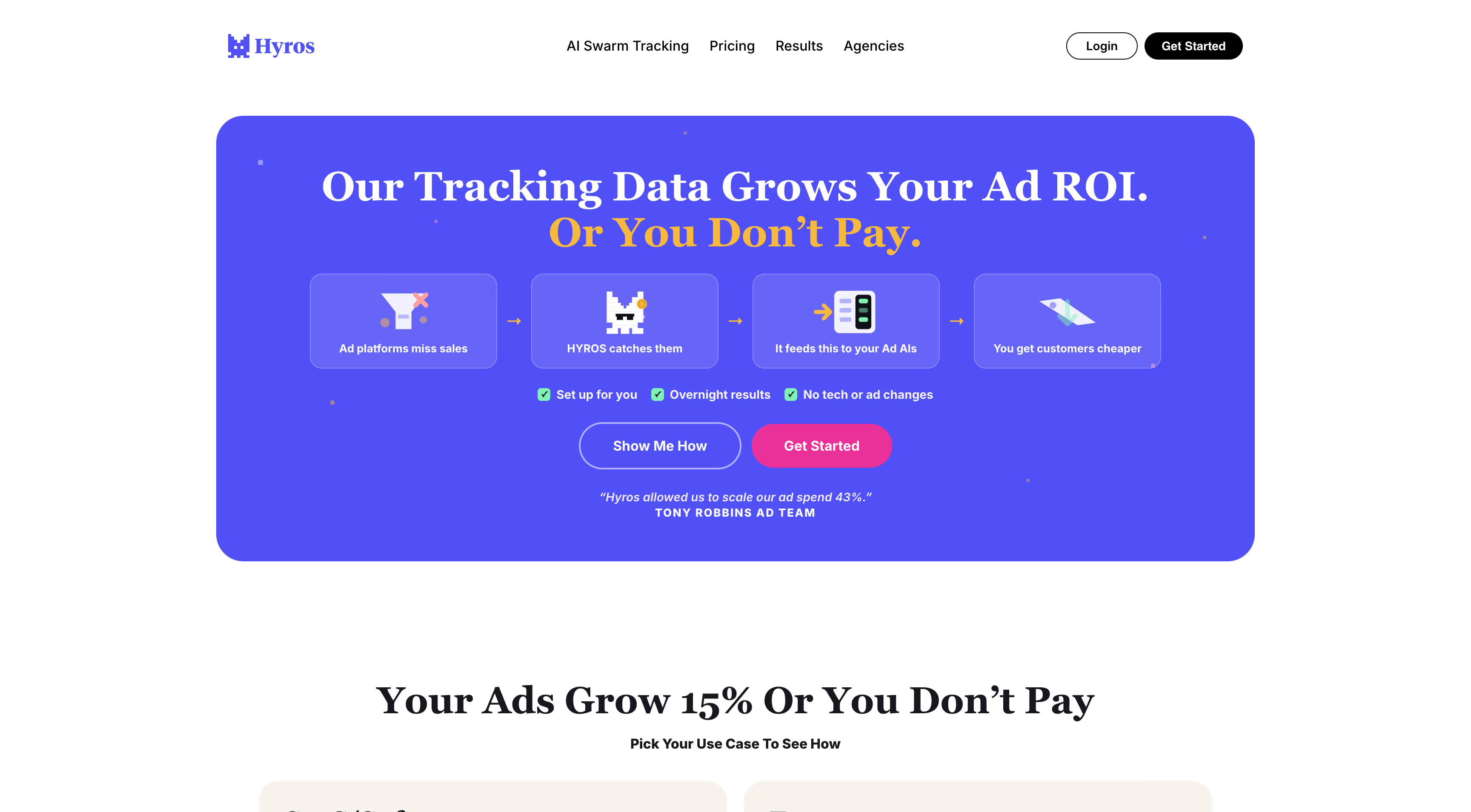
Look at who Hyros puts on its own pricing page: Tony Robbins' ad team, Sam Ovens, Whop. That's the tell. Hyros was built for info products, coaching and high-ticket offers, where one lead is worth four figures and the conversion happens on a sales call three weeks after the click. It tracks that journey better than anything else here. It just doesn't think in SKUs.
A slider by tracked monthly revenue, starting at $69/month for up to $5K. Everything is in one plan. Past the entry tiers the page stops showing numbers and asks for a call; third-party trackers put the $20K tier near $230/month on annual billing and climb into the thousands from there. No free trial.
Roughly 4.9 on Trustpilot across 650+ reviews. Support dominates the praise. The dissent, where it appears, is about tracking dropping out during scaling periods and about what the price does at renewal.
The sharpest tracker on this list for funnels that end in a conversation, and the wrong shape entirely for a store that needs margin per SKU. Not a Triple Whale replacement, a different category.
Best for: brands whose real problem is that Meta keeps buying back customers they already had.
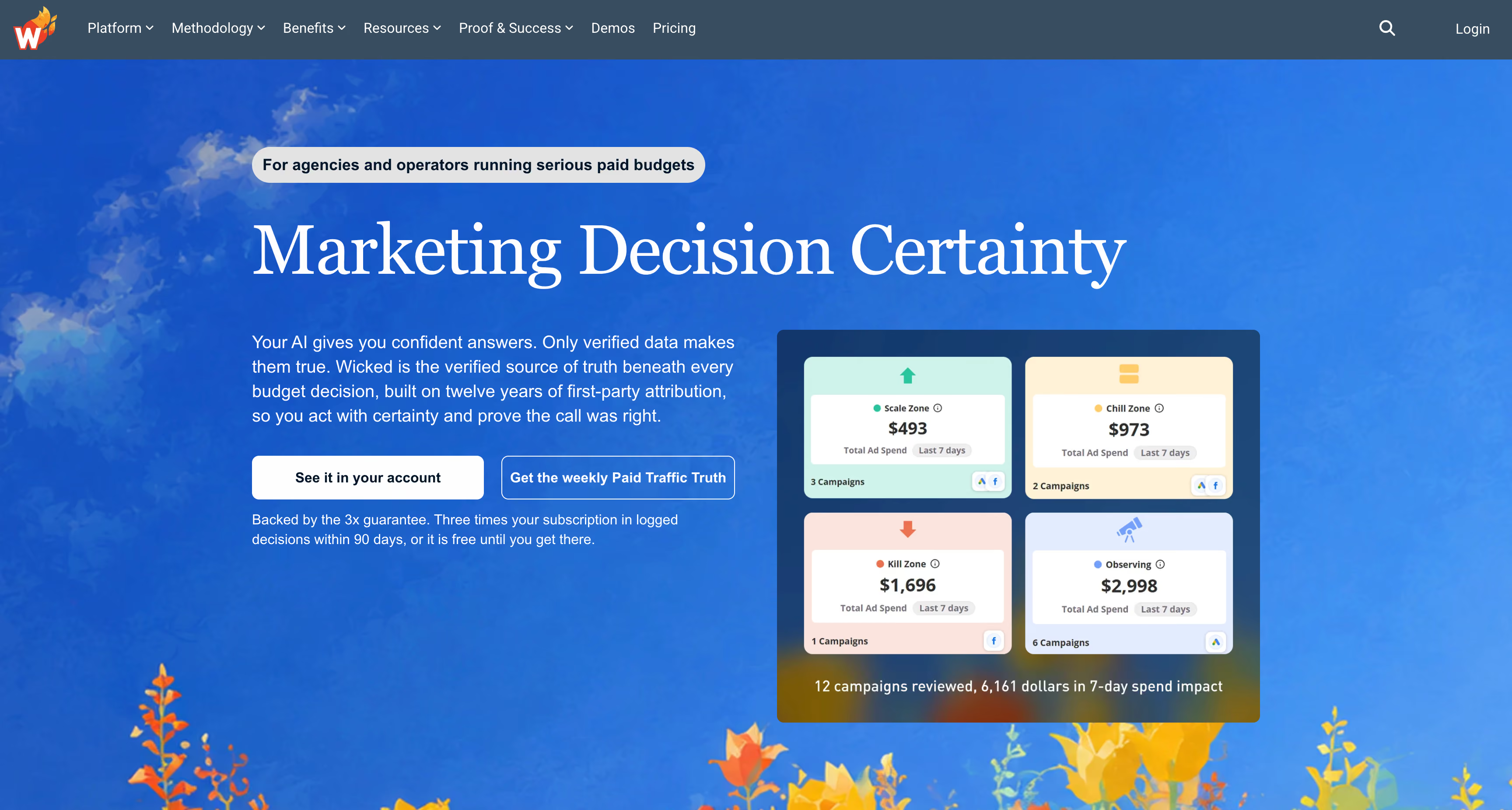
Wicked Reports picked a narrower fight than anyone else here, and it's a good one. Its core metric isn't ROAS — it's nCAC, the cost to acquire a new customer. Meta's algorithm optimizes toward whoever converts most easily, which is usually someone who already bought from you. Great ROAS, flat growth. Wicked separates new from repeat at the order level, then feeds new-customer purchase events back to Meta so the bidding chases first-time buyers instead of recycling your existing list. Problem is - a lot of the tools above do it anyway.
Measure starts at $499/month, Scale at $699, Maximize at $999, with Enterprise quoted from around $4,999. Bands are set by your last 12 months of gross revenue. On the lower two tiers, Advanced Signal and 5 Forces AI cost $199/month each - which is what pushes most buyers to Maximize. No free trial.
The review base is small and scattered across platforms, landing around 4.2 to 4.4. Praise centers on the attribution depth and the new-customer framing. The recurring objection is value: reviewers compare individual features against cheaper specialist tools and question the price relative to what's included.
Viable only for the nCAC problem. As a general Triple Whale alternative it leaves too much of the store unmeasured.
Best for: Shopify stores that want an accurate bottom line cheaply, and are content to keep attribution somewhere else.
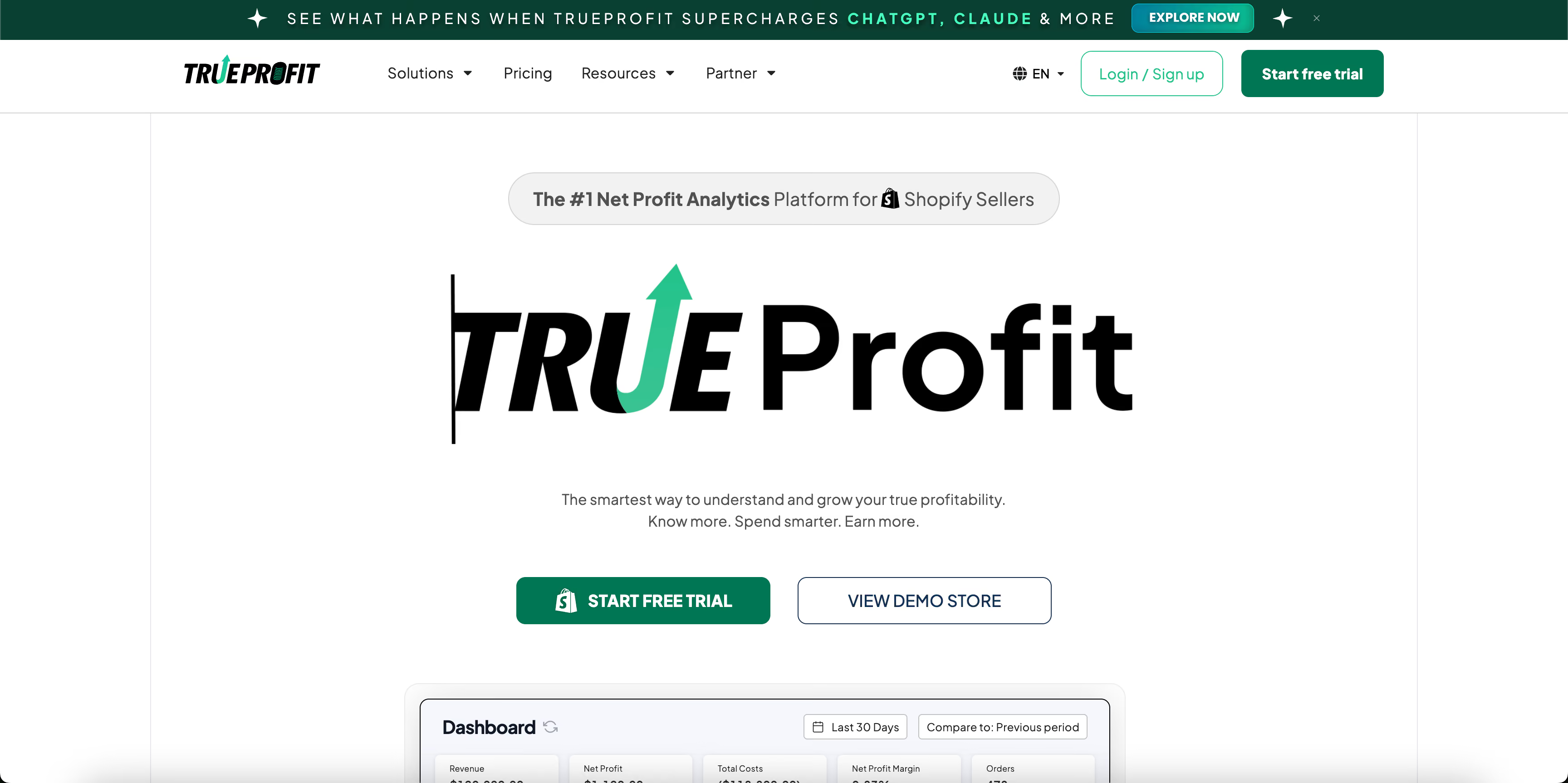
TrueProfit does one thing, and it isn't marketing. It calculates net profit. COGS, shipping, transaction fees, taxes, refunds and whatever custom costs you add, netted out in real time, at $35 a month. Judged as a profit tracker it beats most of this list. Judged as a Triple Whale replacement, it only covers half the job, because attribution sits on the $200 tier and isn't really attribution when you get there.
Basic $35/month for 300 orders, Advanced $60 for 600, Ultimate $100 for 1,500, Enterprise $200 for 3,500 - each with a per-extra-order fee and a surcharge cap. Marketing attribution appears only on Enterprise. 14-day trial, and no annual billing option.
A 5.0 average across roughly 750 Shopify App Store reviews, the deepest review base of any tool here. Merchants credit the accuracy of the profit figure and how fast it's set up. The thing to check before committing is what your bill looks like in a peak month.
The exact inverse of Northbeam: superb at turning revenue into profit, close to useless at working out which ad caused it. Pair it with something else, or you've solved half of what Triple Whale did.
Best for: small and mid-size Shopify stores that want credible multi-touch attribution at a predictable price, with no BI project attached.
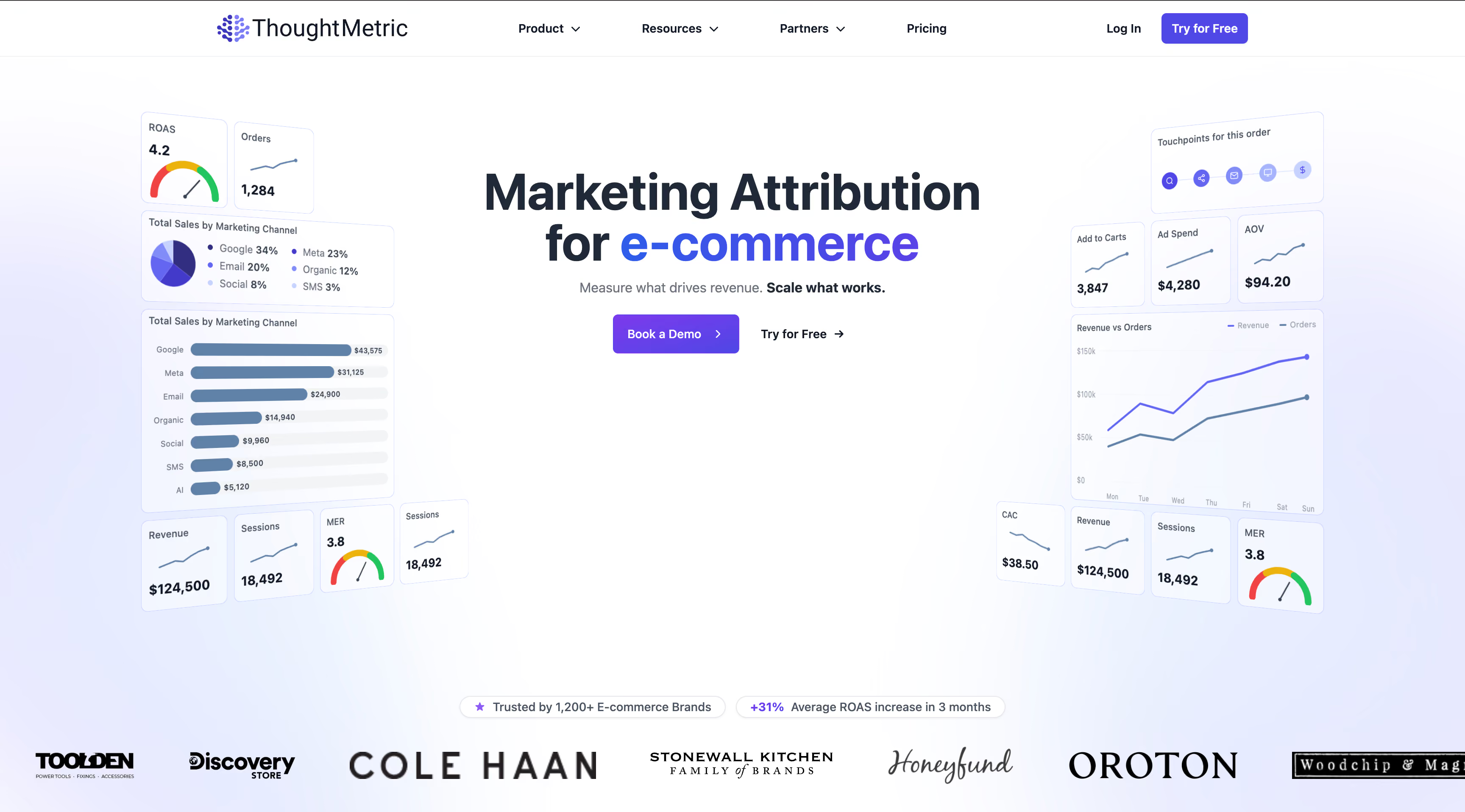
Every other tool on this list is trying to become a platform. ThoughtMetric isn't. It charges by pageviews - $99 a month at 50,000 - puts every feature on every tier, and stops there. Nothing is gated, because there isn't much to gate. For a store spending $30K a month that just wants to know whether TikTok is actually working, that focus is a feature.
$99/month for 50,000 pageviews, $199 at 100,000, scaling from there. Annual billing saves 18%. Every feature is included at every tier, and the two-week trial needs no card.
The review base is thin enough that the number matters less than the pattern. Its Shopify listing sits at 4.2 across 13 reviews; on G2, support and ease of use draw the praise, while the recurring criticism is reporting depth - specifically the ecommerce metrics that aren't there.
The right call at $99 if attribution is genuinely all you need. The moment you ask what a campaign earned rather than what it returned, you've outgrown it. It replaces Triple Whale's attribution, but not its dashboard.
Best for: EU brands whose main problem is tracking accuracy under consent rules, and who already own a BI stack for everything else.
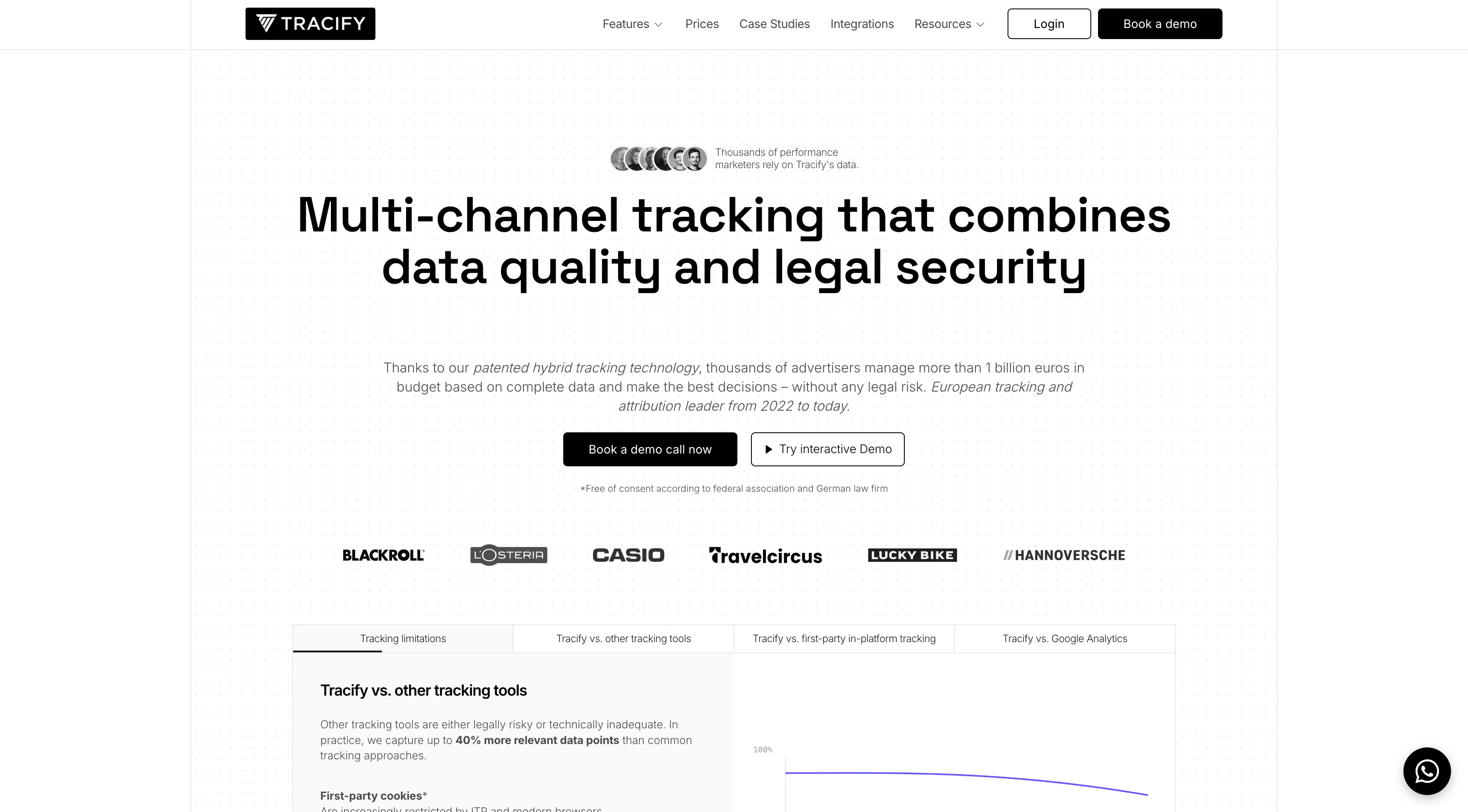
Tracify is a tracking company that added dashboards. It sells one capability - capturing full customer journeys without cookies and without a consent banner - and charges €500 a month plus a €500 setup fee for it. Almost everything downstream of measurement is somebody else's product. For a DACH brand losing a third of its data to consent management, that trade may still be worth making.
From €500/month for the Shop plan, plus a one-off €500 setup fee. Agency pricing on request. A 30-day trial is offered, arranged through a demo call.
4.9 on G2, but from 13 reviews - the smallest base of any tool in this comparison. Reviewers rate support and ease of use highly, and the sample skews almost entirely to small businesses.
A specialist tracking layer priced like a platform. Worth it if consent-free capture is the specific problem you're solving, and expensive if you expected the rest of the stack to come with it. Triple Whale does more for less.
If you're replacing Triple Whale because the profit picture stopped short, Admetrics is the best Triple Whale alternative on this list - it's the only tool here that tracks the click server-side, nets the order down to POAS per SKU, and then moves the budget.
Everything else is a trade. Polar Analytics gives you a strong data foundation, but incrementality is a service you buy per test and it doesn’t act on the result. Northbeam measures better than almost anyone and never touches your costs. Klar covers EU hosting and MMM in one subscription, then stops at the report - no signal back to the ad platforms, no optimizer, no AI layer, so the analysis lands and the budget stays where it was. Hyros tracks a sale that closes on a call, though its profit math ends at revenue less COGS. Wicked Reports is built around new-customer CAC and never sees a margin.
The bottom three are honest about being partial. True Profit is a P&L, not an attribution tool. ThoughtMetric is attribution at $99 with no profit math behind it. Tracify is a tracking layer priced like a platform.
The pattern worth noticing: the tools cluster into ones that measure and ones that calculate profit, and most of them do one or the other. That's why brands leaving Triple Whale so often end up running two subscriptions and reconciling them by hand, which is the problem they were trying to solve.
One last filter before you commit. Run your shortlist against your own data for two weeks and watch where the conversion counts diverge from your ad accounts. A tool that finds 20% more orders than your pixel is either right or wrong, and two weeks of your own numbers settles it faster than any comparison table.
