A loyalty referral program is a structured way to reward your best customers for two things: making repeat purchases and bringing in new buyers. But not all programs are created equal. The best ones blend psychology, technology, and irresistible incentives to build lasting brand love. Imagine your best customers enthusiastically sharing your products, not because you asked, but because they believe in your brand and feel genuinely rewarded for spreading the word.
For DTC and e-commerce, loyalty referral programs do more than just drive sales—they transform your buyers into an unstoppable marketing force.
Understanding Loyalty Referral Programs
A loyalty referral program harnesses customer advocacy, referral marketing, and loyalty rewards in a single, powerful package. At its core, it’s about creating a win-win: customers get perks, and brands get more loyal buyers and organic growth. Customer advocacy turns your best shoppers into brand evangelists, while referral marketing unlocks the natural social networks of your audience. Combined with loyalty rewards—points, discounts, exclusive access—you’ve got a formula that outperforms paid advertising in both trust and ROI.
The Science Behind Loyalty & Referral
Why do these programs work so well? The answer lies in social proof and the psychology of trust. People are far more likely to try a new brand if it’s recommended by someone they know. In fact, referrals are among the most trusted forms of advertising. A loyalty referral program taps into the power of brand ambassadors, leveraging their voices to cut through advertising noise. Additionally, the promise of a reward triggers the brain’s dopamine response, making participation feel good—both emotionally and financially.
Why E-commerce Brands Need Loyalty Programs
With rising ad costs and increasing competition, customer acquisition is expensive. That’s where a loyalty referral program shines. Not only does it reduce churn and improve retention, but it also increases Customer Lifetime Value (CLV). Repeat buyers spend more and refer friends who are likely to do the same. It’s a virtuous cycle—one that can dramatically shift your brand’s growth trajectory. In an environment where 80% of your future profits come from just 20% of your customers, loyalty isn’t optional. It’s everything.
Types of Loyalty Referral Program Models
Let’s dive into the most effective structures:
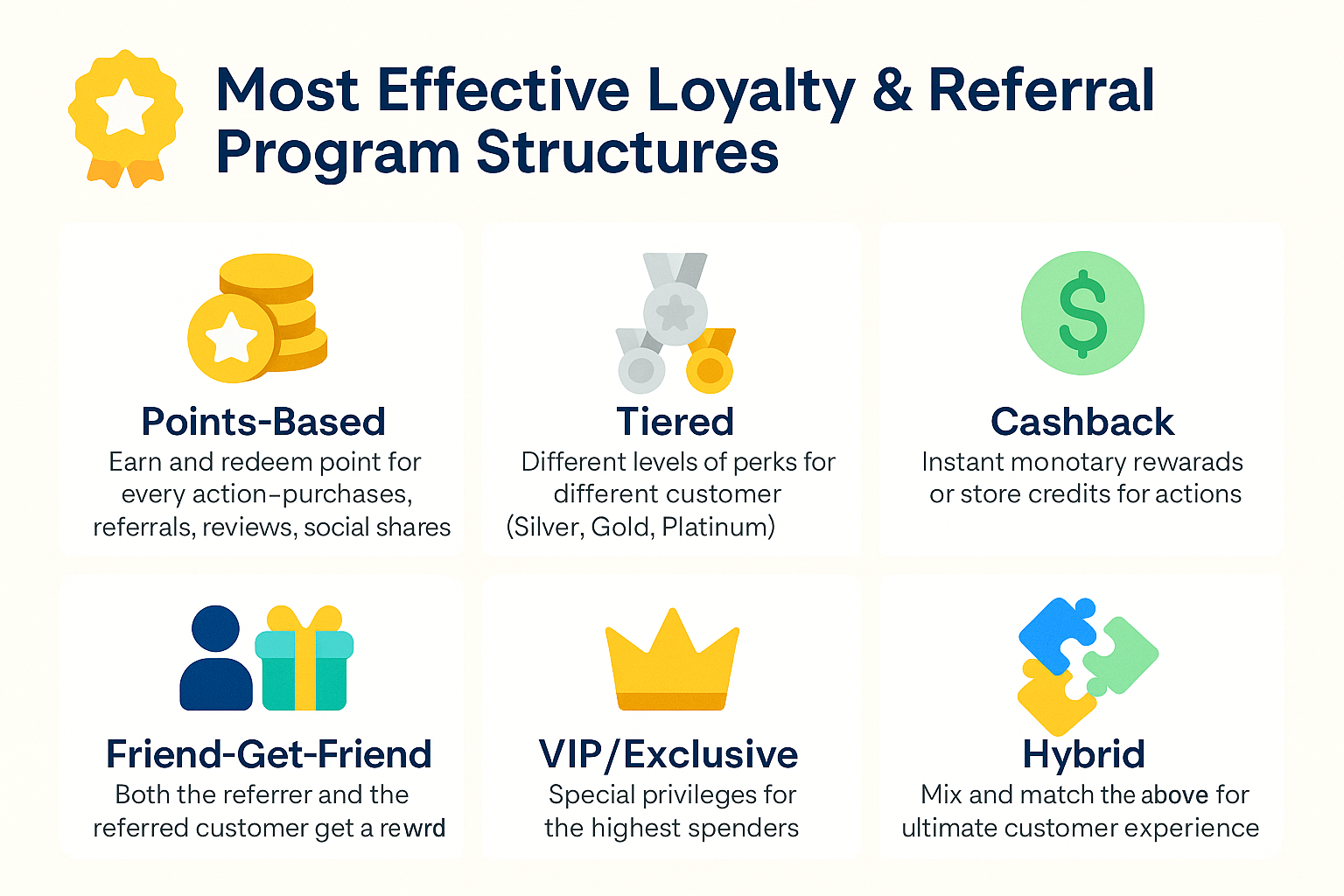
Each has its place. Points-based programs build habits; tiered programs fuel ambition; cashback provides instant gratification; and hybrid models blend the best of all worlds.
Points-Based Loyalty Programs
Points-based programs are arguably the most popular. They’re simple: shoppers earn points for purchases, referrals, or even social actions. The key to success? Make earning and redeeming frictionless. For example, allow customers to use points on every checkout, not just for discounts but for exclusive items or experiences. Pro tip: show points balance prominently and use gamified triggers (like bonuses on birthdays) to drive engagement. Read more about the best influencer marketing platform.
Tiered Loyalty Programs
Tiered programs are all about status. By segmenting your customers (e.g., Bronze, Silver, Gold), you give them something to strive for. The higher the tier, the better the perks—think free shipping, early access, exclusive drops, and more. This strategy taps into human ambition and creates emotional investment. The best tiered programs are transparent, with clear rules and visible progress bars to motivate ongoing engagement.
Cashback & Instant Rewards
Who doesn’t love instant gratification? Cashback or instant rewards appeal to customers who want immediate returns. This could be store credit, actual cash, or even charitable donations in the customer’s name. For DTC brands, instant rewards can drive urgency and boost AOV (Average Order Value). The trick is to balance generosity with sustainability—set minimums for rewards, or offer “use within 30 days” to encourage fast repeat purchases.
VIP & Exclusive Club Models
VIP programs go beyond standard rewards. They offer a sense of belonging. Imagine a private shopping club or access to exclusive content, events, or support lines. When customers feel special, they stick around—and they talk about your brand, too. DTC brands can use VIP status as a badge of honor, with perks like surprise gifts, member-only flash sales, or personalized recommendations.
Hybrid Loyalty Referral Program Approaches
Sometimes, one size doesn’t fit all. A hybrid program combines points, tiers, and referrals, creating a unique ecosystem. This model is particularly effective for brands with diverse audiences or product lines. For instance, a hybrid system might offer points for purchases, bonus points for referrals, and access to tiered benefits as customers accumulate points. The flexibility to mix and match keeps things fresh and exciting.
Choosing the Right Software/Platform
Software choice is mission critical. There are dozens of loyalty referral program platforms: Smile.io, Yotpo, LoyaltyLion, ReferralCandy, and more. Key considerations for DTC and e-commerce:
- Integrations: Shopify, WooCommerce, Klaviyo, SMS, reviews.
- Customizability: Branding, rules, reward types.
- Analytics: Reporting, segmentation, fraud prevention.
- User Experience: Mobile-friendly, fast, intuitive.
Don’t be seduced by bells and whistles. Prioritize platforms that can scale and support your unique business model.
Setting Up Your Loyalty Referral Program
Ready to launch? Start with clear objectives: Are you boosting retention, acquisition, or both? Define the actions you’ll reward (purchase, referral, review, share), then map the customer journey. Use built-in onboarding flows, or create automated email/SMS campaigns to explain the program and show early wins. Don’t forget to A/B test reward structures before full rollout.
Customizing Program Rules for E-commerce
No two e-commerce brands are the same. Customization is crucial. For example, you might reward referrals only for certain products, or set higher points for high-margin SKUs. Use purchase triggers (cart value, frequency, category) to fine-tune your program. The more tailored your program, the higher your engagement and ROI.
Gamification Strategies
Add a dash of fun! Leaderboards, badges, bonus challenges—gamification can supercharge your loyalty referral program. For instance, run monthly challenges (“refer three friends, get double points”) or seasonal campaigns (“holiday points multiplier”). Make sure the experience feels rewarding, not overwhelming.
Social Sharing & Virality
The real magic happens when customers share organically. Encourage social sharing with one-click integrations for Instagram, Facebook, and TikTok. Use incentives—bonus points, sweepstakes entries, exclusive content—to amplify viral loops. UGC (user-generated content) is especially powerful for DTC: showcase customers’ photos and reviews in your feeds, emails, and product pages.
Email & SMS Automation
Set your loyalty referral program on autopilot. Use email and SMS automation for everything from welcome flows to winback campaigns. Send reminders about unused points, exclusive offers, and friend-referral links. Tools like Klaviyo, Omnisend, or Postscript can sync seamlessly with most loyalty platforms.
Tracking, Analytics & Attribution
You can’t improve what you don’t measure. Track key loyalty referral program metrics: participation rates, referral conversions, retention rate, AOV lift, LTV increase, and viral coefficient. Use UTM links for accurate attribution. The best platforms provide real-time dashboards, so you can iterate fast.
Incentive Structures that Actually Work
What’s the right reward? The answer depends on your brand and audience. Monetary rewards (discounts, gift cards) are direct, but don’t overlook experiential perks (early access, community events, exclusive content). A/B test different incentives, and consider surprise-and-delight moments for your best customers.
Leveraging User-Generated Content
Your best marketers are your own customers. Encourage UGC by rewarding reviews, photos, and testimonials. Feature UGC across your site, emails, and ads to create a powerful flywheel of social proof. Automate the process to maximize participation without adding manual work.
Reducing Fraud & Program Abuse
No system is perfect. Use your loyalty referral program’s built-in fraud detection to prevent abuse (e.g., self-referrals, fake accounts). Set clear terms and limits. For example, only reward completed orders or require manual approval for high-value referrals.
International Considerations
Expanding globally? Make sure your program supports multi-currency rewards, localized messaging, and complies with GDPR or CCPA. Consider cultural nuances in rewards and communication style.
Legal and Ethical Best Practices
Stay above board. Disclose referral rewards clearly, follow FTC guidelines, and publish transparent terms and conditions. Ethical programs build trust—and trust builds loyalty.
Success Metrics & KPIs
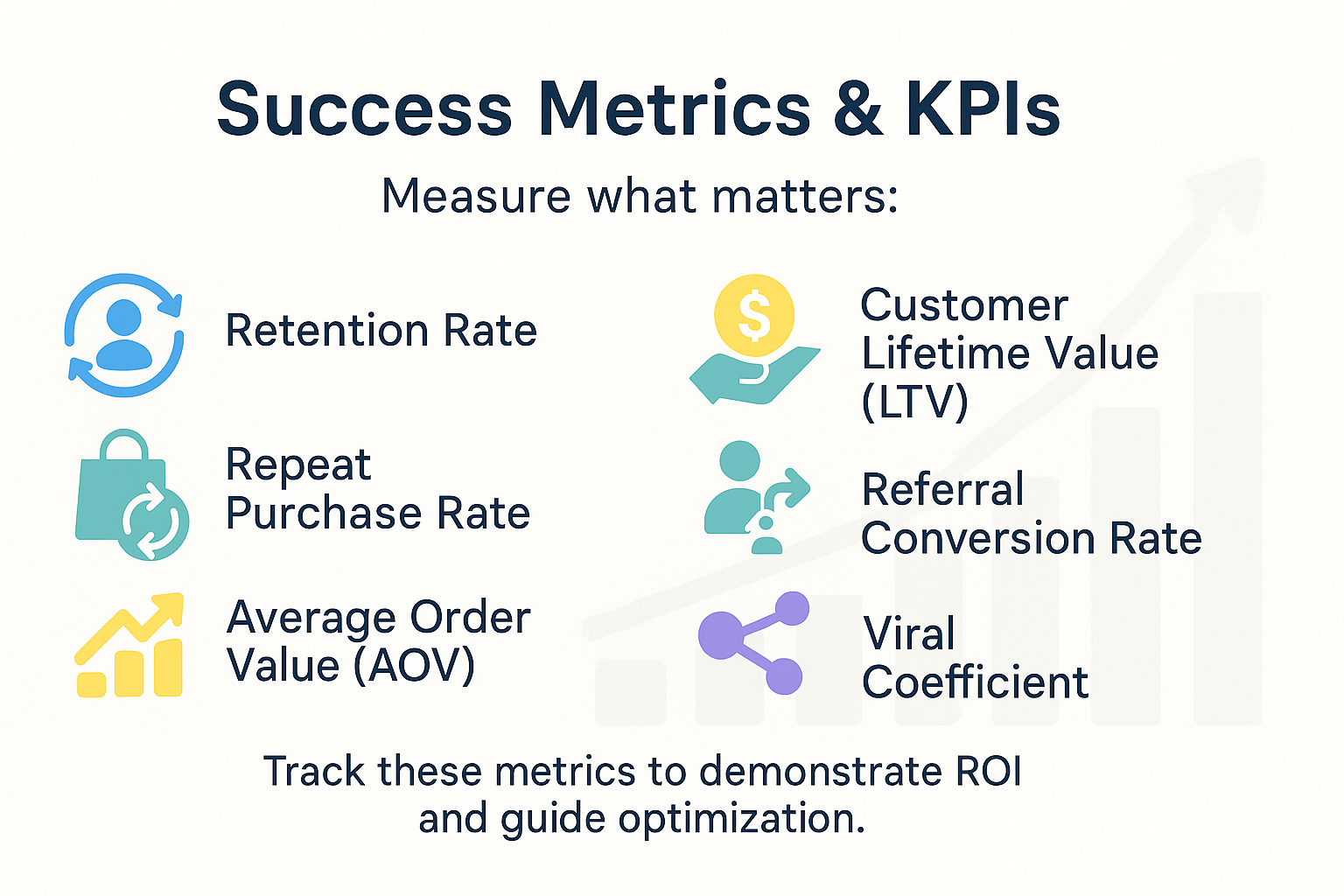
Track these metrics to demonstrate ROI and guide optimization.
How to Promote Your Loyalty Referral Program
Promotion is everything. Use on-site banners, pop-ups, and product page widgets to highlight your loyalty referral program. Promote in order confirmation emails, shipping updates, and across your social channels. Consider paid ads to accelerate awareness. The more visible your program, the more it will grow.
Employee & Influencer Ambassadors
Turn your employees and influencers into program ambassadors. Offer unique referral links, exclusive perks, and contests. Employees who champion your brand can spark additional buy-in from your customers, while influencers can give your program instant credibility.
Overcoming Common Mistakes
Many brands fail by making rewards too stingy, processes too complex, or by failing to promote their program. Avoid jargon, keep participation simple, and monitor feedback. Adjust quickly if you spot drop-offs or confusion.
Measuring ROI of Loyalty Referral Programs
Calculate ROI by comparing CAC (customer acquisition cost) before and after launching your program. Track lift in LTV and retention. Use cohort analysis to understand long-term impacts. A well-run loyalty referral program should quickly pay for itself.
Spotlight: Admetrics — Data-Driven Advertising & Retention Optimization
Admetrics is a powerful, AI‑powered marketing intelligence platform built for DTC and e-commerce brands. It unifies data from major ad platforms like Facebook, Google, and TikTok (as well as Shopify and marketplaces) into one real-time dashboard—with setup often completed within 15 minutes.
Through advanced attribution models and Bayesian predictive analytics, Admetrics helps brands optimize budget allocation, reduce wasted ad spend, and boost key metrics like conversion rate, CLV, CAC, and ROAS.
By using AI to predict customer behavior, segment high-value audiences, and highlight the most effective touchpoints, brands gain the ability to launch proactive, tailored loyalty and referral campaigns—and identify which segments are most likely to respond. The outcome is data‑backed loyalty growth: higher retention, lower acquisition costs, and more effective ad spend—turning customers into long-term advocates.
Why it matters for loyalty & referral programs
- Attribute ROI accurately: See how acquisitions tie back to referral incentives and loyalty spend.
- Segment smarter: Identify high-LTV referrers and reward them strategically.
- Predict churn risk: Trigger targeted loyalty offers to retain at-risk customers.
Integrating Admetrics lets you build and scale referral programs with a scientific edge—backed by real-time signal, attribution clarity, and AI insights.
FAQs
What is a loyalty referral program?
A loyalty referral program rewards customers for both repeat purchases and for referring friends. It builds brand loyalty and drives organic growth for DTC and e-commerce brands.
What are the best incentives for a loyalty referral program?
The best incentives balance financial value with exclusivity—think discounts, exclusive products, early access, and experiences.
How do I prevent fraud in my loyalty referral program?
Use software with fraud prevention, require completed purchases for rewards, and set clear rules to deter abuse.
Can loyalty referral programs work for small brands?
Absolutely! In fact, small brands often see the fastest growth from referral-driven word-of-mouth.
How should I promote my loyalty referral program?
Leverage your website, email/SMS automation, social channels, and customer support touchpoints. Make the program impossible to miss!
What platforms are best for DTC e-commerce loyalty referral programs?
Top options include Smile.io, LoyaltyLion, Yotpo, and ReferralCandy, all of which integrate seamlessly with Shopify and other e-commerce platforms.
Conclusion
A well-designed loyalty referral program is the secret weapon of the world’s fastest-growing e-commerce brands. When you empower your best customers to share your story—and reward them for it—you unlock a sustainable, high-ROI growth engine. Remember, the journey doesn’t end at launch: measure, iterate, and keep delighting your audience. In an industry where trust is everything, your loyalty referral program is how you build it—one happy customer at a time.