Performance Reporting for Agencies has become a must have discipline for DTC and ecommerce teams who feel stuck between competing dashboards and mismatched numbers in every meeting. When you run budgets across Meta, Google, and TikTok while also managing email, influencers, and promotions, the real problem is not a lack of data. Instead, it is a lack of decision grade clarity.
Leaders need a narrative that links media activity to board level outcomes like contribution margin, cash flow, and CAC payback. At the same time, channel owners need an operating view that holds up when attribution shifts, conversions arrive late, and platform models change. Performance Reporting for Agencies solves both by creating a shared language for what happened, why it happened, and what to do next.
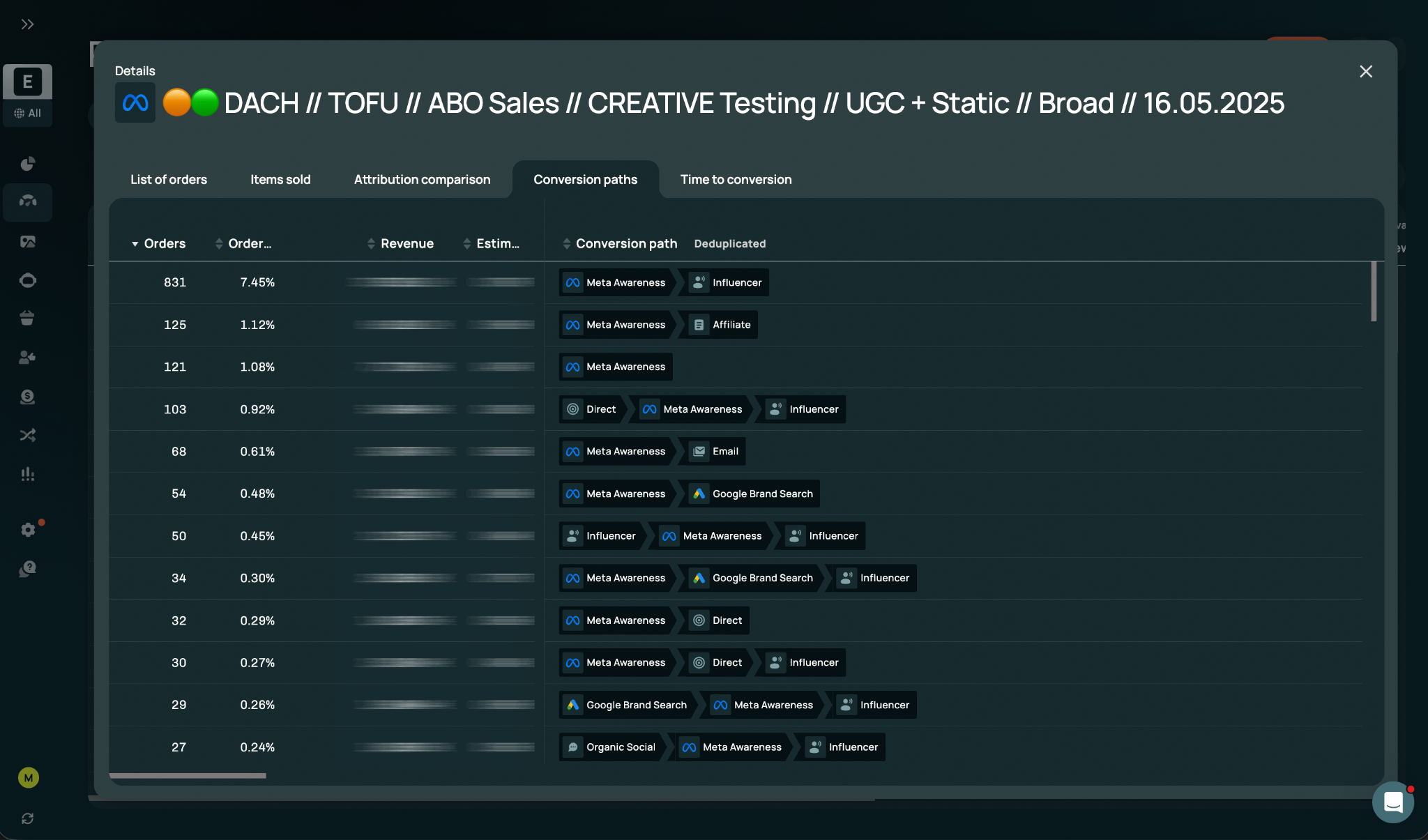
Why Performance Reporting for Agencies matters now
The old shortcuts no longer work. Last click often over credits demand capture. Meanwhile, modeled conversions vary by platform, so weekly performance can look “up” or “down” depending on the lens.
Because scaling decisions move fast, the cost of being wrong has increased. Even a small tracking gap can compound into wasted spend, inventory risk, or missed growth targets. Therefore, strong Performance Reporting for Agencies turns reporting into an execution advantage.
A solid reporting system helps you:
- Standardize definitions across teams and partners
- Tie marketing performance to profitability, not just ROAS
- Add incrementality thinking so you can separate efficient looking spend from true lift
As a result, teams debate less, learn faster, and make budget decisions based on evidence.
What is Performance Reporting for Agencies
Performance Reporting for Agencies is the disciplined process of translating cross channel marketing activity into decisions that improve business outcomes. It goes beyond spend, clicks, and platform dashboards. Instead, it connects media inputs to revenue quality, CAC, LTV, and contribution margin in a way that both marketers and finance can trust.
In practice, Performance Reporting for Agencies consolidates data from sources like:
- Meta Ads, Google Ads, TikTok Ads
- Shopify or other ecommerce platforms
- Email and CRM systems
- Influencer and affiliate platforms
Then it standardizes definitions, such as what counts as a conversion, how to treat refunds, and how to align time windows.
The core outcomes it should drive
Good reporting does not aim to be “complete.” It aims to be useful. Start by tying reporting to the decisions you make every week.
Most DTC teams want clarity on:
- Blended efficiency like MER and blended ROAS
- CAC by new customer versus returning customer
- Payback period and contribution margin after ad spend
- LTV signals by cohort, channel, and offer
If your report cannot change a budget decision, it is noise.
Who should use Performance Reporting for Agencies
Performance Reporting for Agencies fits brands and agencies that need speed, trust, and accountability.
For CMOs and Heads of Growth, it creates a single story that connects cross channel performance to business impact. That matters when you need to answer questions like “Are we scaling profitably?” and “Where should the next €50k go?”
For performance marketers, it reduces time spent reconciling numbers. Also, it gives clearer next steps for testing, pacing, and scaling.
This approach becomes especially valuable when:
- You scale past €1M annual revenue and decisions carry higher risk
- You spend across multiple platforms and attribution disagrees
- You need to align marketing results with finance reality
A practical framework to get started
Start small, then harden the system. You want reliability before complexity.
Step 1: Define the decisions and the North Star KPI
Pick the weekly decisions you must make, then work backward. For most DTC teams, the North Star is one of the following:
- contribution margin
- New customer revenue
- CAC payback window
Then add supporting KPIs like MER, blended CAC, conversion rate, and refund rate.
Step 2: Lock sources of truth and document rules
Data discrepancies usually come from unclear rules, not bad tools. So write down the logic for:
- Currency conversion and tax handling
- Refund and cancellation windows
- Shipping and discount treatment
- Attribution windows and time zones
As a result, Meta, Google, TikTok, and Shopify numbers can reconcile in a way finance will trust.
Step 3: Separate optimization metrics from executive metrics
Platforms need their own conversion signals for bidding. However, leaders need a blended view tied to profit.
A strong setup often looks like this:
- Use platform conversions for in platform optimization
- Use blended outcomes for weekly and monthly decision making
- Calibrate with incrementality tests to validate true lift
This structure keeps teams fast without letting platform bias drive strategy.
Step 4: Build one view that answers “what changed and what next”
Your first dashboard should feel boring. That is a good sign.
Include:
- Spend, revenue, and contribution margin by channel
- New customer share and CAC by channel
- Top drivers, for example CPM, CTR, CVR, AOV
- A short actions list with owners and deadlines
Also, enforce a naming taxonomy so insights translate into actions without manual cleanup.
Reporting cadence that matches decision velocity
The best cadence depends on how quickly you make budget calls.
Daily reporting for pacing and volatility
Use daily reporting when you scale spend, launch new creative, or see CPM swings. Focus on pacing, early indicators, and directionality.
Track:
- Spend and budget pacing
- MER trend and blended ROAS trend
- Conversion rate shifts and AOV shifts
Weekly reporting for allocation and learning
Weekly is the sweet spot for most teams. It balances signal and noise, especially when attribution drifts.
Use weekly reviews to:
* Reallocate budgets across Meta, Google, and TikTok
* Compare platform reported performance to blended outcomes
* Review tests and decide the next experiments
Monthly and quarterly reporting for strategy
Use monthly and quarterly reporting for decisions with longer payoff windows.
That includes:
- Marginal ROAS and scaling ceilings
- Channel role clarity and creative strategy
- Forecasting, targets, and LTV by cohort
Common pitfalls and how to avoid them
Many teams invest in reporting yet still argue in meetings. The fix usually comes from a few practical shifts.
Pitfall 1: Treating ROAS as the only truth
Platform ROAS can be useful, but it is not a profit statement. Therefore, anchor leadership reporting in MER, blended CAC, and contribution margin.
Pitfall 2: Reporting without incrementality
Attribution can tell you “who got credit.” It cannot always tell you “what caused lift.” So use incrementality to validate.
Practical options include:
- Geo experiments
- Holdout tests
- Budget pulses with clear pre and post windows
Pitfall 3: Too many KPIs, not enough decisions
More metrics do not create clarity. Instead, they slow teams down. Limit weekly reporting to what directly affects budget allocation, creative priorities, and offer strategy.
Performance Reporting for Agencies as a competitive advantage
Performance Reporting for Agencies becomes a competitive advantage when it creates faster learning loops and better capital allocation. It replaces platform screenshots with evidence that connects channel activity to profit and cash flow.
For leadership, it improves confidence in scaling decisions. You can explain not only what happened, but also whether growth remained profitable and repeatable. For marketers, it reduces spreadsheet work and focuses attention on experiments that move CAC, conversion rate, and payback.
In a world of signal loss and constant platform change, teams that build decision grade reporting systems move faster with fewer mistakes. Over time, that speed shows up in better ROAS quality, lower wasted spend, and stronger LTV to CAC ratios.
How Admetrics can help
Admetrics helps teams turn Performance Reporting for Agencies into a decision system, not just a dashboard. It unifies ad platform and ecommerce data into an attribution aware view built for multi channel reality.
With Admetrics, teams can:
- See blended performance alongside channel level drivers
- Connect spend to outcomes like CAC, contribution margin, and payback
- Add incrementality and experimentation to validate true lift
- Reduce manual reporting work and speed up weekly decision making
Discover Admetrics and book a demo.
Conclusion
Performance Reporting for Agencies works when it gives everyone the same reality. It aligns Meta, Google, TikTok, and ecommerce data into a single narrative tied to business outcomes.
If you standardize definitions, separate optimization from executive metrics, and validate with incrementality, you can reduce internal debate and make better budget calls. As a result, you scale with more confidence and fewer costly measurement mistakes.
FAQ
What is Performance Reporting for Agencies?
Performance Reporting for Agencies is a structured way to translate cross channel marketing activity into decisions that improve revenue and profitability. It standardizes definitions and connects channel metrics to KPIs like MER, CAC, LTV, and contribution margin.
Which metrics matter most to executives?
Executives typically care most about revenue quality and profitability. Focus on contribution margin, MER, blended CAC, CAC payback period, LTV by cohort, and incrementality backed lift. Use platform ROAS as supporting context, not the final answer.
How often should Performance Reporting for Agencies run?
Use a cadence that matches decision speed. Review pacing daily during volatility, run allocation and learning reviews weekly, and reserve monthly or quarterly cycles for strategy, forecasting, and channel mix planning.
How do we avoid misleading ROAS in Performance Reporting for Agencies?
Anchor the report in blended outcomes like MER and new customer CAC. Then validate major changes with incrementality tests such as geo experiments or holdouts. This reduces the risk of scaling spend that only looks efficient inside a platform.
What attribution model should we use?
Use multi touch attribution for diagnostics and directional insight. However, calibrate it with incrementality testing when you need causal answers. That combination supports both day to day optimization and board level confidence.
What should be included in a weekly agency report?
A weekly report should answer “what changed and what next.” Include budget pacing, KPI movement like MER and CAC, top drivers such as CPM and conversion rate, tests in progress, and a short list of next actions with owners and deadlines.