High performing jewelry brands do not behave like most ecommerce categories. Your reporting needs to reflect that. When AOV is high, consideration takes longer, and margins change by metal, stone, collection, and discount depth, platform ROAS can mislead you.
A campaign can look strong in Meta or Google while contribution margin drops. For example, financing fees, payment processing, shipping insurance, resizing, repairs, and returns can erase the profit you thought you earned. As a result, revenue rises but cash stays tight.
POAS for Jewelry Stores solves this gap by shifting the question from what you sold to what you earned. That change gives marketing and finance a shared scoreboard.

What Is POAS for Jewelry Stores?
POAS for Jewelry Stores means Profit on Ad Spend. It tells you how much profit your ads generate per euro spent, not just how much revenue they drive. That distinction matters in jewelry because two orders can show the same ROAS and deliver very different profit.
Use POAS when you want decisions that hold up on the P and L. In practice, teams usually base POAS on contribution margin after variable costs.
POAS formula (practical version)
To keep this consistent across channels, use a clear definition:
- Profit (contribution margin) = net revenue minus COGS minus variable costs
- POAS = profit attributable to ads divided by ad spend
Variable costs often include:
* Payment processing and financing fees
* Shipping and insurance
* Returns, resizing, and repairs
* Pick, pack, and packaging where relevant
* Discounts and promo codes applied to the order
Why POAS matters for jewelry economics
Jewelry has profit leakage in places standard ROAS ignores. Consequently, scaling on ROAS alone can push you toward the wrong product mix.
Here are common failure modes we see in DTC jewelry:
Branded search and retargeting inflate ROAS, while prospecting drives the real incrementality
Discounting pulls demand forward, but it lowers LTV and trains customers to wait
High AOV hides variable costs, so “winning” campaigns reduce cash generation
When you optimize with POAS, you protect margin while still pursuing growth. Moreover, you can explain performance in terms leadership trusts, like payback period, CAC, and contribution margin.
POAS for Jewelry Stores vs ROAS, CAC, and LTV
Most teams already track ROAS, CAC, and LTV. However, each metric answers a different question.
ROAS tells you revenue efficiency, but it ignores margin and variable costs
CAC tells you acquisition cost, yet it can miss profitability if AOV and margin vary by SKU
LTV tells you long term value, but it updates slowly and depends on retention behavior
POAS for Jewelry Stores ties spend to profit now, so you can scale safely week to week
A useful operating rule is to pair POAS with CAC and LTV. For example, if POAS drops while CAC looks stable, your product mix or discounting likely changed.
Who should use POAS for Jewelry Stores
POAS for Jewelry Stores fits brands that already feel measurement pain. If you run €1M plus revenue and scale across Meta, Google, and TikTok, you need profit level clarity.
This approach helps when:
* Finance asks why revenue and cash do not match
* Your board wants efficient growth and shorter payback
* Your margins vary heavily by SKU, metal, or stone
* Returns, resizing, or repairs create noisy unit economics
It also helps operators. If you manage prospecting, retargeting, creators, and seasonal gifting at once, POAS reduces debate and speeds up budget calls.
How to get started with POAS for Jewelry Stores
Start simple, then add precision. The goal is a system you trust weekly, not a perfect model you never ship.
Step 1: Choose a profit definition everyone agrees on
Align marketing, finance, and ops on what “profit” means for reporting. Most teams use contribution margin.
Decide upfront whether you include:
* Returns as actuals, expected rates, or a blended reserve
* Shipping and insurance as per order costs or averages
* Resizing and repair as per SKU, per collection, or blended
Step 2: Build SKU level margin inputs
Jewelry performance lives at the variant level. Therefore, map margin by:
* Metal type and karat
* Stone size and quality tier
* Collection positioning and pricing tier
If you cannot do full SKU margin on day one, start with margin bands. Then improve coverage over time.
Step 3: Fix tracking hygiene across channels
UTM discipline matters because you need reconciliation between platform reporting and your internal numbers.
Focus on:
* Consistent UTMs for Meta, Google, and TikTok
* Clean channel naming for prospecting vs retargeting
* A single source of truth for orders and refunds
Step 4: Launch with guardrails and learn fast
Start with best sellers and stable fulfillment. Next, shift budget toward products with strong contribution margin, even if ROAS looks slightly worse.
Weekly guardrails to set:
* Maximum discount depth by collection
* Return rate thresholds by category
* POAS targets by product mix
Real Life example: Vesta Collective
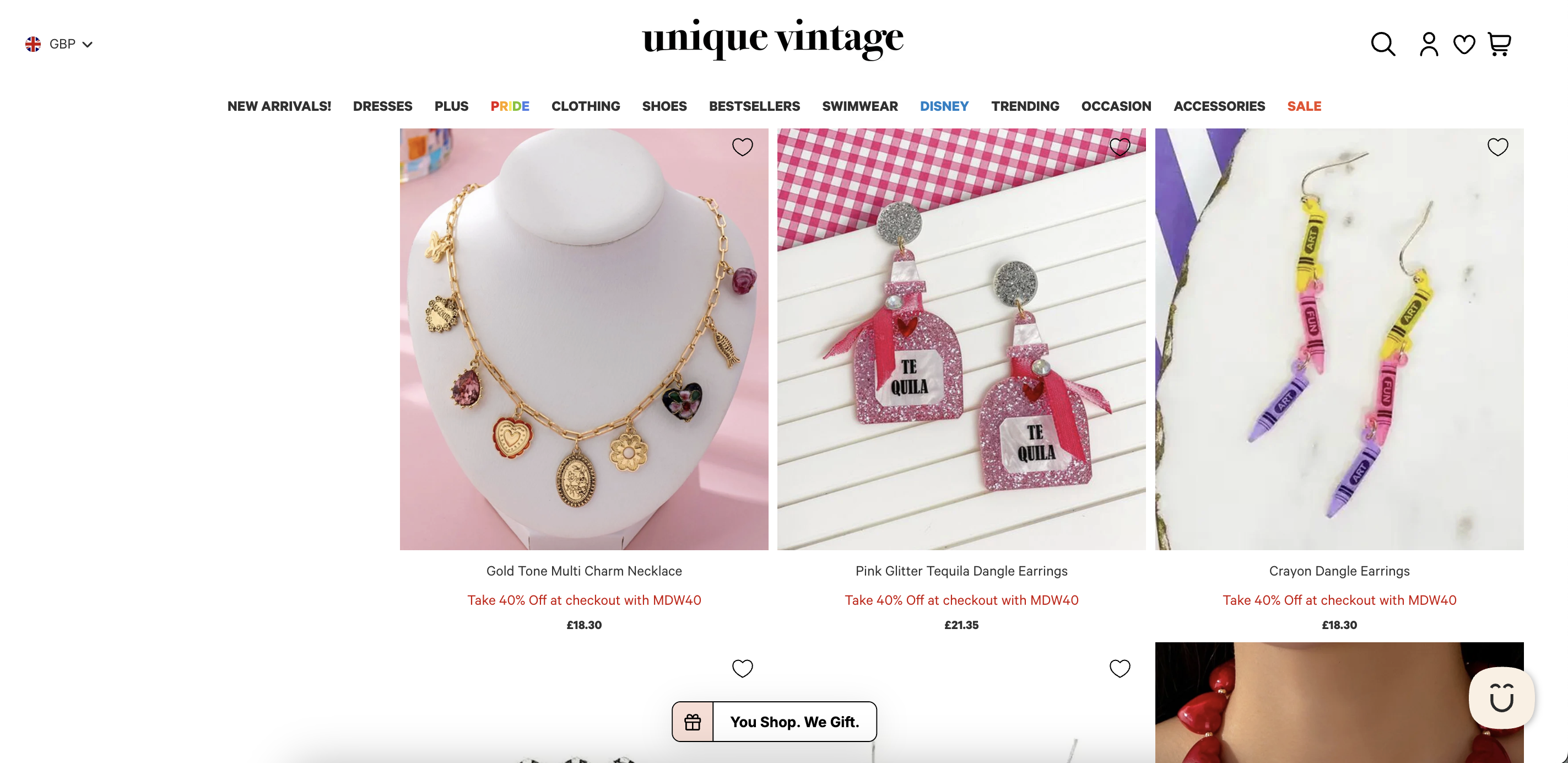
A perfect real-world illustration of this shift comes from a recent 2026 industry case study featuring a former marketer for the DTC jewelry brand Unique Vintage. They explicitly replaced standard ROAS with POAS (Profit on Ad Spend) because ROAS was completely masking the financial realities of their product mix. Here is what this looks like when a real DTC fine jewelry brand applies the POAS framework to their actual operations.
The Real-Life Scenario: The "Hero Product" Trap
Most DTC jewelry brands (think along the lines of Mejuri, Vrai, or Aurate) have a "hero" product that drives the bulk of their top-of-funnel acquisition.
Let's look at a brand pushing a 14k Solid Gold Personalized Pendant for $450. On the Meta Ads dashboard, this campaign is a massive winner. It is generating a 4.5x ROAS, and the marketing team is aggressively scaling the budget. But when the finance and operations teams run the POAS calculation, the reality of selling fine jewelry online brings the campaign to a grinding halt.
The POAS Breakdown: Where the Profit Leaks
Here is the actual unit economics breakdown for one of those $450 orders, exposing why the 4.5x ROAS was a dangerous illusion:
Real-Life Cost FactorThe Financial RealityImpact on MarginGross RevenueThe customer pays full price.$450.00COGS (Cost of Goods)Gold prices are exceptionally high, and personalized items require specialized manufacturing.-$180.00DiscountingThe brand offers a standard "15% off your first order" pop-up to capture the email.-$67.50Payment FinancingHigh AOV jewelry heavily relies on "Buy Now, Pay Later" (Affirm/Klarna), which charges the merchant a ~6% fee.-$27.00Insured ShippingYou cannot ship fine jewelry via standard polymailers. It requires insured, signature-required transit.-$18.00The Return ReserveFine jewelry has an average return/exchange rate of 10-15% due to sizing or "it looked different online."-$45.00PackagingLuxury unboxing experiences (velvet boxes, ribbons, care cards) are expensive.-$8.00Actual Contribution MarginWhat the brand actually keeps before ad spend.$104.50
The Verdict: Scaling into a Loss
If the brand is running a 4.5x ROAS on a $450 item, it means they are spending $100 in Ad Spend to acquire that customer ($450 / 4.5).
- Contribution Margin: $104.50
- Ad Spend (CPA): -$100.00
- Actual Net Profit: $4.50
The brand’s marketing dashboard was flashing bright green, celebrating a 4.5x return. But in reality, their POAS was barely 1.04x ($104.50 / $100). They were making exactly $4.50 per order. Once you factor in fixed overhead (salaries, software, warehouse rent), the brand was actively losing money every time they sold their best-selling necklace.
How Real Brands Fix This Using POAS
By implementing POAS (often through platforms like Admetrics, as mentioned in your text), real brands change their behavior in three immediate ways:
- Shifting Budgets to "Ugly" Winners: They often move ad spend away from flashy, high-AOV diamond or solid gold rings (which have massive return rates and financing fees) and push lower-AOV, high-margin items like sterling silver earrings or simple chains. The ROAS drops, but the cash in the bank goes up.
- Killing the Sitewide Discount: When you see how quickly a 15% discount destroys the POAS on a gold item, brands shift to "Gift with Purchase" or tiered discounts instead.
- Aligning Marketing and Finance: The media buyer stops asking, "Did we hit our ROAS target today?" and starts asking, "Did this campaign actually generate enough cash to cover its own costs?"
When to turn on POAS for Jewelry Stores for maximum impact
Timing matters because POAS needs enough volume to guide decisions.
Turn it on when:
* Conversion tracking is stable and purchase volume is consistent
* You scale spend or expand to new geographies
* You launch new collections and product mix shifts fast
Seasonality is the second trigger. Jewelry peaks can swing AOV and intent quickly. As a result, POAS becomes most valuable two to four weeks before:
* Q4 gifting
* Valentine’s Day
* Mother’s Day
* Graduation
* Wedding season
If performance looks too good to be true in platform ROAS, that is another signal. In many cases, branded demand or view through attribution takes too much credit.
POAS for Jewelry Stores as a profit first operating system
POAS for Jewelry Stores is more than a metric. It becomes an operating system for budget allocation, testing, and forecasting.
When you run media with POAS, you gain three advantages:
- Cleaner budget allocation because Meta, Google, and TikTok compete on profit, not stories
- Better testing discipline because winners improve contribution margin, not just CTR or attributed revenue
- More credible forecasting because you connect spend to payback and cash generation
This is also where AI and predictive analytics help. You can forecast expected POAS by SKU based on margin bands, return likelihood, and discount sensitivity. Then you can pace spend toward the products most likely to hit your profit targets.
Conclusion
ROAS alone cannot carry jewelry brands through high AOV, long consideration windows, and volatile margins. POAS for Jewelry Stores closes the gap between marketing dashboards and financial reality. Therefore, it helps you scale with confidence, protect contribution margin, and make decisions finance will back.
How Admetrics can help
Admetrics helps you operationalize POAS for Jewelry Stores by connecting ad spend to profit signals that matter in jewelry. You can evaluate performance using contribution margin by SKU, promo impact, and the real cost of returns, resizing, repairs, and shipping.
As a result, teams stop scaling campaigns that inflate revenue but weaken profit. Instead, they shift budget toward the mix that improves POAS, CAC payback, and long term LTV.
Book a free demo.
FAQ
What is POAS for Jewelry Stores?
POAS for Jewelry Stores measures profit generated per euro of ad spend. It accounts for margin and variable costs, not just revenue.
How is POAS different from ROAS?
ROAS measures revenue per ad euro. POAS for Jewelry Stores measures profit per ad euro, so it reflects contribution margin.
Why is POAS for Jewelry Stores important for DTC jewelry?
Jewelry margins vary by SKU, metal, stone, and discount depth. POAS for Jewelry Stores prevents you from scaling campaigns that look efficient on ROAS but reduce profit.
What data do I need to calculate POAS?
You need channel level ad spend plus profit inputs, including COGS, discounts, payment fees, shipping and insurance, and returns or expected return rates.
What POAS target should we use?
Set targets based on your margin mix and fixed costs. Many brands start with POAS above 1.0, then refine targets by collection and customer type.
Can POAS guide budget allocation across Meta, Google, and TikTok?
Yes. Apply the same profit rules to each channel, then compare POAS for Jewelry Stores across platforms to shift budget toward the most profitable growth.
How do we validate that POAS improvements are real?
Use incrementality checks like holdouts or geo tests. Confirm that higher POAS for Jewelry Stores increases incremental profit, not just attributed sales.
How often should we report POAS?
Check it daily for pacing, then use weekly trends for decisions. In practice, POAS for Jewelry Stores trends matter more than single day swings.