Open & Click Rates for Supplement Manufacturers are more than email stats. They act as early warning signals for whether your growth system can scale profitably.
For DTC supplement brands, email influences blended CAC, subscription retention, and launch velocity. Meanwhile, paid media reporting often lags, and attribution can look noisy. Because of that, Open & Click Rates for Supplement Manufacturers help you spot creative resonance and offer fit faster than waiting days for platform data to stabilize.
When opens trend down, you may be losing attention or inbox placement. When clicks trend down, your message may fail to create intent. Strong teams treat these signals as revenue instrumentation, not a channel report card.
Open & Click Rates for Supplement Manufacturers: What the Metrics Actually Mean
Open & Click Rates for Supplement Manufacturers typically refers to two metrics you can monitor daily.
Open rate
Open rate is the share of delivered emails that recipients open. It reflects:
* Inbox placement and deliverability
* Sender reputation and list quality
* Send timing and frequency
* Subject line clarity and relevance
However, privacy features can inflate or hide opens. So, treat opens as directional and pair them with clicks and revenue per recipient.
Click rate
Click rate is the share of delivered emails that generate at least one click. It tells you if your email turns attention into intent.
Clicks usually move with:
* Offer strength and product positioning
* Creative clarity and CTA focus
* Segmentation accuracy
* Landing page message match
Importantly, high clicks with weak conversion rate often signals funnel friction. For example, the email promise may not match the PDP, pricing, or bundle logic.
Who Should Prioritize These Metrics and Why
Open & Click Rates for Supplement Manufacturers matter most when email meaningfully affects unit economics.
DTC founders and CMOs
If you manage budget allocation across Meta, Google, TikTok, and lifecycle, email engagement gives you a faster read on demand. As a result, you can protect margin before marginal ROAS collapses.
Use engagement trends to inform:
* When to push spend versus when to pause and refresh creative
* Whether your offer resonates enough to scale acquisition
* How aggressive you can be on promos without harming LTV
Growth and lifecycle teams
If you own retention and monetization, clicks help you identify high intent cohorts. In addition, flows often provide cleaner incrementality than last click paid attribution.
Prioritize segments like:
* Replenishment windows
* Quiz finishers
* Prior purchasers by product category
* Subscribers nearing renewal

Benchmarks and KPIs That Make Engagement Actionable
Benchmarks help, but direction and business impact matter more. Still, most €1M plus DTC brands tend to land in these ranges:
Open rate: 25 to 45 percent for campaigns, often higher for flows
Click rate: 1 to 3 percent for campaigns, 3 to 8 percent for high intent flows
To make Open & Click Rates for Supplement Manufacturers useful in growth decisions, tie them to revenue metrics.
Track these KPIs together:
- Revenue per recipient (RPR) by segment and email type
- Conversion rate from email click to purchase
- CAC by cohort, especially when email supports acquisition
- LTV by cohort, especially for subscription
- Blended ROAS or MER to validate scaling efficiency
If engagement rises but RPR falls, you likely have an offer or landing page problem. Conversely, if clicks stay flat but RPR rises, your targeting and product mix may be improving.
A Practical Framework to Improve Open and Click Rates
Open & Click Rates for Supplement Manufacturers improve fastest when you fix the system, not just the subject lines.
Step 1: Lock measurement hygiene
First, ensure the data is trustworthy.
* Standardize UTM structure across campaigns and flows
* Align your ESP, GA4, and ecommerce platform naming conventions
* Exclude recent buyers from acquisition focused sends to avoid muddy attribution
Then, audit deliverability monthly. If you hit spam or promotions heavily, your tests will mislead you.
Step 2: Segment by intent and value
Next, stop optimizing one blended number. Segmenting usually improves both clicks and conversion rate because relevance increases.
Start with:
* Prospects versus purchasers
* Purchasers by product category
* Subscribers versus one time buyers
* High LTV cohorts versus low AOV cohorts
After that, tailor offers and education depth to each cohort.
Step 3: Build a baseline, then test one lever at a time
Run three sends per segment with stable creative to establish a baseline. Then change one variable.
High impact levers include:
* One clear primary CTA
* Benefit led headline that matches the PDP above the fold
* Social proof placement, such as reviews or clinical references
* Offer framing, such as bundle value versus subscribe and save
Step 4: Prove incrementality with holdouts
Finally, run holdouts on key flows. This protects you from over crediting email for demand created by paid.
Measure lift on:
* Incremental orders
* Incremental subscription starts
* Incremental gross profit
When you can quantify lift, you can defend lifecycle budget and plan spend with more confidence.
Timing Strategy: When to Send for Maximum Impact
The best send time depends on when customers feel ready to act. In supplements, intent often peaks around routines and replenishment cycles.
Morning
Morning performs well for routine and habit messaging. For example, replenishment reminders and simple offers often win early.
Midday
Midday can work for desk based shoppers. Keep the email simple, and lead with one outcome and one CTA.
Evening
Evenings often support deeper education. Therefore, long form content, comparisons, and bundle builders tend to earn steadier clicks.
Align with paid media bursts
If you run aggressive acquisition, sync emails to traffic surges. Sending 30 to 90 minutes after a spend spike can capture warmed demand. It can also make attribution analysis cleaner because intent clusters in time.
Turning Engagement Into Predictable, Profitable Growth
Open & Click Rates for Supplement Manufacturers become powerful when you connect them to profitability. If engagement improves while conversion rate and RPR hold, you can often scale spend with less risk to margin.
Winning teams focus on fundamentals:
* Clean data and consistent tracking
* Segmentation that matches intent
* Message match from inbox to landing page
* Offer strategy that supports LTV, not just short term volume
Most importantly, they validate impact with holdouts. That is how you turn engagement into attribution confidence and smarter budget allocation.
Conclusion
Open & Click Rates for Supplement Manufacturers give you an early read on whether your message earns attention and drives intent. When you tie these metrics to conversion rate, CAC, and LTV, you move from reporting to decision making.
If you treat email as revenue instrumentation, you can protect margin, improve subscription retention, and scale more predictably.
How Admetrics Can Help
Admetrics helps you understand whether better engagement actually drives incremental revenue across Meta, Google, TikTok, and lifecycle.
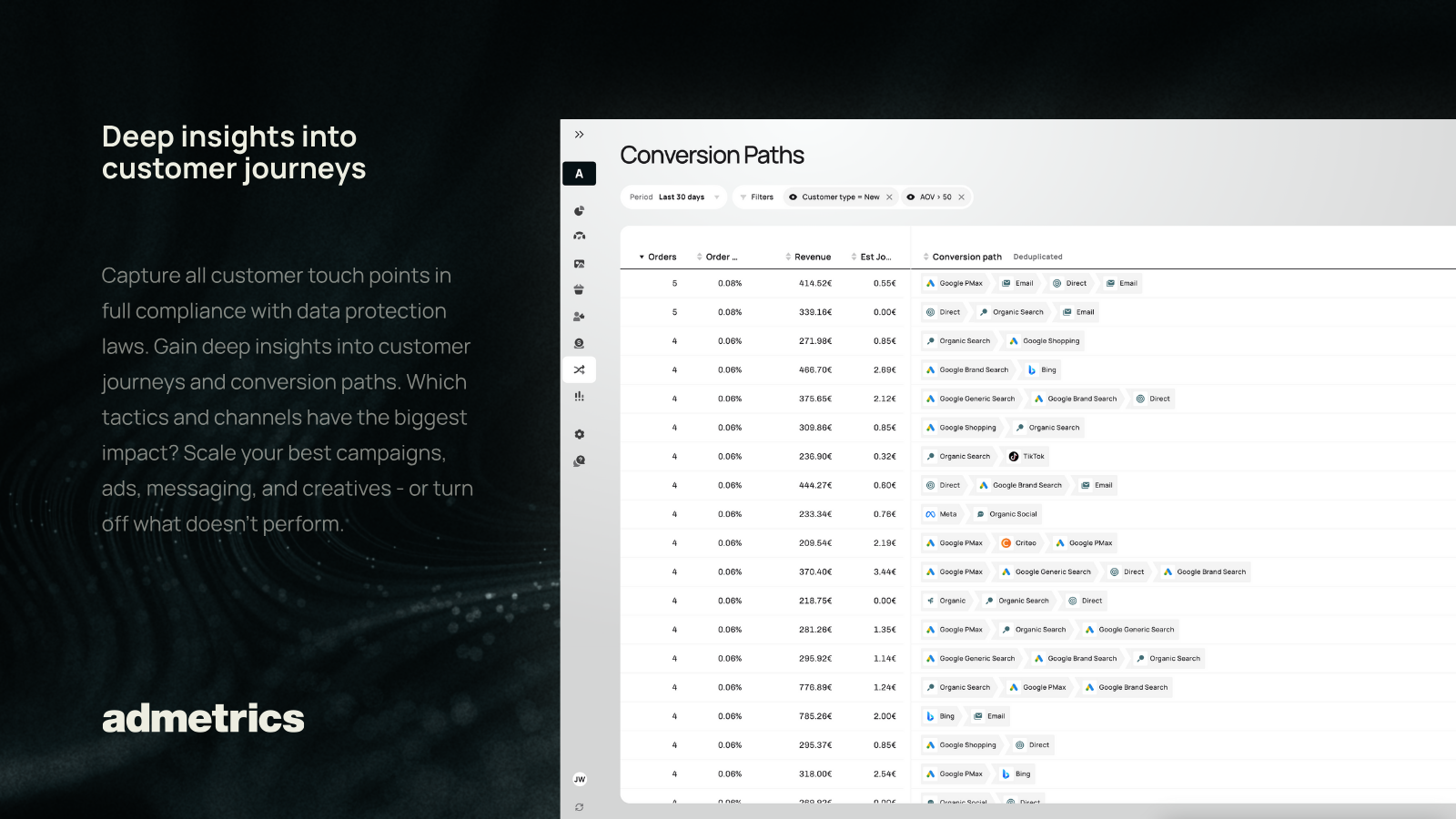
Instead of optimizing for vanity metrics, you can connect email touches to conversion paths and measure lift on orders, subscriptions, and LTV. As a result, you can adjust creative, offers, and cadence based on what improves blended ROAS and MER. Book a demo.
FAQ
What is a good open rate for Open & Click Rates for Supplement Manufacturers?
Many supplement brands see 25 to 45 percent on campaigns, with flows often higher. However, list quality and inbox placement matter more than the number.
What is a good click rate for Open & Click Rates for Supplement Manufacturers?
For campaigns, 1 to 3 percent is common. For segmented, high intent flows, 3 to 8 percent is achievable.
Why did our opens drop even if revenue stayed stable?
Privacy changes can distort opens. In addition, some revenue may come from loyal buyers who click through anyway. Check clicks, deliverability, and revenue per recipient.
Should we still track opens for Open & Click Rates for Supplement Manufacturers?
Yes, but treat opens as directional. Use clicks, conversion rate, and revenue per recipient for core decisions.
What impacts Open & Click Rates for Supplement Manufacturers the most?
Inbox placement, segmentation relevance, offer clarity, and message match typically outperform subject line tactics.
How do we improve clicks without risking compliance?
Use benefit led language, avoid risky claims, and keep one primary CTA. Also align the email promise with the landing page headline.
Do SMS and paid media affect Open & Click Rates for Supplement Manufacturers?
Yes. They shift demand timing and frequency. Therefore, coordinate calendars to reduce fatigue and avoid over messaging the same cohorts.
How often should supplement brands email without hurting engagement?
Most brands land around 3 to 6 campaign sends per week plus flows. Still, you should ramp gradually and monitor unsubscribe rate, spam complaints, and RPR.
Are flows or campaigns better for click rates?
Flows often win because they capture higher intent moments such as welcome, replenishment, and winback. Campaigns drive reach and discovery.
What subject lines work best?
Specific outcomes and curiosity can help. However, long term performance depends more on deliverability, segmentation, and relevance.
How can we attribute sales to email more accurately?
Use holdouts and incrementality tests. Also review blended metrics like MER instead of relying on last click.
What is the fastest lever to lift Open & Click Rates for Supplement Manufacturers?
Fix deliverability and list hygiene first. Then tighten segmentation and simplify creative with one primary CTA.