

Marketing leaders in FMCG ecommerce and DTC face a tough trade off. Channels move fast, but profitability constraints move slow. Meta and TikTok demand can shift in hours. Meanwhile, supply planning, promo calendars, and retailer planning cycles lock decisions for weeks.
That gap explains why Marketing Mix Optimization for FMCG Brands has become a must have. Privacy changes and cookie loss reduced deterministic attribution, so teams often argue about which dashboard tells the truth. You still need decisions that stand up to CFO scrutiny. You also need them before the quarter ends.
Instead of chasing blended ROAS, Marketing Mix Optimization for FMCG Brands focuses on incremental revenue, incremental profit, and long term growth. As a result, you can scale with confidence even when signals look noisy.
Why Marketing Mix Optimization for FMCG Brands matters now
FMCG brands often scale across paid social, paid search, retail media, marketplaces, and trade promotions at the same time. However, each lever impacts the others. A promo can pull demand forward. A distribution win can raise baseline sales. Creative quality can change conversion rate even if spend stays flat.
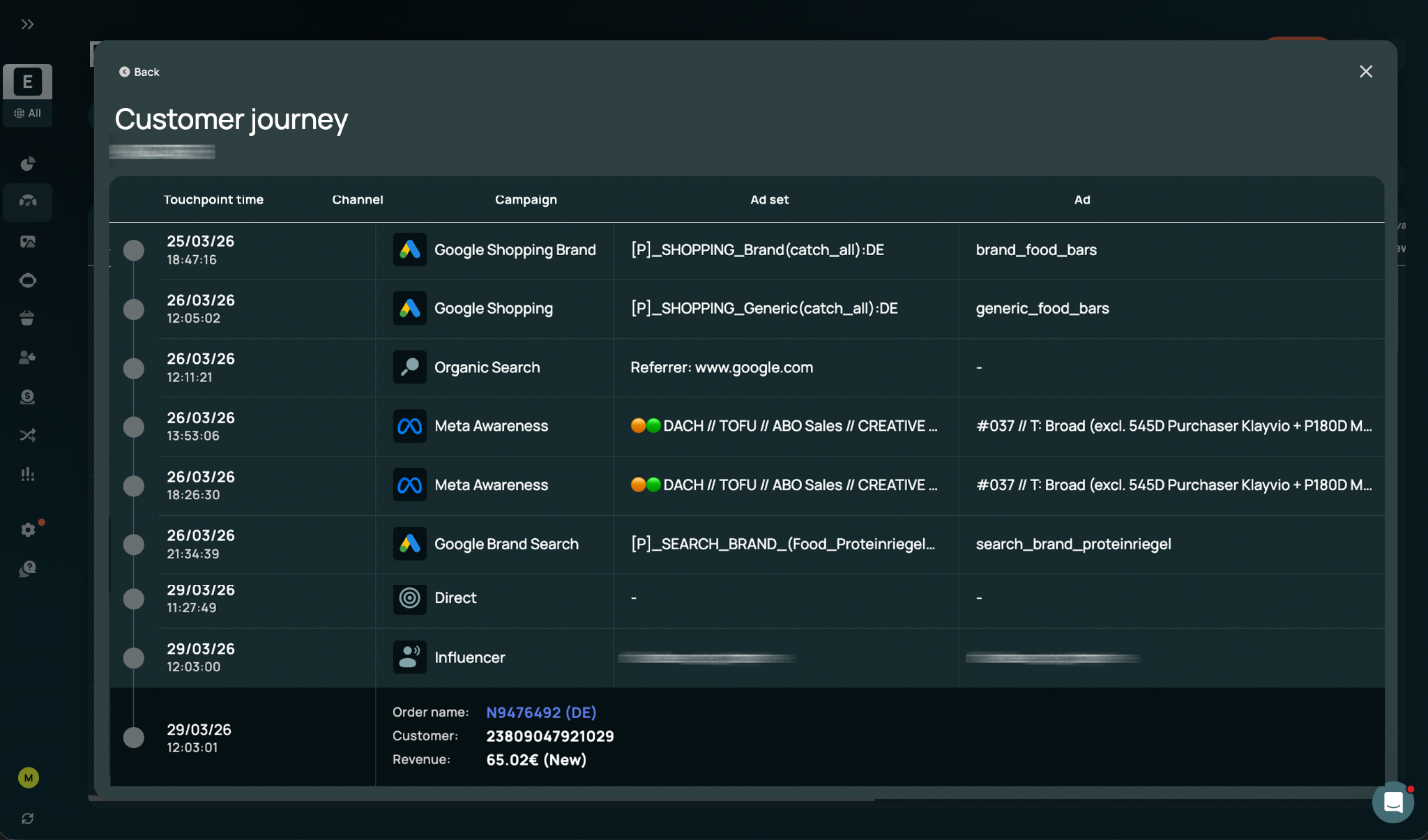
At the same time, platform reporting can over credit lower funnel channels. Last click attribution often rewards brand search and retargeting. That can inflate reported ROAS while true incrementality falls.
Marketing Mix Optimization for FMCG Brands fixes the decision lens. It answers a better question:
- Which spend drives incremental profit, not just attributed revenue?
- Where do diminishing returns start by channel and by tactic?
- How do lag effects and seasonality change what “good” looks like?
- How do DTC and retail sales interact through halo and cannibalization?
When you align on those answers, budget conversations turn into profit conversations.
What is Marketing Mix Optimization for FMCG Brands?
Marketing Mix Optimization for FMCG Brands is a data driven way to allocate budget across channels and commercial levers to maximize incremental outcomes. Most teams use it to improve contribution margin while protecting growth.
In practice, it combines two inputs.
- Econometric modeling to estimate incremental impact across channels and time
- Experiment results to validate incrementality and reduce model risk
This approach helps you move from platform claims to business truth. Consequently, you can forecast outcomes and set clearer targets for ROAS, CAC, LTV, and conversion rate.
What it optimizes for in real teams
Most high performing teams optimize for a mix of these KPIs.
- Incremental profit and contribution margin
- Marginal ROAS by channel and by spend level
- CAC payback window, especially for subscription or repeat purchase categories
- LTV to CAC ratio, segmented by cohort or acquisition source
- Incremental revenue with lag effects included
If you only track blended ROAS, you can miss the point where extra spend becomes less efficient. Marketing Mix Optimization for FMCG Brands makes that curve visible.
Who should use it in FMCG ecommerce and DTC
Marketing Mix Optimization for FMCG Brands fits teams that scale beyond a single channel. It also fits organizations where finance, growth, and brand need a shared narrative.
You will get the most value if you recognize at least one of these pain points.
- You rely on Meta, Google, TikTok, and retail media at the same time
- iOS and cookie loss created gaps between platform reporting and actual sales
- Promotions and price changes distort short term performance signals
- You see efficiency cliffs when you increase budget
- You need board level clarity on what drives incremental profit
CMOs and Heads of Growth typically use it for planning and accountability. Performance leads use it for weekly allocation and testing priorities.
Common scenarios where it pays off fast
Teams often see quick wins when they face one of these moments.
- A channel mix shift toward retail media or marketplaces
- A major creative refresh that changes response rates
- A price increase that changes conversion rate and demand elasticity
- A distribution expansion that increases baseline sales
In each case, last quarter benchmarks can mislead. Marketing Mix Optimization for FMCG Brands resets the baseline with a more realistic model.
How to get started with Marketing Mix Optimization for FMCG Brands
You do not need a perfect dataset to start. You need clean inputs and clear decisions.
Use this step by step plan to move from analysis to action.
Step 1: Define the decisions the model must support
Start with 3 to 5 decisions that matter financially. For example:
- How much to shift between Meta prospecting and paid search demand capture
- How to split spend across retail media networks without duplicating demand
- Whether to fund incremental budget with brand spend, promotions, or performance
When you anchor the work to decisions, stakeholders align faster.
Step 2: Standardize channel and spend definitions
Teams often lose weeks to taxonomy debates. Fix it early.
- Use consistent channel names across platforms and finance
- Separate prospecting, retargeting, and brand search when possible
- Map agency fees and creator spend to the channels they influence
Then reconcile to actual spend so the model matches the P and L.
Step 3: Bring in the commercial context that drives FMCG outcomes
Performance data alone is not enough in FMCG. Add the variables that shift demand and margin.
- Price and discount depth by week
- Promo calendar and promo intensity
- Distribution changes and key retailer events
- Stockouts and supply constraints
- Seasonality markers and major tentpole moments
As a result, the model explains the baseline better and reduces false channel credit.
Step 4: Pair modeling with an incrementality testing plan
Modeling improves faster with real experiments. Therefore, define a simple validation cadence.
- Geo tests for key regions where distribution is stable
- Holdouts for channels like Meta prospecting or retail media
- Creative split tests to isolate message and format impact
A good rule is to validate the highest spend, highest uncertainty channel first.
Step 5: Operationalize outputs into guardrails and routines
Insights do not change outcomes unless teams act on them. Convert results into operating rules.
- Budget guardrails based on marginal ROAS and saturation thresholds
- Scenario planning for promo weeks versus non promo weeks
- A monthly business review that compares predicted lift to realized lift
This keeps Marketing Mix Optimization for FMCG Brands live instead of a one time report.
When to start for maximum impact
Start before decisions harden. Otherwise, you will optimize after money has already been spent.
Most teams should begin 6 to 8 weeks before:
- Annual planning
- Retailer joint business planning cycles
- Major price and promo calendar lock ins
Also start right after a major shock. Price changes, competitor launches, or a distribution step change can break old ROAS benchmarks. In that moment, Marketing Mix Optimization for FMCG Brands helps you reallocate faster with less internal debate.
Turning spend into incremental profit
Marketing Mix Optimization for FMCG Brands helps you answer the question finance actually cares about: what is the next euro of spend worth?
That matters because blended ROAS can stay stable while profitability declines. Diminishing returns, cannibalization between DTC and retail, and promotion pull forward can all hide in the averages.
When you optimize around incremental profit, you gain three advantages.
- You reduce wasted spend by cutting budget where marginal ROAS falls below your profit threshold
- You protect growth by keeping enough upper funnel investment to sustain demand creation
- You plan with reality, because the model includes lags, seasonality, and commercial levers
Over time, this creates a shared language across growth, brand, and finance. It also makes emerging tools more valuable. For example, AI driven forecasting and predictive analytics work best when your inputs reflect incrementality, not attribution bias.
Conclusion
FMCG ecommerce moves at platform speed, but profitable growth follows operational constraints. Marketing Mix Optimization for FMCG Brands bridges that gap by turning fragmented signals into decisions you can defend.
When you focus on incremental profit, marginal ROAS, CAC payback, and LTV, you stop chasing noisy dashboards. Instead, you build a repeatable system for allocating budget across Meta, Google, TikTok, retail media, and trade activity.
How Admetrics can help
Admetrics helps teams act on Marketing Mix Optimization for FMCG Brands by unifying cross channel performance into a single, decision ready view. You can spot saturation, creative fatigue, and efficiency cliffs earlier. Consequently, you can rebalance spend with more confidence and less guesswork.
If you want to see how this looks for your brand, book a demo.
FAQ
What is Marketing Mix Optimization for FMCG Brands?
It is a data driven way to rebalance budget across channels and commercial levers to grow incremental revenue and profit. It aims to reduce wasted spend while improving contribution margin.
How is Marketing Mix Optimization for FMCG Brands different from MMM?
MMM estimates the impact of marketing and other drivers. Marketing Mix Optimization for FMCG Brands takes those insights and converts them into budget allocations, guardrails, and scenarios that teams can execute.
What data do we need to start?
Most teams start with weekly data for spend by channel, sales by channel or total, pricing, promotions, and distribution changes. Stockouts and seasonality signals also help.
How long does it take to see results?
Many teams make better allocation decisions within 4 to 8 weeks once data is clean. Stronger learning often appears by week 12 as tests validate the model.
Can it work across DTC and retail together?
Yes. A solid approach models halo and overlap so DTC, marketplaces, and retail media budgets do not compete blindly. That improves true incremental ROI.
How does it handle Meta, Google, and TikTok?
It estimates marginal returns by platform and by spend level. Then you can shift budget toward the highest incremental profit opportunity while respecting saturation and lag effects.
Is last click attribution enough?
No. Last click tends to over credit lower funnel touchpoints and under count upper funnel demand creation. Marketing Mix Optimization for FMCG Brands uses incrementality to correct that bias.
What is the best way to validate the model?
Run geo tests or holdouts where feasible. Then compare predicted lift to observed lift and recalibrate based on the gaps.
How do promos and price changes affect optimization?
They change both demand and margin. Therefore, Marketing Mix Optimization for FMCG Brands should include them explicitly so you do not over credit marketing for promo driven spikes.
How often should we refresh budgets?
Use weekly guardrails for pacing and quick corrections. Use monthly reviews for strategic reallocations. Daily changes usually help pacing, not learning.
Which KPIs should decision makers focus on?
Incremental profit, marginal ROAS, CAC payback window, and contribution margin after variable costs. LTV becomes critical for repeat purchase categories.
What is a common mistake teams make?
They chase blended ROAS while ignoring marginal returns. That usually leads to scaling into less efficient spend and rising CAC.
Can smaller brands do this without a data science team?
Yes, if they maintain clean spend and sales data and follow a disciplined testing plan. Tools and partners can handle most of the modeling and automation.
How does creative fit into Marketing Mix Optimization for FMCG Brands?
Creative affects response curves and conversion rate. Strong creative can raise marginal ROAS at the same spend, while fatigue can create efficiency cliffs.
What is the first tactical step for marketers?
Align channel naming and time granularity across platforms and sales data. Then map spend to outcomes weekly so you can model and test consistently.

