

Platform dashboards help each walled garden prove its own value. However, they rarely answer the question that matters most when you own the P and L: what actually drove incremental revenue and contribution margin.
Once you scale spend, the numbers stop matching. Meta can show stable ROAS, Google can claim the last click, and finance can still see blended performance flatten. That is exactly where Marketing Mix Modeling for Ecommerce becomes a strategic advantage.
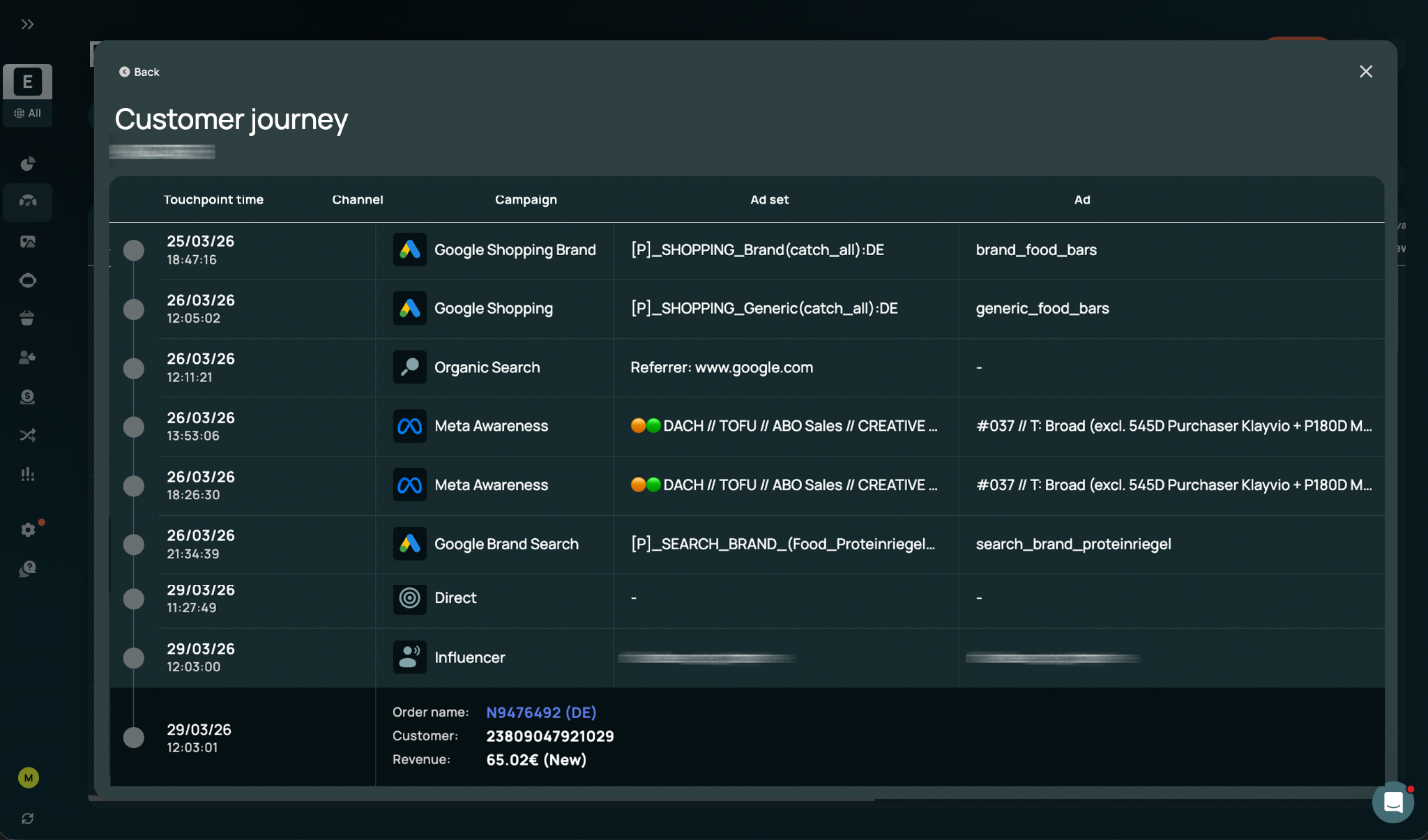
Instead of rebuilding user level journeys that privacy and consent mode now break, Marketing Mix Modeling for Ecommerce starts from outcomes you trust. Then it connects those outcomes to the drivers that changed over time. You get a measurement spine that holds up across iOS shifts, tracking gaps, and an increasingly fragmented channel mix.
What Is Marketing Mix Modeling for E-commerce
Marketing Mix Modeling for E-commerce is a statistical method that explains how marketing and business factors contribute to revenue, orders, and profit over time. It uses aggregated time series data, so it stays reliable even when user level tracking is incomplete.
It typically models weekly performance using inputs like channel spend and business context. As a result, you can estimate incrementality, marginal returns, and saturation by channel.
What MMM Measures (and What It Produces)
A practical MMM setup for e-commerce translates marketing activity into decision metrics you can act on.
Common outputs include:
* Incremental revenue and incremental orders by channel
* Incremental ROAS and profit ROI by channel
* CAC impact, especially when you model new customers separately
* Payback windows and lag effects, which matter for cash flow
* Diminishing returns curves, which show where scaling stops working
The Data MMM Uses
MMM relies on aggregated signals that most €1M plus brands already have.
You will usually include:
* Weekly spend, clicks, and impressions by channel (Meta, Google, TikTok, affiliates, retail media, email)
* Revenue, orders, and ideally contribution margin
* Pricing changes and discount depth
* Promotion calendar (launches, bundles, seasonal events)
* Inventory status and stockouts
* Shipping thresholds and sitewide changes
* External drivers like seasonality and macro shifts
This approach makes Marketing Mix Modeling for Ecommerce especially useful when attribution windows change and reported ROAS drifts away from reality.
Who Should Use Marketing Mix Modeling for Ecommerce
If you are scaling and you feel constant tension between platform reporting and blended performance, MMM is for you. It helps teams move from channel level debates to portfolio level decisions.
Best Fit Teams and Use Cases
MMM tends to pay off fastest for:
* DTC brands doing €1M plus in annual revenue with meaningful paid spend
* Teams expanding into new geographies or launching new product lines
* Marketers accountable to blended targets like MER, contribution margin, or LTV to CAC
* Organizations where finance challenges marketing numbers every budget cycle
Pain Points MMM Solves for DTC Marketers
Most performance teams do not lack data. Instead, they lack a shared truth.
MMM helps when:
* You see stable platform ROAS, but CAC rises at the business level
* You run tests, but you cannot translate wins into confident budget shifts
* You suspect saturation on Meta or Shopping, yet you cannot prove it
* You need to forecast outcomes before you commit spend
In other words, Marketing Mix Modeling for Ecommerce turns measurement into governance.
When to Run Marketing Mix Modeling for Ecommerce
Timing matters because MMM needs variation to learn. If your spend stays flat and your promo calendar never changes, the model will struggle to separate causes.
Run MMM when you have both data and decision pressure.
The Best Moments to Start
MMM delivers the most value when:
* You just hit a scaling phase and incremental efficiency now matters more than volume
* You experienced measurement disruption (iOS changes, consent mode shifts, tracking migrations)
* You plan quarterly or annual budgets and need a defensible allocation plan
* You are expanding channels and want to avoid expensive trial and error
Data Thresholds to Aim For
As a benchmark, many teams start with:
* Weekly data for 18 to 24 months
* Clear channel definitions and consistent naming
* A promo calendar that matches what actually happened in market
You can start with less history. However, uncertainty rises, so you should rely more on validation tests.
How to Get Started With Marketing Mix Modeling for Ecommerce
Treat MMM as an operating system, not a one time analytics project. You want a model you can refresh, challenge, and use in planning.
Step 1: Align on the Business Question
Start with one decision that leadership will actually act on.
Good starting questions include:
- Where should we reallocate 10 percent of spend to improve contribution margin
- Which channel has the best marginal ROAS at current spend levels
- What happens to CAC and new customer volume if we cut prospecting spend
This keeps Marketing Mix Modeling for Ecommerce focused on allocation, not reporting.
Step 2: Build a Finance Safe Outcome Metric
Pick an outcome that reconciles to finance.
Most ecommerce teams choose one of these:
* Contribution margin after marketing
* New customer revenue
* Orders with gross profit weighting
Then document definitions in plain language. Otherwise, you will relive attribution arguments in a new format.
Step 3: Make the Dataset Decision Ready
Build a clean weekly table that includes both marketing inputs and business context.
To reduce bias, include:
* Promo flags and discount depth
* Price changes
* Stockouts and delivery constraints
* Major site changes
Without these controls, MMM can miscredit ads for demand that promotions created.
Step 4: Model Fast, Then Iterate
Ship a first version quickly for directional insight. Then improve it with better granularity and validation.
A practical iteration loop looks like:
* Baseline model to identify big levers and obvious saturation
* Second pass with better channel breakdowns (for example brand versus non brand search)
* Sensitivity checks on lag and adstock assumptions
* Validation against lift tests, geo holdouts, or platform studies
Step 5: Operationalize the Outputs
MMM only creates value when people use it.
A simple cadence that works for many DTC teams:
* Weekly: channel owners review marginal returns and pacing guardrails
* Monthly: leadership reviews reallocations, forecast scenarios, and confidence ranges
* Quarterly: budget planning based on response curves, CAC targets, and LTV assumptions
This is how Marketing Mix Modeling for Ecommerce becomes a compounding advantage.
Turning MMM Insights into Budget Allocation
MMM should not just tell you what happened. It should tell you what to do next.
Use a Portfolio Mindset
Channels behave like an investment portfolio. Returns change as you scale, and risk increases when you concentrate spend.
MMM helps you:
* Identify where incremental ROAS stays strong at higher spend
* Spot early saturation before blended ROAS collapses
* Balance growth and efficiency by setting spend ranges per channel
Tie Recommendations to KPIs That Leaders Trust
To avoid vanity metrics, link model outputs to KPIs that affect the business.
Examples:
* Improve contribution margin by shifting budget from low marginal ROAS to high marginal ROAS channels
* Reduce CAC without hurting revenue by protecting upper funnel where it drives downstream demand
* Raise LTV to CAC by investing in retention levers during promo heavy periods
Combine MMM with Experimentation
MMM is strongest when you challenge it. Tests also help you move faster with confidence.
Use experiments to:
* Validate uncertain channels where spend correlates with seasonality
* Calibrate incrementality assumptions for prospecting versus retargeting
* Confirm lag effects for channels like video and affiliates
When you pair testing with MMM, you get both strategic clarity and execution speed.
Conclusion
When you scale, attribution disagreements stop being annoying and start being expensive. You need a measurement approach that holds up when tracking breaks and channel mixes diversify.
Marketing Mix Modeling for Ecommerce gives DTC leaders a unified view of incrementality, saturation, and marginal returns. As a result, you can allocate budget based on expected business impact, not platform narratives. Over time, that clarity improves ROAS, stabilizes CAC, and supports healthier LTV to CAC decisions.
How Admetrics Can Help
Admetrics helps DTC teams operationalize Marketing Mix Modeling for Ecommerce with a decision ready measurement layer built for modern signal loss.
With Admetrics, you can:
* Unify paid and owned data into a consistent source of truth
* Quantify incrementality and diminishing returns across Meta, Google, TikTok, and CRM
* Pressure test budget shifts using scenario planning tied to revenue and contribution margin
* Build finance friendly reporting that reduces internal debate
FAQ
What is Marketing Mix Modeling for Ecommerce?
Marketing Mix Modeling for Ecommerce is a statistical approach that estimates how each marketing channel and business factor contributes to revenue or profit over time. It separates baseline demand from incremental lift so you can make better budget decisions.
Why use Marketing Mix Modeling for Ecommerce now?
Privacy changes, iOS limitations, and consent mode reduce user level visibility. Marketing Mix Modeling for Ecommerce still works because it relies on aggregated historical outcomes and marketing inputs, not perfect tracking.
How is MMM different from attribution?
Attribution assigns credit across user journeys, often using clicks or views. MMM estimates incremental impact at the channel level using time series patterns, which makes it more stable for strategic planning.
What data do we need for Marketing Mix Modeling for Ecommerce?
Most teams use weekly channel spend plus outcomes like revenue or contribution margin. You should also include pricing, promotions, inventory constraints, and seasonality to avoid miscrediting performance.
How much history is enough for reliable MMM?
Many ecommerce brands aim for 18 to 24 months of weekly data. You can start with less, but you should expect wider confidence ranges and a bigger need for validation tests.
Can MMM replace platform reports or multi touch attribution?
No. MMM guides cross channel strategy and budget allocation, while platform reporting helps with in channel optimization. Together, they give you both execution detail and true incrementality.
How often should we refresh an MMM model?
Monthly refreshes work well for many scaling DTC teams. If you change pricing, promos, or channel mix frequently, you may refresh more often to keep forecasts accurate.
What KPIs should leadership focus on from MMM?
Prioritize incremental ROAS, marginal profit ROI, CAC impact, payback windows, and confidence intervals. These metrics connect MMM outputs directly to budget allocation and financial planning.
What are common pitfalls with MMM?
Common issues include missing promo data, inconsistent channel definitions, ignoring lag effects, and treating MMM as a one time project. Teams win when they operationalize the model and validate it with tests.

