Welcome to the future of ecommerce visibility—Generative Engine Optimization (GEO) for Ecommerce. In an era where large language models (LLMs) and AI-powered chatbots are fast becoming the first point of interaction for online shoppers, GEO is rapidly evolving from a buzzword to a business imperative. Instead of competing solely for blue links on Google, ecommerce brands now face a new frontier: being the answer surfaced directly by AI assistants, voice bots, and generative search tools. If your content isn’t GEO-ready, you’re already behind.
But what exactly is Generative Engine Optimization, and how can ecommerce leaders ensure their products and brand content are chosen, summarized, and recommended by LLMs? In this guide, we’ll explore everything you need to know—whether you’re a technical SEO, digital merchandiser, or ecommerce director hungry for the next competitive edge.
Generative Engine Optimization (GEO) for Ecommerce
What is GEO?
GEO stands for Generative Engine Optimization. Unlike traditional SEO, which aims to get your page listed on search engines, GEO targets how AI models—such as ChatGPT, Gemini, and Amazon’s Rufus—read, select, and generate answers for users. The primary goal? Ensure your brand, product, and content are featured and cited in the AI-generated responses delivered by these systems.
GEO is not just about keywords. It’s about data structures, semantic relationships, and context-rich content that LLMs can easily parse and trust. In short, it’s the art and science of training the engines that train the world.
Understanding Generative Engines and LLMs
Difference Between Search and Generation
Search engines index, rank, and display links based on relevance and authority. Generative engines, however, synthesize content from massive data corpora—meaning your information is not simply linked, but can be rewritten, summarized, or “repackaged” in AI-generated output.
How LLMs Choose Content
Large language models rely on their training data, recent web crawls, and APIs. When a user asks a product-related question, the LLM does not just return links; it constructs a human-like answer. The brands, products, and details that appear are those most present, best structured, and most frequently associated with the right context.
Why GEO Is Critical for Ecommerce
The New AI Shopping Experience
Consumers are turning to AI chatbots for pre-purchase advice, comparison, and discovery. If an LLM recommends your product, it’s a shortcut to conversions. On the other hand, being absent from these conversations means invisibility—even if your traditional SEO is strong.
Shifting Customer Journeys
AI-powered chats don’t always direct users to your site. Instead, they may provide answers (with or without attribution) inside the chat interface. GEO ensures your brand is cited, recommended, and even hyperlinked when these generative engines summarize product categories, answer “best of” questions, or suggest product matches.
GEO vs Traditional SEO
From Blue Links to Answers
Traditional SEO optimizes for page ranking; GEO optimizes for being part of the AI’s knowledge graph. You need both, but the strategies differ. GEO is proactive—designing your data and content to be scraped, parsed, and included in LLM answers.
LSI and Semantic Optimization
Latent Semantic Indexing (LSI) keywords and semantic structuring are more critical than ever. AI looks for meaning, relationships, and clarity. It prefers content with clear connections and unambiguous product attributes.
How LLMs “Feature” E-commerce Brands
What It Takes to Be an LLM Result
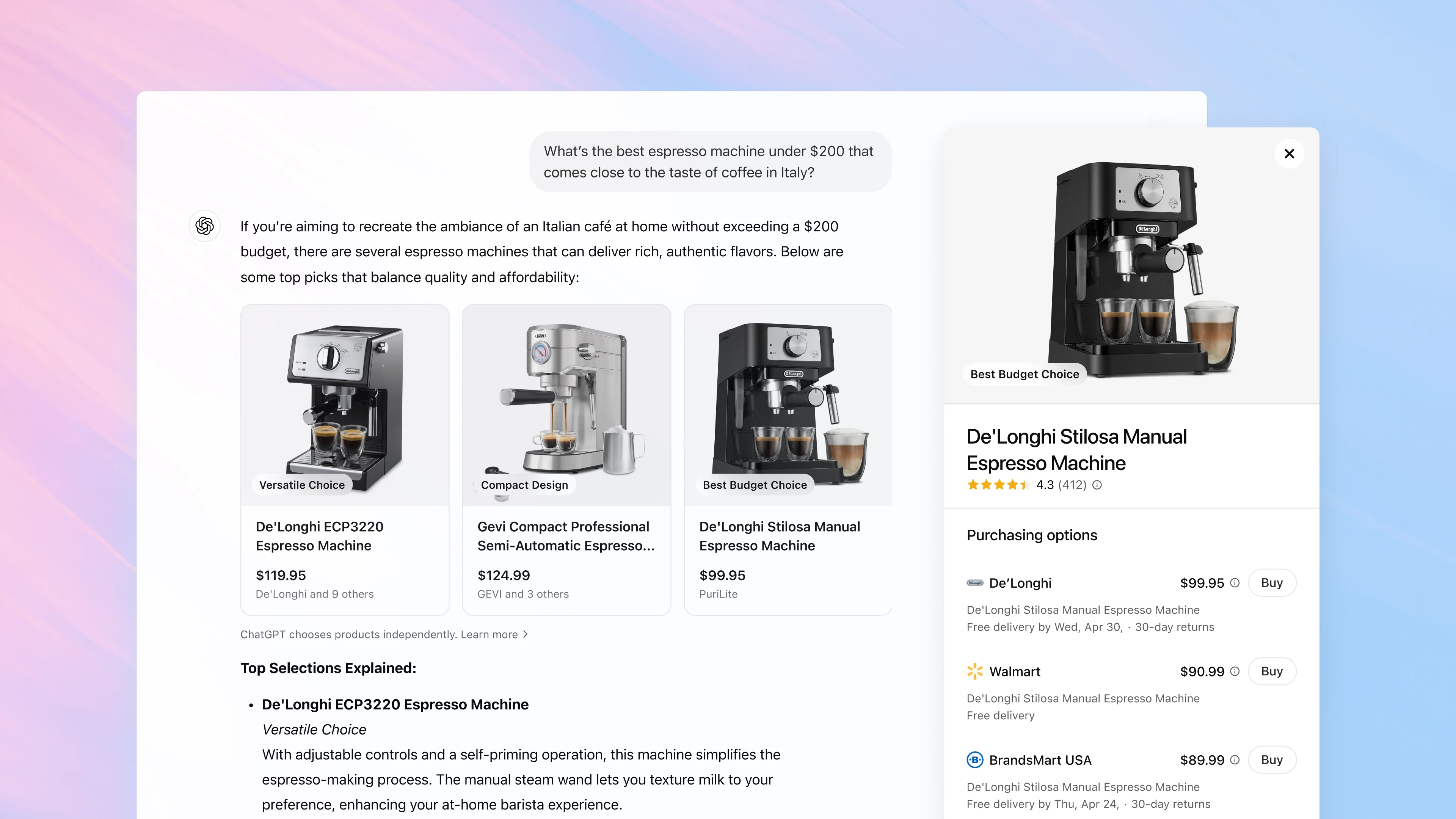
LLMs select answers based on authority, coverage, structure, and clarity. Well-marked up product data, trustworthy reviews, and consistent language all boost the odds.
Product Knowledge Embedding
Embedding means your product data, descriptions, specs, and reviews are part of the model’s knowledge. The more structured and repeated (across your site and the web), the more likely you are to appear as a cited brand in generative answers.
Product Data Optimization for GEO
Schema Markup
Implement advanced schema markup (Product, FAQ, Review, HowTo) to describe products in a way that LLMs can “read” and understand.
Structured Product Descriptions
Descriptions should be clear, concise, and consistently structured. Include attributes, usage, compatibility, and unique value props.
AttributeExampleProduct Name"UltraSoft Memory Foam Pillow"Main Feature"Pressure-relieving comfort for all sleep styles"Compatibility"Works with standard pillowcases"Price"$29.99"
Content Strategies for GEO in Ecommerce
Conversational Content
Write in a Q&A or conversational style. LLMs favor content that matches user intent and real user questions.
FAQ and How-To Integration
Include robust FAQ sections and how-to guides within product and category pages. These often get quoted directly in AI outputs.
Leveraging LSI Keywords for GEO
Contextual Product Language
LSI keywords—words and phrases related to your main keyword—signal broader understanding. Use synonyms and related terms throughout your content.
Related Topic Clusters
Build clusters around related products, uses, and user questions to reinforce your topical authority.
Product Review Optimization
Generative Summaries
Encourage and display customer reviews that are rich in detail and address common questions. LLMs often summarize these in responses.
UGC for LLMs
User-generated content (UGC), especially detailed reviews and Q&As, give LLMs more data to pull from when constructing answers.
Prompt Engineering for Ecommerce
Building “Answerable” Content
Structure your content so it directly answers likely LLM prompts. For example, answer “What’s the best wireless mouse for designers?” with a specific, data-rich, and unambiguous paragraph.
Anticipating LLM Prompts
Review chat logs, search queries, and competitor summaries to anticipate the types of questions LLMs will face about your product category.
Brand Authority and Trust Signals
E-E-A-T in the Age of AI
Demonstrate Experience, Expertise, Authority, and Trust (E-E-A-T). Cite third-party reviews, showcase certifications, and link to reputable sources.
Authoritative Reviews and Mentions
Get your products covered by well-known review sites and industry blogs—LLMs often favor these sources.
Link Building for GEO
Internal Linking Best Practices
Connect your product, category, and knowledge pages logically. LLMs use these links to understand site structure and context.
Outbound Citations for LLMs
Link out to authoritative external resources when relevant. This can increase your brand’s trust score in the “eyes” of the AI.
Visual Content and GEO
Image Alt Text for LLMs
Use descriptive, keyword-rich alt text. LLMs increasingly “see” and describe images in responses.
Generating Descriptive Visuals
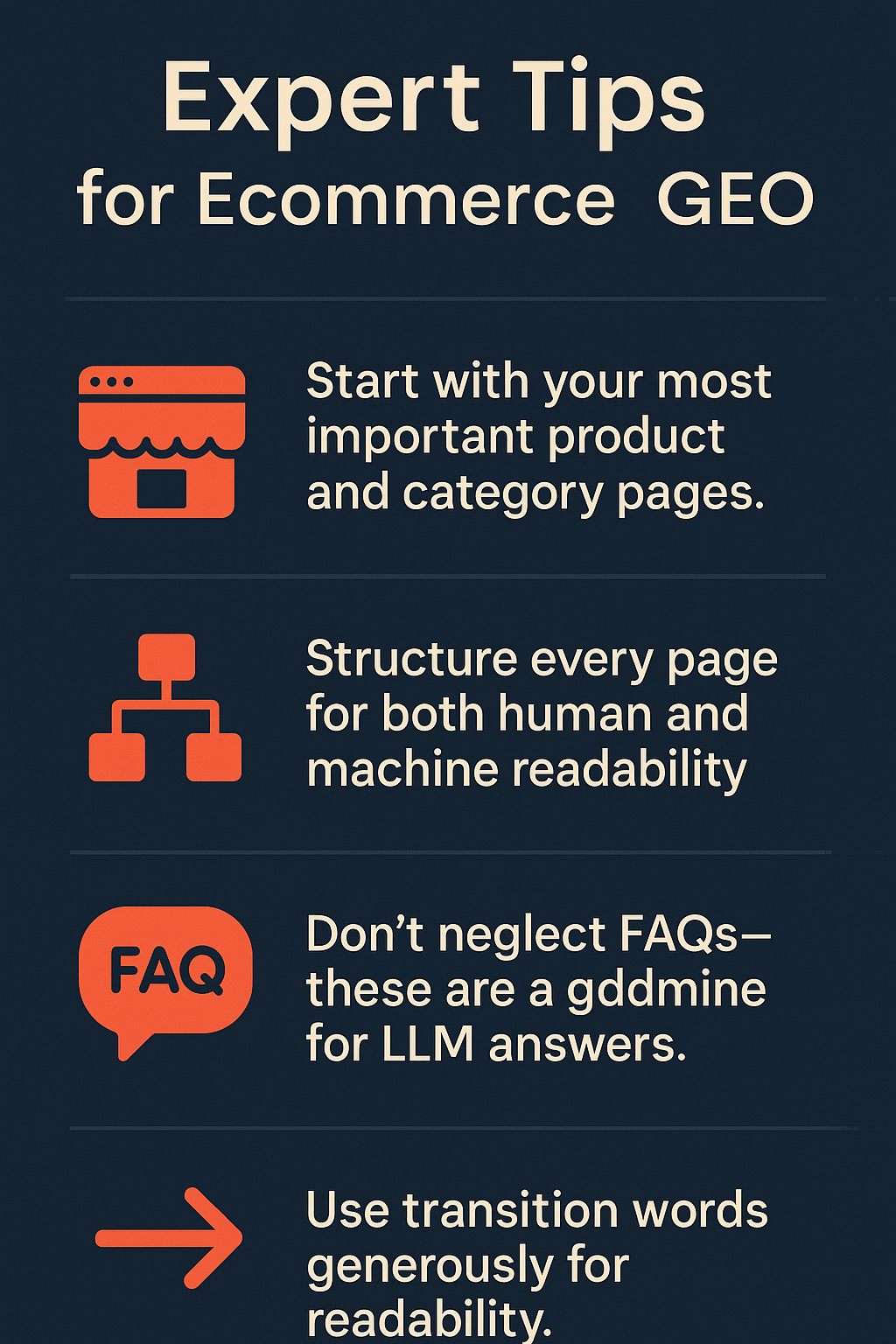
Consider infographics or explainer visuals with text overlays, which can be “read” and summarized by vision-enabled models.
AI-Ready Product Descriptions
Writing for Bots & Buyers
Descriptions should be natural and informative for people, but also structured for AI—bullet points, short paragraphs, and tables help.
Adaptation to Conversational Output
Phrase information in ways that make sense if quoted verbatim in a chat or voice interface.
Schema Types and GEO
Product, FAQ, Review, HowTo
Leverage all available schema types to provide context and detail. The more structured your data, the more likely it is to be picked up.
Advanced Structured Data
Explore emerging schema types, such as “ShoppingAction” or “ProductGroup”, as generative engines evolve.
Building FAQ Sections That LLMs Love
Questions That Surface in Chat
Analyze which questions are commonly asked in chat interfaces and include these in your FAQs.
Direct, Unambiguous Answers
Write answers that are clear, direct, and contain enough detail to stand alone if quoted out of context.
Testing and Measuring GEO Success
LLM Simulations
Test your site and content with AI tools to see how they respond to ecommerce questions. Use OpenAI Playground or other LLM APIs.
Monitoring SERP vs AI Results
Track both traditional search rankings and appearances/citations in AI-generated answers.
Tools for GEO Optimization
- Yoast SEO: For content structure and schema validation.
- Schema.org Validator: To check advanced markup.
Overcoming Common GEO Challenges
- Content Cannibalization: Avoid duplicating answers across multiple pages.
- Keeping Data Fresh: Regularly update product info and reviews to ensure LLMs always see your latest offerings.
Continuous Learning: Staying Ahead in GEO
Monitoring LLM Updates
Keep an eye on new LLM releases and best practices—they change fast!
Community Sharing & Research
Engage with GEO, SEO, and AI communities to learn, adapt, and test new strategies.
Omnichannel GEO Approaches
Social, Voice, and Chat Synergy
Repurpose GEO-optimized content across social, voice search, and live chat for maximum exposure.
Multimodal Content
Create assets that work in text, image, and even video—future LLMs will leverage all.
Incorporating Customer Feedback
UGC as LLM Fuel
Highlight and encourage in-depth user reviews—these become quotable data for LLMs.
Live Review Integrations
Integrate review widgets that feed new UGC directly into your product pages.
GEO Content Maintenance
Regular Updates
Schedule content and schema reviews quarterly.
Versioning for LLM Consistency
Keep archives of content versions to track what information LLMs may have accessed and when.
Admetrics x Generative Engine Optimization
By leveraging Admetrics’ advanced analytics and attribution capabilities, ecommerce brands can significantly strengthen their GEO strategy. Admetrics unifies marketing data from all channels—paid, organic, offline, and marketplaces—into a centralized dashboard, enabling precise monitoring of which product or category content is driving AI-generated visibility and manipulation of buyer signals.
The marketing mix modeling and AI-driven experimentation tools reveal how context-rich, structured content influences conversion pathways—insights that are invaluable for optimizing content blocks toward generative search outcomes. In essence, using Admetrics’ data-driven decisions with GEO best practices empowers ecommerce teams to craft and iterate content that not only ranks in traditional search, but also gets surfaced, cited, and trusted by LLMs and chat assistants. Start you free trial today.
Generative Engine Optimization for Ecommerce
GEO for Ecommerce is not optional. As AI and LLM-driven shopping experiences accelerate, brands must move beyond traditional SEO tactics. GEO bridges the gap between human and AI, ensuring your products, reviews, and content are not just “findable,” but “featureable.” Investing in GEO now means future-proofing your ecommerce strategy and ensuring your store is ready for the next generation of digital shoppers.
FAQs: Generative Engine Optimization for Ecommerce
What is Generative Engine Optimization (GEO)?
GEO is the practice of optimizing your ecommerce content and data for generative AI models, ensuring your products and brand information are included in AI-generated answers and recommendations.
How is GEO different from SEO?
While SEO focuses on traditional search engine rankings, GEO targets how LLMs and AI chatbots process, select, and generate content directly for user questions.
What content formats work best for GEO?
Conversational FAQs, structured product data, rich reviews, and well-organized how-to guides are particularly favored by LLMs.
Can I track my GEO results?
Yes! Test your site with AI chatbots and monitor the inclusion of your content in their answers, as well as track traditional analytics and SERP rankings.
Do LLMs cite sources?
Sometimes. While some AI outputs include citations or links, others do not. Either way, having authoritative, well-structured content increases your odds of being featured or mentioned.
How often should I update my GEO strategy?
Regularly—at least quarterly. As AI models and generative platforms evolve, update your content and schema to stay current.