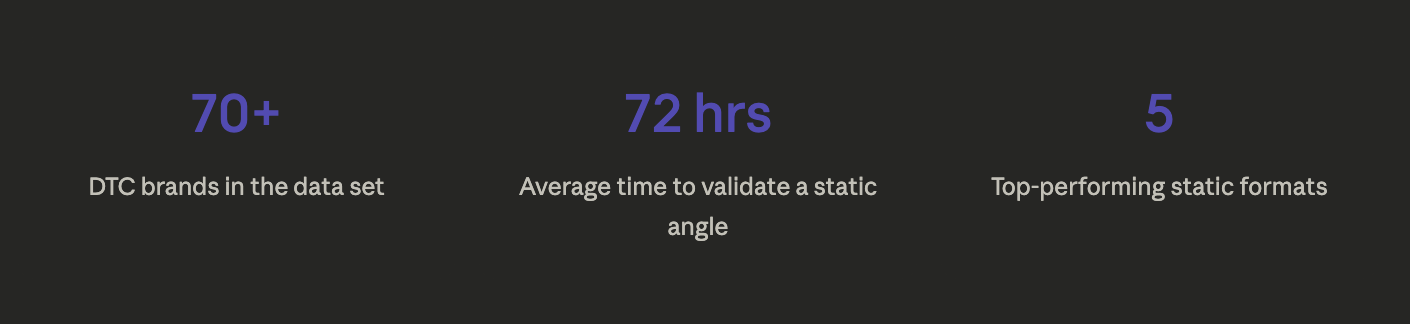
Across more than hundreds direct-to-consumer brands, one pattern keeps emerging: static image ads are quietly outperforming video in a significant share of campaigns, and most brand teams are not testing nearly enough of them. This guide breaks down the five formats working right now, explains why they work, and shows you how to build them into a repeatable creative testing process.
Why static ads still matter in a video-first landscape
Every platform algorithm, every creative agency pitch, and every industry trend piece seems to point in the same direction: video is king. And to be fair, video is a genuinely powerful format. But the data coming out of high-growth DTC brands tells a more nuanced story.
Static ads, single-image creatives with no motion are faster to produce, cheaper to test per iteration, and capable of validating a message angle within as little as 72 hours of live spend. For brands that later want to repurpose winning static concepts, tools like Image to Video AI can help turn high-performing visuals into scalable motion creatives without restarting the production process.
The brands scaling fastest right now are not choosing between static and video, they are using statics as the front end of their creative development process. This workflow often extends into AI video, where validated static ideas are transformed into short-form motion ads for higher engagement and platform reach. They find what resonates, then invest in video production behind proven concepts.
How to use statics inside a creative testing flywheel
Before diving into the formats themselves, it is worth understanding the strategic logic behind a static-first testing approach. The idea is simple: instead of spending significant production budget on video creatives before you know which messaging angles resonate with your audience, you run cheap and fast static tests first.
Once a static angle hits your performance benchmarks, whether that is a target cost per acquisition (CPA), click-through rate (CTR), or return on ad spend (ROAS), you have a validated concept worth investing in. At that point, scaling it into video makes sense because you already know the core hook works. This approach compresses your feedback loop and reduces wasted creative spend.
Scaling with Precision: Leveraging Admetrics for Performance
Creative testing is only as effective as the data behind it, and in 2026, "vibe-based" decision-making doesn't cut it. To truly optimize these static formats, high-growth brands use Admetrics as their central source of truth. By integrating Admetrics into your workflow, you can move beyond the surface-level metrics provided by ad managers and track the actual contribution margin of every individual image.
The platform allows you to tag specific creative elements—like a "checkerboard" layout versus an "anti-ad"—to see which visual DNA is actually driving long-term customer value. Because Admetrics synthesizes data across your entire tech stack, you can spot creative fatigue the moment your ROAS dips below your break-even point, allowing you to swap out "tired" statics for fresh iterations before your margins evaporate. It’s the difference between guessing which image looks better and knowing exactly which one paid for your morning espresso. Start your free demo now and discover scaling precision.
The 5 top-performing static ad formats right now
The anti-ad
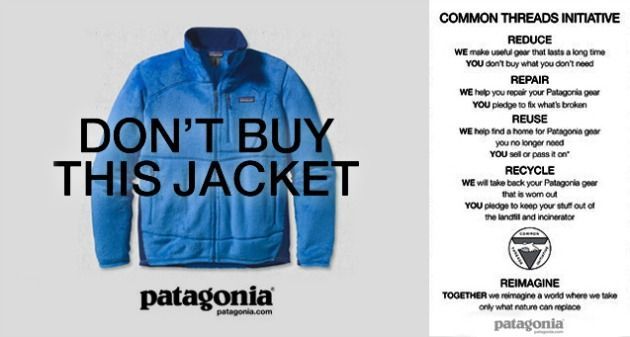
Most ads follow a predictable formula: polished product photography, a benefit-driven headline, and a branded call to action. The anti-ad deliberately subverts that formula. Instead of leading with aspiration, it leads with something the viewer does not expect, a bad review, a satirical testimonial, an awkward truth about the product category, or a candid admission.
The mechanism here is pattern disruption. When someone is scrolling a feed full of glossy brand messaging, an ad that looks like a complaint or a joke registers as something different and earns a second look. That initial hook generates curiosity-driven engagement, and the platform algorithm, particularly on Meta, interprets high engagement as a signal to push the creative further.
This format works especially well for cold audiences (people who have never interacted with your brand), because it builds rapport through perceived authenticity before asking for anything. It feels native to the feed rather than intrusive.
Best for: cold audience prospecting, brands with a strong POV or voice.
The one core idea

The brief for this format is deliberately constraining: if you had to communicate the single most important thing your product does in ten words or fewer, what would you say? That becomes the creative.
The mistake most brands make is trying to use one ad to do too many jobs , communicate the product story, list every feature, establish trust, and drive a purchase. The one core idea format rejects that entirely. It picks one message, expresses it as cleanly as possible, and supports it with visuals that are easy to process quickly.
Counterintuitively, the constraint makes the creative more effective. A viewer scrolling at speed can absorb a single sharp idea in a fraction of a second. They cannot process a cluttered ad at all. The more creative and unexpected the visual framing of that single idea, the better the stopping power.
Best for: new product launches, top-of-funnel awareness, retargeting with a clear USP
The clever one
This format uses humor, cultural references, or unconventional creative concepts to stop the scroll and earn genuine engagement. Think of it as a piece of content that happens to be an ad, something a person might actually share, comment on, or tag a friend in.
The key distinction here is that the creative concept itself is doing the work, not just the product claim. When an ad earns organic social behavior, shares, comments, saves, it generates two compounding effects. First, it signals to the algorithm that the content is worth amplifying. Second, those organic interactions bring your ad in front of people who were never in your paid targeting pool, effectively increasing your reach for free.
This reduces your effective CPM (cost per thousand impressions), meaning you get more reach for the same spend. That is a significant advantage in a competitive auction environment like Meta or TikTok.
Best for: brands with a distinctive tone, consumer goods with broad appeal, retention and remarketing
The checkerboard
The checkerboard is a four-panel grid layout that alternates between ad copy and product imagery. A typical arrangement might look like this: top-left has a headline, top-right has a product shot, bottom-left has a benefit callout, bottom-right has a lifestyle or usage image.
The reason this format performs well is information density. It delivers the visual richness of a carousel ad (a multi-image swipeable format) in a single static unit, which means your audience gets more context without requiring any interaction. The grid structure also guides the viewer's eye naturally across the entire creative, which increases time-on-ad, a metric that correlates strongly with downstream conversion.
For products that need to show multiple angles, demonstrate a transformation, or communicate more than one key benefit, the checkerboard solves the layout problem without making the creative feel cluttered. In many cases, a video editor is then used to repurpose these structured static layouts into motion-based creatives for paid social testing.
Best for: products with multiple benefits, skincare, supplements, apparel, home goods
The platform native

The goal of the platform native format is simple: make an ad that does not look like an ad. Instead of designing creatives that conform to traditional ad aesthetics, branded frames, polished typography, logo placement, this approach mimics the visual language of organic content on whatever platform the ad will run on.
The most effective way to execute this is to have designers create the creative directly inside the platform they are targeting, using that platform's native tools and design conventions. The result is an ad that feels like part of the feed rather than an interruption of it. Lower ad recognition means lower resistance, which translates to higher engagement and better conversion rates, particularly among audiences with high ad fatigue.
This format is especially effective on platforms like TikTok and Instagram Reels, where the gap between native content and polished ad content is most visible and most costly to brand performance.
Best for: any platform where ad fatigue is high, scaling campaigns with worn-out creative.
Key ecommerce and DTC advertising terms explained
CPM (cost per thousand impressions) The amount an advertiser pays for every 1,000 times their ad is shown. Lower CPMs mean you are reaching more people for the same spend. Organic engagement on ads can reduce effective CPM by expanding reach beyond your paid audience.
CPA (cost per acquisition) The total cost to acquire one paying customer through a paid channel. Calculated by dividing total ad spend by the number of purchases attributed to that campaign. A key efficiency metric for performance marketers.
CTR (click-through rate) The percentage of people who see an ad and click on it. Calculated as clicks divided by impressions. A higher CTR generally indicates that an ad's creative or messaging is resonating with the target audience.
ROAS (return on ad spend) Revenue generated for every dollar spent on advertising. A ROAS of 3x means you earned $3 in revenue for every $1 spent. ROAS is a core profitability metric for ecommerce advertising.
Cold audience People who have had no prior interaction with your brand, they have never visited your website, engaged with your content, or been exposed to your ads before. Reaching cold audiences is the top-of-funnel prospecting challenge for all growth marketers.
Creative testing / creative testing flywheel A structured process of systematically launching, measuring, and iterating on ad creatives to identify which messages, formats, and concepts perform best. A flywheel approach feeds winning insights back into the next round of production, compounding improvements over time.
Ad fatigue The decline in ad performance that occurs when an audience has been exposed to the same creative too many times. Engagement drops, CPMs rise, and conversion rates fall. Frequent creative refreshes and format diversification are the primary mitigations.
Meta (Facebook and Instagram ads) Meta's advertising platform, which covers Facebook and Instagram placements. It is one of the primary paid social channels for DTC and ecommerce brands due to its audience size, targeting capabilities, and shopping integrations.
Carousel ad An ad format that allows multiple images or videos to be displayed in a swipeable sequence within a single ad unit. Each card can have its own headline, description, and link. The checkerboard format delivers similar information density as a single static image.
Conclusion
The 2026 DTC landscape is noisier than ever, and while video will always have its place, the brands currently winning the efficiency game are the ones doubling down on static agility. Winning isn't about having the biggest production budget; it’s about having the fastest feedback loop.
By implementing these five high-performing formats and anchoring your creative strategy in the granular, contribution-level data of Admetrics, you transform your ad account from a cost center into a high-speed intelligence engine. Don't wait for a month-long video production cycle to tell you if a message resonates, test it today with a static, validate it with data, and scale with confidence. In a world obsessed with motion, sometimes the most effective way to stop the scroll is to simply stand still.
Frequently asked questions
Are static ads really better than video for DTC brands?
Not universally, but across a large sample of DTC brands, static ads consistently outperform video in a meaningful share of campaigns. More importantly, statics are faster and cheaper to test. The recommended approach is to use statics to validate messaging angles first, then scale proven concepts into video production.
How long does it take to validate a static ad angle?
With adequate spend behind the creative, most teams can get directional signal within 72 hours. Exact timelines depend on your daily budget, audience size, and the KPIs you are using to evaluate performance.
How many static formats should a brand be testing at once?
Most brands test far too few. A robust creative testing program typically runs three to five distinct format concepts simultaneously per campaign, with multiple variations within each format testing different messaging angles or visual approaches.
What platforms are static ads most effective on in 2026?
Meta (Facebook and Instagram feed placements) remains the strongest environment for static ads, particularly for cold audience prospecting. Pinterest and Google Display also continue to deliver strong results for static creative. TikTok is predominantly video-first, though native-style statics can perform in certain categories.
What makes an anti-ad different from a negative review ad?
A negative review ad uses an authentic customer complaint, usually to introduce a problem your product solves. An anti-ad is a broader category: it includes any creative that deliberately subverts expected ad conventions. That could be a bad review, but it could also be a satirical product description, an absurdist image, or a self-deprecating headline.
What image dimensions should I use for static ads on Meta?
For feed placements, 1080×1080px (1:1 square) and 1080×1350px (4:5 portrait) are the standard recommended sizes. Portrait formats typically get more screen real estate on mobile and can outperform square. Always check Meta's current ad specs, as these are updated periodically.
How do I reduce ad fatigue with static creatives?
The most effective strategies are: maintaining a regular cadence of new creative launches (at least weekly for high-spend accounts), rotating formats rather than refreshing only copy or color, and segmenting audiences so no single group sees the same creative too frequently. A structured creative testing flywheel makes this sustainable at scale.
Does the checkerboard format work for all product types?
It works best for products that have more than one key benefit or require both a product image and supporting context to drive conversion. It is particularly effective for skincare, supplements, food and beverage, home goods, and apparel. It is less suitable for single-feature products or highly abstract services where visual variety adds confusion rather than clarity.
What does "platform native" mean in practice for a creative team?
It means designing assets using the visual language and conventions of the target platform — not just exporting standard brand creative and placing it there. For Instagram, that might mean mimicking the look of a casual user post. For TikTok, it might mean using the platform's text overlays and aspect ratio. Some teams have designers create the asset directly within the platform's tools rather than in external design software.
How do I know when to move a winning static concept into video production?
The clearest signal is when a static creative has hit your target CPA or ROAS threshold consistently over a meaningful spend level — typically at least $1,000–$2,000 in total spend, though this varies by category. At that point, you have validated that the underlying hook and messaging angle resonates, which gives your video production team a proven creative brief to work from rather than starting from scratch.
Static ads are not a fallback for teams that cannot afford video production. They are a strategic tool for validating creative concepts faster, cheaper, and with less risk. The brands gaining the most ground in 2026 are the ones treating statics as the first chapter of their creative process — not an afterthought.