Are your email campaigns actually driving revenue, or are they just sitting in the inbox? For direct-to-consumer (DTC) brands, getting a customer to open an email is only half the battle. The real profit lies in the click. Understanding Click Rate Statistics 2026 is essential if you want to turn passive readers into active buyers and scale your business profitably.
In the fast-changing landscape of 2026, privacy updates from Apple and Google have made open rates less reliable. As a result, click-through rate (CTR) has become the gold standard for measuring email engagement and intent. In this guide, we will break down the most important Click Rate Statistics 2026, show you what top-performing brands are doing differently, and provide actionable tips to boost your own metrics.
Why Click Rate Statistics 2026 Matter for DTC Brands
A click is a direct signal of customer intent. When someone clicks a link in your email, they are actively considering a purchase. Relying solely on open rates is dangerous in 2026, as bot opens and privacy protections can artificially inflate those numbers.
By tracking your CTR, you can measure exactly how well your content, offers, and product recommendations resonate with your audience. Furthermore, higher click rates lead to higher conversion rates, which ultimately lowers your overall customer acquisition cost (CAC). If you ignore your click metrics, you risk wasting money on campaigns that fail to drive bottom-line growth.
The Benchmark: Average vs. Top 10% Performers
To understand your current performance, you need to know how you stack up against the rest of the industry. According to recent 2026 data from leading platforms like Klaviyo and Brevo, the gap between average brands and top performers is massive.
Here is a look at standard ecommerce and DTC benchmarks for 2026:
- Average Campaign CTR: 1.69% – 2.27%
- Top 10% Campaign CTR: 5.22%+
- Average Flow (Automated) CTR: 5.58% – 7.39%
- Top 10% Flow CTR: 10.0%+
If your standard promotional campaigns are hovering around a 1% click rate, your messaging is likely missing the mark. Top-performing DTC brands achieve double or triple the average CTR by relying heavily on segmentation, personalization, and AI-driven recommendations.
The Power of Automated Flows
If there is one major takeaway from Click Rate Statistics 2026, it is that automated email flows are the true revenue engine for ecommerce.
While standard newsletter blasts account for the vast majority of email volume, they generate relatively low engagement. On the other hand, automated flows—such as welcome series, abandoned carts, and post-purchase follow-ups—deliver over three times higher click rates than standard campaigns.
Key Automation Stats for 2026:
- Abandoned Cart Emails: Average click rates reach between 6% and 9%, with top performers hitting 12% to 18%.
- Welcome Series: These highly anticipated emails easily generate 5% to 8% click rates.
- AI Recommendations: Adding AI-powered product recommendations inside your emails lifts average click rates to 3.75%, proving that deep personalization drives action.
How to Improve Your Email Click Rates
Knowing the Click Rate Statistics 2026 is helpful, but taking action is what actually drives profitable growth. Here are three proven strategies to improve your metrics today:
- One Email, One Goal: Do not overwhelm your subscribers with multiple offers. Every email should have a single, focused call-to-action (CTA).
- Optimize for Mobile: Over 60% of emails are opened on mobile devices. Ensure your CTA buttons are large, highly visible, and easy to tap with a thumb.
- Segment Ruthlessly: Stop sending the same message to your entire list. Segment your audience based on past purchase behavior, browsing history, and engagement levels. Segmented promotional emails generate significantly higher CTRs than generic mass blasts.
How to Use Admetrics.io for Profitable Growth
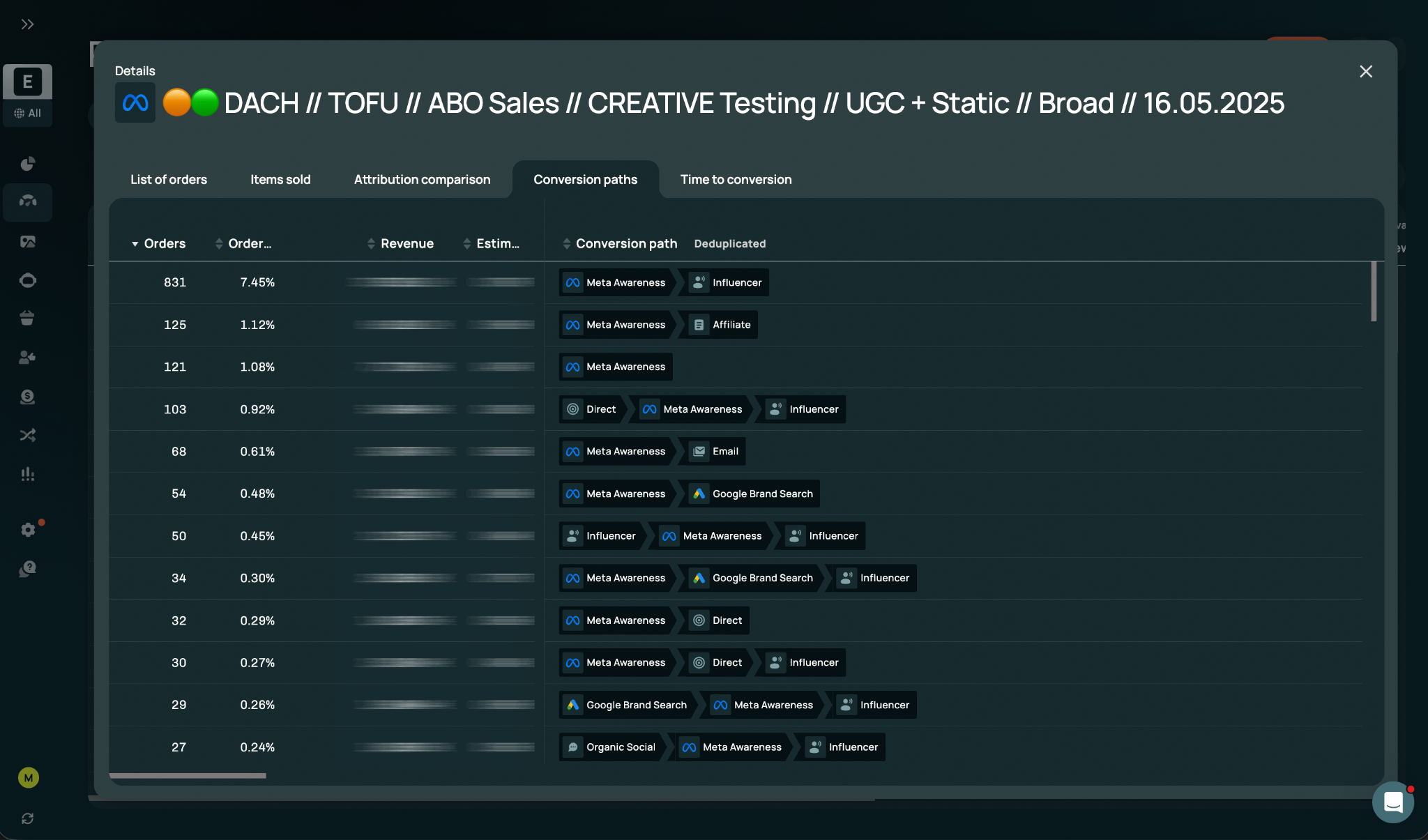
To truly scale profitably, you must connect your email performance directly to your paid acquisition efforts. To drive profitable growth using Admetrics.io, you need to transition from relying on fragmented, platform-reported data to using it as a unified "mission control" for your e-commerce operations. Start by connecting your ad platforms and Shopify store to calculate your true Marketing Efficiency Ratio (MER) and Customer Acquisition Cost (CAC) across the entire customer journey, cutting through the attribution noise.
You can instantly recover lost signals from privacy updates by enabling its Server-to-Server Data Pushback, which sends enriched conversion data directly back to Meta, Google, and TikTok to optimize their bidding algorithms. Finally, run your budget allocation through its AI-driven Marketing Mix Modeling (MMM) and use the Bayesian experimentation engine to test creatives and landing pages; this allows you to stop guessing which ads work and start aggressively scaling the specific campaigns that deliver verified, incremental profit. Book a demo and start your free trial here.
Frequently Asked Questions (FAQ)
What is a good email click-through rate (CTR) in 2026?
For DTC and ecommerce brands, a good CTR for standard promotional campaigns is between 2% and 3.5%. However, top-performing brands regularly achieve CTRs above 5%. For automated flows like abandoned carts, you should aim for a CTR of 6% or higher.
Why is my email click rate so low?
Low click rates usually stem from a lack of relevance or poor email design. If you send generic mass blasts, bury your call-to-action at the bottom of the email, or fail to optimize for mobile devices, your subscribers will open the email but quickly close it without clicking.
Why should I track click rates instead of open rates?
Due to privacy updates like Apple's Mail Privacy Protection (MPP), open rates have become artificially inflated and unreliable. Click rates are a much more accurate measure of genuine user engagement and purchase intent.
How do automated flows impact click rates?
Automated flows are triggered by specific customer behaviors, making them highly relevant and timely. Because the customer is already primed to receive the message (e.g., after abandoning a cart), automated flows typically see click rates that are 3 to 4 times higher than standard scheduled campaigns.