In the fiercely competitive DTC and ecommerce ecosystem, shipping and returns aren't just operations—they're experiences. If a slow delivery or clunky return process leaves your customers frustrated, no amount of slick UX or Instagram-worthy packaging will save you. This post dives into seven cutting-edge logistics solutions that streamline operations, delight customers, and use analytics platforms like Admetrics to reveal what actually moves the needle.
Why Shipping & Returns Are a Make-or-Break Factor for DTC Brands
Modern consumers demand speed, simplicity, and transparency—especially when it comes to fulfillment. Whether you're shipping artisanal olive oil or high-tech wearables, your post-purchase experience impacts your CAC, LTV, and even your brand sentiment on platforms like Trustpilot. A great return policy isn't just a cost—it's a conversion tool.
Poor execution, on the other hand, erodes trust and contributes to churn. But the good news? Tech has caught up. Today’s tools integrate seamlessly, automating tasks and surfacing insights that let you iterate quickly.
Tool #1: ShipBob — Fulfillment Made Scalable
What it is: A third-party logistics (3PL) provider that integrates directly with Shopify, BigCommerce, and WooCommerce.
Why it’s great:
- Offers 2-day shipping across the U.S.
- Distributed warehouse network for faster delivery
- Real-time inventory and shipping analytics
How to use it:
Use ShipBob’s dashboard to see delivery times by region, monitor fulfillment accuracy, and optimize inventory placement across their fulfillment centers.
Tool #2: Loop Returns — Streamlined Returns Automation
What it is: A returns platform designed specifically for Shopify merchants.
Why it’s great:
- Offers exchange-first flows to preserve revenue
- Easy integration with major carriers
- Auto-routes customers to the fastest warehouse
Use case:
Brands using Loop have reported up to 40% fewer return-related support tickets and a notable drop in cart abandonment thanks to a visible and friendly return experience.
Tool #3: Returnly — Credit-First Return Experiences
What it is: A solution from Affirm that gives customers instant store credit for returns.
What stands out:
- Reduces refund wait times
- Encourages repurchasing instead of refunding
- Ties directly into your ecommerce platform
Pro tip:
Use Returnly's reporting tools to spot high-return products and address quality or expectation mismatches upstream in your marketing.
Tool #4: EasyPost — Shipping API Integration for Developers
What it is: A shipping API that gives full control to dev teams.
Why it’s powerful:
- Supports 100+ carriers
- Real-time rate shopping
- Fully programmable label printing and tracking
Best for:
Brands with in-house engineering teams that want granular control without building from scratch.
Tool #5: AfterShip — Post-Purchase Tracking That Converts
What it is: A branded tracking and notifications platform.
Why use it:
- Keeps customers updated and reduces “Where’s my order?” emails
- Offers upsells and cross-sells on the tracking page
- Integrates with 900+ carriers
Added bonus:
AfterShip’s dashboard lets you compare delivery KPIs across carriers—use that to negotiate better SLAs or reallocate shipments.
Tool #6: Narvar — Proactive Customer Experience Engine
What it is: A CX platform focused on the entire post-purchase journey.
What’s included:
- Delivery notifications
- Return automation
- Customer feedback collection
Why it matters:
Narvar customers see higher repeat rates and lower churn, particularly in fashion and lifestyle verticals where fit and satisfaction can vary.
Tool #7: Admetrics — The Analytics Powerhouse for Customer Insights
What it is: A marketing analytics platform with specific capabilities for ecommerce and DTC brands.
How it helps with shipping and returns:
- Tracks return rate by SKU, campaign, and cohort
- Measures customer sentiment pre- and post-return
- Integrates with Shopify, Meta Ads, Google Ads, and email tools
Real-world impact:
A DTC apparel brand using Admetrics noticed a spike in returns from Meta campaigns targeting colder regions. Turns out the product description lacked warmth specs. A quick tweak in messaging reduced returns by 21%.
Using Admetrics to Track Customer Happiness and Return Trends
You can’t optimize what you don’t measure. Admetrics bridges the gap between marketing, logistics, and customer satisfaction, equipping ecommerce teams with actionable insights and real-time analytics. Here’s how:
• Customer satisfaction
Admetrics integrates first‑party and server‑side tracking to collect data across touchpoints—including delivery updates and return workflows—while respecting user privacy standards like GDPR and CCPA.
• A/B testing packaging, speed, messaging
Thanks to Admetrics’ experimentation engine—including Bayesian-powered variant testing—you can trial changes in packaging, delivery speed, or notification tone. Then observe the downstream impact on returns, repeat orders, and sentiment responses.
• Cohort-level analytics by campaign or SKU
You can tie returns and happiness metrics back to specific campaigns, products, regions, or cohorts. For example, compare return rates of customers who purchased via a summer Meta campaign vs. those from a Q4 TikTok push. You’ll get a clear view of what creative, audience, or logistics combos are working—or failing.
In short: Admetrics doesn’t just measure sales—it monitors the full journey from impression to profits. By combining real-time attribution, delivery tracking, sentiment analysis, and experimental testing, the platform gives you a unified, data-driven way to reduce returns, increase satisfaction, and grow smarter. Start your free trial and unique insights based on accurate data.
Building Your Post-Purchase Tech Stack
Here’s a simplified matrix to help choose the right combo based on your needs:
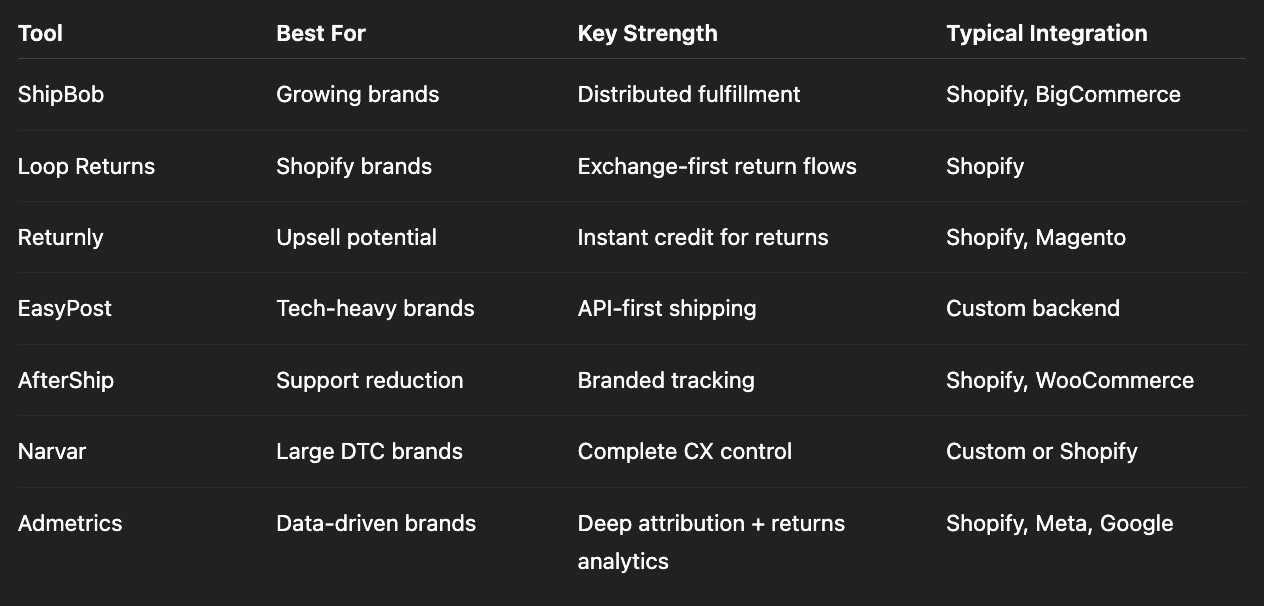
Optimize What Matters Most
In the DTC world, conversion doesn’t end at checkout—it continues through the unboxing, the delivery, and the return experience. These seven tools make it easier to manage that complexity while delighting your customers. With platforms like Admetrics offering granular analytics, you're no longer flying blind. Instead, you’re steering every shipment and return toward retention, not just resolution.
So, whether you're scaling up or tightening margins, now’s the time to treat your logistics stack like you would your acquisition funnel—strategically and backed by data.
Frequently Asked Questions
What’s the best tool for reducing return rates?
Loop and Returnly are excellent for this. They encourage exchanges and use pre-filled forms that reduce friction.
How can I track which marketing campaigns lead to higher returns?
Admetrics allows you to view return rates at the campaign and creative level.
Do faster deliveries always reduce returns?
Not always. While speed boosts satisfaction, return rates often hinge more on product fit, accuracy, and description clarity.
Can I automate return shipping label generation?
Yes, Loop Returns and EasyPost both offer automated label generation.
Is it worth branding my tracking page?
Definitely. AfterShip shows that branded tracking increases repeat purchases and reduces support inquiries.
What metrics should I track to evaluate shipping performance?
Delivery promise accuracy, % of packages delivered late, and NPS segmented by carrier or fulfillment method.