If you thought corporate drama was all boardroom PowerPoints and polite press releases, think again. The e-commerce giants have entered a new kind of arms race, one that feels less like a dignified industry competition and more like two toddlers fighting over who gets to play with the shiny new toy - AI shopping agents.
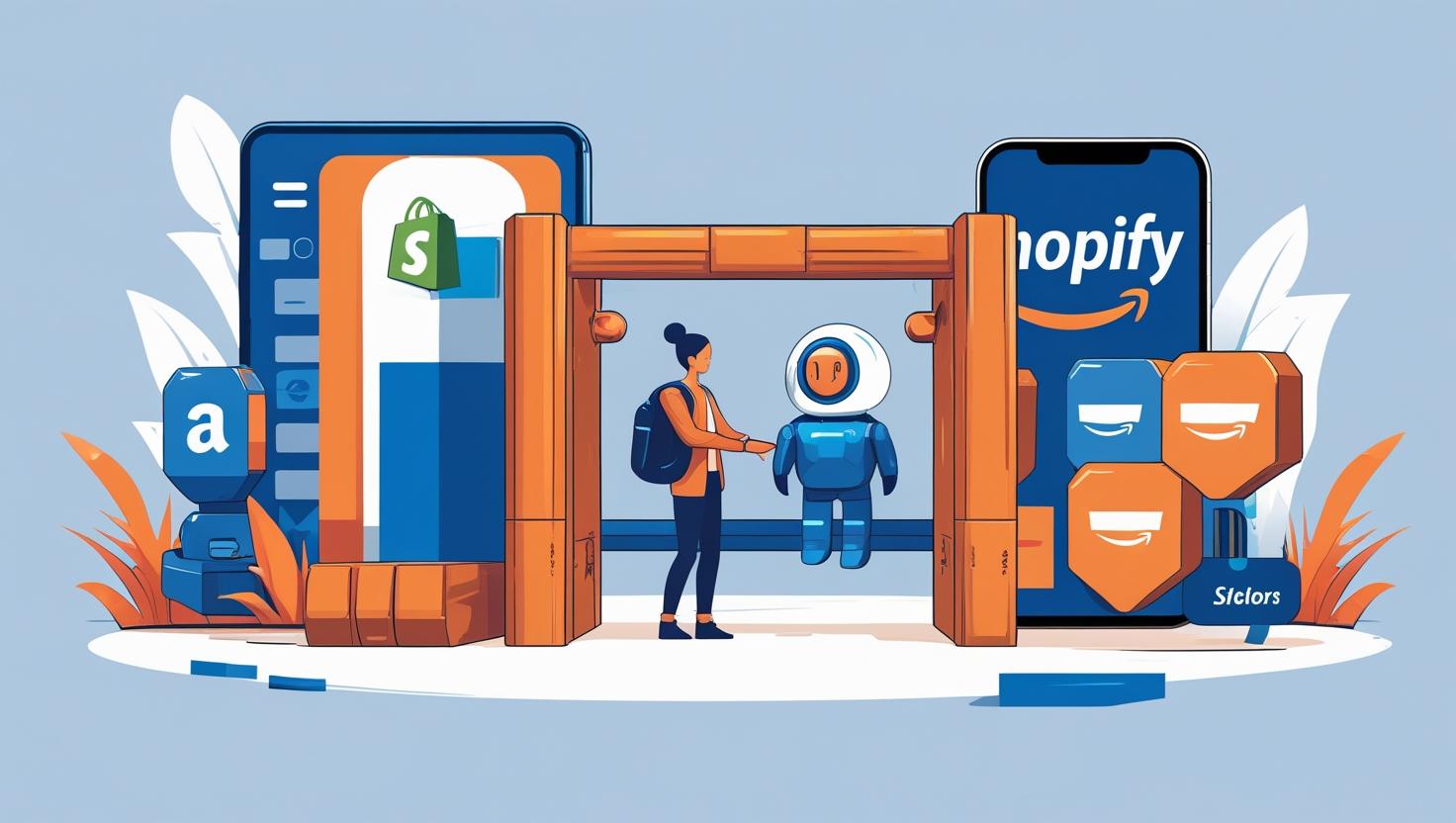
Last week, Shopify quietly updated its robots.txt file, the digital gatekeeper that tells search engines and bots where they can and can’t go on a website — with a passive-aggressive “NO AI AGENTS ALLOWED” sign. Almost simultaneously, Amazon decided to block Google’s shopping agent outright.
On the surface, these are just small technical changes. But in reality, they mark the opening shots in a major platform war — one that could redefine how online shopping works, who controls it, and who gets left behind.
What Actually Happened (And Why It Matters)
The first volley came from Shopify. SEO specialist Johnny Herge noticed the company’s updated robots.txt, which now explicitly tells AI shopping agents to take a hike. The language makes it clear:
- Automated scraping? Nope.
- “Buy-for-me” agents? Not here.
- Automated checkout flows? Only if a human’s clicking the buttons.
Shopify’s technical advisor Ilya Grigorik insisted this wasn’t a new restriction — just a “formalization” of their existing stance. Which, if you’ve been around tech PR long enough, is corporate for: We’ve been doing this for a while, but now we’re telling you so you can’t say we blindsided you. It’s like when a friend says, “I’m not mad, I’m just clarifying boundaries,” right after you borrowed their car without asking.
Meanwhile, Amazon didn’t even bother with subtlety. They slammed the door on Google’s shopping agent. This was spotted by Marketplace Pulse founder Juozas Kaziukėnas, whose commentary sums it up perfectly:
“No one wants to be where the AI agents are shopping at – everyone wants to build AI agents that do the shopping.”
Translation: Platforms don’t want AI middlemen; they want to be the AI middlemen.
The Real Drama Behind the Drama
To understand the sudden defensiveness, you have to think like an e-commerce platform.
For years, companies like Amazon and Shopify have poured billions into:
- Building brand identity and customer loyalty.
- Optimizing “conversion funnels” so shoppers end up buying more.
- Hoarding first-party data like it’s liquid gold.
AI shopping agents threaten all of that.
Imagine you’ve spent years crafting the perfect online store — personalized recommendations, clever upsells, loyalty perks — and then along comes an AI that treats your site like a vending machine. It scans for price, shipping time, and reviews, buys what’s needed, and moves on. No brand love. No browsing. No impulse buys. From the platform’s perspective, this isn’t just losing a sale — it’s losing the relationship. And that relationship is the whole game.
Amazon’s Slightly Diabolical Strategy
Amazon’s approach here is almost Machiavellian.
Step 1: Block Google’s AI shopping agent so their customers can’t use it to comparison shop.
Step 2: Build their own AI shopping features (“Buy for Me” and similar tools) so customers get automation without leaving Amazon’s ecosystem.
It’s a classic walled-garden strategy:
- Keep competitors’ tools out.
- Develop your own tool to do the same thing.
- Leverage your massive customer base to make it the default.
It’s the tech version of saying, “You can’t use their dessert — but don’t worry, we’ve got a dessert for you right here.”
Why This Actually Matters for Sellers
For merchants — especially small to mid-sized businesses — this isn’t just corporate soap opera. It’s a signal that the future of online selling might be more fragmented than ever.
In a world where each platform blocks rival AI agents and builds its own, we’re heading toward:
- Platform-specific AI shopping systems — each with its own rules, integrations, and quirks.
- Increased operational complexity — especially for sellers managing inventory across multiple marketplaces.
- More dependence on platform policies — which can change overnight.
If AI agents were universal, they could compare prices, shipping times, and seller reputations across the web in seconds. That would be amazing for customers and potentially fair for sellers. But if we end up with balkanized AI ecosystems, it’ll be like needing a different shopping cart for every store you visit.
The Facebook Shops Déjà Vu
This whole situation feels a bit like Facebook Shops circa 2020. Remember when Facebook and Instagram wanted all transactions to happen inside their apps? Sellers were told it was the future. It wasn’t. The experiment flopped because sellers hated losing control and customers didn’t see the point.
But AI shopping is a bigger shift than in-app checkout ever was. If an AI can make purchasing decisions entirely on its own, platforms lose not just the checkout — but the shopper’s attention altogether. That’s a much deeper wound.
Timeline: How the AI Shopping Platform Wars Escalated
Mid-2023 — Google’s “Shopping Agent” quietly rolls out testing
- Google begins experimenting with AI-powered shopping assistants that can search, compare, and buy products on behalf of users.
- The idea: integrate purchasing into Search and Bard, making Google not just a guide to stores — but the store navigator and cashier.
Late 2023 — Early seller skepticism emerges
- Merchants and marketplaces begin voicing concerns about losing direct relationships with customers.
- AI agents are seen as a threat to carefully built brand experiences.
February 2024 — Amazon tests “Buy for Me”
- Amazon quietly experiments with AI-assisted ordering features for select users.
- Functionality lets shoppers hand off the decision-making to AI, cementing Amazon as both platform and agent.
June 2024 — First quiet blocks of AI agents
- A few niche marketplaces start tweaking their robots.txt files to limit scraping and automated purchasing.
- These changes go mostly unnoticed outside of SEO and developer circles.
August 2024 — Shopify draws the line
- SEO specialist Johnny Herge spots Shopify’s updated robots.txt, explicitly banning AI shopping agents from checkout flows.
- Shopify’s Ilya Grigorik says it’s not new policy, just a “formalization” — but sellers see it as the start of a broader crackdown.
August 2024 — Amazon shuts Google out
- Marketplace Pulse’s Juozas Kaziukėnas notices Amazon has blocked Google’s shopping agent entirely.
- Amazon continues developing its own AI shopping tools, signaling it intends to be the only AI agent in its own marketplace.
Current — Diverging strategies emerge
- Shopify & Amazon: Block rivals, build their own AI tools.
- Perplexity & ChatGPT: Seek partnerships and negotiated access to product data.
- Smaller platforms: Mostly watching and waiting, deciding whether to wall off AI agents or work with them.
Who’s Playing It Smarter
Not every platform is going full fortress mode.
Perplexity and ChatGPT, for example, are taking a partnership approach — striking deals with platforms to allow controlled access for AI shopping. That’s more like installing a really good security system but still letting friends visit, rather than building a moat and raising the drawbridge.
If history is any guide, the open-and-collaborate approach often leads to faster adoption and better long-term customer trust. But it requires being comfortable with less control, which is not exactly Big Tech’s strong suit.
Actionable To-Dos for DTC Brands in the AI Shopping Wars
Fortify Your Direct Sales Channels
- Own your audience: Double down on collecting first-party customer data via email, SMS, and loyalty programs.
- Push direct traffic: Invest in SEO, content marketing, and direct social ads that send people to your site, not just your marketplace listings.
- Offer exclusives: Give customers reasons to buy directly — exclusive products, bundles, or perks unavailable on Amazon/Shopify marketplaces.
Audit Your Platform Dependencies
- Make a platform reliance map: List all the sales channels you depend on, and note what percentage of revenue each drives.
- Identify AI risk zones: Which channels are likely to block outside AI agents or force you into proprietary AI tools?
- Develop contingency plans for high-risk platforms so you’re not caught off guard if they lock down further.
Prepare for Platform-Specific AI Rules
- Assign someone (or yourself) to monitor platform developer updates — especially changes to robots.txt, API policies, and checkout flows.
- Keep your product data clean and structured so it can integrate smoothly with multiple AI tools, even if they all have different formats.
- Build a “universal” product feed that can be adapted quickly for different AI shopping systems.
Experiment With AI Partnerships Early
- Explore integrations with open AI assistants like ChatGPT or Perplexity where possible.
- Negotiate data-sharing agreements that let AI agents access your catalog but maintain attribution and links back to your store.
- Treat these early partnerships as learning labs — see how customers respond and how it impacts conversions.
Create AI-Friendly Brand Content
- Develop structured, machine-readable product descriptions that are concise but keyword-rich.
- Use clear, standardized spec tables so AI can parse features and benefits quickly.
- Invest in high-quality, multi-angle images — AI tools increasingly rely on visual data for recommendations.
Maintain Multi-Channel Resilience
- Avoid over-reliance on a single marketplace’s AI ecosystem.
- Distribute inventory across 2–3 marketplaces + your own store so you’re insulated if one platform’s AI policy cuts your visibility.
- If feasible, add niche platforms where AI adoption may be slower but loyalty is stronger.
Double Down on Customer Loyalty
- Use subscription models or membership perks to lock in recurring revenue that AI shopping agents can’t easily replace.
- Personalize follow-ups via email/SMS after each purchase to strengthen direct bonds.
- Build a community space (private Facebook group, Discord, or branded forum) to keep engagement high outside of transactions.
Track AI-Driven Changes in Buyer Behavior
- Monitor shifts in traffic sources — are AI referrers showing up in your analytics?
- Watch for reduced browsing behavior — AI shopping might bring more “just-buy-it” customers who skip exploration.
- A/B test your checkout and upsells to adapt to shorter decision cycles. Learn more about marketing tactics and discover compelling examples.
The Bottom Line
Here’s what is really going on:
- Shopify and Amazon aren’t afraid of AI shopping in principle.
- They’re afraid of AI shopping they don’t control.
- They’re betting they can block the competition’s tools long enough to build their own and make them the standard.
For sellers, the takeaway is clear:
- Expect fragmentation. Selling across platforms will mean dealing with multiple, incompatible AI shopping rules.
- Invest in direct relationships. The more customers you can reach without relying entirely on a platform, the safer you are.
- Stay adaptable. AI shopping is still in its early innings — today’s blocked agent could be tomorrow’s required integration.
The robots might be getting smarter at buying things, but the human instinct to guard territory? That’s not going away anytime soon. And when billion-dollar companies feel their turf threatened, the results are always… entertaining.
FAQs for AI Shopping Platform Wars
FAQ 1: Why did Shopify and Amazon recently update their robots.txt files?
Both e-commerce giants updated their robots.txt files to restrict or outright block third-party AI shopping agents (like Google’s shopping agent). They made these technical updates to prevent outside AI bots from scraping their proprietary product data and executing automated checkout flows, which bypasses the platforms' own customer experiences.
FAQ 2: What is the difference between how Shopify and Amazon handled the blocking of AI agents?
Shopify took a slightly more passive-aggressive approach, adding explicit language prohibiting automated "buy-for-me" scraping unless a human clicks the final checkout buttons. They framed this as a "formalization" of existing boundaries. Amazon, on the other hand, took a direct and aggressive route by completely slamming the door on Google’s shopping agent and other AI bots without subtlety.
FAQ 3: What is the underlying reason e-commerce platforms are afraid of third-party AI shopping agents?
Platforms invest billions of dollars into building brand loyalty, optimizing conversion funnels, and collecting first-party customer data. Third-party AI agents threaten this ecosystem by acting as automated middlemen—finding the best price, checking out automatically, and removing the customer's direct interaction with the storefront. To the platforms, this means losing the customer relationship entirely.
FAQ 4: How does Amazon's "Buy for Me" feature tie into their strategy of blocking Google?
Amazon is employing a classic "walled-garden" strategy. By blocking Google's agent, they prevent customers from using outside tools to comparison shop. Simultaneously, Amazon is developing its own native AI shopping tools (like "Buy for Me"). This ensures customers get the convenience of AI automation, but they are forced to stay strictly within Amazon's ecosystem to use it.
FAQ 5: Why is the AI shopping platform war compared to the "Facebook Shops" initiative of 2020?
The situation is reminiscent of Facebook Shops because, in 2020, Facebook tried to force all e-commerce transactions to happen inside its own app, an experiment that largely failed because sellers hated losing control of their data. However, the AI shift is an even bigger threat. If an AI makes purchasing decisions entirely on its own, platforms and sellers lose not just the checkout data, but the shopper’s attention and browsing phase altogether.
FAQ 6: What are the potential negative impacts of fragmented AI shopping systems on independent sellers?
If every major platform blocks universal AI agents and builds its own proprietary tools, sellers will face massive market fragmentation. They will have to navigate platform-specific AI rules, deal with increased operational complexity in managing inventory and product feeds across different walled gardens, and become highly dependent on sudden platform policy changes.
FAQ 7: How are AI companies like Perplexity and ChatGPT approaching the e-commerce trend differently than Amazon?
Instead of building walled gardens, AI platforms like Perplexity and OpenAI (ChatGPT) are seeking partnerships and negotiated access. They are trying to strike deals with platforms to allow controlled access to product data, functioning more like invited guests. This open-and-collaborate approach often fosters faster adoption and better long-term trust, though it requires platforms to surrender some control.
FAQ 8: What actionable steps should DTC brands take to fortify their direct sales channels against these AI restrictions?
Direct-to-Consumer (DTC) brands should focus heavily on owning their audience. This means investing in collecting first-party data (via email, SMS, and loyalty programs), driving direct traffic through SEO and content marketing, and offering exclusive products or bundles on their own sites that are completely unavailable on giant marketplaces like Amazon.
FAQ 9: How should sellers prepare their product data for the evolving AI shopping landscape?
Sellers must ensure their product data is highly structured and machine-readable. This includes writing concise, keyword-rich descriptions, using standardized specification tables for easy parsing by AI, and maintaining high-quality, multi-angle imagery. Sellers should also aim to build a "universal" product feed that can be quickly adapted to comply with the different formatting rules of various AI systems.
FAQ 10: Why is building customer loyalty and community more important than ever in the age of AI shopping agents?
As AI shopping agents focus purely on utility—scanning for price, shipping speed, and reviews—they strip away the emotional elements of browsing and impulse buying. To counteract this, brands must build strong communities (via private groups, memberships, and personalized follow-ups) and subscription models to secure recurring revenue and brand love that an automated bot cannot replicate or easily redirect.