Customer Lifetime Value for Fitness Brands turns high pressure media decisions into a finance aligned growth plan. It forces every conversation about Meta, Google, and TikTok to move beyond short term ROAS and into payback, margin, and retention.
In fitness DTC, the first purchase rarely tells the full story. A customer might start with a starter bundle, then reorder, add accessories, or upgrade into a subscription. Meanwhile, CAC can swing fast due to seasonality, competitor bidding, and promotion heavy periods.
When teams rely on last click reporting or platform ROAS alone, they often scale the cheapest first order. However, those customers may churn quickly or return more products. Customer Lifetime Value for Fitness Brands connects acquisition to what happens after the click, including repeat purchase cadence, churn, refunds, discount depth, and contribution margin.
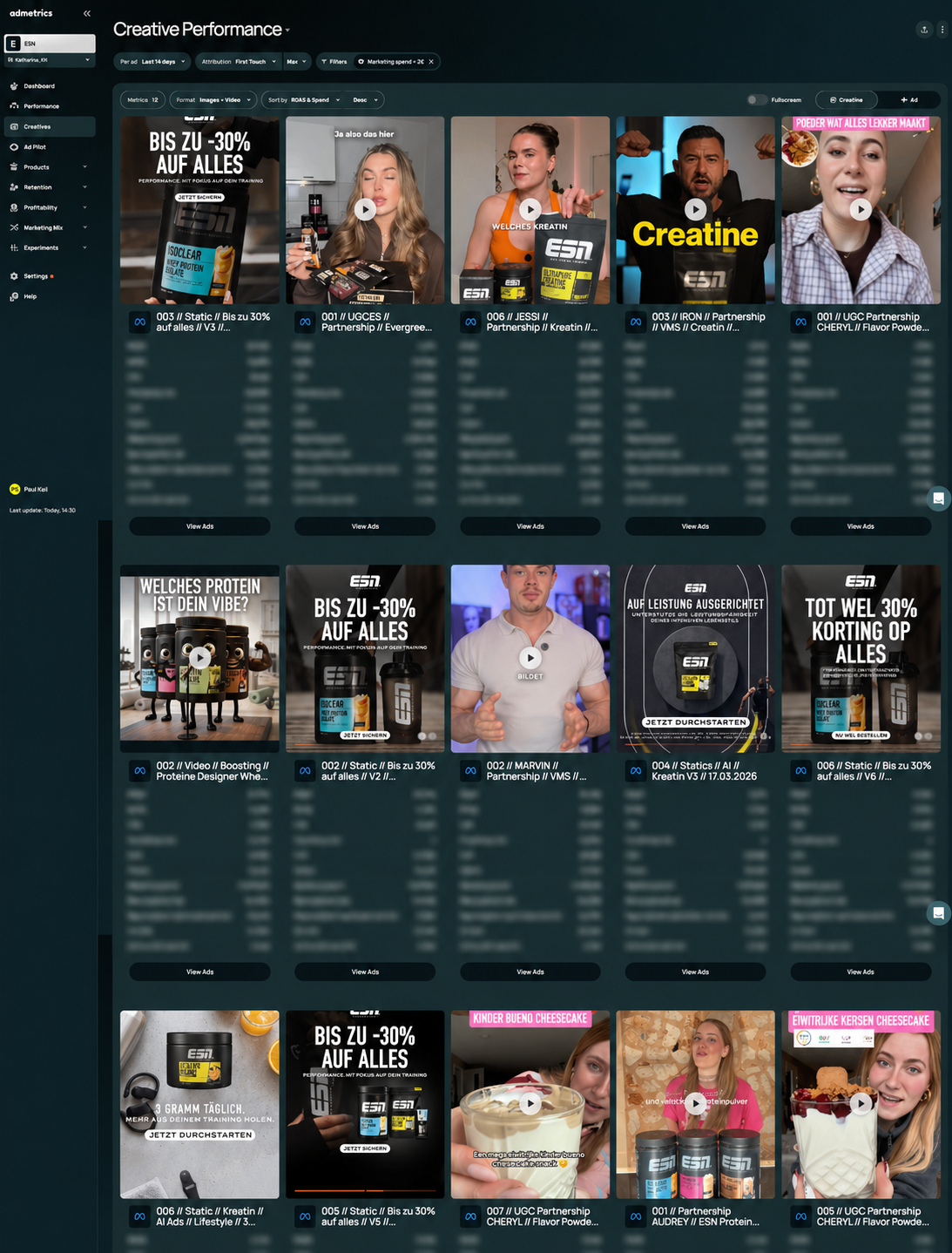
What Is Customer Lifetime Value for Fitness Brands
Customer Lifetime Value for Fitness Brands estimates the total value a customer generates across their relationship with your brand. In practice, it helps you answer one question: can you scale acquisition while staying profitable after costs and churn?
To make CLV actionable, focus on contribution margin, not revenue. Therefore, include factors like returns, shipping, payment fees, customer support, and discounting.
The CLV formula most teams can operationalize
Most brands start with a simple model, then improve it over time.
- Average order value
- Purchase frequency within a set window like 60 or 90 days
- Gross margin percentage
- Retention period or subscription duration
- Adjustments for refunds, returns, and discount depth
Once you standardize this, you can compare cohorts by channel, offer, and first product purchased.
Why Customer Lifetime Value for Fitness Brands beats short term ROAS
ROAS is a useful diagnostic, but it has blind spots. It often rewards demand capture and last click conversions, even if those customers never buy again.
Customer Lifetime Value for Fitness Brands changes the decision frame. Instead of asking, "Did this campaign hit target ROAS today?" you ask, "Did this campaign acquire customers with strong payback and durable margins?" As a result, budget allocation becomes more stable and more profitable.
The KPIs CLV connects into one operating view
CLV becomes powerful because it ties together the metrics your leadership team already tracks.
- CAC: how much you pay to acquire a customer
- LTV: what that customer returns over time
- LTV to CAC ratio: a quick health check for scaling
- Payback period: how long it takes to recover CAC from contribution margin
- Conversion rate: useful for diagnosing funnel changes, but not sufficient for profitability
A common scaling guardrail for many DTC models is targeting an LTV to CAC ratio above 3:1. That number varies by cash flow, inventory cycles, and risk tolerance. Still, it gives teams a shared baseline for decisions.
Who should prioritize Customer Lifetime Value for Fitness Brands
If you own budget allocation across Meta, Google, and TikTok, you should prioritize Customer Lifetime Value for Fitness Brands. It turns performance marketing from a weekly ROAS debate into an investment plan with clear payback periods.
CMOs and growth leads benefit when they balance revenue targets with profitability. Competitive auctions, influencer driven spikes, and heavy promotions can raise CAC while lowering customer quality. Therefore, CLV helps you set guardrails before volume hides the damage.
Performance marketers also win because CLV improves daily execution. You can rank campaigns by downstream value, not just CPA. In addition, you can spot creative concepts that attract repeat buyers versus impulse buyers.
Getting started: a practical CLV setup for fitness DTC
Start simple, then tighten accuracy as you learn. You want a model you can trust and use every week.
Step 1: Pull the right data
Aim for 12 to 24 months of data if possible. If you scale fast, even 6 to 12 months can work for an initial model.
Collect:
- Customer ID and first purchase date
- Orders, refunds, and returns
- COGS and gross margin inputs
- Shipping and fulfillment costs
- Subscription status and churn events
- Acquisition source, campaign, and creative metadata
Step 2: Segment cohorts that behave differently
Fitness brands often have distinct customer paths. So segment early.
Useful segments include:
- One time buyers vs subscribers
- First product purchased like starter kit, subscription, accessory
- Offer type like full price vs discount vs bundle
- Channel and platform like Meta, Google, TikTok
This is where Customer Lifetime Value for Fitness Brands becomes actionable. Otherwise, you average away the signal.
Step 3: Set CAC targets using payback and margin
CAC targets should reflect your economics, not platform benchmarks.
Use this workflow:
- Define your target payback window like 30, 60, or 90 days
- Calculate contribution margin within that window
- Set a CAC cap that keeps payback inside the window
- Track LTV to CAC by cohort to validate scaling
If you run a subscription heavy business, you can often accept a longer payback. However, you still need churn and refund assumptions grounded in data.
Step 4: Make CLV usable in media buying
If CLV stays in a spreadsheet, it rarely changes outcomes. Instead, bring it into execution.
- Add cohort CLV to weekly performance reporting
- Compare creative tests using predicted LTV, not only CPA
- Push value signals back to ad platforms where possible
This helps optimization favor customers who stick, not just customers who convert once.
When to measure Customer Lifetime Value for Fitness Brands
Measure on a cadence that matches how quickly your business changes.
Early signal: 7 to 14 days
You can estimate predicted LTV from early behaviors like second purchase rate, onboarding engagement, or subscription activation. It will be imperfect. Still, it lets you reallocate budget before wasted spend compounds.
Operational checkpoints: 30 and 60 days
By 30 to 60 days, you see clearer patterns in replenishment and subscription continuation. Additionally, attribution noise tends to stabilize.
Refresh after structural changes
Update your model after pricing changes, new bundles, a new subscription tier, or major retention programs. Otherwise, historical CLV can mislead you and push CAC too high.
Turning ROAS into a growth investment with CLV
Customer Lifetime Value for Fitness Brands keeps growth teams honest about what they buy in auctions. When you treat acquisition as an investment, you stop making fragile decisions based on one dashboard.
This matters in fitness because customer behavior follows routines and motivation cycles. You can drive strong first purchase volume while damaging long run economics through:
- Discount reliance that lowers margin and trains low value buyers
- Creative that overpromises, which increases refunds and churn
- Poor onboarding that kills subscription durability
CLV surfaces these issues earlier. Therefore, teams can fix the real bottleneck instead of chasing cheaper CPMs.
A simple framework to scale without breaking profitability
Use this weekly loop.
- Review cohort LTV to CAC by channel and by first product
- Identify winners and losers at the creative concept level
- Reallocate budget toward cohorts with strong payback and retention
- Run incrementality tests to confirm true lift
- Feed learnings into offers, onboarding, and lifecycle flows
Over time, this creates compounding gains. You scale what retains, and you cut what churns.
Conclusion
Customer Lifetime Value for Fitness Brands gives DTC leaders a shared language for growth and profitability. It connects CAC, ROAS, and conversion rate to what actually matters, which is contribution margin over time.
When you operationalize Customer Lifetime Value for Fitness Brands weekly, you stop over investing in cheap first orders that churn. Instead, you build a portfolio of acquisition strategies that balance fast payback with durable LTV.
How Admetrics can help
Admetrics helps teams improve Customer Lifetime Value for Fitness Brands by reducing last click bias and validating growth with incrementality. You can see which campaigns drive true lift and which ones simply harvest demand across Meta, Google, and TikTok.
That clarity makes budget shifts safer. It also helps you protect ROAS while improving CAC efficiency and long term LTV.
Book a demo here.
FAQ
What is Customer Lifetime Value for Fitness Brands?
Customer Lifetime Value for Fitness Brands is the total contribution a customer generates across their relationship with your brand. It accounts for repeat purchases, churn, refunds, discounts, and costs.
Why does Customer Lifetime Value for Fitness Brands matter more than ROAS?
ROAS focuses on short term revenue attribution. Customer Lifetime Value for Fitness Brands shows payback and profitability over time, which makes it a better metric for scaling decisions.
How do I calculate Customer Lifetime Value for Fitness Brands quickly?
Use a starting model: average order value times purchase frequency times gross margin times retention period. Then adjust for refunds, returns, and discount depth.
What is a good benchmark for Customer Lifetime Value for Fitness Brands?
There is no single benchmark that fits every brand. Compare cohorts by channel, offer, and first product, then track LTV to CAC and payback period against your cash flow needs.
How does churn affect Customer Lifetime Value for Fitness Brands?
Churn shortens retention time. Even small increases in churn can sharply reduce Customer Lifetime Value for Fitness Brands, especially for subscription or replenishment models.
Which levers grow CLV fastest in fitness ecommerce?
Retention and margin levers usually beat auction tweaks. Focus on onboarding, lifecycle messaging, subscription durability, upsells, bundles, and product experience.
How does attribution affect Customer Lifetime Value for Fitness Brands decisions?
Biased attribution often overcredits last click channels like brand search. As a result, teams underfund upper funnel campaigns that may drive higher LTV cohorts.
Should I optimize ads for Customer Lifetime Value for Fitness Brands or CAC?
Use both. Set CAC caps using payback windows and contribution margin, then optimize toward Customer Lifetime Value for Fitness Brands to prioritize durable customers.
What data do I need to measure Customer Lifetime Value for Fitness Brands accurately?
You need customer IDs linked to orders, refunds, returns, subscription status, and margin inputs. You also need acquisition source and campaign identifiers for cohort analysis.
How often should I update Customer Lifetime Value for Fitness Brands models?
Update at least monthly if you scale spend aggressively. Update sooner after major changes in pricing, offers, bundles, or retention programs.