Measurement used to feel like math. You launched campaigns on Meta, Google, and TikTok, then your dashboards and finance numbers mostly matched.
Now, privacy, consent, and platform modeling changed the rules. As a result, the same spend can show different ROAS depending on the dashboard, attribution window, and how many conversions the platform inferred instead of observed.
This is exactly why Cookieless Tracking matters. It gives DTC teams decision grade benchmarks for signal quality, modeled versus observed revenue, and the impact on CAC, LTV, payback, and incrementality. Most importantly, it helps you move budget faster with fewer internal debates.
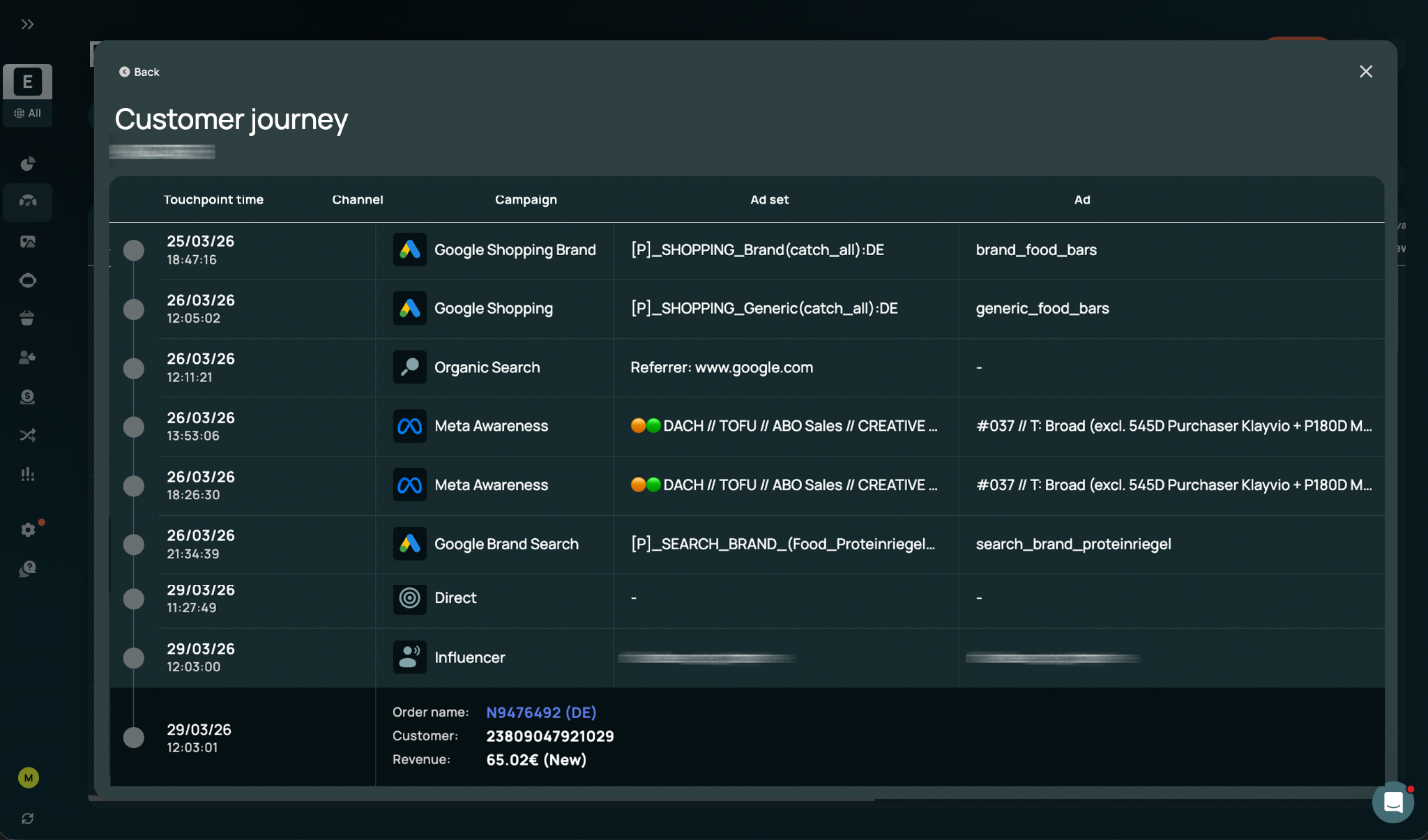
Why Cookieless Tracking matters for profitable growth
Cookieless measurement does not just make reporting messy. It also creates real business risk.
When attribution confidence drops, teams often slow down. Meanwhile, CAC rises quietly, tests take longer to validate, and leaders start discounting marketing forecasts.
Cookieless Tracking Statistics 2026 reframes measurement around what you can still trust:
- How much conversion data you directly observe versus model
- How match rates and consent rates change over time
- How reporting gaps affect blended ROAS, MER, CAC, and payback
- How often platform results align with incrementality tests
Because these benchmarks quantify uncertainty, they also improve decision making. You can set realistic confidence ranges instead of chasing false precision.
Cookieless Tracking Statistics: What it is and what it is not
Cookieless Tracking Statistics 2026 refers to the measurement framework and benchmarks brands use when third party cookies do not reliably identify users across sites.
In practice, it is a set of operational numbers that tell you how strong your signals are, where attribution breaks, and how large the gap is between platform reported performance and backend revenue.
It typically combines:
- First party data capture, such as email or phone with consent
- Server side event collection
- Platform conversion APIs and aggregated event measurement
- Modeled conversions and statistical attribution
- Finance aligned revenue reconciliation
However, Cookieless Tracking Statistics 2026 is not a promise of perfect user level tracking. Instead, it gives you a way to manage signal quality like a growth lever.
The benchmarks that matter most in a cookieless world
Most DTC teams still look at ROAS first. That makes sense, but ROAS alone gets more fragile when identifiers disappear.
To stay profitable, anchor performance reviews on a small set of KPIs that survive modeling changes:
- Blended CAC and CAC by cohort
- LTV and contribution margin by channel or campaign group
- MER for executive level efficiency tracking
- New customer rate and share of spend driving acquisition
- Incrementality from lift tests or holdouts
Then, use platform ROAS as a diagnostic metric. In other words, treat it as a signal, not the source of truth.
Who should use Cookieless Tracking?
Cookieless Tracking fits DTC and ecommerce teams doing €1M plus in annual revenue who scale paid media across Meta, Google, TikTok, and affiliates.
It is especially useful when you see any of these symptoms:
- Platform ROAS improves but total revenue does not
- Finance questions marketing numbers more often
- Small tracking changes swing results by 20 to 40 percent
- Your team spends more time reconciling dashboards than testing new growth ideas
For founders, CMOs, and growth leaders
You need forecast confidence and board ready ROI narratives. Therefore, you need to quantify how much of reported revenue is observed versus modeled.
With Cookieless Tracking Statistics 2026, you can:
- Set CAC and payback targets that account for measurement uncertainty
- Define channel accountability without over trusting any single platform
- Communicate risk to finance using ranges and test backed evidence
For performance marketers and ecommerce leads
You need fast feedback loops. Yet cookieless gaps create false positives, especially when algorithms optimize to modeled conversions.
With Cookieless Tracking Statistics 2026, you can:
- Monitor match rates and event quality before scaling spend
- Spot when an apparent ROAS lift likely comes from modeling changes
- Prioritize experiments that validate real incremental revenue
Getting started with Cookieless Tracking
You do not need a complex model on day one. You need a clean foundation and a cadence.
Start with these steps.
Step 1: Inventory your signals and map them to business outcomes
List every data source you control across web, app, checkout, email, and CRM. Then map each one to the metrics your business actually optimizes for, such as contribution margin, payback, and new customer rate.
This step prevents a common mistake. Teams often over optimize toward platform ROAS while ignoring LTV and margin.
Step 2: Implement server side events and enforce a strict event taxonomy
Server side collection usually improves consistency because it reduces browser loss and ad blocker impact. Also, it makes it easier to reconcile events with backend orders.
Define a strict taxonomy for key events:
- View content
- Add to cart
- Initiate checkout
- Purchase
- Subscribe or first order versus repeat
If purchase events fire inconsistently, every downstream model gets worse. Fixing event hygiene often produces more value than changing attribution windows.
Step 3: Calibrate platform reporting with controlled experiments
Platforms model conversions differently. Because of that, you need experiments that act as an independent referee.
Use one or more of the following:
- Geo holdouts
- Conversion lift tests
- Budget based incrementality tests
Then compare lift to platform reported results. Over time, this creates your calibration layer for Cookieless Tracking Statistics 2026.
Step 4: Create a weekly reconciliation cadence
A cookieless setup needs operational discipline.
Each week, reconcile:
- Platform conversions and spend
- Server side events
- Ecommerce backend orders and revenue
- Refunds, discounts, and contribution margin impacts
This cadence reduces internal debates. More importantly, it helps you reallocate budget faster.
Best timing to adopt Cookieless Tracking 2026
Start before reporting becomes a negotiation.
In practice, the best timing is 4 to 8 weeks before major budget shifts. That window gives you time to baseline match rates, validate your event taxonomy, and run at least one incrementality test.
Also, start early ahead of seasonal ramps. If you wait until peak periods, volume can hide tracking gaps. Then you risk learning the wrong lesson at the most expensive time of year.
Turning Cookieless Tracking 2026 into confident budget decisions
Cookieless measurement does not mean you must accept worse performance. It means you must manage uncertainty explicitly.
When teams adopt Cookieless Tracking Statistics 2026 as their shared language, three things change:
- You stop asking which dashboard is right, and you start measuring signal quality.
- You shift from last click certainty to incrementality proof.
- You build forecasts with confidence ranges, so finance trusts your plan.
As a result, CAC targets become more realistic, scaling decisions get faster, and creative testing becomes more reliable.
Conclusion
The cookieless future is already here for most DTC teams. You can either let signal loss slow down your decisions, or you can build a framework that stays useful as identifiers disappear.
Cookieless Tracking Statistics 2026 gives you benchmarks and operating habits that connect marketing activity to real revenue. When you manage observed versus modeled performance, calibrate platforms with lift tests, and reconcile to finance weekly, you protect ROAS, CAC, and payback decisions from dashboard noise.
How Admetrics can help
Admetrics helps DTC teams turn cookieless measurement into profitable growth decisions.
We unify platform signals from Meta, Google, and TikTok with first party ecommerce outcomes. As a result, you can quantify incremental revenue and contribution, not just modeled clicks.
What you can do with Admetrics:
- Track blended efficiency using MER alongside CAC and payback
- Compare platform ROAS to backend revenue in one view
- Build test ready reporting for incrementality workflows
- Create clearer ROI narratives for leadership and finance
FAQ
What are Cookieless Tracking Statistics 2026?
Cookieless Tracking Statistics 2026 are measurement benchmarks and operating metrics that help brands evaluate performance when third party cookies and user level identifiers do not reliably work. They focus on signal quality, modeled versus observed conversions, and the business impact on KPIs like ROAS, CAC, and payback.
Why should CMOs care about Cookieless Tracking Statistics 2026?
Because budget allocation and forecasting depend on trust in the numbers. Cookieless Tracking Statistics 2026 helps CMOs explain uncertainty, defend ROI narratives, and set channel accountability using incrementality and finance aligned reconciliation.
How do Cookieless Tracking Statistics 2026 change ROAS reporting?
They make you treat ROAS as one input rather than the truth. In a cookieless environment, platforms model more conversions, so reported ROAS can drift from backend revenue. Therefore, you should triangulate with lift tests, server side events, and blended metrics like MER.
Which metrics become more important under Cookieless Tracking Statistics 2026?
Incrementality, blended CAC, new customer rate, contribution margin, and LTV become more important. These KPIs remain meaningful even when attribution windows or platform modeling changes.
Do Cookieless Tracking Statistics 2026 replace attribution models?
No. They help you calibrate and govern attribution models by quantifying how much performance is observed versus modeled. As a result, you can weight insights appropriately and avoid over reacting to dashboard swings.
How can marketers use Cookieless Tracking Statistics 2026 day to day?
Monitor match rates and event quality, QA the purchase event flow, and set variance thresholds by channel. Then use incrementality tests to validate scaling decisions, especially after tracking or platform changes.
What is the fastest way to improve measurement in 2026?
Implement server side tracking, strengthen consent collection, and run incrementality tests on a monthly cadence. These steps usually improve decision quality faster than changing attribution windows or rebuilding campaign structure.
How often should we refresh Cookieless Tracking Statistics 2026 benchmarks?
Review them quarterly. Platform models, privacy rules, and user behavior change quickly, so quarterly updates help you keep CAC targets and forecasts aligned with reality.