Rising CAC forces DTC teams to do more with the traffic they already pay for. Meanwhile, most brands have squeezed easy wins out of the media layer. As a result, the biggest leaks now sit onsite, including slow product discovery, unanswered pre purchase objections, and landing pages that lag behind creative output.
At the same time, attribution keeps getting messier. Shoppers move across Meta, Google, and TikTok, then jump devices and sessions before they buy. Consequently, teams see conflicting reports, which makes budget allocation feel political.
AI shopping assistants sit at the intersection of conversion efficiency and attribution clarity. They guide shoppers to the right SKU faster, reduce friction, and make on site intent measurable. This article explains how AI shopping assistants work, where they fit in a modern growth stack, and how to launch them without creating new measurement blind spots.
What are AI shopping assistants?
AI shopping assistants are on site or in app experiences that use machine learning and generative AI to help shoppers discover, evaluate, and buy products in real time. They act like a high performing sales associate that never sleeps. Instead of offering generic scripts, they use live data to answer questions and recommend products that match intent.
Unlike static quizzes or basic chatbots, AI shopping assistants can connect to:
* Product catalog and variants
* Inventory and availability
* Pricing and promos
* Reviews and UGC summaries
* Shipping, returns, and policy content
* Brand and compliance rules
Because they pull from your source of truth, they can stay accurate even when assortments and bundles change.
Why DTC teams are betting on AI shopping assistants now
Paid social and search still work, but efficiency has tightened. Many scaled brands now treat conversion rate and revenue per session like first class growth levers, not just CRO metrics.
AI shopping assistants can move measurable outcomes that map directly to profitability:
* Conversion rate lift by removing decision friction
* Higher AOV via bundles, cross sells, and compatible add ons
* Lower support costs through deflection of repetitive tickets
* Higher ROAS by making each paid click more likely to convert
Just as important, they create a first party interaction layer. That layer generates new signals that help explain why shoppers did not convert, which improves iteration across creative, offers, and landing experiences.
Why AI shopping assistants improve conversion and ROAS
When CAC rises, you have two core options. You can try to buy cheaper traffic, or you can extract more value from each session. In most categories, the second path is more reliable.
AI shopping assistants help in three ways.
1) Faster product discovery
Large catalogs create choice overload. Therefore, shoppers bounce when they cannot find the right product quickly.
AI shopping assistants shorten time to product by:
* Asking 1 to 3 clarifying questions
* Filtering to best fit SKUs and variants
* Explaining differences in plain language
That improvement typically shows up in higher PDP views per session and higher add to cart rate.
2) Objection handling at the point of hesitation
Shoppers often leave because they feel uncertain, not because they dislike the product. Common objections include sizing, compatibility, shipping speed, return risk, and ingredient concerns.
AI shopping assistants answer these questions in context. As a result, they reduce drop off that attribution tools later mislabel as platform volatility.
3) Higher AOV through helpful recommendations
Discounting is not the only way to raise AOV. AI shopping assistants can recommend bundles and add ons that match the shopper’s goal while respecting inventory and margin priorities.
For example, you can prioritize:
* High margin accessories
* Overstocked variants
* Seasonal bundles tied to current campaigns
This is where AOV and contribution margin gains can translate directly into stronger ROAS.
Real World Examples of DTC Brands Using AI Shopping Assistants
When DTC brands move away from basic chatbots and implement true AI shopping assistants—tools that actively guide product discovery, handle fit/sizing objections, and build routines—the impact on conversion and revenue is highly measurable.
Here are concrete examples of DTC brands that have successfully turned AI shopping assistants into performance levers:
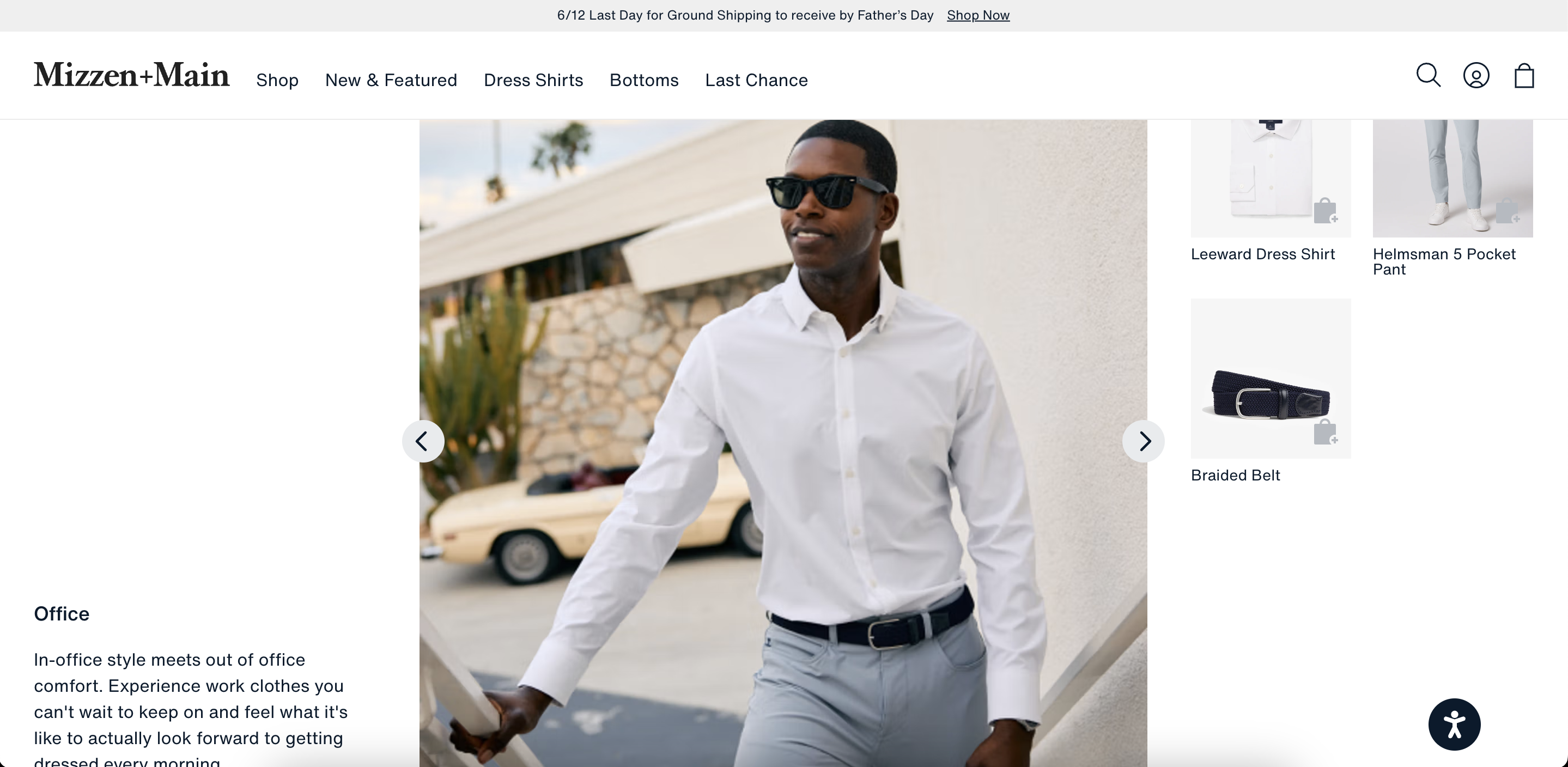
1. Mizzen+Main (Men's Apparel)
The Problem: High-intent shoppers were abandoning carts due to choice overload and "fit hesitation." Men's apparel sizing is notoriously inconsistent, and without an in-store associate to guide them through fit, print, and pattern, digital shoppers were bouncing.
The AI Solution: Mizzen+Main deployed an AI-driven "Smart Size Chart" and "Shirt Finder" assistant. Instead of forcing shoppers to look at a static sizing grid, the AI asked 4 to 6 simple conversational inputs to generate a "digital twin" of the shopper, instantly mapping their specific body measurements to the exact garment.
The Results:
- Conversion Lift: Shoppers who engaged with the AI assistant converted at an average rate of 20% (more than double the baseline conversion rate).
- Higher AOV: Average order value was 19% higher for users who engaged with the assistant.
- Top-Line Impact: The assistant saw a 32% engagement rate and contributed to a 7% increase in total company revenue within months of launch.
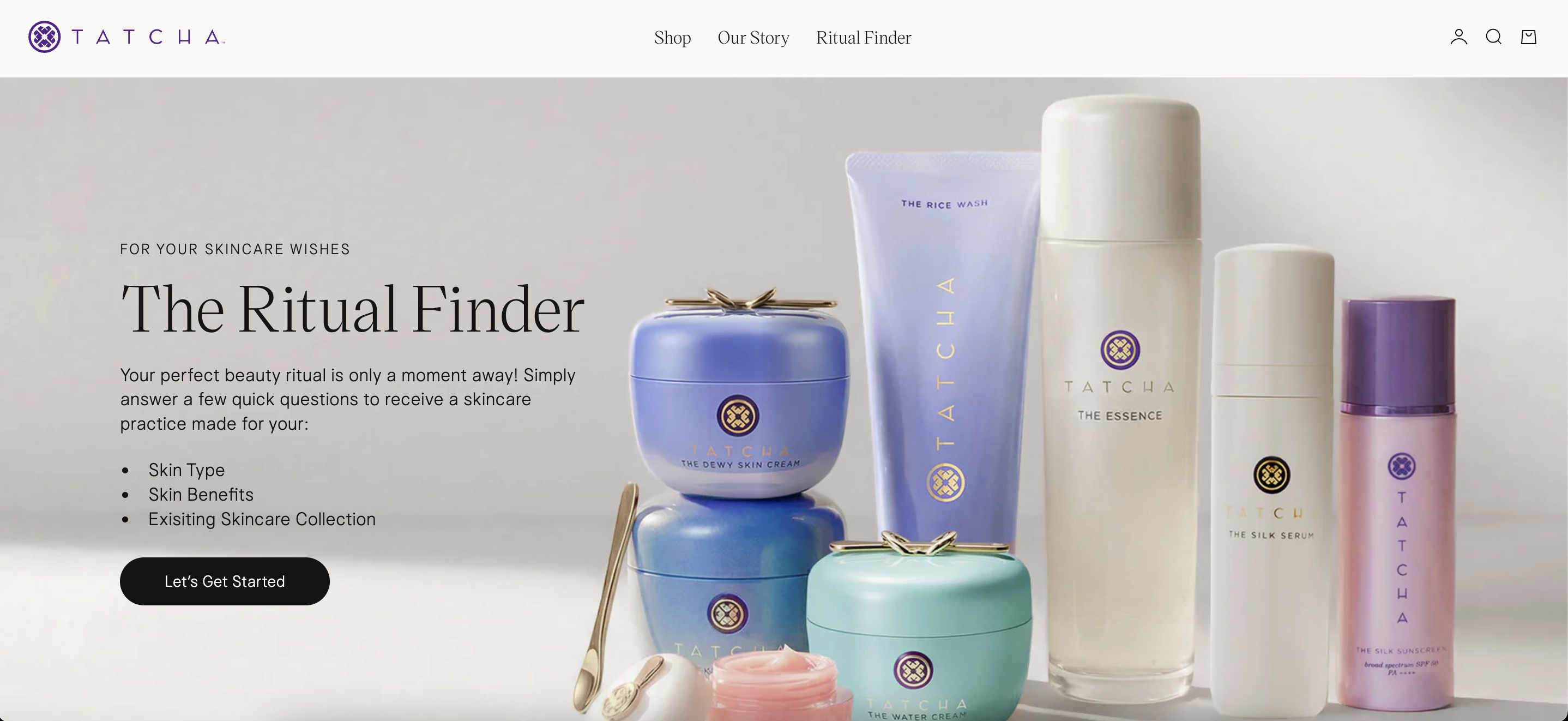
2. Tatcha (Premium Skincare)
The Problem: Skincare is a highly consultative category. Shoppers need to know if ingredients clash, what suits their specific skin type, and how to layer products. A standard FAQ page cannot build a personalized skincare routine.
The AI Solution: Tatcha integrated an AI shopping assistant to act as a digital skincare specialist. The AI actively handles product discovery, routine building, and checkout guidance, all while strictly adhering to Tatcha’s luxury brand voice and compliance rules regarding ingredient claims.
The Results:
- Revenue Influence: The AI assistant directly influenced 11.4% of total online revenue.
- Engagement to Conversion: Tatcha saw a 3x lift in conversions among users who engaged with the conversational discovery flow.
- Customer Satisfaction: They maintained an 81% CSAT score, proving that the AI felt like a premium brand interaction rather than a robotic deflection tactic.
3. TFG / Bash (Fashion & Lifestyle)
The Problem: During peak promotional periods like Black Friday, choice overload peaks. Shoppers land on category pages with thousands of SKUs, get overwhelmed by the sheer volume of products, and leave before finding what they want.
The AI Solution: TFG deployed a conversational AI agentspecifically engineered for guided discovery. If a shopper lingered on a page or showed exit intent, the assistant proactively triggered a chat, asking qualifying questions to narrow down options and surface highly relevant recommendations based on real-time session behavior.
The Results:
- Conversion Lift: The cohort of shoppers who interacted with the AI assistant saw a 35.2% higher conversion rate.
- Revenue Efficiency: The AI drove a 39.8% higher revenue per visit (RPV) compared to the control group.
- Reduced Friction: Exit rates dropped by 28.1% for engaged shoppers, saving expensive Q4 ad traffic from bouncing.
4. Victoria Beckham Beauty (Luxury Fashion & Beauty)
The Problem: Luxury buyers expect bespoke service, but replicating that online across a deep catalog of fashion and cosmetics is difficult to scale.
The AI Solution: The brand deployed an AI shopping assistant capable of contextual cross-selling. Instead of basic "frequently bought together" widgets, the AI assistant could analyze what the shopper was viewing and contextually recommend the right complementary shade of makeup or matching accessory in a conversational format.
The Results:
- AOV Lift: The brand achieved a 20% uplift in Average Order Value.
- Top-Line Growth: The highly personalized upselling directly contributed to a 10% overall revenue growth for the ecommerce channel.
AI shopping assistants for DTC teams: Who benefits most
AI shopping assistants fit best when your brand already has meaningful paid spend and clear performance pressure. If you run at €1M plus in annual revenue and scale on Meta, Google, or TikTok, you likely feel at least one of these pain points.
You should prioritize AI shopping assistants if
* CAC is rising and ROAS feels harder to defend
* Attribution reports disagree across platforms and analytics
* Your catalog is large, complex, or high consideration
* Creative velocity outpaces landing page updates
* Support volume grows with paid spend
In other words, AI shopping assistants help when you need more efficient sessions and cleaner answers about what drives conversions.
How to launch AI shopping assistants without breaking measurement
Treat rollout like a performance program, not a site widget. This approach keeps stakeholders aligned and makes results credible.
Step 1: Define success metrics tied to profit
Pick a small KPI set so the project stays focused. Then align stakeholders on how you will measure incrementality.
A practical KPI set for DTC teams includes:
- Conversion rate and add to cart rate
- AOV and revenue per session
- Assisted conversion rate and assist rate
- ROAS and CAC by channel
- Support deflection rate and cost per ticket
If you already manage to a CAC and LTV model, connect assistant impact to payback period. For example, a CVR lift that lowers CAC often improves LTV to CAC even when LTV stays flat.
Step 2: Instrument events and product data before you scale
AI shopping assistants can only perform as well as your data layer. Therefore, confirm you have:
* Consistent product IDs across catalog, analytics, and feeds
* Clean events for view item, add to cart, begin checkout, purchase
* Tracking for assistant exposures and assistant driven clicks
* Inventory and pricing feeds that update frequently
Also log assistant conversations. Those transcripts become a high signal source for UX fixes and creative insights.
Step 3: Start on high intent surfaces
Launch where shoppers have the strongest intent and the highest objections.
Recommended starting points:
* PDPs for sizing, fit, compatibility, and reviews
* Cart for bundles, substitutes, and shipping reassurance
After you stabilize performance, expand into collections and landing pages. This sequencing reduces risk and speeds learning.
Step 4: Prove incrementality with holdouts
If you only look at last click, you will over credit the assistant. Instead, measure lift with controlled tests.
Common setups include:
* Audience holdouts
* Geo split tests
* Session level randomization
Then evaluate lift in conversion rate, AOV, and revenue per session. Finally, compare ROAS and CAC shifts by channel so you can see whether Meta, Google, or TikTok traffic benefits differently.
Step 5: Operationalize guardrails and iteration
Brands win when they treat the assistant like a product.
Set up:
* Brand and compliance rules for claims and tone
* Escalation paths to human support
* A weekly review of top questions, failure cases, and missed SKUs
Over time, you can add predictive layers. For example, you can use propensity scoring to decide when to show the assistant, what offer to surface, or which bundle to recommend.
When is the best time to deploy AI shopping assistants?
Timing matters because you want lift you can trust. Deploy AI shopping assistants when your team can tie impact to business outcomes without creating attribution confusion.
You are ready when:
* Funnel events are reliable across devices and sessions
* Product data stays clean and up to date
* You can run holdouts or geo tests
Also consider seasonality. Many brands see the fastest gains when choice overload peaks, such as during product drops, holiday gifting, or promo heavy periods. Therefore, launching four to eight weeks before a peak gives you time to learn from real queries and refine your merchandising logic.
Conclusion
AI shopping assistants help DTC teams convert more of the demand they already paid to acquire. They speed up discovery, handle objections in real time, and lift AOV with relevant recommendations. As a result, they can improve ROAS and reduce CAC without relying on ever increasing media budgets.
However, the biggest advantage comes from measurement discipline. When you validate lift through incrementality tests and track assisted revenue properly, AI shopping assistants become profit infrastructure, not a shiny add on.
How Admetrics can help
AI shopping assistants add new touchpoints to the customer journey. That helps conversion, but it can also blur attribution if you rely on last click.
Admetrics unifies cross channel performance across Meta, Google, and TikTok. In addition, it models conversions with a realistic view of influence and supports incrementality testing. Consequently, you can see which campaigns create new demand when AI shopping assistants guide shoppers onsite.
If you want to scale with confidence, start here: https://www.admetrics.io/en/book-demo
FAQ
What are AI shopping assistants?
AI shopping assistants are AI powered tools that guide shoppers through product discovery, evaluation, and purchase decisions. They can answer questions, recommend SKUs, and support bundles using live catalog and policy data.
How do AI shopping assistants increase ROAS?
They increase ROAS by improving conversion rate and AOV on owned channels. Therefore, each paid click produces more revenue, which lowers CAC at the same spend level.
Where should AI shopping assistants live on site?
Start with high intent pages such as PDPs and cart. Then expand to collections and paid landing pages once you trust answer quality and tracking.
Do AI shopping assistants replace customer support?
No. They deflect repetitive questions and route complex cases to humans. This reduces cost per ticket while keeping high value conversations personal.
What data do AI shopping assistants need to work well?
At minimum they need a clean product catalog, accurate inventory, pricing and promo rules, shipping and returns content, FAQs, and reviews. They also need brand rules to stay compliant.
How do AI shopping assistants impact attribution?
They often shift more value to onsite assists. Track assistant exposure and assistant clicks, then measure incremental lift with holdouts so you do not over credit last click.
What KPIs should we monitor?
Monitor conversion rate, AOV, revenue per session, assist rate, assisted conversion rate, support deflection rate, and incremental lift versus control. Also watch ROAS and CAC by channel to see where gains concentrate.
Are AI shopping assistants safe for brand compliance?
Yes, if you add guardrails. Use approved claims, blocked topics, tone rules, and ongoing QA from transcript reviews.
How fast can AI shopping assistants be launched?
Basic deployments can go live in days if tracking and catalog data are clean. Deeper personalization and integrations often take a few weeks.
Will AI shopping assistants slow down site performance?
They should not if implemented well. Load the assistant asynchronously and monitor Core Web Vitals, especially LCP and INP.
What is the biggest mistake teams make with AI shopping assistants?
Treating them like a widget instead of a conversion program. Teams win when they define KPIs, instrument events, run incrementality tests, and iterate weekly.