Every Black Friday and Cyber Monday, consumers are bombarded with endless deals, discounts, and promotions. Yet, despite the frenzy, not every discount drives profit. Some brands chase vanity revenue with blanket markdowns that erode margins, while others turn BFCM into a strategic growth engine.
The difference lies in conversion optimization. Success during BFCM 2026 requires more than slashing prices. It demands carefully designed offers, an understanding of consumer psychology, and websites optimized to turn visitors into loyal customers. This guide explores how to craft profitable promotions, leverage behavioral triggers, and fine-tune conversion funnels to maximize both sales and long-term growth.
Designing Profitable Offers and Discounts
Discounting is inevitable during BFCM, but doing it blindly can be dangerous. The goal is not just to sell more units but to sell profitably. This means aligning offers with margins and using financial metrics to stay disciplined. Concepts like marginal cost pricing ensure that discounts never fall below the cost of production, while price elasticity of demand helps determine how sensitive your customers are to price changes. Together, these insights reveal where discounts will boost revenue and where they risk undermining profitability.
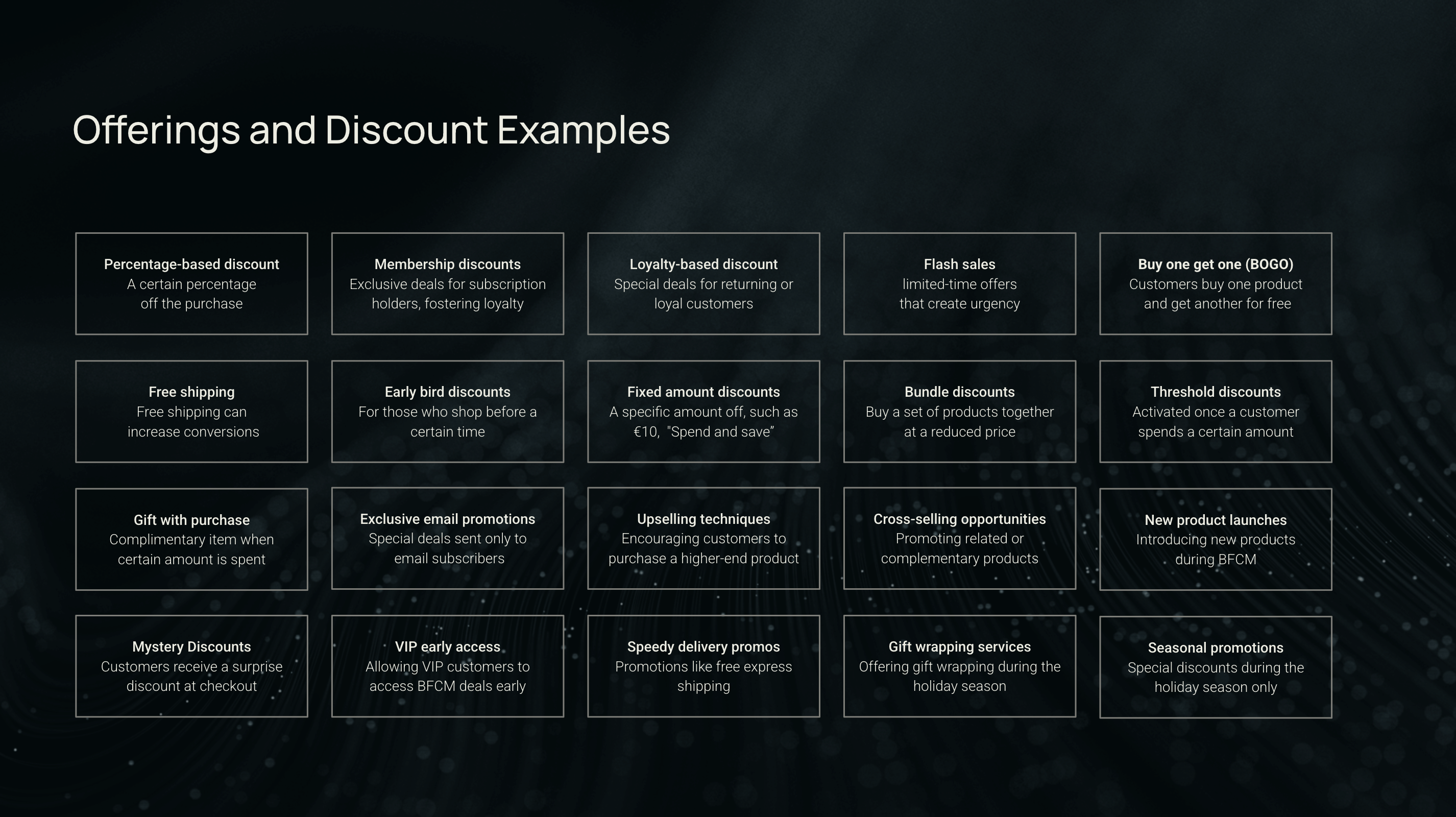
Strategic offer design is critical. Instead of across-the-board markdowns, brands can implement tactics like early-bird offers that reward prompt action, loyalty discounts that strengthen retention, or bundles that increase average order value. Threshold discounts encourage customers to add “just one more item” to qualify for savings, while perks like free shipping or gift wrapping add value without major margin loss.
The mattress brand Casper provides a strong example. By applying a tiered discount strategy during BFCM, they offered larger savings on high-margin products while keeping other markdowns more conservative. This approach drove strong sales while protecting the bottom line, showing that smart discounting is about balance—not a race to the lowest price.

Leveraging Consumer Psychology for BFCM Wins
Discounts alone rarely seal the deal. The most effective BFCM campaigns tap into consumer psychology. By understanding how cognitive biases influence decision-making, brands can craft promotions that resonate more deeply with shoppers.
The decoy effect makes one product option look more attractive by introducing a less compelling alternative, a tactic famously used by Dollar Shave Club.

The Ikea effect increases perceived value when customers feel involved in creating or customizing a product.
Anchoring bias plays on comparisons—by showcasing original prices alongside discounted ones, as Alpin Loacker does, brands make savings appear more compelling.
Equally powerful are the triggers of urgency and scarcity. When Paul Valentine promotes an advent calendar with limited quantities, the fear of missing out drives faster action.
Reciprocity and the endowment effect also play a role—offering free samples, like a beauty brand might, creates a sense of obligation to purchase, while Dagsmejan’s extended guarantees reassure customers that they already “own” something of value. Finally, authority can be leveraged through expert endorsements or influencer collaborations, as ESN demonstrates with fitness professionals endorsing its gear.

These psychological levers, when woven into campaign messaging, transform discounts from generic price cuts into persuasive experiences that customers feel compelled to act on.
Conversion Rate Optimization (CRO) for BFCM
Traffic during BFCM is abundant, but conversions are what truly matter. A modest lift in conversion rate can translate into millions in additional revenue. That’s why conversion rate optimization (CRO) is one of the most powerful levers for BFCM success.
CRO begins with user experience. Applying design principles like Hick’s Law, which suggests that too many choices slow decision-making, helps simplify navigation and reduce friction. Site speed is equally critical. A 0.1-second improvement in load time can increase conversions by 10%, and during BFCM, where traffic surges stress servers, delays can be disastrous. Ensuring mobile responsiveness is non-negotiable, given that the majority of BFCM traffic now comes from smartphones.
Optimization also extends to localization. Brands selling internationally can tailor sites with local currencies, languages, and search terms, as Shopify Markets enables. A/B testing conducted before BFCM provides valuable insights into which headlines, images, or CTAs resonate most with audiences, allowing brands to enter the peak season with proven assets.
The DTC footwear brand Allbirds demonstrates how CRO and SEO strategies can work together. By localizing digital experiences and becoming their own strongest competitor in organic search, they maximized reach and reduced reliance on paid channels. This strategy created a durable advantage during BFCM, when competition for attention is at its highest.
Retargeting as a Conversion Lever
Not every visitor converts on their first interaction, especially during the decision-heavy BFCM period. Retargeting ensures that interested shoppers come back and complete their purchases.
Effective retargeting requires segmentation. Cart abandoners should receive personalized nudges, perhaps highlighting the item they left behind with a limited-time discount. Casual browsers, on the other hand, might be re-engaged with dynamic ads that showcase the exact products they viewed. The timing and frequency of retargeting also matter—too much can feel intrusive, too little may lose the customer entirely.
Cross-channel retargeting strengthens the approach. Ads across social media, email reminders, and display campaigns keep the brand present wherever customers are. Dynamic retargeting makes this even more powerful by tailoring creative to the products most relevant to each user. The impact can be dramatic: a Criteo study found that retargeting can boost ad response rates by up to 400%.
By treating retargeting as a core conversion lever, not just an add-on, brands can turn missed opportunities into major revenue wins.
Landing Page Optimization for BFCM
Landing pages are where intent turns into action. During BFCM, they must be built to handle high volumes and maximize conversions. Clear and compelling offers should be front and center, supported by strong visuals and concise copy. Prominent CTAs guide visitors toward purchase, while trust signals—reviews, testimonials, and security badges—reduce hesitation.
Page performance is critical. Load times need to be lightning-fast, especially on mobile devices. Retargeting pixels should be embedded to capture traffic that doesn’t convert on the first visit, enabling timely follow-ups. Testing these elements well in advance of BFCM is crucial; the high-stakes sales weekend is no time for experiments.
Key metrics provide insight into performance: conversion rate, add-to-cart rate, average order value, and cart abandonment are among the most important. By tying these to profit margins and acquisition costs, brands can see not just which pages convert, but which pages contribute most to the bottom line.
Optimizing the Conversion Funnel
Finally, BFCM conversion success depends on managing the entire funnel, from awareness to retention. With traffic levels peaking, capturing every stage of the journey is essential.
At the top, awareness campaigns introduce offers to new audiences. Interest is sustained with engaging content and product recommendations, while consideration is reinforced with reviews, testimonials, and time-limited offers. Conversion requires a seamless checkout process with multiple payment options and clear trust signals.
Retention, often overlooked during BFCM, is just as important. Post-purchase emails, loyalty rewards, and exclusive follow-up offers turn one-time buyers into long-term customers. By analyzing drop-off points and tailoring strategies at each stage, brands can turn more visitors into repeat purchasers and build lasting value beyond the holiday weekend.
Conclusion
BFCM 2026 is not about offering the deepest discounts. It is about converting attention into sustainable growth. Brands that align promotions with margins, apply consumer psychology wisely, and optimize every stage of the funnel will outperform competitors relying solely on price cuts.
Conversion optimization is the multiplier that makes all other BFCM strategies work harder. It ensures that marketing investments translate into not just higher revenue, but higher profitability and stronger customer loyalty.
👉 Prepare now. Use these conversion strategies in combination with Admetrics Data Studio to track, test, and refine your efforts—and make BFCM 2026 your most profitable yet.
FAQ: BFCM Conversion Optimization
What is BFCM conversion optimization?
It’s the process of improving every step of the Black Friday and Cyber Monday sales funnel to maximize conversions, profitability, and customer retention.
Which discounts work best during BFCM?
Tiered discounts, bundles, and loyalty-driven offers drive sales while protecting margins, unlike blanket markdowns that erode profitability.
How can consumer psychology boost BFCM sales?
Biases like scarcity, anchoring, and loss aversion tap into decision-making shortcuts, encouraging shoppers to buy faster and with greater confidence.
What CRO tactics matter most for BFCM 2026?
Fast page speed, mobile optimization, localized experiences, and trust signals are critical for maximizing conversions.
Why is retargeting so effective during BFCM?
It re-engages high-intent visitors, often leading to significantly higher conversion rates compared to first-touch prospecting.