The ecommerce landscape has rapidly evolved, and Direct-to-Consumer (DTC) brands are leading the charge. As competition grows and customer expectations soar, the efficiency of order fulfillment becomes a decisive factor in a brand’s success. Enter Automated Fulfillment Services for ecommerce—the backbone of scalable, data-driven online retail operations.
Automated fulfillment services leverage advanced technology, robotics, and integrated software to handle orders, inventory, and shipping with minimal human intervention. For DTC brands and online stores, these services are more than just operational tools—they are strategic growth engines that drive higher order accuracy, faster delivery times, and better customer experiences.
Let’s dive into the world of automated fulfillment, why it’s a game-changer for ecommerce, and how to choose the best solution for your brand.
Automated Fulfillment Services for Ecommerce
The keyword "Automated Fulfillment Services for ecommerce" has become a pivotal phrase for fast-growing online brands. In today’s digital-first marketplace, fulfillment isn’t just about moving boxes—it’s about creating seamless, delightful experiences for your customers. Automated fulfillment solutions take the pain out of logistics, enabling DTC brands to focus on what matters most: building relationships, innovating products, and scaling globally.
From real-time inventory management to robotic picking and packing, automation turns fulfillment into a strategic advantage. As you consider your options, understanding how automation is shaping the ecommerce fulfillment landscape will empower you to make informed decisions for your business.
Why DTC Brands Need Automated Fulfillment
DTC brands, by their nature, require nimble, scalable, and efficient fulfillment operations. Unlike traditional retail, DTC brands ship directly to consumers—bypassing wholesalers, distributors, and often physical retail altogether. This means every order, from a single lipstick to a monthly subscription box, must be processed with speed and accuracy.
Automated fulfillment services help DTC brands:
- Eliminate costly manual errors
- Scale quickly during demand spikes
- Reduce operational overhead
- Gain real-time insights into order and inventory status
- Offer consistent, branded unboxing experiences
Consider Allbirds or Glossier—these fast-growth brands rely on automated fulfillment to deliver on their brand promise while keeping operations lean. Without automation, the logistics of high-volume DTC sales can quickly become overwhelming, limiting growth and damaging brand reputation.
How Ecommerce Automation Transforms Fulfillment
Automation in ecommerce fulfillment isn’t just about replacing humans with machines. It’s about creating intelligent, interconnected systems that streamline the entire supply chain. Automated software can route orders to the nearest fulfillment center, trigger restocks before inventory runs out, and even customize packaging at scale.
Some of the most impactful transformations include:
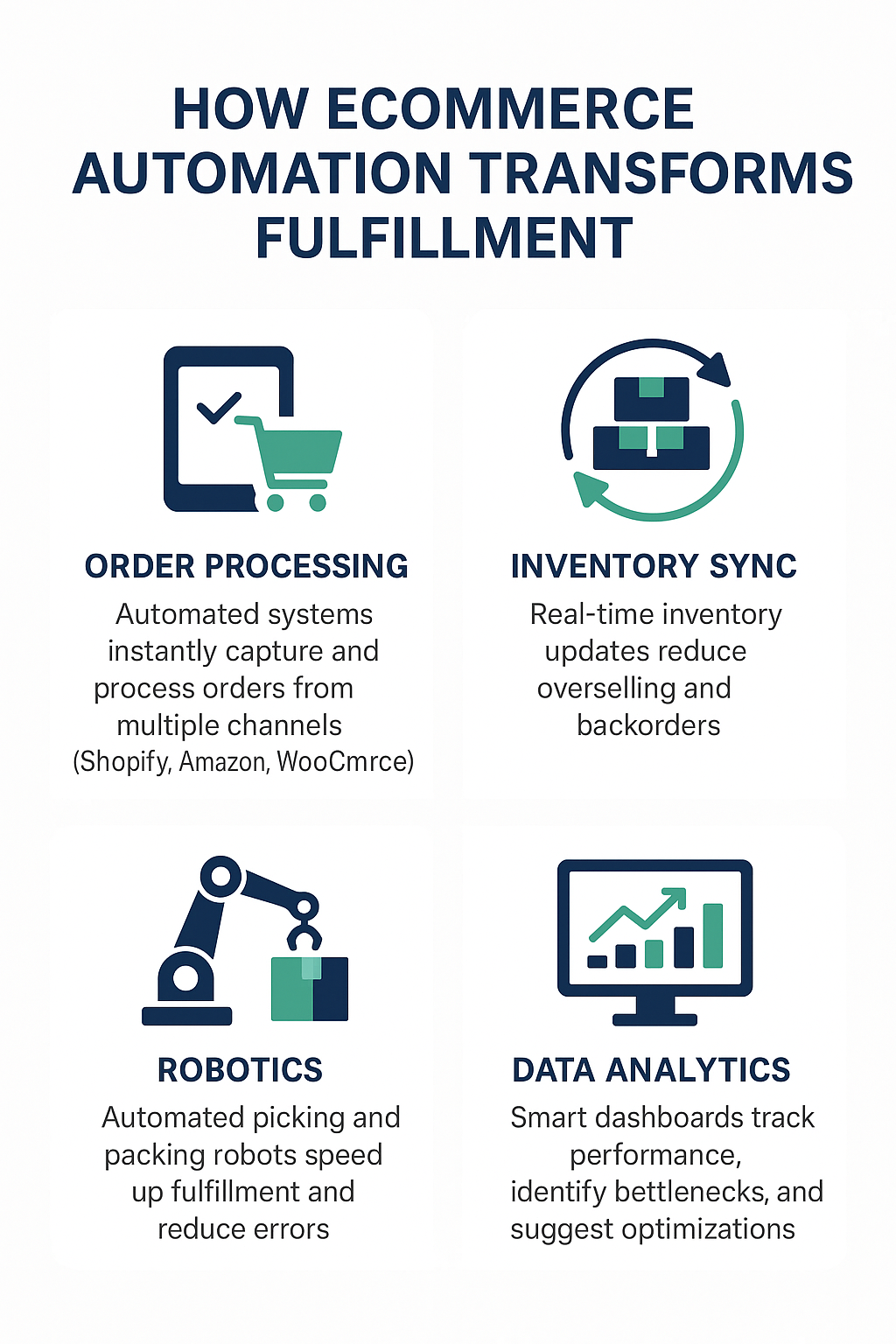
With these tools, DTC brands can deliver on the modern shopper’s desire for speed, reliability, and transparency.
Key Benefits of Automated Fulfillment Services
Embracing automated fulfillment offers several benefits that can transform your business:
- Cost Efficiency: Reduce labor costs and eliminate errors that lead to costly returns or reships.
- Faster Shipping: Automated picking, packing, and shipping mean orders go out the door faster—sometimes within minutes.
- Scalability: Handle volume surges during sales events or seasonal peaks without hiring temporary staff.
- Accuracy: Robotics and barcoding ensure that every order is correct, boosting customer satisfaction and loyalty.
- Insights: Access real-time data to forecast demand, optimize stock levels, and plan for growth.
These advantages are not just “nice-to-haves”—they’re must-haves for any DTC brand serious about winning in ecommerce.
Top Challenges in Traditional Fulfillment
Before automation, fulfillment was riddled with challenges:
- Manual Errors: Human mistakes during picking and packing can lead to wrong shipments and returns.
- Slow Processing: Manual workflows can’t keep up with today’s ecommerce velocity.
- Inventory Blind Spots: Delays in inventory updates lead to overselling, backorders, and disappointed customers.
- High Labor Costs: Scaling a team for peak demand is expensive and inefficient.
Automated fulfillment services address these pain points head-on, making them essential for modern ecommerce brands.
Essential Features of Automated Fulfillment Solutions
Not all automated fulfillment services are created equal. Here’s what the best solutions offer:
- Real-Time Order Tracking: Transparency for both brand and customer.
- Seamless Integration: Connects easily with Shopify, WooCommerce, BigCommerce, Amazon, and other platforms.
- Robotics & Automation: Robots handle repetitive tasks, reducing errors and costs.
- WMS (Warehouse Management System): Advanced software to manage inventory, orders, and workflows.
- Custom Packaging: Ability to create branded experiences at scale.
- Returns Automation: Effortless, trackable returns for higher customer satisfaction.
Selecting a partner with these features ensures your fulfillment operations are future-proof.
Comparing In-House vs. Outsourced Fulfillment
DTC brands must decide whether to keep fulfillment in-house or outsource to a third-party logistics provider (3PL) with automation. Let’s compare:
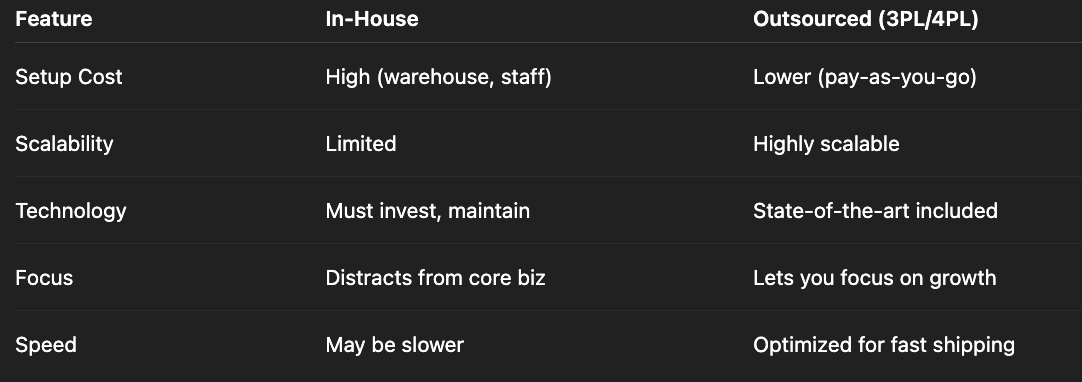
For most DTC and e-commerce brands, outsourcing to a leading automated fulfillment partner unlocks speed, flexibility, and efficiency without the hassle of running a warehouse.
Best Automated Fulfillment Services for Ecommerce
Here’s a curated list of industry leaders, each bringing unique strengths to ecommerce brands:

When selecting a partner, consider your unique needs: do you need global reach, custom packaging, or seamless returns? A careful assessment pays dividends.
Pitfalls and Mistakes to Avoid
Not every fulfillment automation journey is smooth sailing. Watch out for:
- Vendor lock-in: Choose partners with open APIs and easy exit options.
- Underestimating Volume: Start with realistic order forecasts.
- Integration Issues: Test before launch to avoid order syncing errors.
- Ignoring Returns: Automate returns from day one.
Learning from others’ mistakes saves time, money, and headaches.
International and Cross-Border Fulfillment Automation
Expanding globally is a thrilling milestone for any DTC or ecommerce brand, but it comes with a web of challenges that can easily become overwhelming. Automated fulfillment services step in to remove much of the stress and complexity from international shipping, acting as the connective tissue that holds your cross-border operations together.
But international fulfillment is more than just storage. Automated customs forms streamline one of the biggest bottlenecks in global commerce. Rather than manually filling out customs paperwork for every order, automation software instantly generates the required forms, pre-fills all product details, and attaches necessary declarations. This eliminates delays at customs checkpoints, dramatically reducing the risk of shipments getting stuck in limbo.
Tax and duty calculation can also be a minefield. Each country has its own tax rates, VAT requirements, and import duties, all of which can change with little notice. Automated fulfillment platforms use real-time databases to calculate taxes and duties for every order, ensuring the correct amount is collected upfront and that customers are never surprised by hidden charges at delivery.
Finally, compliance with local laws is a must for any global operation. Regulations regarding packaging, labeling, restricted items, and data privacy vary widely. Automation ensures every order complies with local regulations, automatically applying the correct labels or flagging items that can’t be shipped to specific destinations.
By leveraging these advanced features, automated cross-border fulfillment allows brands to reach new markets with confidence, minimizing delays, eliminating logistical headaches, and providing an exceptional customer experience on a global scale.
Managing Returns Efficiently with Automation
Returns are an inherent part of the ecommerce experience—some customers inevitably change their minds or receive items that don’t fit or meet expectations. While returns can be a logistical headache for retailers, automation transforms them into a streamlined, customer-centric process that actually builds loyalty.
First, automated systems enable pre-approved, trackable returns. Instead of requiring customers to jump through hoops to initiate a return, brands can offer simple online portals where shoppers generate prepaid shipping labels with a click. This not only reduces friction but also allows the brand to monitor the return’s progress in real-time. Integration with major carriers means tracking numbers are automatically assigned and communicated, so everyone knows where an item is at any given moment.
Upon receipt of a returned item, automated restocking and refunds come into play. Barcode scanning, robotics, and inventory management software work together to process the return instantly, updating stock levels and triggering an automated refund if the item meets return criteria. This eliminates manual bottlenecks, cuts down on processing time, and prevents errors that can frustrate customers.
A seamless, automated returns experience does more than just solve logistical problems—it demonstrates a commitment to customer satisfaction, encourages future purchases, and differentiates your brand from competitors who still rely on manual processes. When handled well, returns automation turns a potential pain point into an opportunity for customer delight and loyalty.
Speed vs. Accuracy: The Fulfillment Balance
Ecommerce brands used to choose between lightning-fast shipping and perfect order accuracy. Automated fulfillment changes the game—now you get both. With robotics and smart software, orders are routed to the optimal warehouse for fast delivery, while automation reduces picking errors and ensures every box is right. Real-time monitoring flags issues instantly, letting you improve on the fly. The result? Customers enjoy quick, accurate deliveries, boosting satisfaction and loyalty. For DTC brands, automation means greater efficiency and scalability, ending the compromise between speed and precision.
Omnichannel Fulfillment and Automation
Modern shoppers expect to buy anywhere and receive orders seamlessly, whether online, in-store, or via marketplaces. Automated fulfillment makes this possible by syncing inventory, orders, and tracking across all sales channels. From B2B and DTC to in-store pickup (BOPIS) and Amazon or Walmart fulfillment, everything flows through a unified system—no manual work, no stockouts. Automation empowers brands to offer a consistent, efficient experience everywhere customers shop, building loyalty and streamlining operations. Read more about the best social proof tools for ecommerce.
Powering Fulfillment Efficiency with Admetrics
Admetrics goes beyond ad analytics—it offers DTC brands a full-fledged data platform that bridges marketing, operations, and fulfillment. By consolidating data from Shopify, ad platforms, and logistics tools, Admetrics delivers real-time insights into order performance, inventory trends, and customer journeys—all within a single, privacy-compliant dashboard. This holistic view enables brands to identify fulfillment bottlenecks (like high order cycle times or inaccurate pick rates), correlate them with marketing campaigns, and proactively optimize workflows.
Built on advanced analytics—including machine learning forecasting and attribution—Admetrics helps brands make informed decisions about fulfillment strategies. For example, if a specific campaign drives a surge in orders that threatens to outpace picking capacity, the platform can flag the risk ahead of time. Brands can then route orders to another fulfillment center or activate temporary staff, ensuring on-time delivery and preserving customer trust. With predictive insights and performance monitoring, DTC brands can scale order volumes quickly—without sacrificing speed, accuracy, or shine in the unboxing experience.
Frequently Asked Questions About Automated Fulfillment
What is automated fulfillment for ecommerce?
Automated fulfillment uses technology to handle orders, inventory, and shipping with minimal human input, reducing errors and speeding up delivery.
How do I choose the best automated fulfillment service?
Look for technology integration, real-time data, service quality, and the ability to scale as your business grows.
Can I customize packaging with automated fulfillment?
Absolutely. Many services offer custom packaging options to match your DTC brand.
Is automated fulfillment secure?
Leading partners offer robust cybersecurity, compliance, and data protection measures.
Do these services support global shipping?
Yes. The top fulfillment providers have global warehouses and handle international shipping complexities.
What if I need to handle returns?
Returns automation is a standard feature, making the process seamless for both you and your customers.
The Future of Ecommerce Fulfillment
Automated Fulfillment Services for ecommerce have transformed the DTC landscape. Brands that embrace automation enjoy faster growth, happier customers, and more efficient operations. As technology advances—AI, robotics, IoT—the gap between brands that automate and those that don’t will only widen.
If you want to stay competitive, now is the time to invest in automated fulfillment. The right partner will do more than ship your products—they’ll power your brand’s growth, every step of the way.