

The attribution is rarely the complaint. Read enough Northbeam reviews and a pattern shows up: the numbers get credited, everything around them gets criticized.
The deeper issue is where the reporting stops. Northbeam gives you ROAS. COGS never enters the platform, so there's no contribution margin, no P&L, no cohort or LTV view, and refunds report as a channel metric with no product breakdown and no link to margin. A campaign returning 3.2x on 18% margin and one returning 3.2x on 61% margin look identical on screen.
Then there's the collection layer. Touchpoints get recorded by a browser pixel, which means a visit counts only if the script fires and the UTMs survive. Apex sends order-level results back to Meta through CAPI and stops there, so TikTok, Snapchat and the native networks never receive enriched signal. Data sits in the US with no EU residency option, which for a European brand is a legitimate blocker.
Northbeam pricing starts at $1,500 a month for Starter, billed against your data volume, with Professional and Enterprise quoted on request and no free trial. Two things about the Northbeam pricing plans catch buyers out. Shopify is the only direct ecommerce connection on the entry tier, so other store integrations mean an upgrade. And MMM+ isn't on Starter either, which leaves the entry plan as multi-touch attribution at enterprise money. Most Northbeam alternatives in this comparison open between €200 and $500, and several publish their rates instead of gating them behind a call.
Four criteria, ordered by how much each one changes a budget decision.
Attribution and tracking accuracy. Model count, whether you can define your own credit rules, and how conversions get captured. Server-side collection beats a browser pixel, and what happens to the recovered data matters as much as recovering it.
Data foundation. Connector depth, where the data physically sits, who owns it, and whether you can get it out.
Profit tracking. Whether COGS, shipping, fees and returns reach the report, and how far down they go. Gross margin is a start. POAS at SKU level with returns attributed by campaign is the standard.
Action. What happens once the number lands. Most tools stop at a dashboard, a few recommend, two execute.
Northbeam competitors fall into three groups against those criteria: profit-led ecommerce platforms, broad analytics suites that trade depth for breadth, and specialists that go deep on one method. Rankings come from public documentation, published pricing and vendor demos, checked in August 2026.
Best for: ecommerce and DTC teams who want profit as the metric budget decisions run on, and who want the tool to make the move instead of writing a recommendation.
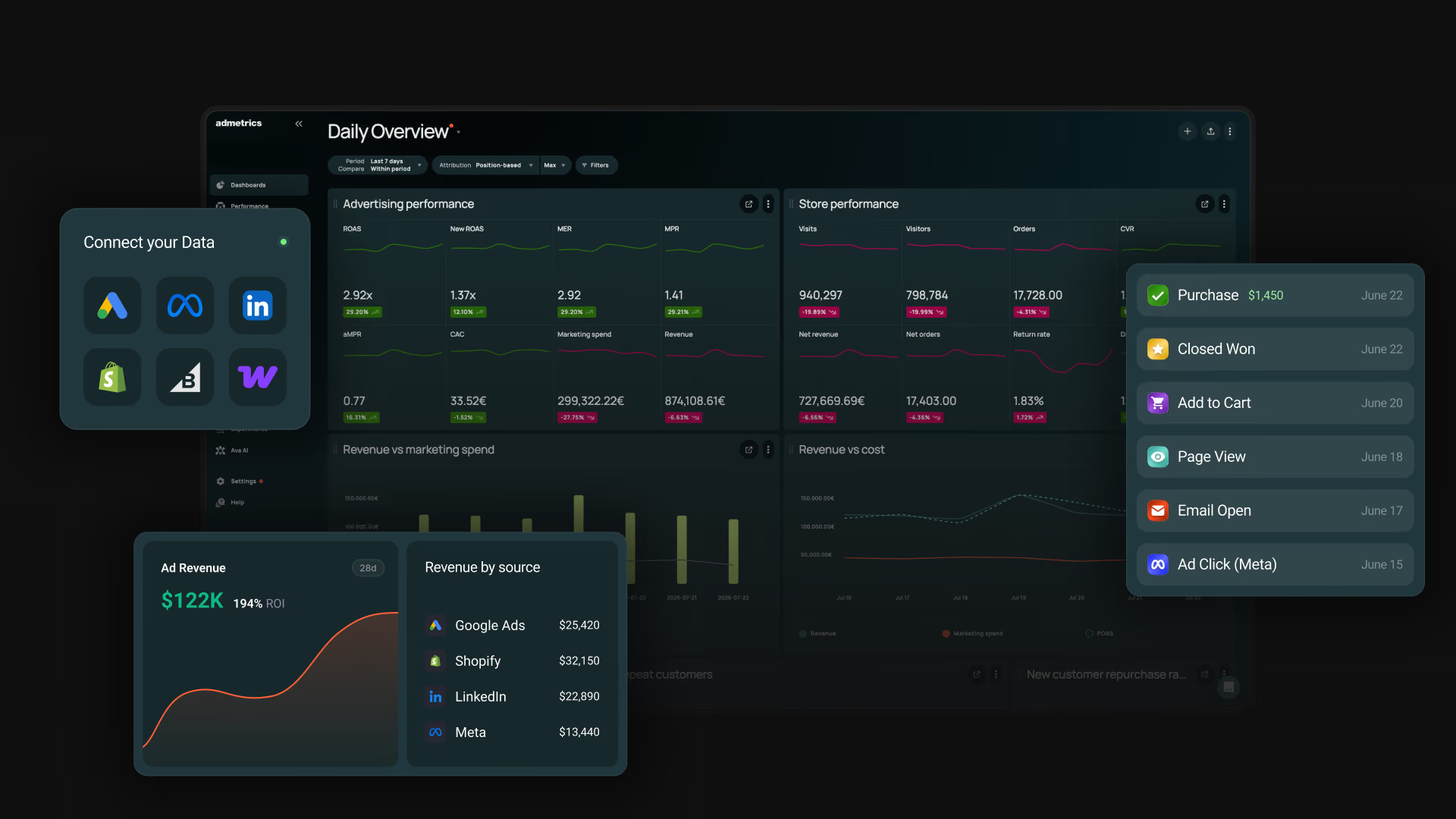
Admetrics is built around a position most attribution tools step around: the number you optimize against should already have COGS, shipping, fees and returns taken out of it. Tracking runs first-party and server-side, so conversions the browser drops get recovered and sent back to the ad platforms as an enriched signal. Underneath sits the part Northbeam never had, contribution margin through to EBITDA, LTV cohorts, returns split by campaign and product. Then the Allocator moves the budget.
From $399/month. A free data audit and a free trial come before you commit, and a dedicated success manager is included rather than reserved for enterprise contracts.
4.97, the highest rating of any tool in this comparison. Switchers most often mention the same two things: conversion counts that were finally reconciled, and a profit number they could take to a board meeting.
An all-in-one solution for e-commerce brands and the right pick when the question you're stuck on is which campaign made money, and when you want that answer to end in a budget change. It costs more than a dashboard, and it does considerably more than one.
Best for: Shopify and omnichannel brands who want a real data foundation, their own warehouse, their own metrics, without hiring a data team to build it.
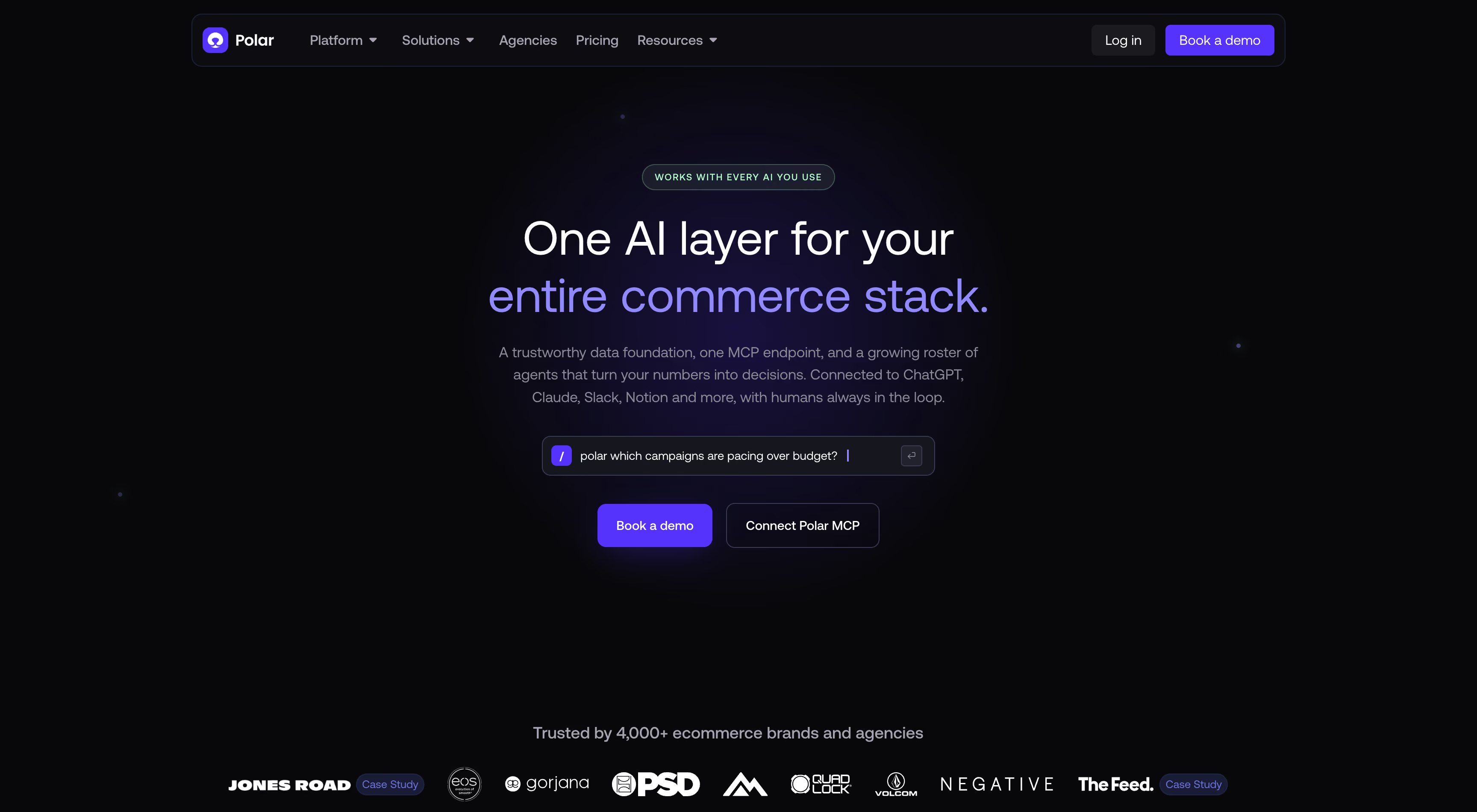
Polar sells the layer underneath the dashboard. Every plan ships a dedicated Snowflake database and a semantic layer of 400+ pre-built ecommerce metrics, which is a different proposition from a tool that holds your data and rents it back to you in charts. Attribution runs off a first-party pixel served from your own domain, and Lifetime ID stitches sessions and logins into one path across devices. The profit math is real too: COGS, 3PL, shipping, payment fees and returns all feed a contribution margin stack that lands at campaign and SKU. What Polar doesn't do is budget automation.
GMV-based and quoted through a demo. G2 lists entry pricing around $300/month for the Analyze tier, and the stack is modular: intraday refresh, SQL access, custom connectors, the CAPI enhancer and each incrementality test are priced on top. Unlimited users and a dedicated Success Manager are included at every level.
4.7 on G2 from a small review base, with ease of setup and quality of support scoring highest. The pattern across Shopify App Store reviews is consistent: fast onboarding, responsive team, and reporting that replaced a pile of connectors. Complaints, where they show up, are about the cost of the add-ons stacking.
The pick if your problem is that you need a proper data stack and can't build one. It reports profit accurately and it hands you the warehouse. It just stops at the point where the media buyer would still need to do a lot of stuff manually.
Best for: Shopify brands who want a real-time dashboard and an AI layer that will push changes into the ad accounts.
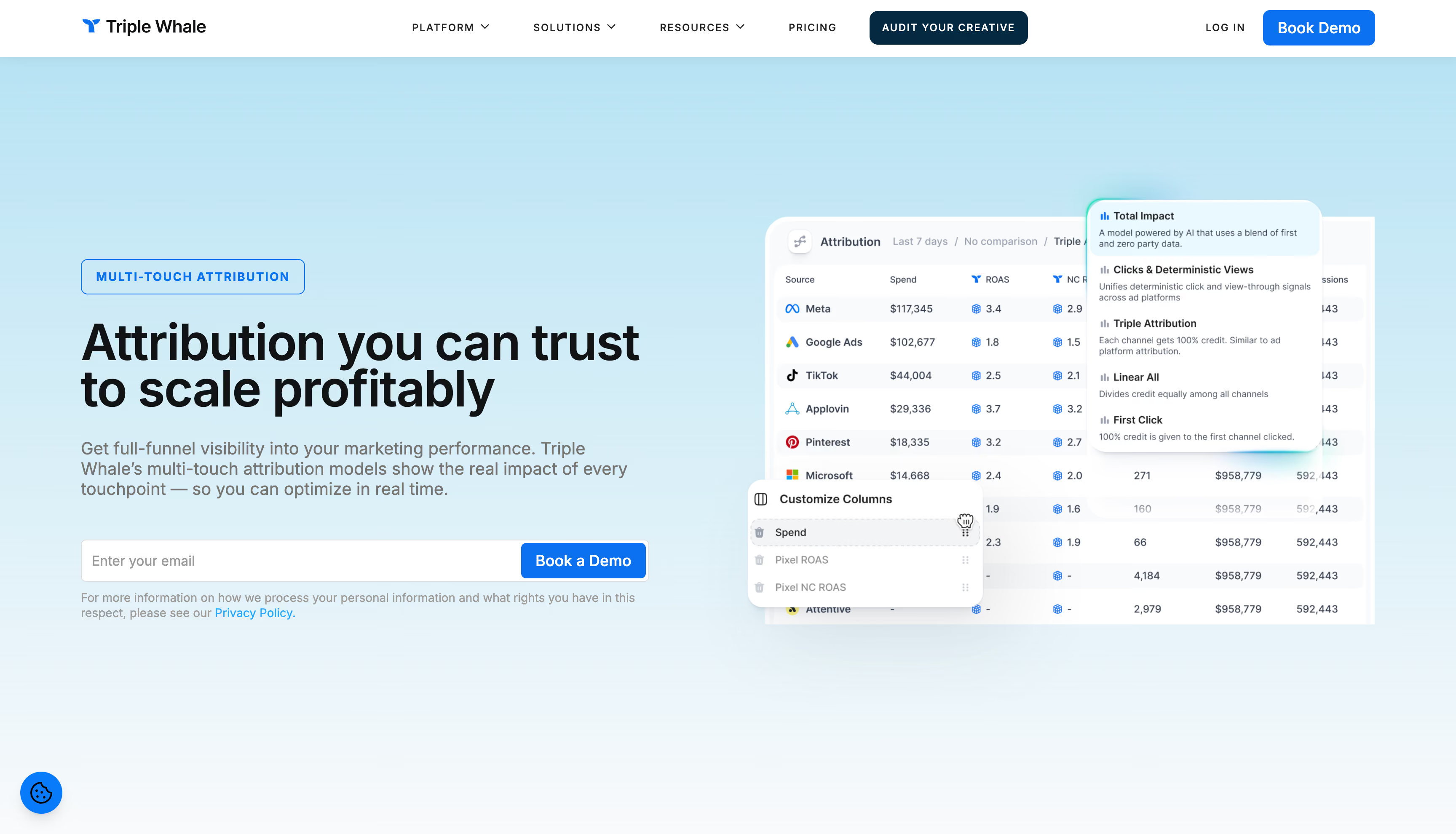
Triple Whale has spent the last two years turning itself from a dashboard into what it calls an AI operating system, and Moby is the whole pitch now. It reads your data, answers questions in Slack, and on the higher tier it queues and executes campaign changes inside guardrails you set. The measurement underneath is solid enough: the Triple Pixel captures cross-device, a post-purchase survey feeds a proprietary attribution model, and Sonar pushes conversions back to Meta. The catch is what happens to the profit number. Triple Whale calculates margin from COGS and stops at gross. Nothing below that line, no full P&L, and returns never get attributed to the campaign that caused them.
Free plan, Foundation from $219/month, Automate from $749/month, Enterprise quoted. All prices scale with annual GMV, all paid tiers are 12-month subscriptions, and annual prepay saves two months. Retention ($19/mo), Conversion ($79/mo), Compass, data warehouse sync and white-glove data science are add-ons. A dedicated CSM only kicks in around $10M GMV.
4.3 on G2, and the reviews split rather than cluster. The daily dashboard and speed of setup get consistent credit; attribution numbers people stopped trusting, billing friction and cancellation difficulty come up often enough to take seriously.
One of the most complete AI-powered tools here, sitting on a profit view that ends too early. If your decisions run on ROAS and you want an agent that acts, it fits. If you need to know what a campaign earned after COGS, shipping and returns, you'll be doing that math somewhere else.
Best for: DACH and EU brands that want attribution with every byte hosted in Germany, and don't need any automation.
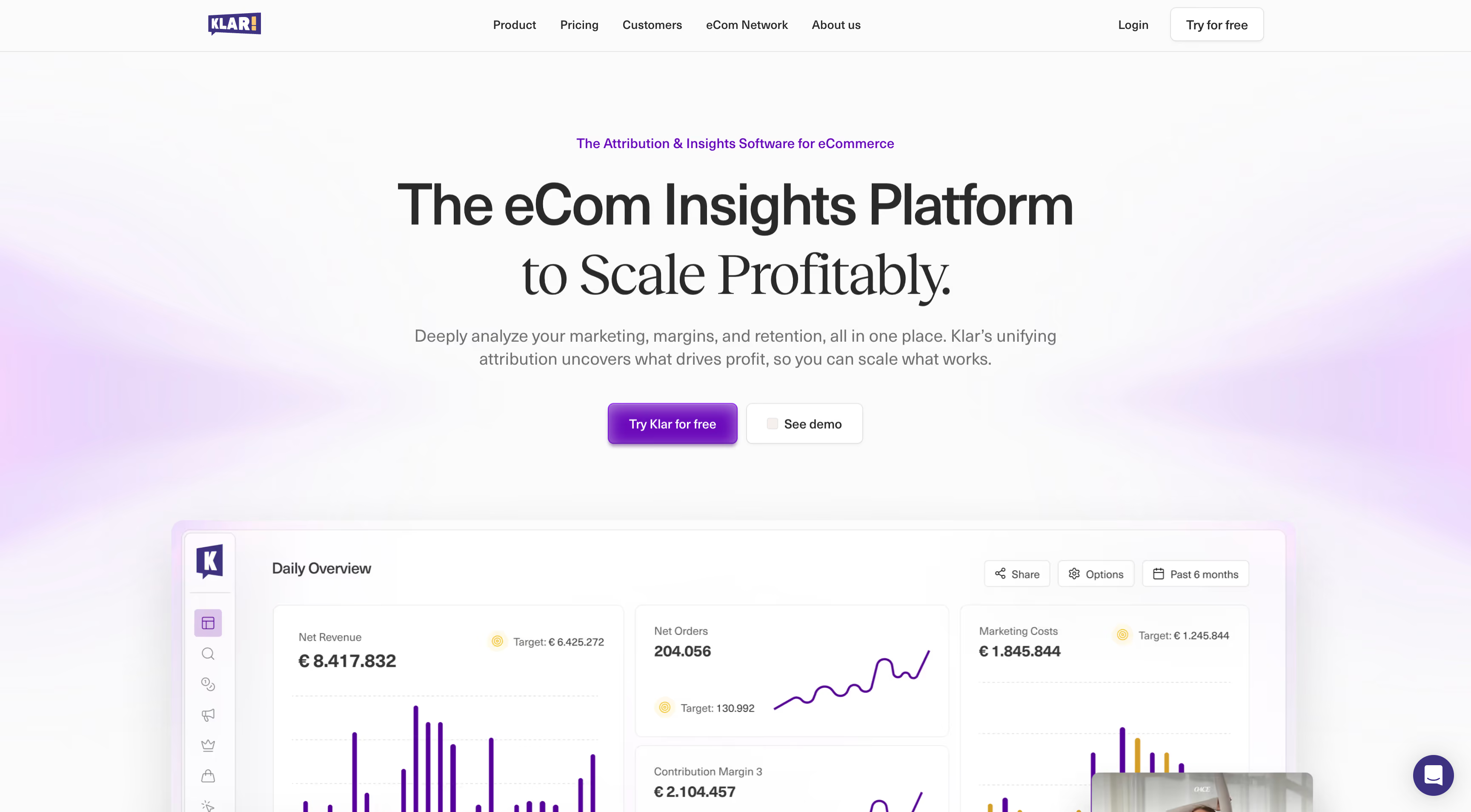
Klar is a Munich company that built the thing most attribution tools bolt on last: the profit layer. COGS, fulfillment, transaction fees and overheads all load into a real P&L, and then attribution reports carry that margin through, so a channel report shows contribution rather than ROAS. The tracking is first-party and cookieless, the data sits in Germany under ISO 27001, and there's a data-driven model that reweights touchpoints by intent, order and time lag. It's a well-built measurement and reporting product. It's also a product that ends at the report.
Core from €200/month, Core + Attribution from €400/month, both scaling with your net revenue over the trailing 12 months and recalculated quarterly. No setup costs, no minimum term on monthly billing, 14-day trial after onboarding.
Klar has no G2 rating, so there's no large public sample to read. What exists sits mostly on OMR, the German review platform, where it holds attribution and ecommerce analytics category badges for 2026. Customers skew heavily DACH, with names like Junglück, BLACKROLL and yfood on the site.
Solid measurement for a European brand that wants profit and privacy in the same tool, priced fairly if you accept that the real plan is €400. What you don't get is the closed loop: no signal pushed back to the platforms, no budget moved, no assistant.
Best for: brands with real offline and upper-funnel spend - linear TV, OTT, podcasts, direct mail - that need one deduplicated number across a hundred channels.
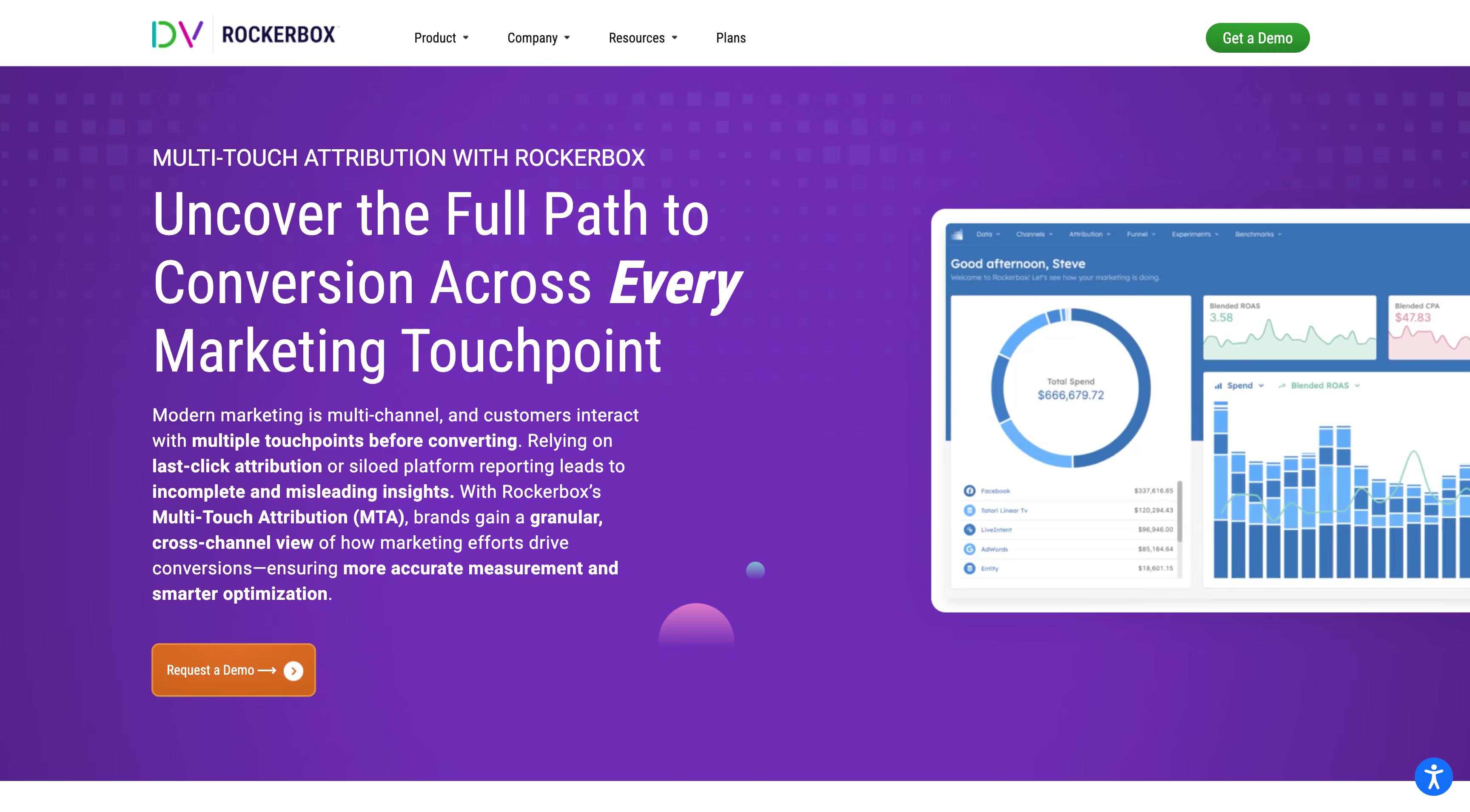
Rockerbox is the enterprise end of this list and it doesn't pretend otherwise. The premise is that no single method is trustworthy alone, so it runs three: multi-touch attribution for daily granularity, Bayesian MMM for long-run channel contribution, and managed incrementality tests to prove causality. The tests calibrate the models, and the interface shows you where the three methods agree and where they diverge instead of blending them into one comfortable number. That's methodologically honest and rare. It's also a measurement company, not a commerce company. DoubleVerify bought it in March 2025 for $85 million and folded it into a broader ad-verification suite, which is worth knowing if you're betting on the roadmap.
Not published. The plans page splits the platform into data and analysis products and routes you to a call. Third-party directories put entry pricing around $2,000 per month, and procurement data suggests mid-market contracts land between $40,000 and $90,000 a year for brands spending $100K to $500K monthly on media. No free trial, and incrementality tests are delivered as a managed service.
4.6, with reviewers consistently crediting the breadth of channel coverage and the responsiveness of the analytics team. The honest caveat that shows up in reviews: walled gardens won't share impression data, so view-through numbers stay modeled rather than observed.
The right instrument if your measurement problem is genuinely hard - many channels, heavy offline, spend big enough that a 5% misallocation costs more than the contract. For a DTC brand that needs to know which SKU earns after returns, it's an expensive way to get a ROAS number.
Best for: high-spend advertisers with long, messy funnels - opt-ins, webinars, sales calls - who need every sale tied back to the click that started it.
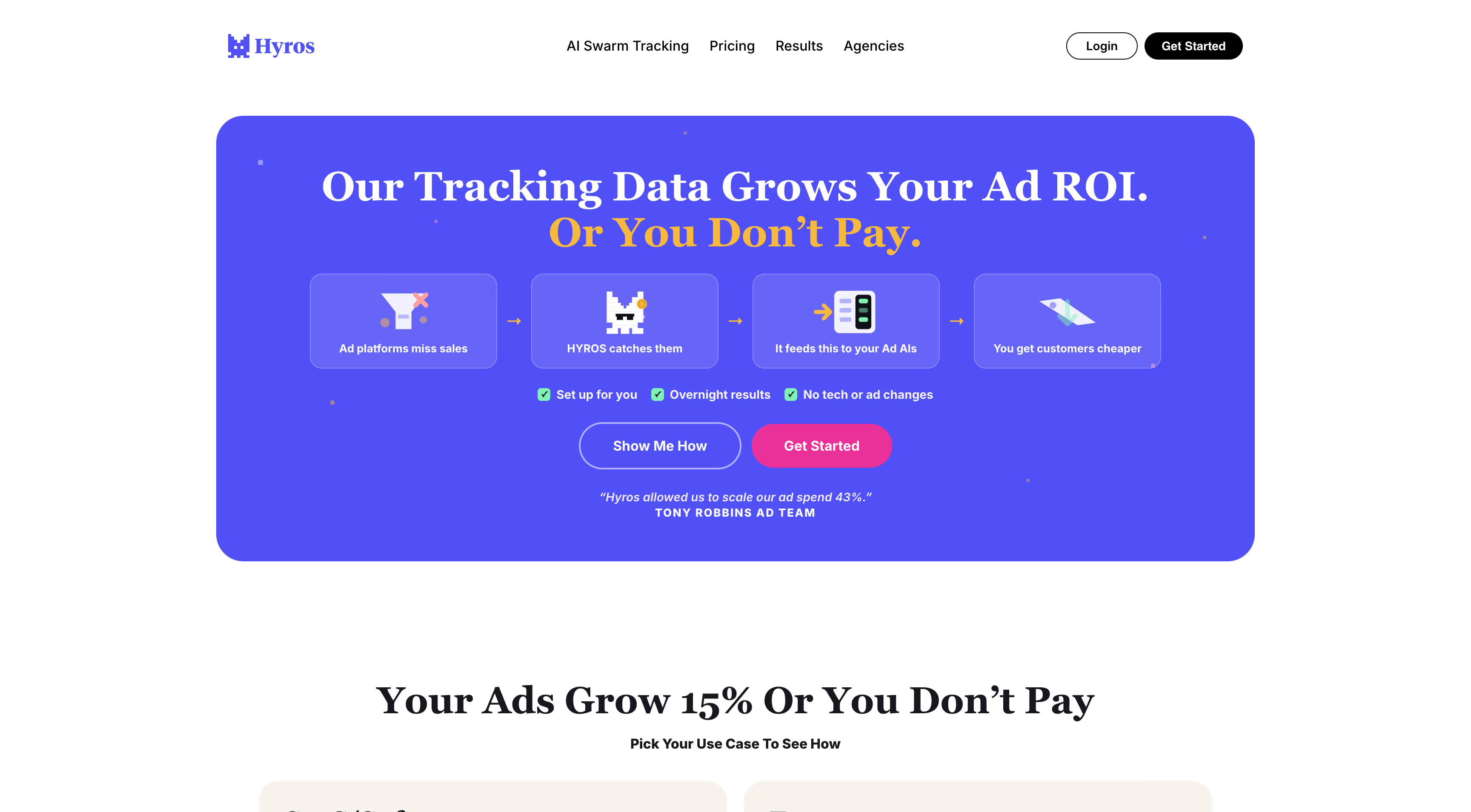
Hyros comes from the info-product world and it shows in the best and worst ways. The tracking is genuinely built for funnels other tools give up on: a first-party script fingerprints the visit, then ties every later order to the same email or phone number, across devices, across months. If your buyer clicks an ad in March, joins a webinar in April and books a call in May, Hyros keeps that on one lead record. It also pushes the recovered conversions back to five ad platforms. What it doesn't do is anything a merchandiser or a CFO would ask for. There's no POAS, no contribution margin, no SKU report, and no model that sizes a channel's impact.
A Shopify track starts around $69/month at $5K tracked monthly revenue. The Business track starts at $230/month on annual billing for up to $20K tracked revenue and scales through tiers to roughly $1,499/month at $750K, custom above that. Agency pricing depends on client volume. Monthly billing costs meaningfully more than the displayed annual rates, and there's a 90-day refund window instead of a trial.
4.9 average, and the sentiment is polarized. Tracking accuracy and the assigned onboarding analyst draw consistent praise. The recurring complaints are pricing opacity, the mandatory sales call, and an interface that people describe as dated next to the Shopify-native tools.
If your funnel runs through calls, webinars and email over weeks, Hyros will find attribution that other tools can't. If you run a store and need to know which SKU made money after returns, it isn't built for that question, and no amount of tracking accuracy fixes a missing profit layer.
Best for: agencies and subscription brands with long buying cycles who care most about new-customer acquisition cost and want an independent read across many ad platforms.
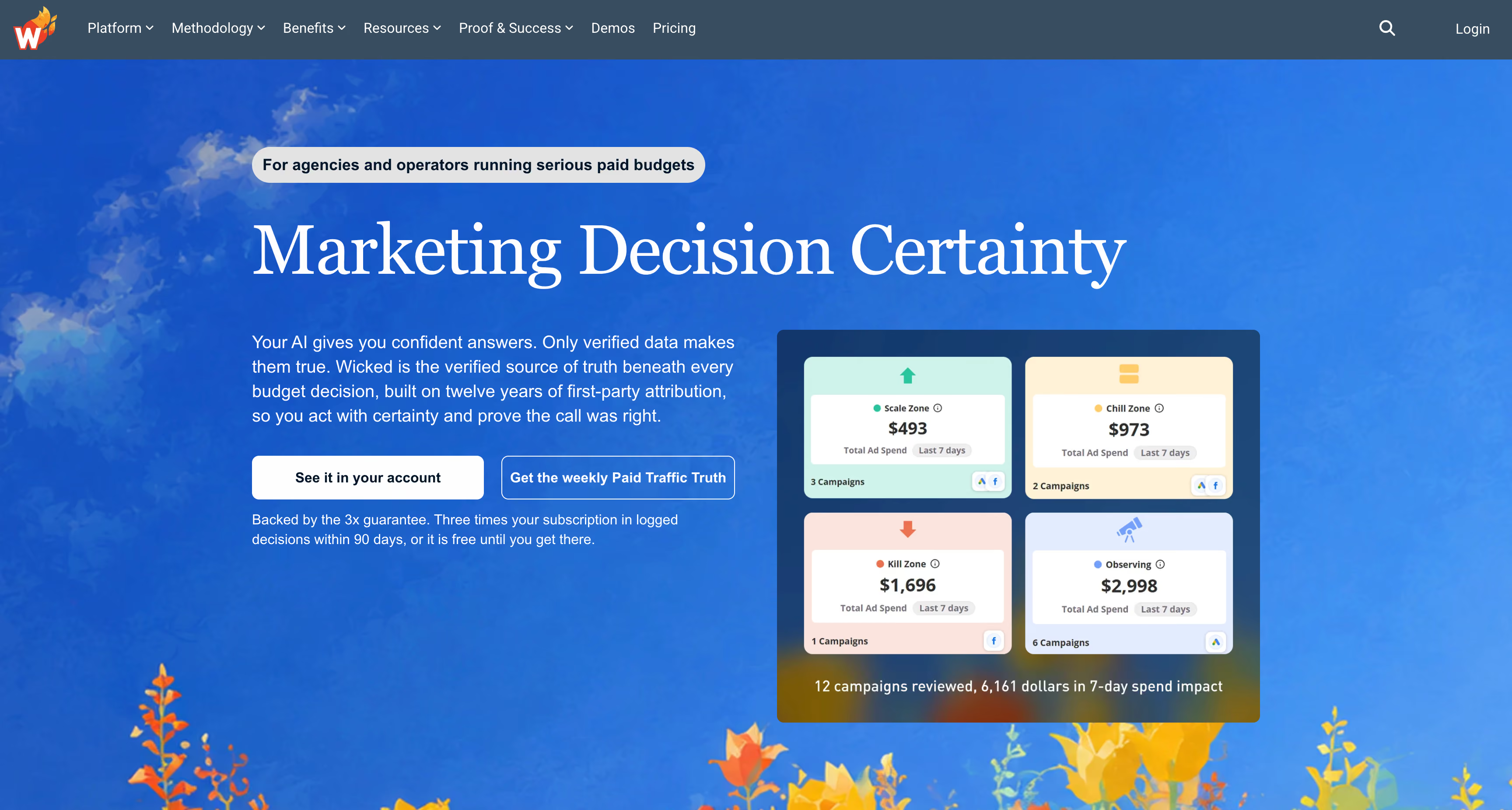
Wicked has been doing click attribution since before iOS 14 made it fashionable, and the product still reflects that origin. It logs the click server-side, then matches every later order back through order ID and CRM record, with lookback and look-forward windows you can stretch to lifetime. The methodology has a name and a point of view: five forces, nightly analysis, a Scale / Chill / Kill call on every channel. Where it falls short is everything past the click. There's no COGS in the platform at all, so a channel that returns 4x on garbage margin looks like a winner.
Banded on your trailing 12-month gross revenue. In the entry band, Measure is $499/month, Scale $699, Maximize $999, and Enterprise starts at $4,999. Advanced Signal and 5 Forces AI cost $199/month each on the two lower tiers and come included from Maximize. Pricing is quoted through a call, and there's no trial.
4.2, the lowest rating of any tool in this comparison, though the criticism is fairly specific rather than general. Attribution accuracy and the support team draw praise, especially from agencies. The recurring complaints are an interface that feels a generation behind the Shopify-native tools, and a total cost that climbs once the add-ons are on.
A serious attribution engine for long, multi-touch, subscription-shaped funnels, wrapped in a product that stops the moment the click is accounted for. If you already have profit reporting elsewhere and just need a defensible read on acquisition, it does that job. If you wanted one tool, this isn't it.
Best for: EU brands whose biggest measurement problem is the consent banner, and who already own a BI stack for everything downstream of tracking.
Tracify solves one problem and charges platform money for it. In DACH, a cookie banner can wipe out a third of your data before any tool gets to see it, and Tracify's answer is a patented collection method that runs without cookies and without a banner at all, anonymizing at the point of capture. The approach has been separately certified as consent-free, the servers are in Munich and Frankfurt, and nothing gets processed outside the EU. For a German brand losing that much signal, this is a real answer to a real problem. Just know what you're buying: this is a tracking layer with dashboards attached.
From €500/month for the Shop plan plus a one-off €500 setup fee, with agency pricing on request. A 30-day trial is available, arranged through a demo call.
4.9 on G2, from the smallest review base of any tool in this comparison. Reviewers rate support and ease of use highly, and the sample skews almost entirely toward small businesses.
Worth the money if consent-free capture is the specific thing standing between you and accurate numbers, and you have somewhere else to do the profit maths. If you expected the rest of a stack to arrive with it, €6,000 a year plus setup buys less than tools costing half as much.
For most ecommerce and DTC teams, Admetrics is the Northbeam alternative that answers the complaint that started the search. Tracking runs server-side and first-party, so the conversions a browser pixel drops come back. The recovered signal returns to six ad platforms rather than one. Profit runs through COGS, shipping, fees and returns to SKU level, with returns attributed to the campaigns that caused them. And the Allocator turns the result into a budget move instead of a recommendation. It opens at a quarter of Northbeam's entry price, with a free data audit and a trial before you commit.
